This guide covers everything you need to know about cinewhoops in 2026, from choosing the right size to our top recommendations.
Quick Summary: Best Cinewhoops & Gear (2026)
| Category | Product | Key Features |
|---|---|---|
| Best Overall | GEPRC Cinelog30 V3 | Excellent factory tune, quiet operation, and the perfect balance of power vs. efficiency. |
| Best for Beginners | DJI Avata 2 | Ready-to-fly system with GPS, motion control, and the easiest learning curve. |
| Beginner Alternative | BetaFPV Aquila20 HD | All-in-one kit that teaches traditional FPV skills without the need for soldering. |
| Best Micro | BetaFPV Pavo Pico II | Fits in your palm. Supports O4 Lite for 4K recording in the tightest indoor spaces. |
| Best 2.5-inch | Speedybee Bee25 | Modular camera mount, robust frame, and a great balance between freestyle and cinematic flying. |
| Best for Real Estate | GEPRC Cinebot25 V2 | Purpose-built for indoor stability with GPS included for safer operation. |
| Best Value | iFlight Defender 16 | Sub-250g compliance with solid performance at an accessible price point. |
| Best Value (Larger) | iFlight Defender 20 | Slightly larger than the 16 for better prop authority while remaining compact. |
| Best Micro Alt | CaddxFPV Gofilm 20 | Ultra-compact alternative with Walksnail Moonlight for low-light capability. |
What Is a Cinewhoop?

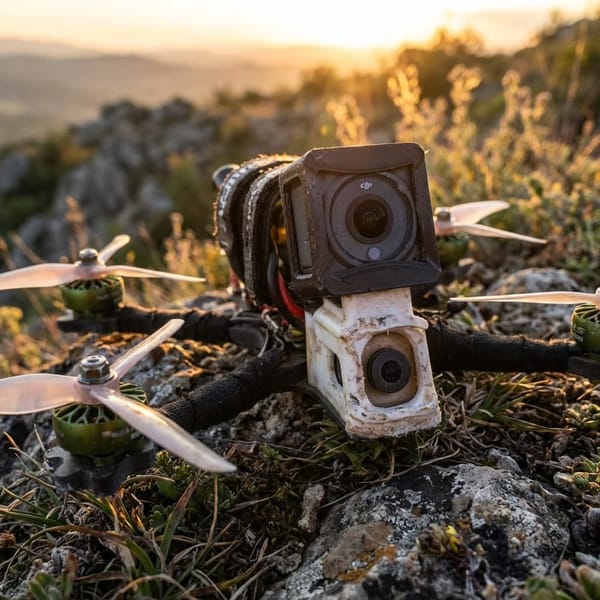
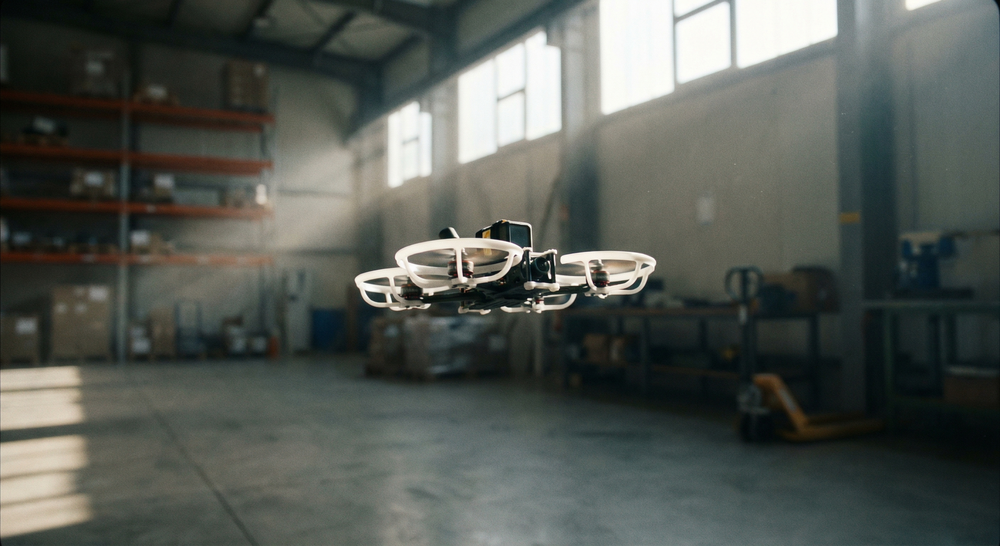
A cinewhoop is a small FPV drone with ducted propellers. The plastic shrouds around each prop serve two purposes: they protect people and objects from the spinning blades, and they generate extra thrust at low speeds.
This design trades raw speed for safety and smoothness. A cinewhoop will never match a 5-inch freestyle quad for acrobatics, but it excels at the slow, flowing shots that make cinematic footage shine.
Why Choose a Cinewhoop?
Safety first. The ducts let you fly inches from talent, through doorways, and around fragile objects without the anxiety of exposed props. For real estate work, event coverage, or any project involving people, this matters.
Smooth flight characteristics. Cinewhoops naturally want to fly slow and steady. Their weight distribution and duct design create stable footage that larger drones struggle to match at low speeds.
Compact size. These drones fit in tight spaces. Indoor warehouse shots, car interiors, narrow hallways, between trees in dense forest. A 3-inch cinewhoop can fly where a 5-inch quad simply cannot go.
Professional results without the bulk. Modern HD systems like the DJI O4 Pro eliminate the need for a separate action camera on smaller builds, keeping weight down and flight times reasonable.
The Trade-offs
Nothing comes free. Cinewhoops have limitations:
- Slower and less nimble than standard FPV drones
- Shorter flight times due to duct drag and weight
- Struggle in wind compared to larger quads
- Not ideal for freestyle or aggressive flying
If you want to do power loops and sharp snap rolls, look elsewhere. But for smooth cinematic work, these limitations rarely matter.
Cinewhoop Sizes Explained
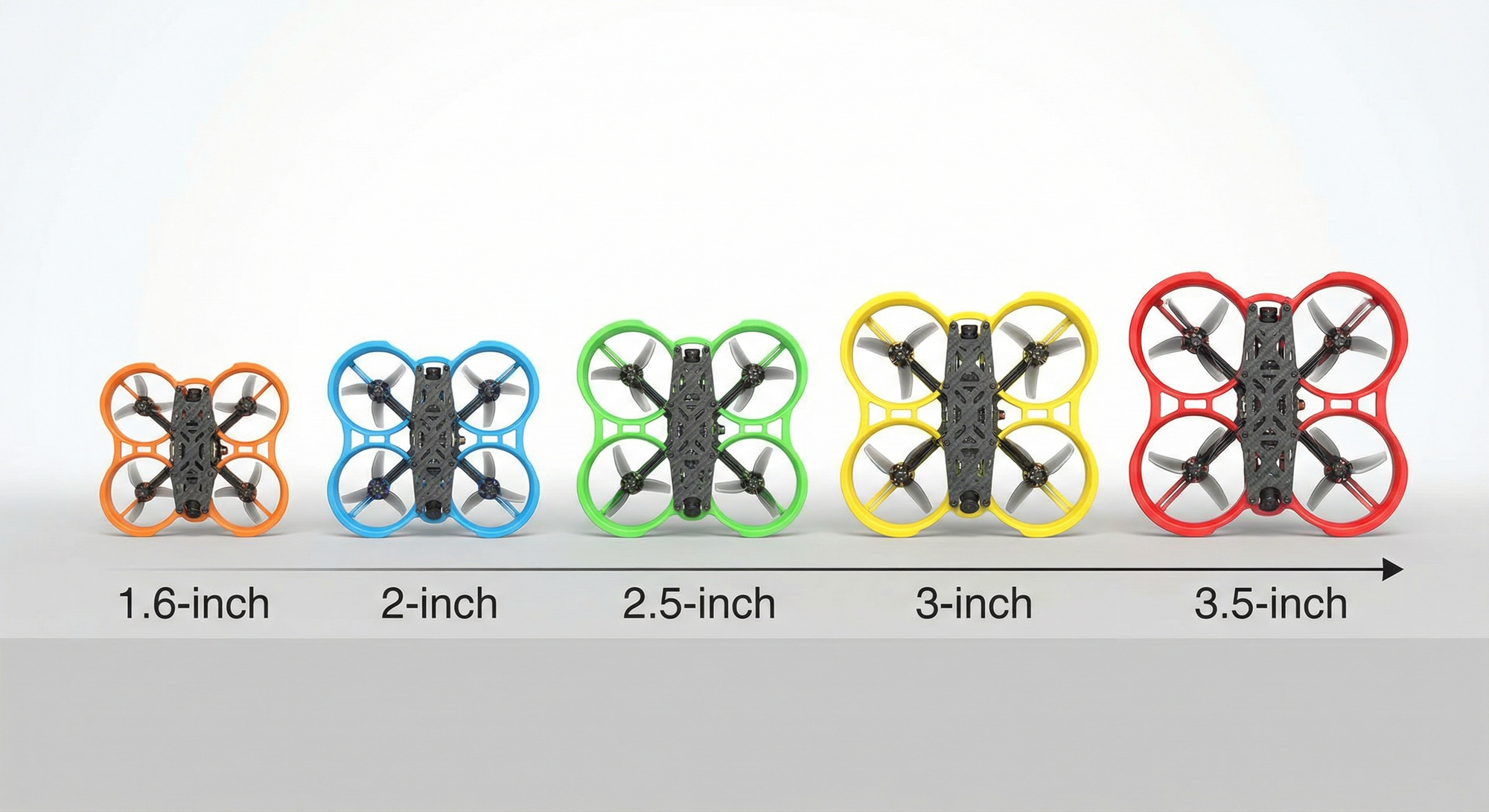
Cinewhoops come in several sizes, measured by propeller diameter. Each size has distinct characteristics:
| Size | Best For | Typical Weight | Wind Handling |
|---|---|---|---|
| 1.6-inch | Sub-250g builds, tightest spaces | 80-100g | Poor |
| 2-inch | Indoor flying, beginners | 100-150g | Fair |
| 2.5-inch | Balanced performance | 150-200g | Good |
| 3-inch | Professional work, GoPro carrying | 200-280g | Very Good |
| 3.5-inch | Maximum stability, outdoor work | 280g+ | Excellent |
Which Size Should You Choose?
A good rule: buy the biggest size your environment allows.
Larger propellers give you more power, better efficiency, longer flight times, and smoother footage in wind. But bigger drones are louder and harder to maneuver through tight gaps.
For sub-250g compliance: Go 1.6-inch or 2-inch. These pair well with the DJI O4 Lite and keep you under the registration threshold in most countries.
For GoPro carrying: You need at least 2.5-inch, preferably 3-inch. The extra lift handles action camera weight without sacrificing flight performance.
For professional work: 3-inch hits the sweet spot. Enough power for outdoor shoots, compact enough for indoor spaces, and the widest selection of pre-built options.
For maximum stability: 3.5-inch handles wind best and produces the smoothest footage, but sacrifices maneuverability in tight spaces.
Best Cinewhoops 2026
Best Overall: GEPRC Cinelog30 V3
GEPRC Cinelog30 V3 O4 FPV Drone
If we could recommend only one cinewhoop, this would be it. The Cinelog30 V3 nails the balance between professional performance and everyday usability.
The flight characteristics are superb straight out of the box. GEPRC has tuned this drone beautifully for cinematic work. It hovers smoothly, transitions are buttery, and the efficiency lets you get real work done on a single battery.
Noise levels are notably low compared to competitors. If you shoot real estate or events where drone noise matters, this matters.
Trade-off: The prop guards are relatively fragile. This is not a crash-it-and-forget drone. For beginners still finding their muscle memory, consider something more rugged.
Best for Beginners: DJI Avata 2
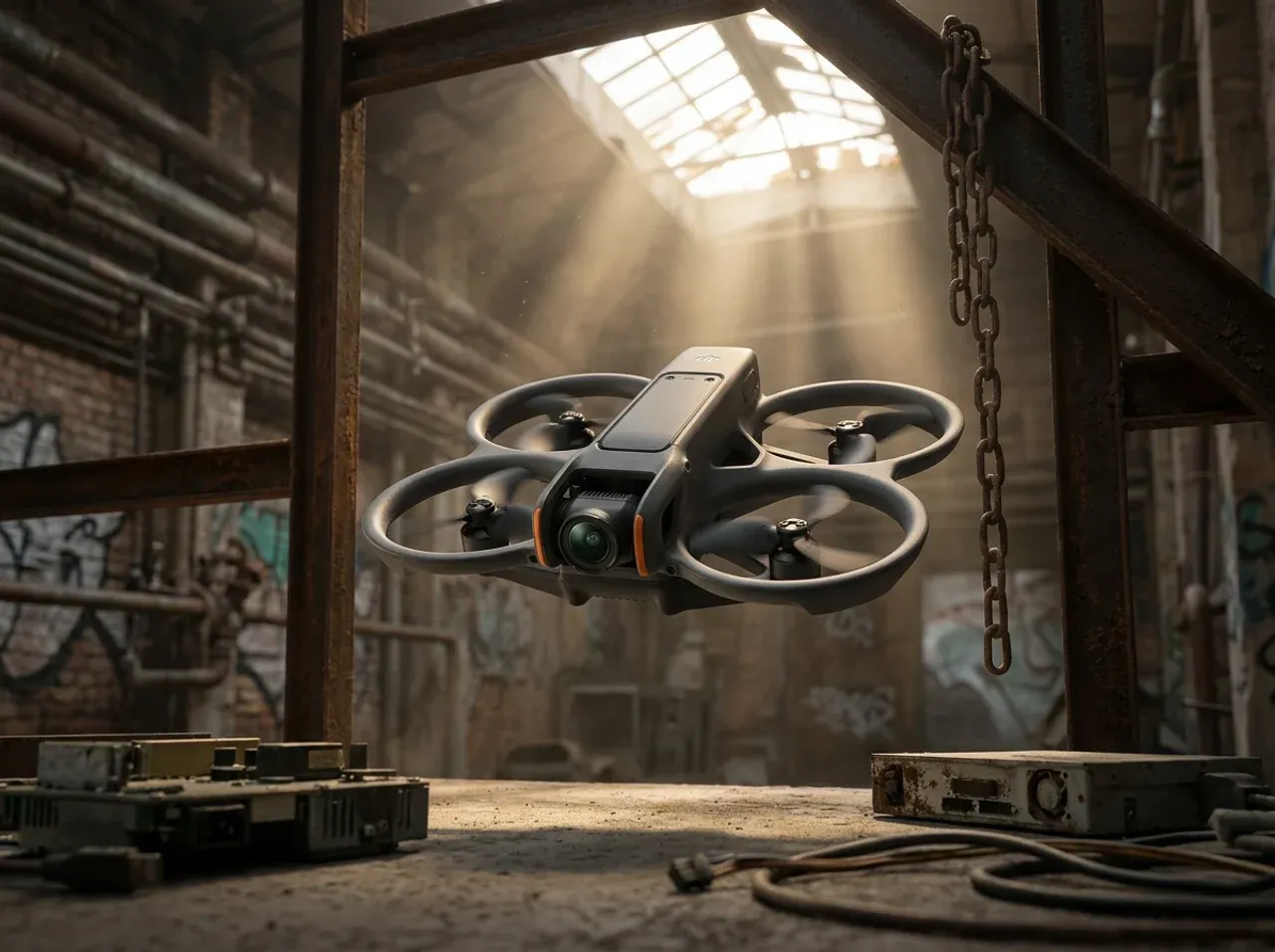
The Avata 2 takes a different approach. Instead of a traditional FPV platform, DJI offers a complete ready-to-fly system with GPS, automatic stabilization, and the legendary DJI video transmission.
Buy DJI Avata 2 here
For those who don't want to solder, tune PID loops, or figure out Betaflight, the Avata 2 removes the technical barrier entirely. The built-in camera produces footage comparable to the DJI O4 Pro, and features like GPS return-to-home provide a safety net that traditional FPV lacks.
The motion controller option lets absolute beginners capture cinematic shots within minutes of unboxing. No simulator practice required.
Trade-off: Less flexibility than a traditional build. You're locked into DJI's ecosystem, and repairs must go through official channels.
Best Beginner Alternative: BetaFPV Aquila20HD
Buy here 👉 BetaFPV Aquila20HD
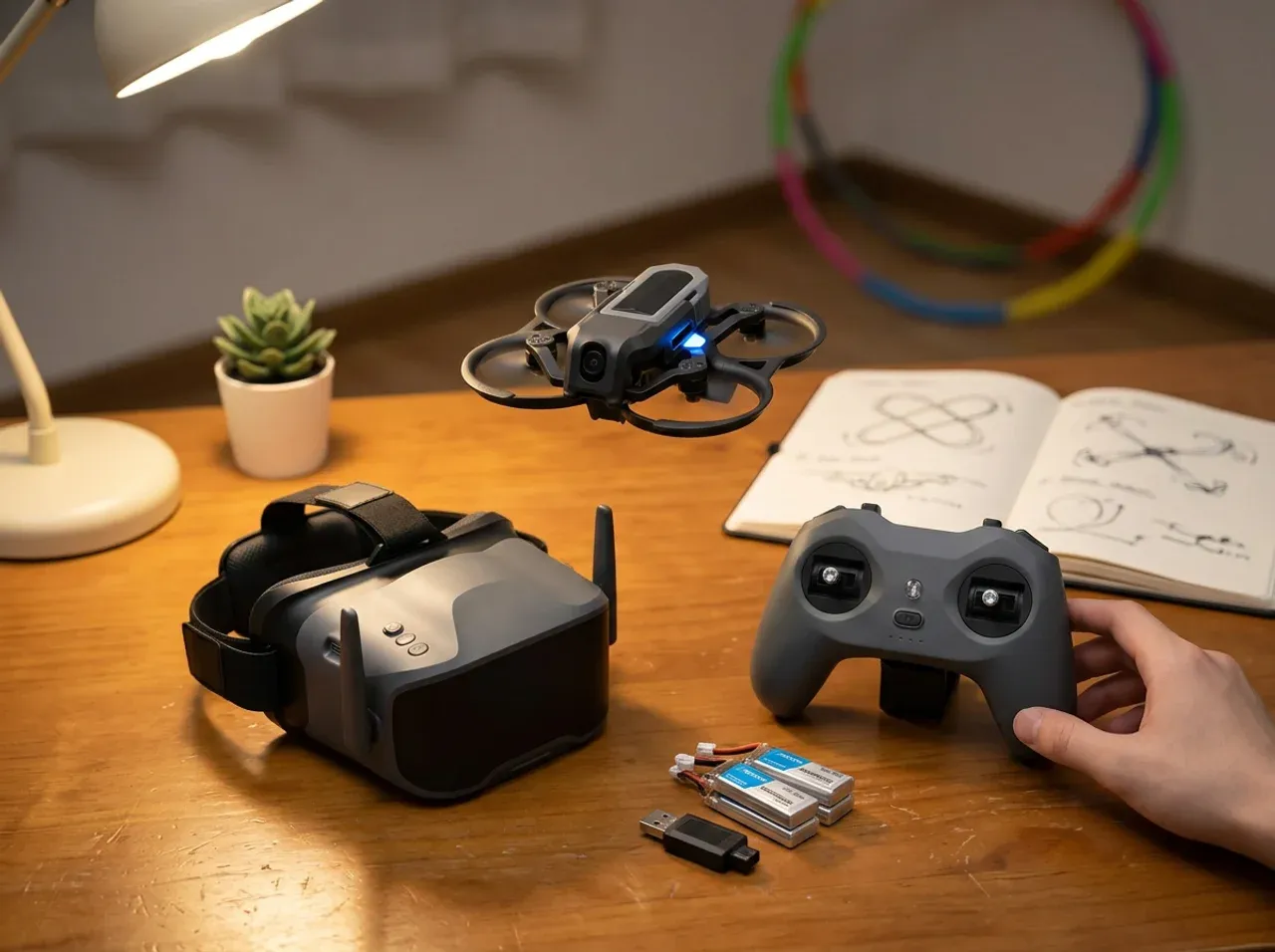
The Aquila20HD is BetaFPV's answer to the DJI Avata for beginners who want a traditional FPV experience without the complexity. This 2-inch cinewhoop comes with everything you need in one box: drone, radio, and a built-in HD camera system.
What makes it beginner-friendly is the integrated approach. Unlike building your own, there's no soldering or configuration required. Unlike the Avata, you're learning real FPV skills that transfer to any drone. The flight characteristics are forgiving, and the 2-inch size is manageable indoors while still capable outdoors.
The onboard HD recording means no separate action camera needed, keeping weight down and the build simple. Flight times are reasonable at 4-5 minutes, enough to learn without constant battery swapping.
Trade-off: Fixed camera system limits upgrade paths. Not as refined as premium options like the Cinelog series.
Best Micro Option: BetaFPV Pavo Pico II

The smallest cinewhoop that supports DJI O4. At just 84g with O4 Lite and battery, the Pavo Pico II captures proper 4K footage from a platform that fits in your palm.
BetaFPV includes canopies for both O4 Lite and O4 Pro, though we recommend sticking with the Lite on this 1.6-inch platform. The O4 Pro's extra weight taxes the small motors too much for optimal performance.
Flight times run 4-5 minutes, and the tiny footprint opens up shots no larger drone can reach: through car windows, between branches, inside appliances, through small gaps in architecture. If your creative vision involves impossibly tight spaces, this is your tool.
Trade-off: Micro size means short flight times and zero wind tolerance. Strictly an indoor drone for calm conditions. The 45mm props lack the authority of larger sizes, so reserve this for smooth, slow flights.
Best Micro Alternative: Caddx Protons

For those who want the smallest possible cinewhoop with an all-in-one HD solution, the Caddx Protons delivers. This ultra-compact 1.6-inch drone packs Caddx's own HD camera system into a frame that weighs under 100g without battery.
The Protons shines for tightest spaces where even a 2-inch feels too big. Car interiors, through small windows, between closely spaced objects. The ducted props protect surroundings while the tiny footprint opens up shots no other drone can reach.
Sub-250g out of the box means no registration required in most countries. The all-in-one design eliminates cable management headaches, and Caddx's camera tech produces footage that punches above its weight class.
Trade-off: Fixed camera system limits upgrade paths. Micro size means micro flight times (3-4 minutes) and no wind tolerance whatsoever. Strictly an indoor drone for calm conditions.
Best 2.5-inch: Speedybee Bee25
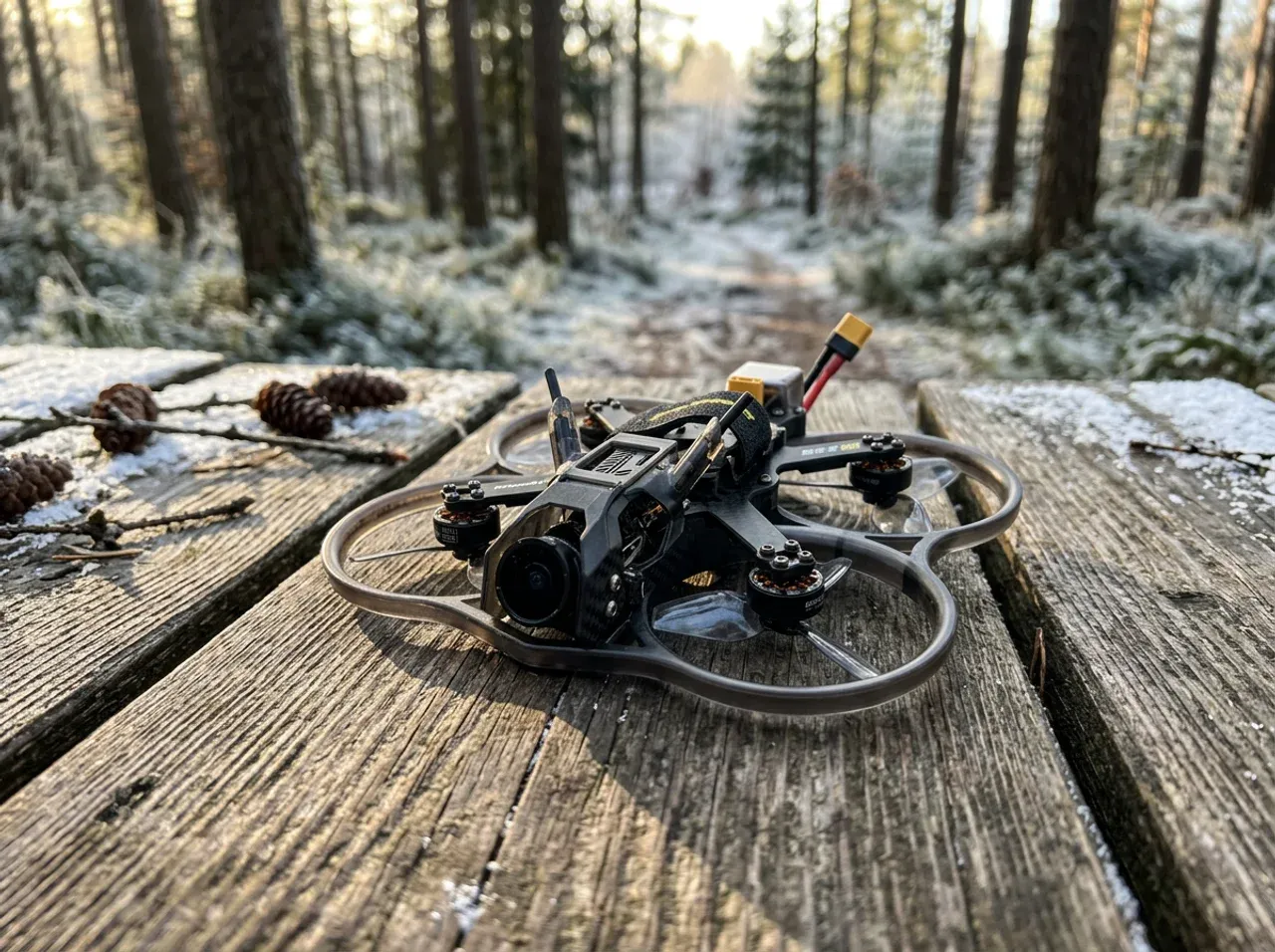
Oscar Liang's favorite 2.5-inch cinewhoop, and for good reason. The Bee25 combines outstanding performance with thoughtful design at a competitive price.
The modular camera mounting system accommodates DJI O3, O4 Pro, and O4 Lite with quick-swap plates. Flight time hits 7-8 minutes on a 4S 850mAh battery, impressive for this size class. The frame is robust enough to survive beginner crashes while remaining under 250g with the right battery.
What sets the Bee25 apart is how well it flies straight out of the box. Speedybee has tuned this drone beautifully for both cinematic capture and light freestyle. If you want a 2.5-inch that can do smooth orbits one moment and punchy split-S entries the next, this is it.
Trade-off: Heavier than some competitors. The robust frame adds grams that lighter builds avoid.
Best 2-inch: BetaFPV Pavo20 Pro II

For indoor work and tight spaces, the Pavo20 Pro II excels. The handling feels natural and predictable, making it easy to thread through doorways and around furniture.
The frame design prioritizes weight savings over crash resistance. Smart for performance, less smart for beginners who test their durability regularly.
Compatible with both DJI O4 Pro and O4 Lite, giving you flexibility on camera weight.
Best Value: iFlight Defender Series

These offer solid performance at an accessible price point. The Defender 16 keeps you under 250g, while the Defender 20 gives you more prop authority for a small weight increase.
Not as refined as the GEPRC options, but excellent value for those starting out or wanting a backup rig.
Best for Real Estate: GEPRC Cinebot25 V2

The Cinebot25 V2 is purpose-built for indoor professional work. It comes with GPS installed, making it easier to fly consistently in complex indoor environments.
The modular camera mount is clever. If GEPRC releases future drones with different camera systems, you may be able to swap your O4 Pro between them.
Caution: The camera sits exposed at the front. One nose-first crash could mean camera damage. Best for pilots who fly carefully in controlled environments.
Best Budget 3.5-inch: DarwinFPV CineApe35
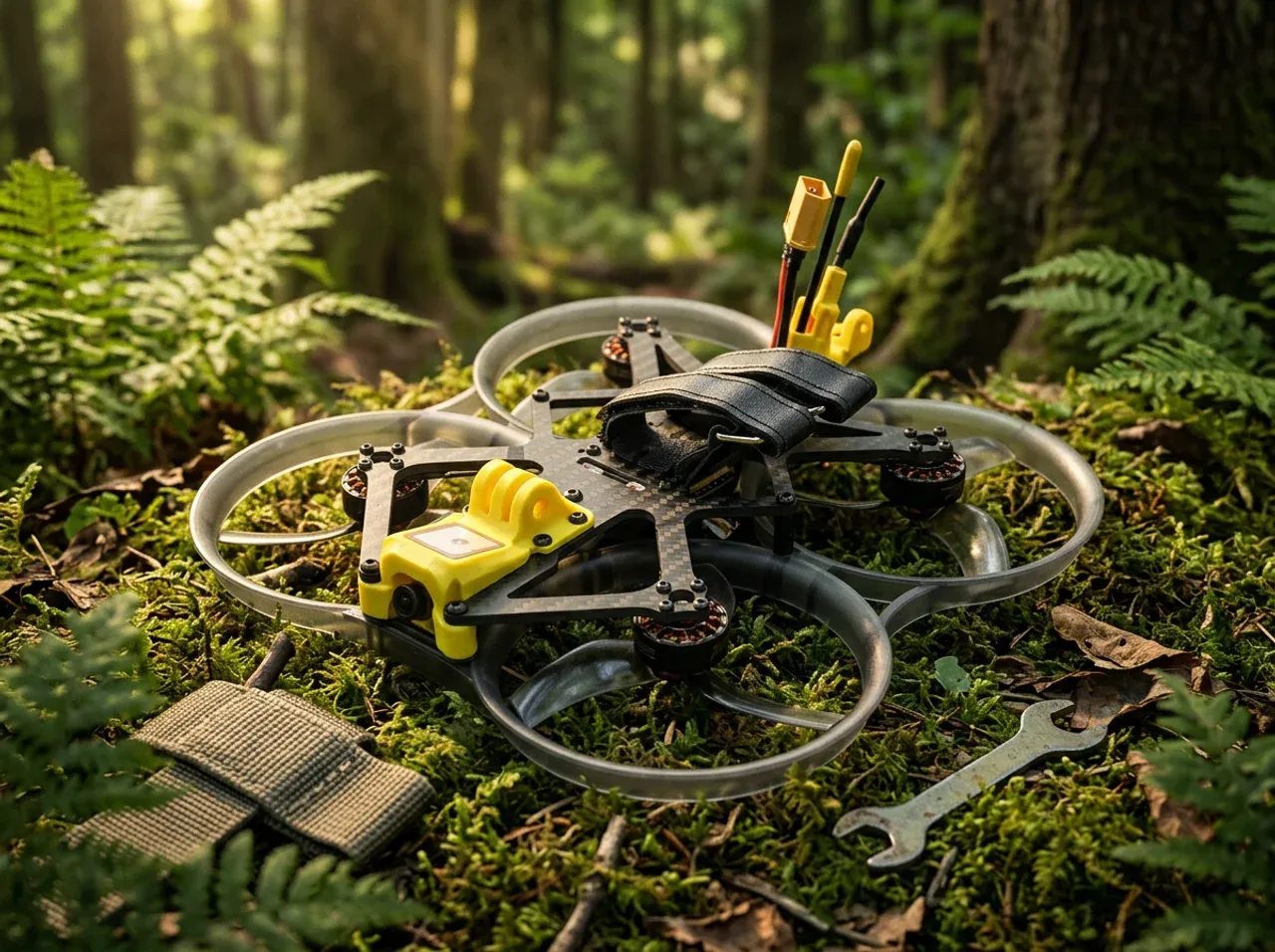
DarwinFPV CineApe35 on Banggood
For 3.5-inch performance on a tighter budget, the CineApe35 delivers surprising capability. You sacrifice some refinement compared to premium options, but the core flight performance holds up well.
Key features include GPS (rare at this price point), inverted motor mounting for durability, and solid carbon construction. The 2006 2030KV motors provide smooth power delivery.
Trade-offs: Antenna quality and current sensor accuracy aren't as refined as premium options. GoPro mount alignment may need adjustment.
Good choice for those who need maximum stability but don't want to stretch to GEPRC prices.
Also Consider: Foxeer Foxwhoop 25
For HDZero pilots, the Foxwhoop 25 offers a purpose-built cinewhoop with HDZero VTX pre-installed. If you're committed to the HDZero ecosystem for racing and want a cinewhoop that matches, this avoids the DIY integration work.
Also Consider: iFlight Nazgul Cinewhoop Series
iFlight offers several cinewhoop variants beyond the Defender series. The Nazgul line provides proven performance with various video system options. Worth exploring if iFlight is your preferred brand.
HD Video Systems Explained
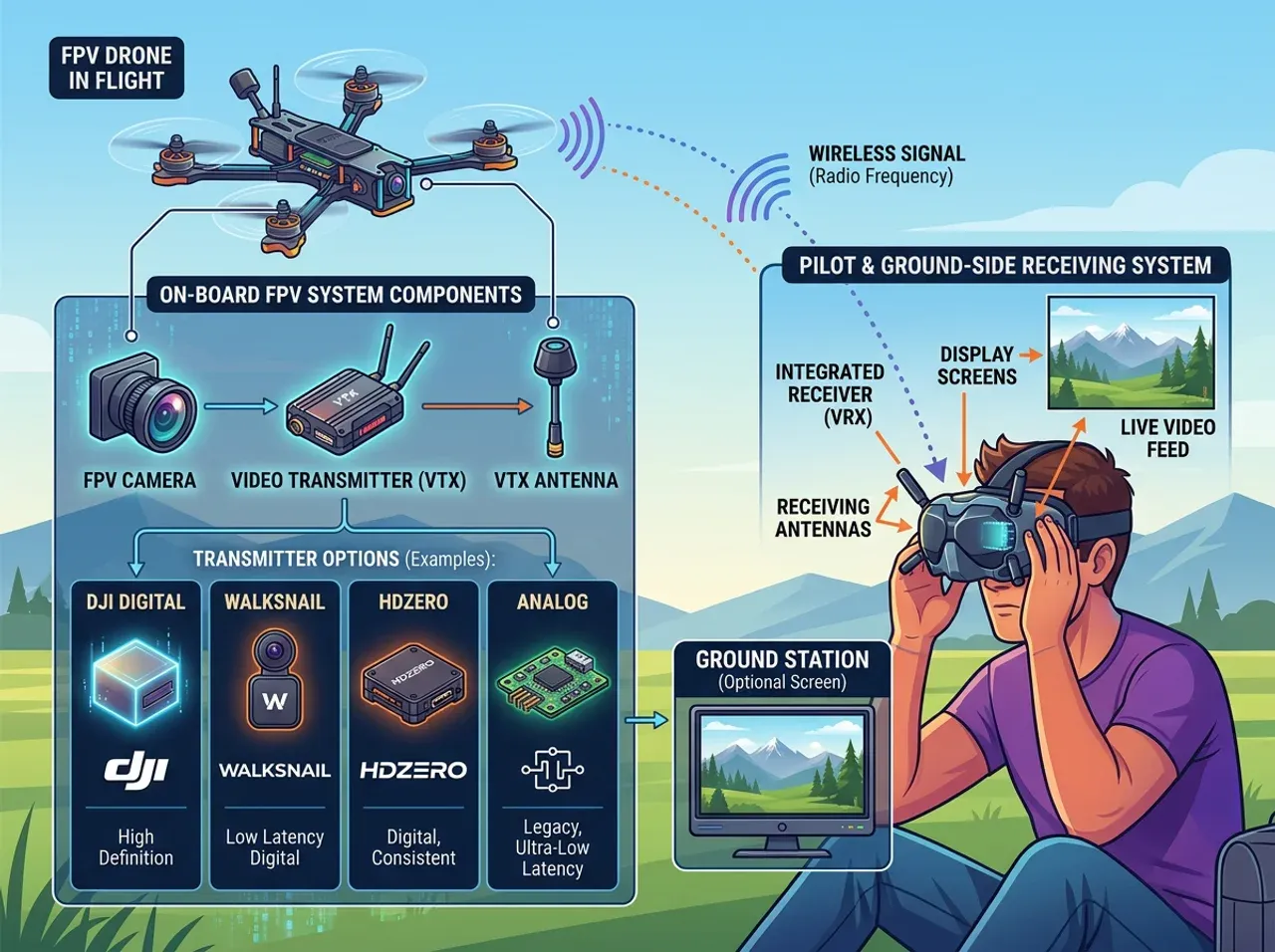
One of the most important decisions for any cinewhoop build is your video system. This determines both what you see in your goggles and what quality footage you can record. In 2026, digital FPV dominates, but the options differ significantly in weight, quality, latency, and cost.
DJI O4 Pro
The current gold standard for cinematic work.
The DJI O4 Pro Air Unit delivers the best image quality available in FPV. With a 1/1.3" CMOS sensor recording 4K at 60fps, it produces footage that rivals dedicated action cameras. The OcuSync 4.0 transmission system offers up to 15km range and excellent penetration through obstacles.
Specifications:
- Resolution: 4K/60fps onboard, 1080p/100fps to goggles
- Sensor: 1/1.3" CMOS
- Latency: ~20ms to goggles
- Weight: 63g (air unit + camera)
- Max range: 15km
Best for: Professional filmmakers prioritizing image quality above all else.
Trade-offs: Heavy. Requires 2.5-inch or larger cinewhoop. Premium price. Camera cables can be fragile.
Compatible cinewhoops: GEPRC Cinelog30 V3, GEPRC Cinebot25 V2, BetaFPV Pavo20 Pro II
DJI O4 Lite
Lighter weight for sub-250g builds.
The O4 Lite sacrifices some features for weight savings. Same 4K recording capability as the Pro, but with a smaller sensor and no SD card slot for expanded storage. Perfect for keeping under the 250g threshold.
Specifications:
- Resolution: 4K/60fps onboard, 1080p/100fps to goggles
- Sensor: 1/2" CMOS (smaller than Pro)
- Latency: ~20ms to goggles
- Weight: 36g (air unit + camera)
- Max range: 10km
Best for: Sub-250g builds where weight matters more than ultimate image quality.
Trade-offs: No SD card slot. Smaller sensor means slightly worse low-light performance. Build quality reportedly not as robust as O3 or O4 Pro.
Compatible cinewhoops: BetaFPV Pavo Pico II, GEPRC Cinelog30 V3, iFlight Defender 16
DJI O3 Air Unit
The previous generation, still capable.
Before the O4 series, the O3 was king. Many pilots still fly O3 units, and they remain available at discounted prices. Image quality is excellent, though not quite matching the O4 Pro's sensor.
Specifications:
- Resolution: 4K/60fps onboard, 1080p/100fps to goggles
- Sensor: 1/1.7" CMOS
- Latency: ~30ms to goggles
- Weight: 57g (air unit + camera)
- Max range: 10km
Best for: Budget-conscious buyers who want DJI quality at lower cost.
Trade-offs: Being phased out. Camera cables have better durability reputation than O4 series, but lower availability long-term.
Walksnail Avatar
The value alternative with small-drone support.
Created by former DJI engineers, Walksnail offers competitive digital FPV at a lower price point. The standout feature for cinewhoop pilots: support for tiny whoops via their 1S VTX option.
Specifications:
- Resolution: 1080p/60fps onboard, 720p/120fps to goggles
- Latency: ~35ms to goggles
- VTX weight: 9.6g (full size), 4.5g (1S nano)
- Max range: ~3km
Best for: Pilots who want digital quality across multiple drone sizes, from tiny whoops to 5-inch builds.
Trade-offs: Image quality slightly below DJI. Range not as good. Software can feel less polished.
Compatible cinewhoops: CaddxFPV Gofilm 20, GEPRC Cinelog35 V2 Walksnail edition
Why choose Walksnail: If you fly multiple sizes (tiny whoop AND 3-inch cinewhoop AND 5-inch freestyle), Walksnail's ecosystem lets you use one goggle system across all of them. The 1S VTX opens up digital HD for micro builds that can't handle DJI's weight.
HDZero
The racer's choice with lowest latency.
HDZero prioritizes latency above all else. At 16-22ms end-to-end, it's the most responsive digital system available. For precision proximity flying where every millisecond matters, HDZero excels.
Specifications:
- Resolution: 720p/120fps to goggles (no onboard recording)
- Latency: 16-22ms (lowest available)
- VTX options: Full, Nano, Whoop sizes
- Max range: ~1.5km
Best for: Racing pilots and those who prioritize minimum latency over image quality.
Trade-offs: Lower image quality than DJI or Walksnail. No onboard recording (requires separate HD camera). Most expensive overall system cost.
Why choose HDZero: If you compete in races, or if you fly extremely precise proximity lines where instant response matters more than pretty pictures, HDZero is your system. The analog compatibility also means you can fly with mixed groups without issues.
Lightweight HD Cameras (Non-FPV Systems)
For cinewhoops without a DJI/Walksnail/HDZero air unit, or for pilots who want even lighter weight than integrated HD systems, standalone action cameras fill the gap.
RunCam Thumb Pro
At just 16g, the Thumb Pro is the lightest way to get 4K footage on your cinewhoop. Compatible with Gyroflow software stabilization for smooth footage.
- Weight: 16g
- Resolution: 4K/30fps
- FOV: 150°
- Power: 5V only (requires BEC for direct battery connection)
Best for: Sub-250g analog builds, or as backup camera on digital builds.
Hawkeye Thumb 4K
Similar to the RunCam but with a wider voltage range (5V-23V), meaning easier wiring directly to your flight controller. Can function as both FPV camera AND HD recorder in one unit.
- Weight: ~20g
- Resolution: 4K
- Wide voltage: 5V-23V direct connection
- Can output video for FPV while recording
Best for: Simplifying builds by combining FPV camera and HD recorder.
Insta360 SMO 4K
Developed in partnership with BetaFPV specifically for FPV drones. At 30g it's heavier than the Thumb cameras but offers Insta360's excellent FlowState stabilization built-in.
- Weight: 30g
- Resolution: 4K
- Stabilization: FlowState (best-in-class)
- Mount: Designed for cinewhoops
Best for: Pilots who want stabilization without post-processing, especially for micro cinewhoop builds.
Which Video System for Which Use Case?
| Use Case | Recommended System | Why |
|---|---|---|
| Professional filmmaking | DJI O4 Pro | Best image quality, 4K/60fps |
| Sub-250g build | DJI O4 Lite + RunCam Thumb Pro | Weight savings |
| Multiple drone sizes | Walksnail Avatar | 1S to 6S support |
| Racing competition | HDZero | Lowest latency |
| Budget build | DJI O3 (discounted) or Analog + Thumb Pro | Cost savings |
| Analog preference | Analog VTX + RunCam Thumb Pro | Familiar system, light HD |
A Note on Goggles
Your video system choice locks you into a goggle ecosystem. DJI systems require DJI goggles (Goggles 2, Goggles 3, or Goggles N3). Walksnail and HDZero both offer their own goggles but also support analog via module bays.
If you're new to FPV and plan to eventually own multiple drones, consider which ecosystem gives you the most flexibility. HDZero and Walksnail goggles work with analog, DJI goggles do not.
Key Components Guide
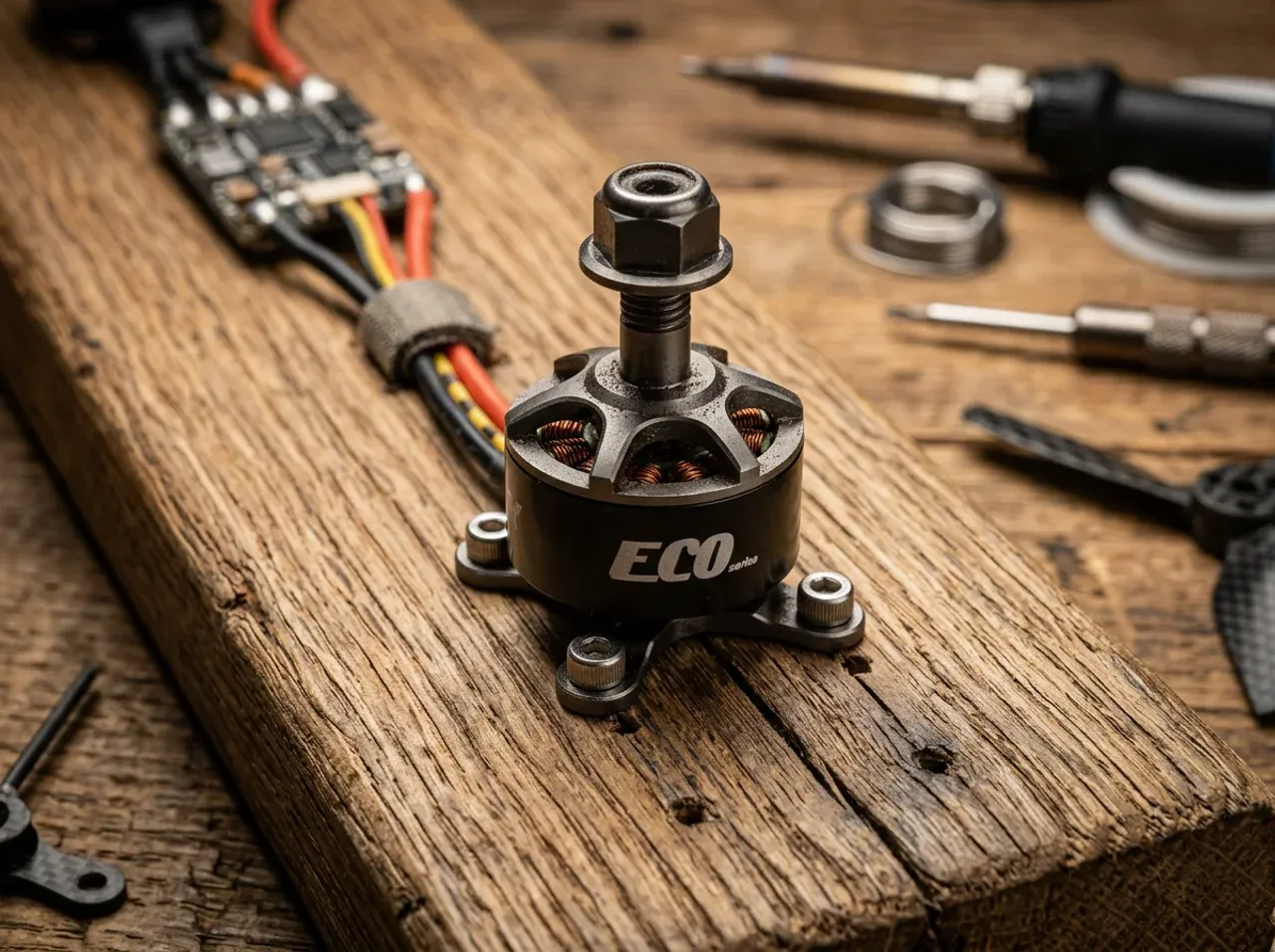
Building your own cinewhoop? Here's what you need to know about the major components.
Motors
Cinewhoops use lower KV motors than freestyle quads. The extra torque from ducted props means you want motors that spin efficiently at lower RPMs.
Popular options from our store:
- Emax Eco 1407 Cinewhoop Motor - Solid choice for 3-inch builds, available in 3300KV and 4100KV
- Emax Eco II 2004 Cinewhoop Motor - Multiple KV options for different cell counts
- T-Motor F1408 Motor II - Premium option with excellent build quality
KV selection guide:
| Prop Size | 3S Battery | 4S Battery |
|---|---|---|
| 2-inch | 4500-5000KV | 3500-4000KV |
| 2.5-inch | 3800-4200KV | 2800-3200KV |
| 3-inch | 3000-3500KV | 2400-2800KV |
| 3.5-inch | 2500-3000KV | 2000-2400KV |
Propellers
Cinewhoops carry significant weight relative to their size: ducted frames, batteries, HD cameras. This demands more aggressive propellers than you'd use on a freestyle quad of equivalent size.
Propeller Types:
Standard (pointy) props - Most efficient and quietest, but generate less thrust. Not ideal for cinewhoops carrying heavy payloads.
Bullnose props - Larger surface area at the blade tips generates more thrust. Standard choice for cinewhoops. Slightly less efficient and louder, but the extra grip matters when carrying a GoPro or DJI O4 Pro.
Blade count:
- Bi-blade (2 blades) - Most efficient, quietest. Use when flight time matters more than raw thrust.
- Tri-blade (3 blades) - Best balance. Smooth footage, adequate thrust for most payloads.
- Quad-blade (4 blades) - Maximum thrust for heavy setups. Louder, less efficient, but holds altitude better with heavy cameras.
- 5-6 blade - Extreme options for maximum payload capacity. Rarely needed unless carrying full-size action cameras on smaller frames.
Ducted props are specific to cinewhoop frames. You cannot use standard FPV props with duct guards. Fortunately, HQProp makes excellent options in all sizes.
From our store:
- HQProp DT75MMX3 - Tri-blade for 2-inch builds
- HQProp DT76MMX3 V2 - Updated tri-blade for 2-inch
- HQProp Duct 89MMX8 - Bi-blade for 2.5-inch builds
- HQProp T3X2.9X3 - Tri-blade 3-inch
Testing advice: Props are inexpensive. Buy several types and test with your specific setup. Evaluate:
1. Efficiency - How does flight time compare?
2. Noise level - Quieter props matter for indoor work and client comfort
3. Thrust - Does the drone hold altitude easily with your camera attached?
4. Smoothness - Any vibration at hover or cruise?
5. Responsiveness - How quickly does it respond to throttle changes?
For most cinewhoop pilots carrying DJI O4 units, tri-blade bullnose props offer the best compromise between thrust and flight time.
Video Systems
Your FPV video system determines what you see in your goggles and what quality you can record.
DJI O4 Pro - The current gold standard. 4K recording at 60fps, excellent low-light performance, and the best video transmission range. Heavy, so requires 2.5-inch or larger.
DJI O4 Lite - Lighter, cheaper, still records 4K. Good choice for sub-250g builds where weight matters more than ultimate quality.
Walksnail Avatar - Strong alternative to DJI with competitive quality. CaddxFPV's Gofilm 20 comes with Walksnail pre-installed.
Analog - The budget option. Requires a separate HD camera if you want good footage. Still viable for those who prefer the analog look or want to minimize cost.
Flight Controllers
For cinewhoops, you typically want an AIO (All-In-One) board that combines the flight controller and ESC in one package.
TuneRC Poly F405 20A AIO - Handles 2S-4S, compact, reliable.
Batteries
Battery selection affects flight time, performance, and whether you stay under weight limits. Here's what you need to know.
Cell count (S rating):
- 3S (11.1V) - Most common for cinewhoops. Good balance of power and flight time.
- 4S (14.8V) - More power, snappier response, but heavier. Works well for 3-inch and larger.
- 6S (22.2V) - Reserved for large cinewhoops (3.5-inch+). Excellent efficiency but requires specific motor KV.
Matching motor KV to cell count:
Higher cell count requires lower KV motors. A 4000KV motor on 3S becomes equivalent to a 3000KV motor on 4S. Always check your motor specifications for recommended cell count.
Capacity vs flight time:
Larger capacity means longer flight time but more weight. For most cinewhoops:
| Cinewhoop Size | Typical Battery | Flight Time |
|---|---|---|
| 1.6-inch | 2S 450-550mAh | 3-4 minutes |
| 2-inch | 3S 550-650mAh | 4-5 minutes |
| 2.5-inch | 4S 650-850mAh | 5-7 minutes |
| 3-inch | 4S 850-1100mAh | 6-8 minutes |
| 3.5-inch | 4S-6S 1100-1300mAh | 7-10 minutes |
Connector types:
- XT30 - Smallest, for micro builds
- XT60 - Standard, for 3-inch and larger
- PH2.0 - Tiny whoop connectors, not common on cinewhoops
Practical advice: Start with whatever battery the manufacturer recommends for your specific BNF. Once you're comfortable flying, experiment with different capacities to find your preferred balance of flight time vs performance. You don't need expensive high-C batteries for cinematic flying - standard 75C packs work fine.
Always match your battery connector to your drone. Adapters add weight and potential failure points.
Building vs Buying
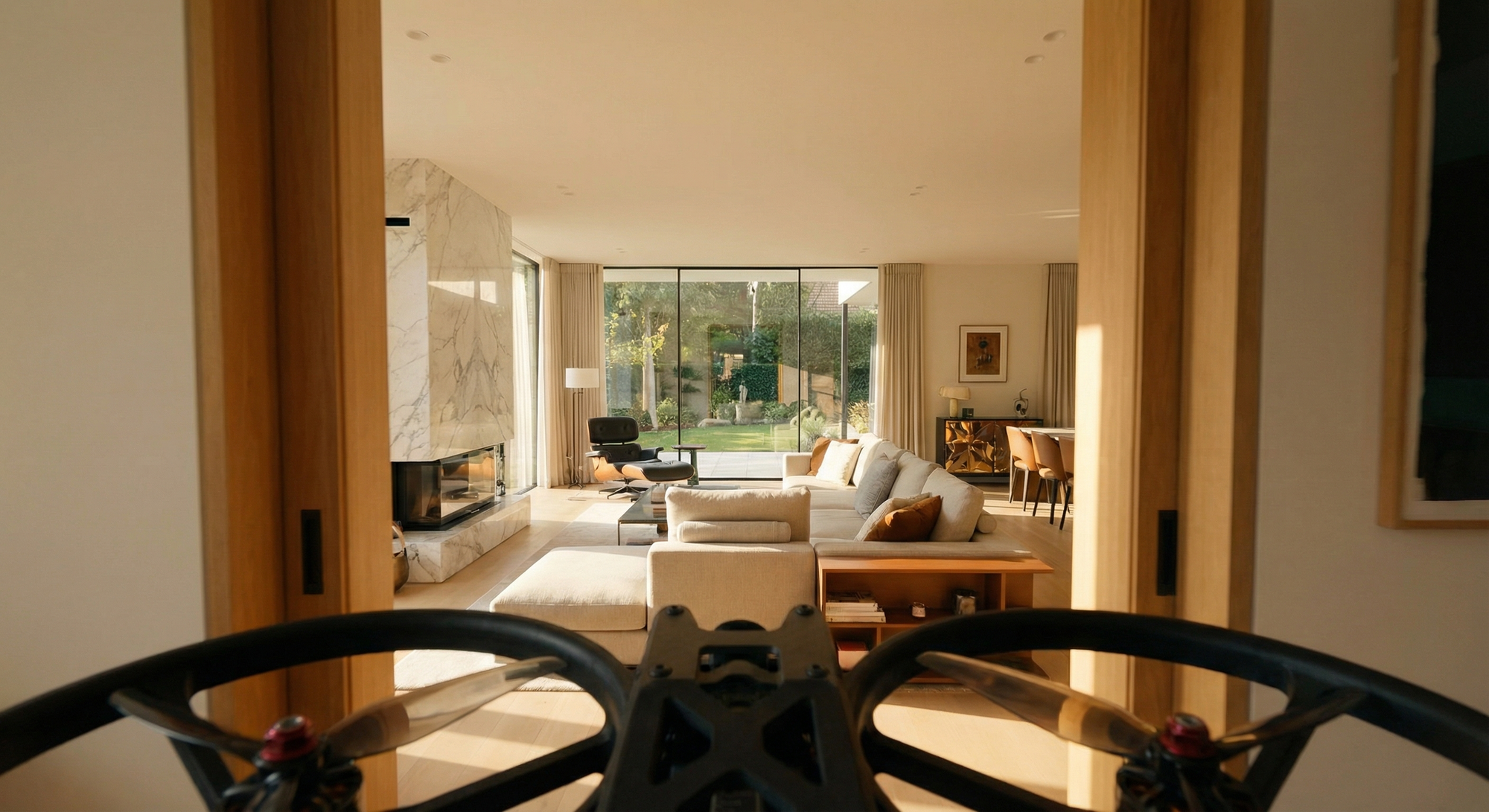
Why Buy Pre-Built
Instant gratification. Open the box, bind to your radio, fly. No soldering, no firmware configuration, no troubleshooting.
Tested configurations. Manufacturers tune these drones before shipping. The PID loops, rates, and filter settings are optimized for that specific setup.
Easier warranty. If something fails, you have recourse. Self-built means self-support.
Why Build Your Own
Complete control. Every component is your choice. Want a specific motor, a particular camera angle, a custom LED pattern? Build it yourself.
Repair knowledge. When you build it, you know how to fix it. This matters for a platform designed to fly close to obstacles.
Potential cost savings. If you already have a transmitter, goggles, and some components, building just the quad can be cheaper than a complete BNF.
Our Take
For your first cinewhoop, buy pre-built. Learn to fly, learn to repair, understand what you like and don't like. Your second cinewhoop can be a custom build tailored to your exact preferences.
FAQ & Tips
What Camera Angle Should I Use?
For cinewhoops, the consensus is 10-20 degrees of upward tilt on your FPV camera. This allows comfortable forward flight while keeping the horizon in frame.
Why this range?
- Lower angles (5-15°) feel more natural for slow, cinematic flying
- Higher angles (15-25°) allow faster forward flight while maintaining visibility
- GoPro/action cameras typically want slightly higher tilt (15-25°) due to their wider field of view
Pro tip: If you're just starting, begin around 12-15 degrees. Adjust after you've flown a few sessions and understand your personal preference.
Acro vs Angle Mode for Cinewhoops?
Both modes work for cinewhoops, but Acro mode generally produces smoother footage.
Angle mode:
- Self-leveling when you release the sticks
- Easier for beginners
- Can cause wobbles as the drone fights your inputs during smooth pans
- Works well for static hover shots
Acro mode:
- No self-leveling, maintains attitude until you command otherwise
- Smoother footage once you're comfortable
- Better for flowing, continuous shots
- Requires more practice to master
If you must use Angle mode: Reduce the angle strength to around 20 in Betaflight. This reduces the self-leveling force, making the drone less resistant to your smooth inputs and reducing wobble.
Our recommendation: Put time into a simulator and learn Acro. The learning curve is worth it for the footage quality improvement.
How Do I Reduce Jello in Footage?
Jello (rolling shutter vibration artifacts) ruins otherwise good shots. Common causes and fixes:
1. Unbalanced props - Check for damage, replace warped props
2. Loose camera mount - Ensure your camera is solidly mounted with no wiggle
3. Motor issues - Check for bent shafts or damaged bells
4. PID tuning - Increase D-term filtering if vibration persists at specific throttle ranges
5. ND filters - Can help by forcing slower shutter speeds, smoothing motion blur
The DJI O4 Pro includes built-in stabilization that helps, but proper mechanical setup prevents most jello at the source.
Can I Fly a Cinewhoop Outdoors?
Yes, but size matters. Larger cinewhoops (3-inch and 3.5-inch) handle wind well enough for outdoor work. Smaller sizes (1.6-inch, 2-inch) struggle with anything beyond light breeze.
If outdoor cinematic work is your primary use case, skip the micro sizes and go 3-inch minimum. The Cinelog30 V3 and Cinelog35 V3 excel outdoors.
Do I Really Need GPS?
For pure indoor work, no. For any outdoor flying where you might lose orientation or video signal, GPS with return-to-home provides valuable insurance.
The DJI Avata 2 includes GPS standard. Many BNF cinewhoops offer GPS as an option (GEPRC Cinebot25 V2, DarwinFPV CineApe35). If your outdoor flying takes you beyond visual range or involves complex environments, GPS is worth the weight penalty.
Tips From the Community
We surveyed experienced FPV pilots about their cinewhoop advice. Here's what they emphasized:
Camera Choice Matters
"Not everyone needs an O4 Pro. If you're not chasing Oscar nominations, a Runcam Thumb or Hawkeye gives you solid 4K for a fraction of the cost and weight." - Multiple pilots echoed this sentiment.
The O4 Pro is fantastic, but if your footage ends up compressed on social media, you might not need it. A lighter camera means better flight performance.
Match Your Drone to Your Use Case
Real estate work favors different builds than event coverage or narrative filmmaking. Think about your typical shooting environment before committing to a size.
"I use my 3-inch for everything indoor and my 3.5-inch for outdoor work. Having two sizes covers 95% of my shoots."
Don't Skip the Simulator
Even if you buy a DJI Avata with its safety features, time in a simulator accelerates your learning dramatically. Liftoff, Uncrashed, and similar programs teach muscle memory without repair bills.
Prop Guards Are Not Force Fields
They protect people and objects from props. They don't protect your drone from hard impacts. Fly as if the guards aren't there, and be pleasantly surprised when they save you.
Budget for Extras
Your first cinewhoop purchase should include:
- Extra props (you will break them)
- At least 3 batteries (one in the air, one charging, one ready)
- A good charger
- A carrying case
Recommendations by Use Case
Real Estate Photography
Primary: GEPRC Cinebot25 V2 or GEPRC Cinelog30 V3
Why: GPS helps in complex indoor spaces, quiet operation, smooth footage, professional appearance
Micro alternative: BetaFPV Pavo Pico II for impossibly tight spaces (closets, small bathrooms)
Event Coverage
Primary: DJI Avata 2
Why: Complete system, GPS failsafe, motion controller for quick shots, professional look
Traditional FPV alternative: Speedybee Bee25 with O4 Lite for sub-250g compliance
Narrative Filmmaking
Primary: GEPRC Cinelog30 V3 with O4 Pro
Why: Best image quality, smooth flight characteristics, reliable performance
Larger alternative: GEPRC Cinelog35 V3 for maximum stability in outdoor narrative work
Indoor Commercial Work
Primary: BetaFPV Pavo20 Pro II or Speedybee Bee25
Why: Compact size fits through tight gaps, excellent handling, proven performance
Budget alternative: iFlight Defender 20
Budget Starter
Primary: iFlight Defender 16 or 20
Why: Good performance at accessible price, sub-250g options available
More capable alternative: Speedybee Bee25 (best value 2.5-inch)
Absolute Beginner (No FPV Experience)
Primary: BetaFPV Aquila20HD or DJI Avata 2
Why: Complete kit with radio included, no building/config required, learn real FPV skills (Aquila) or easiest path to air (Avata)
Tightest Spaces / Travel
Primary: BetaFPV Pavo Pico II with O4 Lite
Why: Sub-100g with battery, proper 4K recording, tiny footprint, fits anywhere
Alternative: Caddx Protons for all-in-one simplicity
Maximum Stability / Outdoor Work
Primary: GEPRC Cinelog35 V3 with O4 Pro
Why: 3.5-inch props handle wind best, smoothest footage in challenging conditions
Budget alternative: DarwinFPV CineApe35
HDZero Pilots
Primary: Foxeer Foxwhoop 25
Why: Purpose-built for HDZero ecosystem, avoids DIY integration
Walksnail Pilots
Primary: CaddxFPV Gofilm 20
Why: Native Walksnail integration, Moonlight camera quality, optimized setup
Major Cinewhoop Brands
The cinewhoop market has several established players. Here's a quick overview of what each brand offers:
GEPRC
Strengths: Premium build quality, excellent tuning out of the box, wide size range
Key models: Cinelog30 V3, Cinelog35 V3, Cinebot25 V2
Best for: Professional work, pilots who want refinement
GEPRC consistently produces some of the best-tuned cinewhoops available. Their Cinelog series is widely regarded as the benchmark for smooth cinematic flight.
BetaFPV
Strengths: Innovation, micro/whoop expertise, complete beginner kits
Key models: Pavo Pico II, Pavo20 Pro II, Pavo25 V2, Aquila20HD
Best for: Micro builds, beginners wanting complete packages
BetaFPV pioneered many micro cinewhoop designs and continues to push the boundaries of how small HD-capable drones can get.
DJI
Strengths: Complete systems, ease of use, professional appearance
Key model: Avata 2
Best for: Absolute beginners, commercial operators who need turnkey solutions
The Avata 2 isn't a traditional FPV platform, but for many users, it's exactly what they need: HD recording, GPS, and polished software in one package.
iFlight
Strengths: Value, variety, proven designs
Key models: Defender 16, Defender 20, Nazgul Cinewhoop series
Best for: Budget-conscious buyers, pilots who want options
iFlight offers solid performance at competitive prices. Not as refined as GEPRC, but excellent value.
Speedybee
Strengths: Innovative modular designs, app integration, value
Key models: Bee25, Bee35
Best for: Pilots who want features without premium pricing
Speedybee's modular approach to camera mounting and their focus on sub-250g designs has earned them a strong following.
DarwinFPV
Strengths: Budget-friendly, feature-complete designs
Key model: CineApe35
Best for: Maximum size at minimum cost
DarwinFPV undercuts premium brands while still delivering capable platforms. The CineApe35 includes GPS at a price point where others don't.
CaddxFPV
Strengths: Walksnail integration, HD systems expertise
Key models: Gofilm 20, Protons
Best for: Walksnail ecosystem pilots, all-in-one micro solutions
As the company behind Walksnail Avatar, CaddxFPV naturally offers Walksnail-native cinewhoops.
Foxeer
Strengths: HDZero ecosystem, camera expertise
Key model: Foxwhoop 25
Best for: HDZero pilots who want purpose-built cinewhoops
Foxeer produces HDZero-ready cinewhoops for pilots committed to that ecosystem.
Conclusion
Cinewhoops fill a specific niche that no other drone platform can match. For close-proximity flying, indoor work, and smooth cinematic footage, they are the right tool for the job.
In 2026, the options have never been better. Whether you want a complete DJI system that works out of the box or a custom build tailored to your exact specifications, there's a cinewhoop for you.
Our top recommendation: Start with the GEPRC Cinelog30 V3 if you're serious about cinematic work, or the DJI Avata 2 if you want the simplest path to the sky.
Both are available from Unmanned Tech, along with the parts and support you need to keep flying.
Have questions about cinewhoops? Our team flies what we sell. Reach out and we'll help you find the right setup for your needs.
Related Products
Ready-to-Fly Cinewhoops:
- GEPRC Cinelog30 V3 O4
- GEPRC Cinelog35 V3 O4 Pro
- GEPRC Cinebot25 V2
- iFlight Defender 16
- iFlight Defender 20
- CaddxFPV Gofilm 20
- BetaFPV Aquila20HD
Frames:
Motors:
Propellers:
Video Systems: