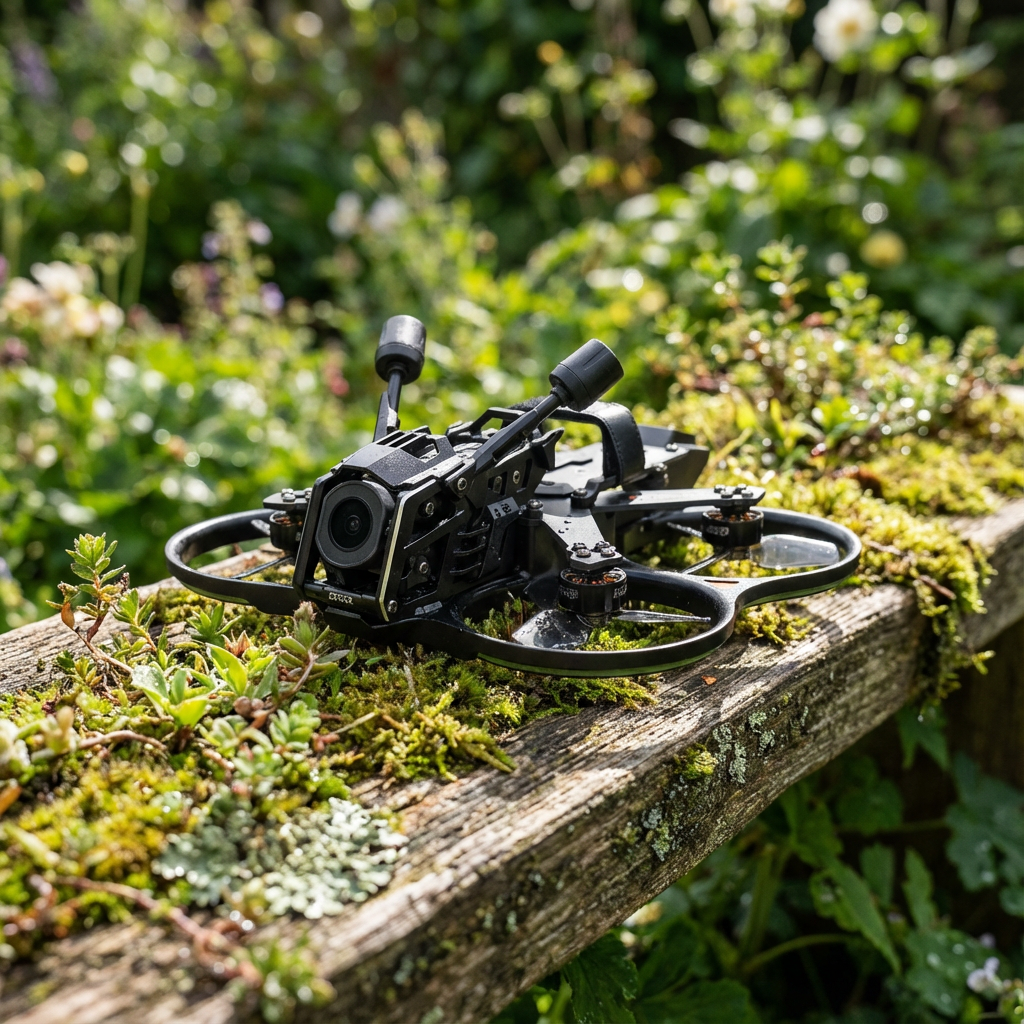
Small prop-protected cine drone that folds a DJI O4 Pro feed, GPS rescue and a modular camera cage into a single package. TL:DR — solid build, sticky battery pad and useful damping, but wind matters.
Quick specs at a glance
The Cinebot25 V2 uses a Taker F722 35A 32-bit all-in-one flight controller, Speedix X2 1404 4600KV motors and HQ D63 tri-blade props. The supplied video stack in this unit is DJI O4 Pro, but other configurations exist.
Modular cage and serviceability
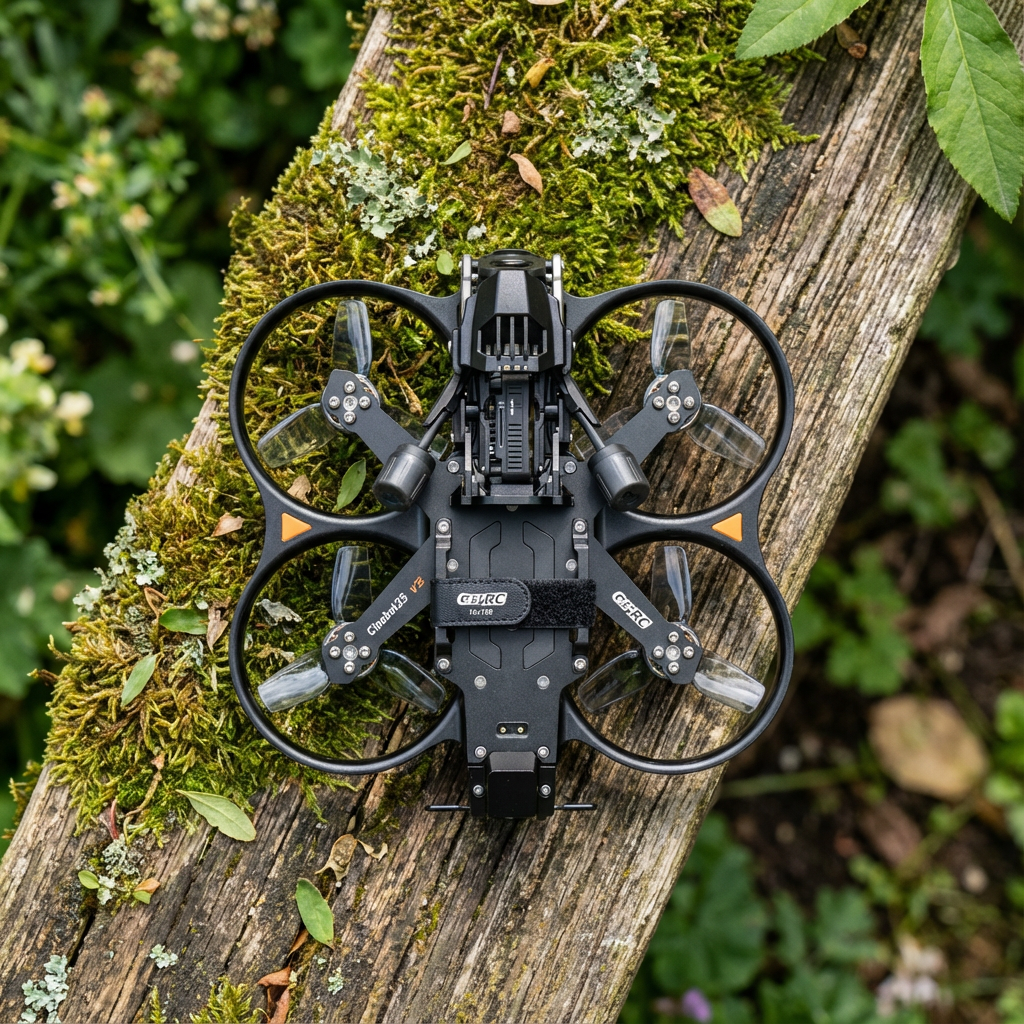
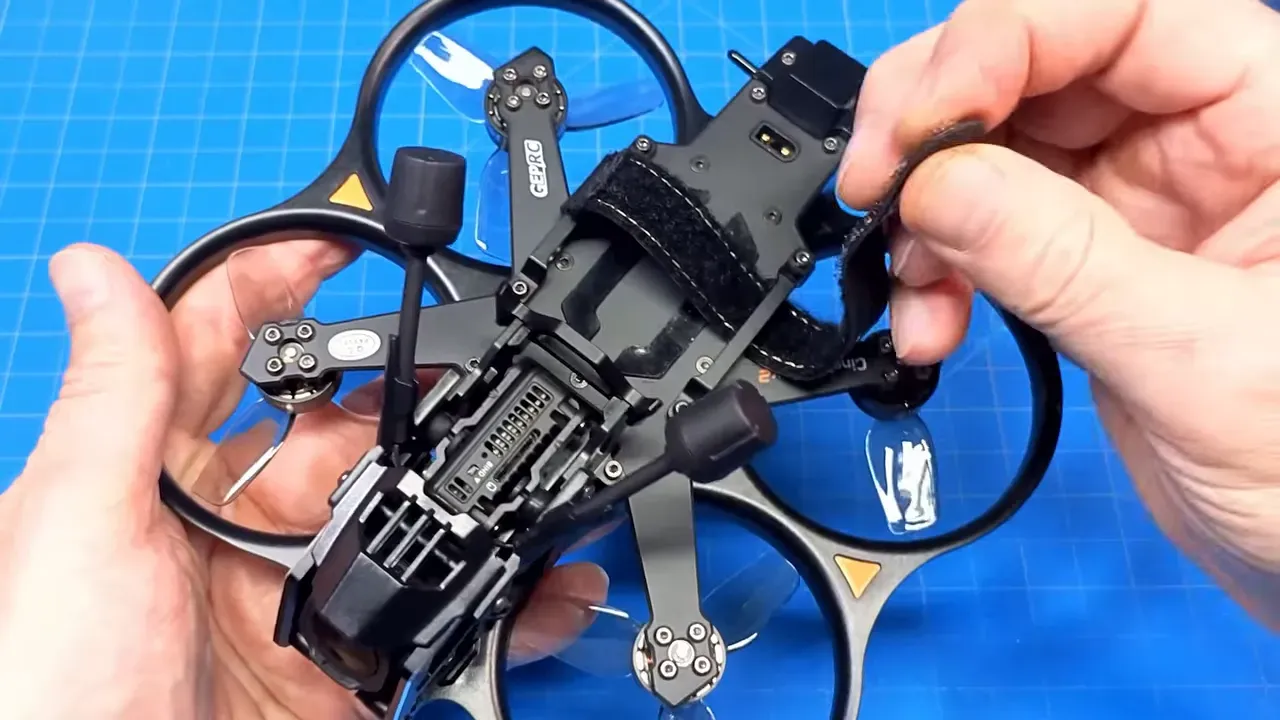
The camera and VTX sit on rubber mounts inside a removable metal cage. Two screws at the front and two at the rear free the whole module for swaps or upgrades.
GPS, receiver and antenna layout
The GPS is a GEPRC M10 Nano inside a small plastic shroud. Receiver is ExpressLRS with a T-style antenna. Satellite lock comes fast on most runs.
Battery mounting and pad behaviour
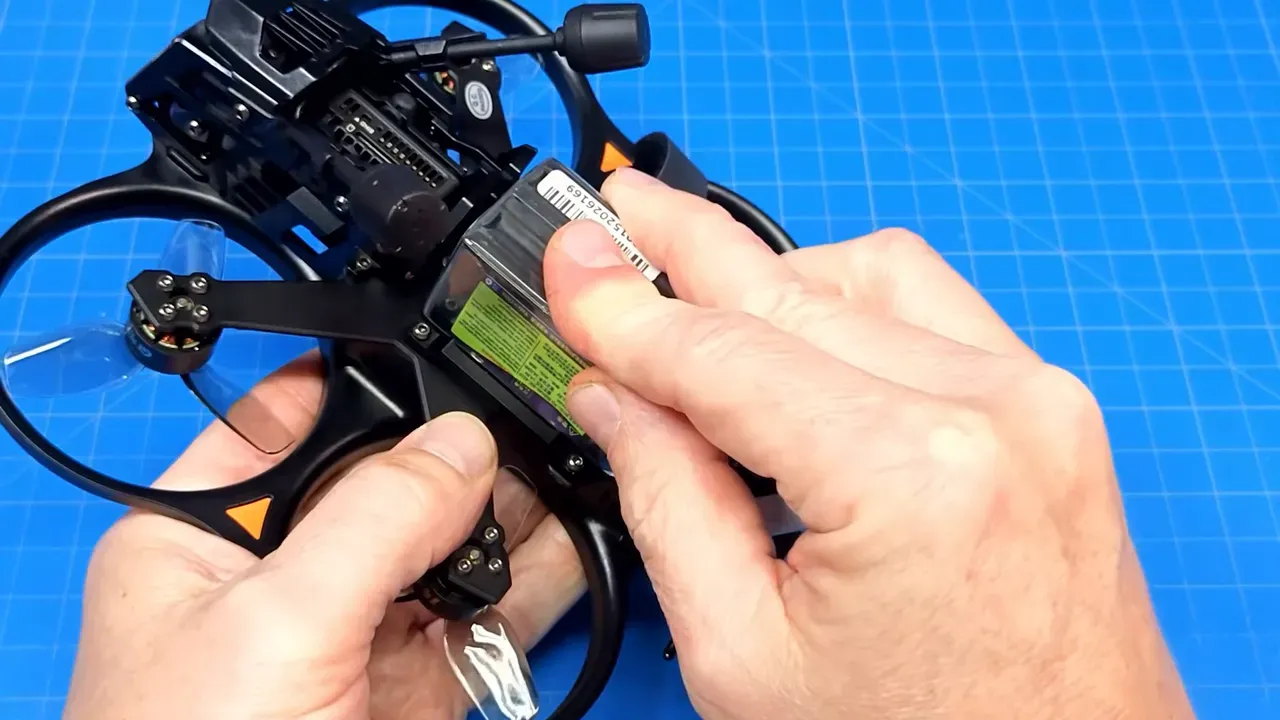
XT30 power lead mounts to the top plate and Geprc supplies a stickier battery mat than older models. Some packs require changing the mounting posts to run lengthwise.
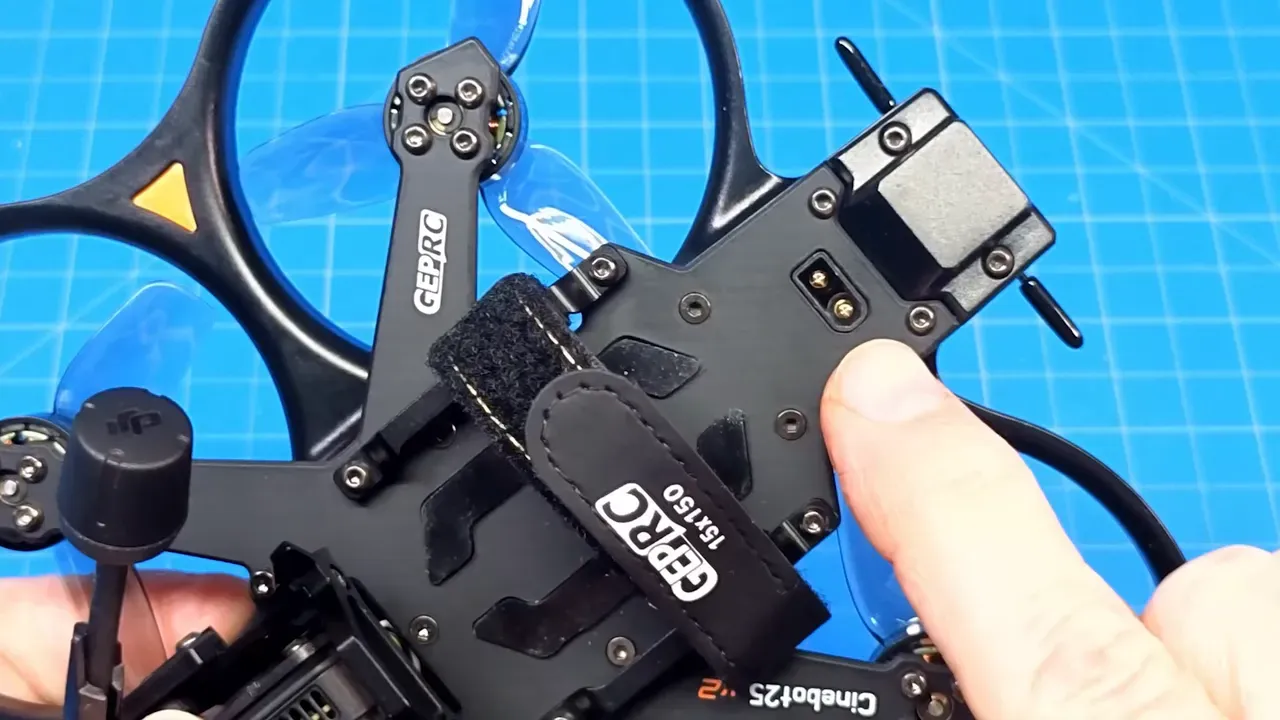
Included extras
Box contents include spare props, extra antennas, a second top plate, rubber dampers, screws, a colour quick-start guide and a sticker sheet. Little extras are welcome.
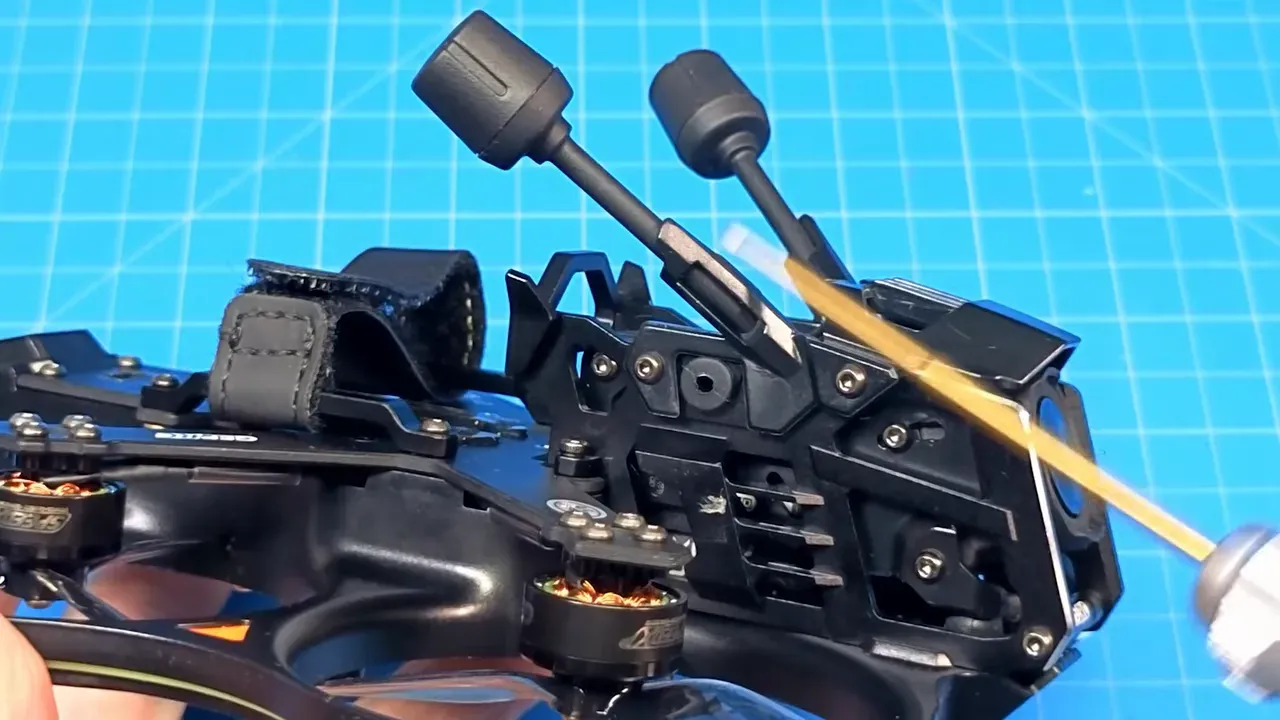
GPS rescue and satellite lock
GPS rescue engages after roughly seven satellites. The Cinebot25 V2 stores satellites between batteries, so quick turnarounds pick up satellites in 30 seconds or so.
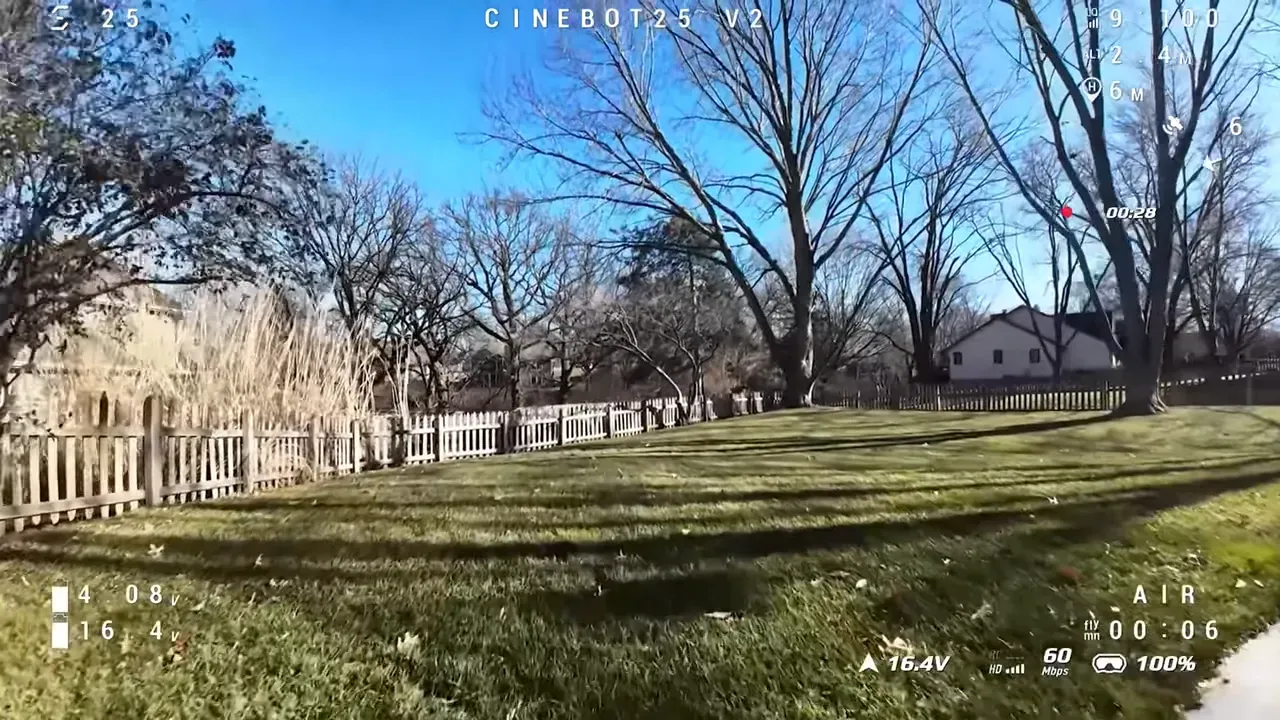
Flight tests — wind exposes limits
Prop protection and vertical plates increase wind surface area. In 18–29 mph gusts the raw goggle DVR showed noticeable drift and buffeting. Expect reduced performance compared to open-frame quads.
RockSteady and stabilized video
With the DJI rock-steady mode enabled the system crops in to stabilise footage. That helps descents and windy passes, but does not cancel large crosswinds.

Flight envelope and freestyle
It is primarily a cine platform, but the Cinebot25 V2 handles light freestyle. Punch-outs and rapid nose-down transitions occasionally reveal minor yaw wobble, though this unit performed cleaner than many predecessors.
Battery life numbers
Reported flight times varied by pack. On a 960mAh branded pack the long cruise ran eight minutes 45 seconds. An 850mAh BetaFPV pack gave around eight minutes, while 650mAh packs averaged five minutes under heavier flying.
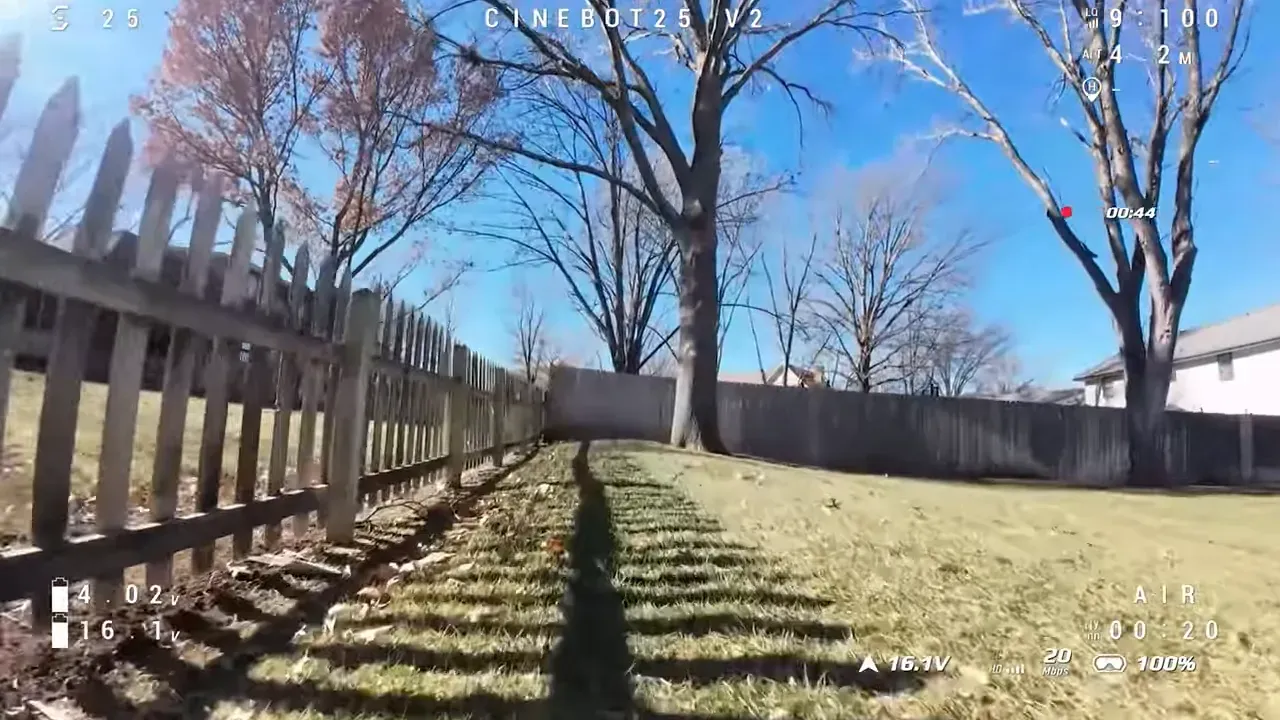
Prop protection and crash resilience
The guard is mostly metal and resists straight-on strikes. Side squeezes can flex the cage enough to nick props, but repairs look cheap — spare props ship in the box.
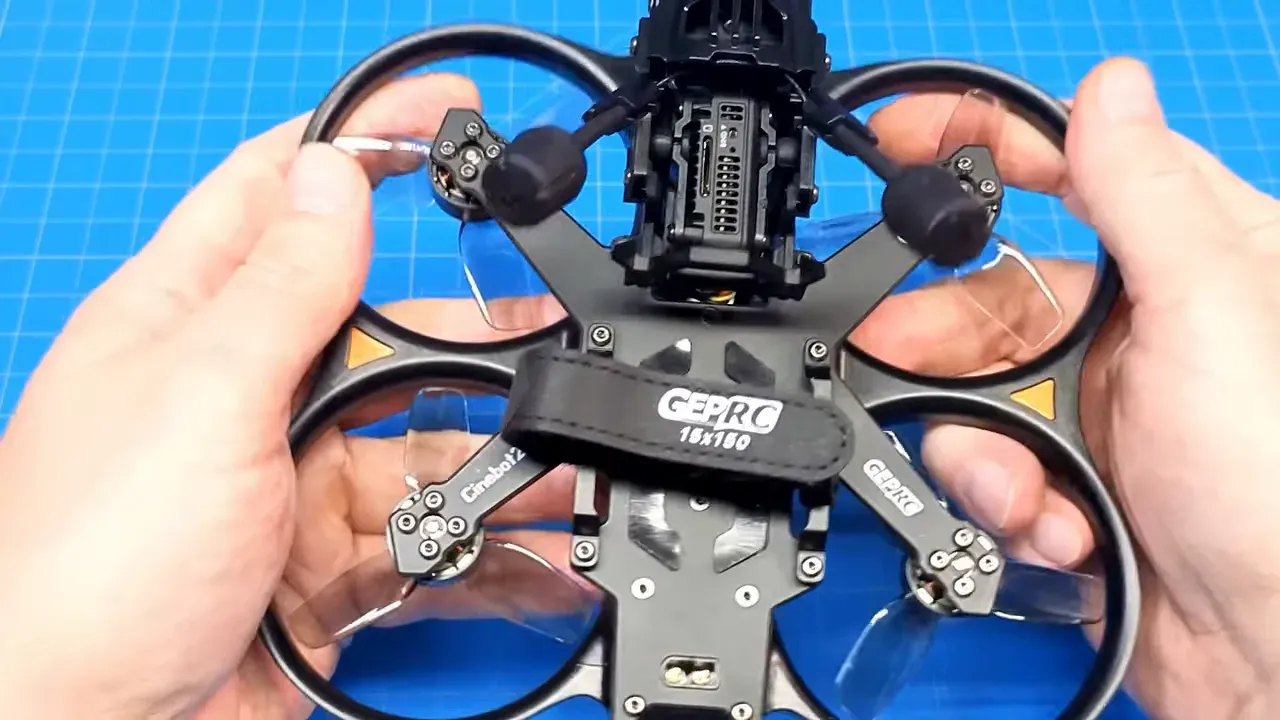
Wiring and protective sheaths
Geprc uses sticky protective sheaths for motor wires. Cover those with electrical tape or acetate motor wire tape to stop the sheath migrating into the prop arc over time.
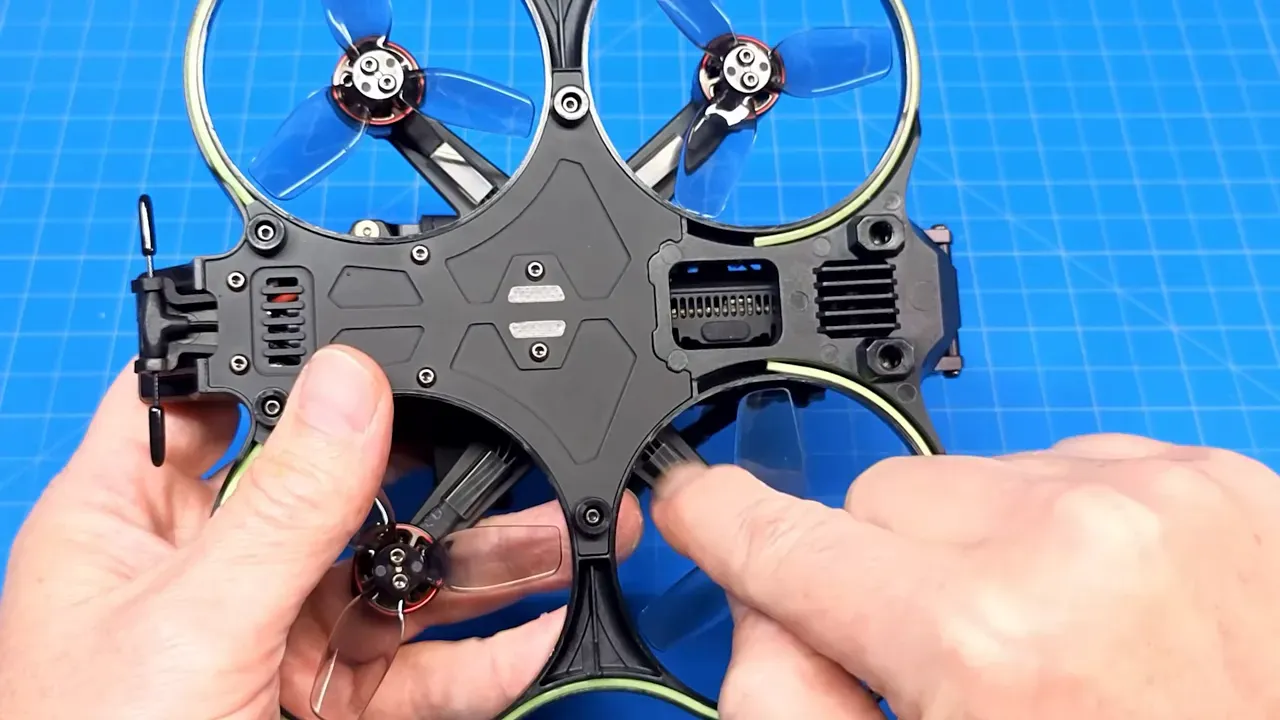
Damping, hood and camera tilt
The camera sits on independent rubber mounts inside a metal housing. The protective hood adjusts with side screws and allows a little more angle behind the screw slots.
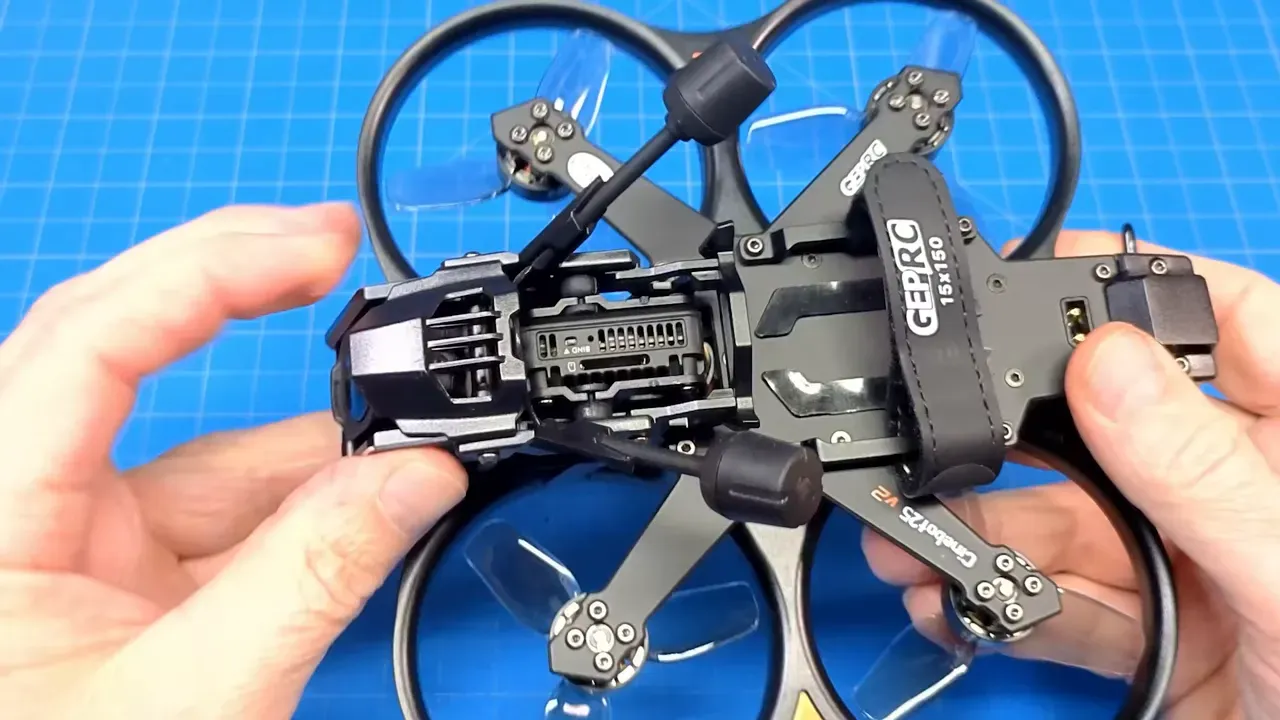
Top-plate UX and access
Top-plate access gives you the USB port for the flight controller, a bind button, SD slot and VTX controls. Screws are hex and easy to service if a deeper teardown is required.
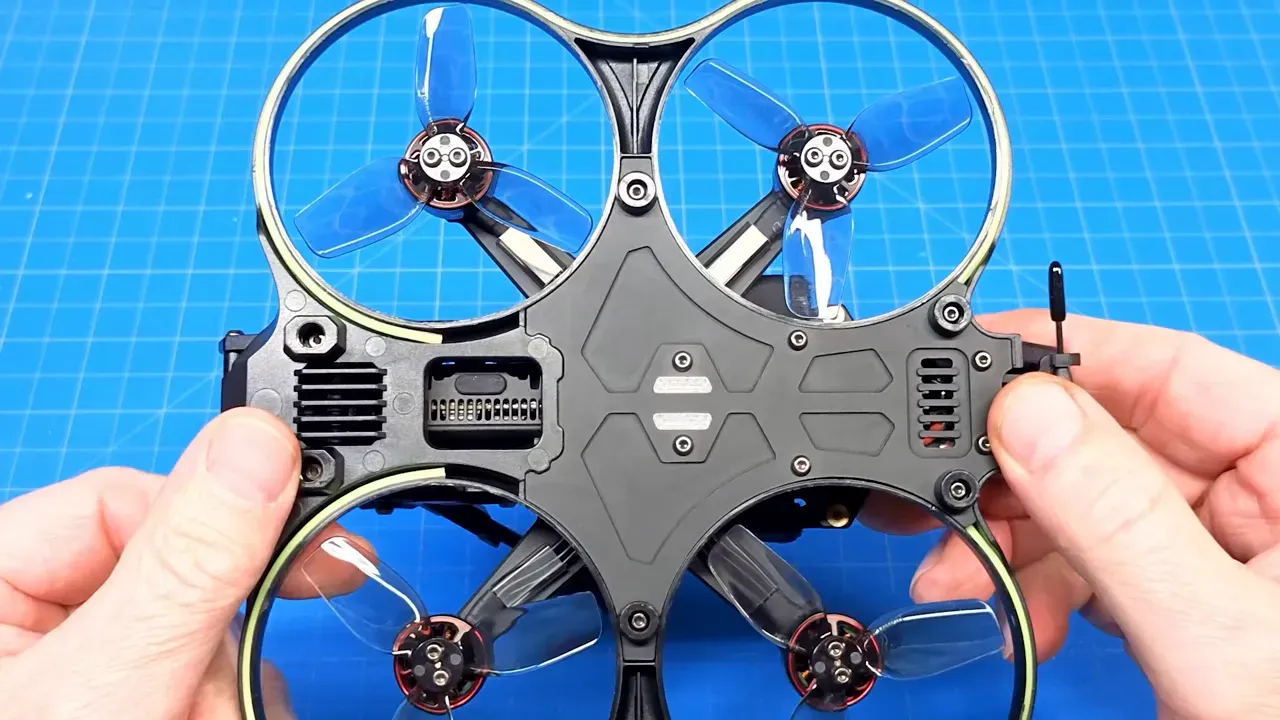
Price expectation and availability
At time of testing, Geprc had not posted an official product page. Expect pricing in the mid-to-upper $400s. The cage, detachable module and DJI stack suggest Geprc aims this at serious hobbyists and low-budget shooters.
Final assessment
Construction feels solid and modularity works. Sticky battery pad, rubber damping and quick GPS lock are practical wins. Strong winds remain the Cinebot25 V2’s main constraint.
FAQ
Does the Cinebot25 V2 include GPS rescue?
Yes. It needs roughly seven satellites for GPS rescue and pulls satellites quickly if used in rapid battery swaps.
What video system does it use?
The tested unit used the DJI R4 Pro/O4 pipeline with RockSteady stabilization. Other configurations may appear on retailer listings.
How long do flights last?
Expect around eight minutes on 850–960mAh packs during cinematic flight. Aggressive flying on 650mAh packs averages five minutes.
Is the prop protection robust?
The metal cage resists front impacts well. Side pressure can deform it enough to touch props, but replacements are inexpensive.
Takeaway
Small, well-made cine platform with sensible modularity, fast GPS lock and useful damping. Strong winds reduce its cinematic strengths.
- Modular camera cage: removes with four screws for swaps or repairs.
- Fast GPS: stores satellites for quick re-locks between batteries.
- Sticky pad: improved battery adhesion reduces ejection risk in crashes.
- Wind sensitivity: prop guards add drag—pick calm days for best footage.
This article was based from the video Full Featured Cinebot25 V2 // GPS, Beeper, Led Lights, Prop Protection & DJI O4 Pro