The FCC has quietly added foreign-made unmanned aircraft and dozens of drone components to its "covered list." That move effectively blocks their import and sale in the US unless specifically cleared.
TL:DR
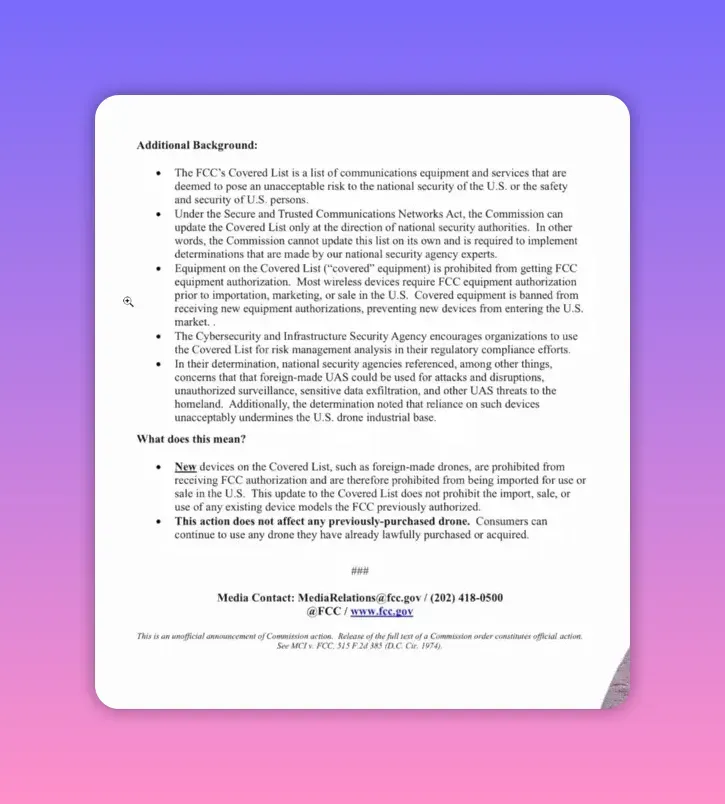
TL:DR — FCC document DA25-1086 puts foreign-built UAS and critical components on the covered list. Existing, previously FCC-certified models remain usable for now. New imports and sales of most non-US parts look blocked. Expect supply shocks and legal churn.
What the FCC actually did
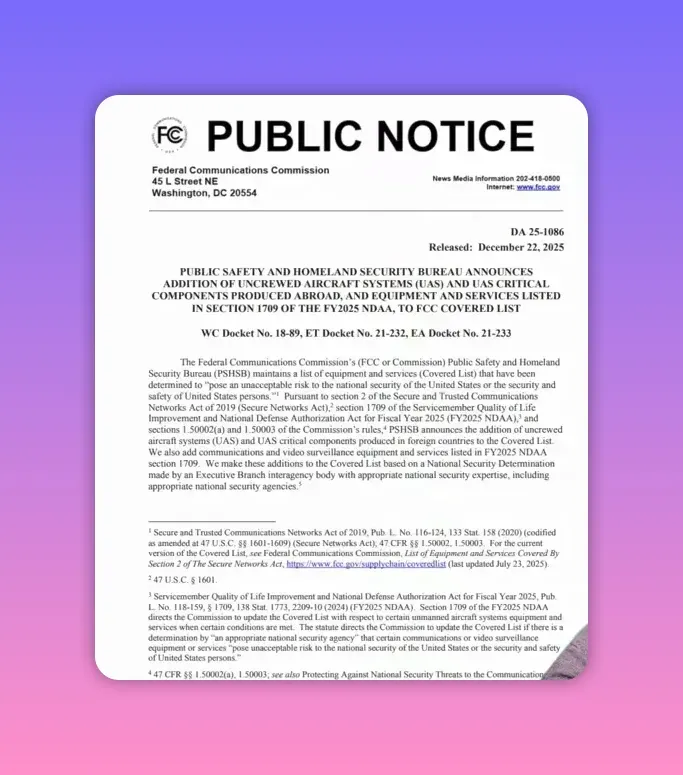
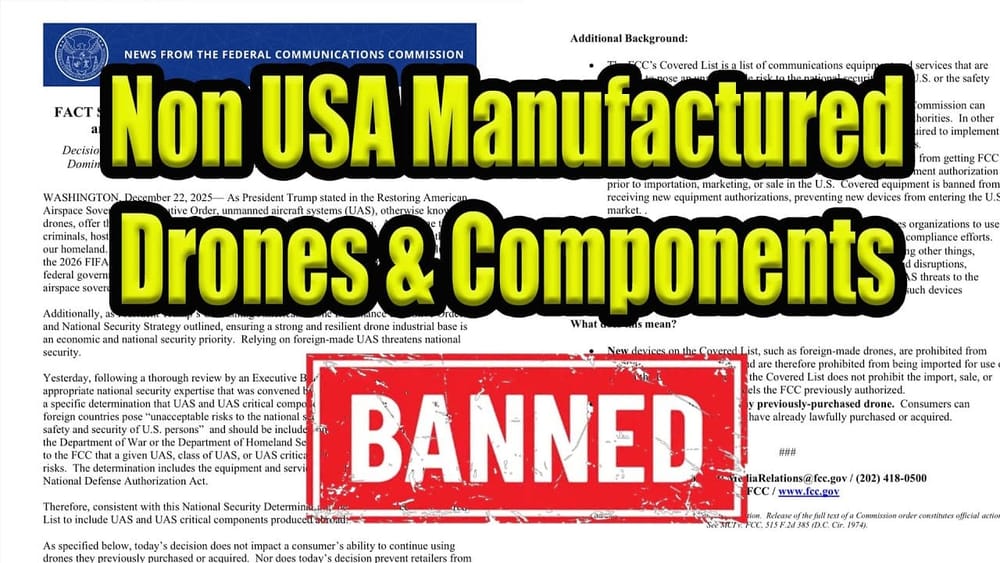
On 22 December 2025 the FCC published DA25-1086. It updates the executive-branch referral to add unmanned aircraft systems and many components made outside the US to the covered list. The language ties the move to national security and weaponization risks.
Which parts are on the covered list
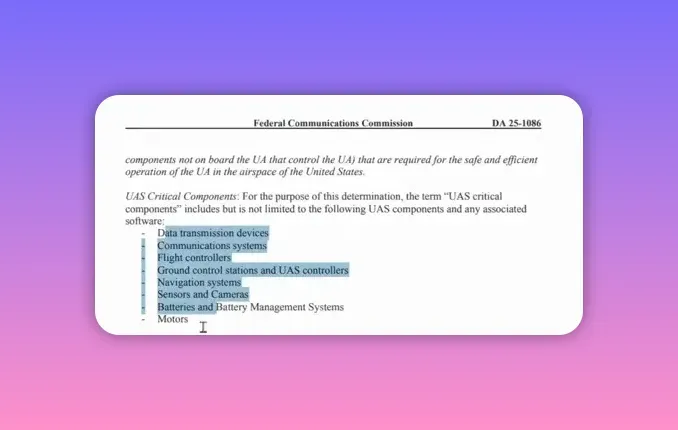
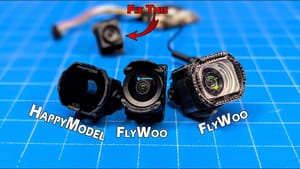
The list names data-transmission devices, comms systems, flight controllers, ground control stations, navigation systems, sensors and cameras, batteries and BMS, and motors. In short: radios, smart controllers, digital video links and even motors can be treated as covered.
What this means for gear you already own
The FCC says the update doesn't retroactively ban previously authorised models. You can still legally fly and use drones you lawfully bought. But authorised devices could face certification withdrawal, which would stop further sales even if owners can keep flying.
Why components matter more than whole drones
A motor or flight controller rarely had FCC certification before. That absence becomes a lever. Regulators can treat any non‑US-made motor or autopilot as covered, then block its import and sale. That hits hobbyist builds as hard as commercial rigs.
DJI, NDAA and the digital FPV angle
This is distinct from the imminent, more specific DJI action, but it overlaps. NDAA‑compliant, US-made systems should be fine. The only currently compliant digital FPV option named is the NDAA HD0 system. Many popular digital links and goggles now sit in legal limbo.
Retail and supply-chain consequences
Expect US shelves to dry up fast. Online imports from Banggood, AliExpress and others could be blocked at ports. Shops will pause orders. That will squeeze replacement parts and force pilots to hunt legacy stock or US-made substitutes.
The bigger picture: control, not just safety
This move is part of a broader trend: governments limiting civilian access to advanced tech. That includes AI-grade GPUs and now drones. The practical effect: fewer consumer options, more leasing or managed services, and concentrated control of capabilities.
What you should do right now
Read DA25-1086 and the SUAS News summary. Don't panic-buy parts; retail sellers may cancel orders. Audit your fleet: note FCC-certified models and registration details. If you rely on non‑US components for work, plan alternatives and document operational needs now.
FAQ
Are previously purchased drones still legal to use in the US?
Yes. The FCC update does not criminalise ownership or use of devices lawfully bought before the change. It mainly blocks future authorisations and imports.
Does this ban include motors and passive parts?
Yes. The covered list explicitly mentions motors. Because many passive components never had FCC approvals, regulators can treat them as newly covered when foreign-made.
Will DJI gear still work or be sold?
Existing, previously FCC-certified DJI models remain usable. Sales of new DJI hardware could be blocked. If the FCC withdraws prior certifications, even older stock could be pulled from sale.
Takeaway
Short, sharp guidance for busy pilots:
- FpV drone owners: check whether your system is FCC‑certified and where components were made.
- Don't assume online orders will arrive — hold off on large overseas buys until policy clarity emerges.
- Document mission-critical hardware and seek US-made or NDAA-compliant options where practical.
- Follow FCC DA25-1086 and SUAS News for legal updates; this will evolve fast.
This article was based from the video Non US Manufactured Drones & Components Are FCC Banned - The Endgame!