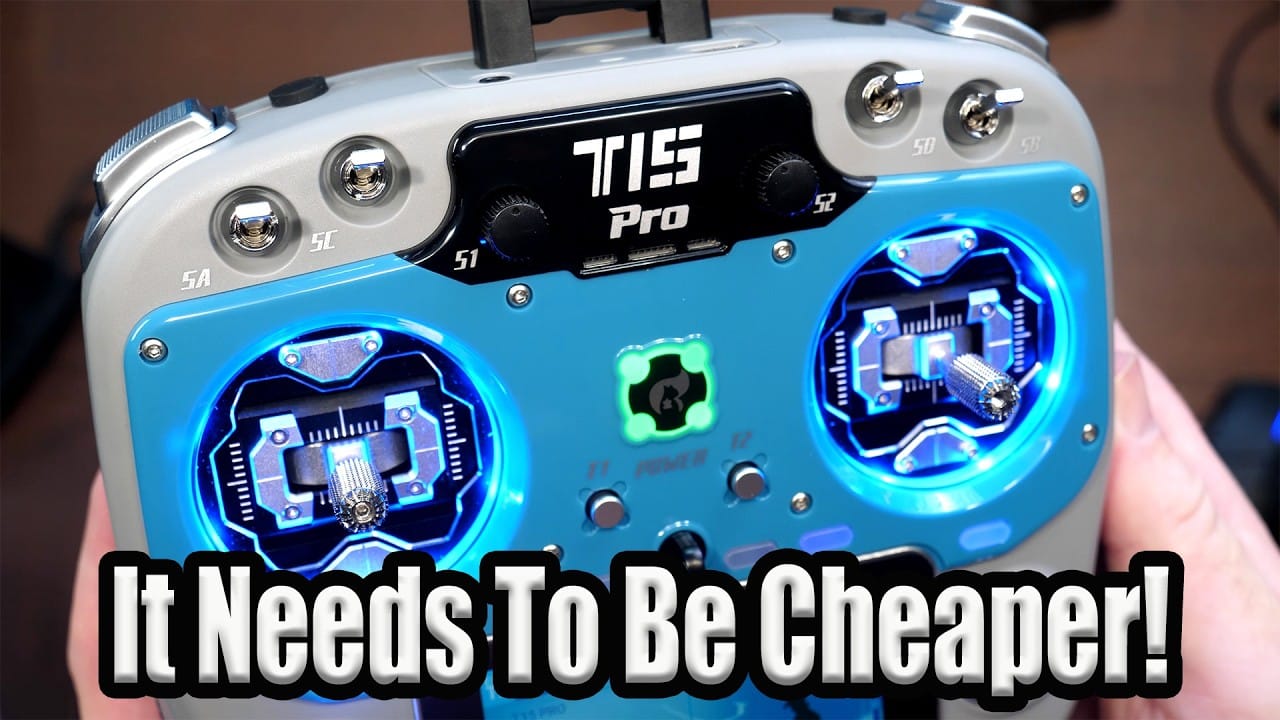
Jumper’s T15 Pro looks like a spec sheet you’d actually want in an FpV drone stack—then it hits you with Express LRS generation mismatch and a spicy price. This report walks through the hardware, the DFU firmware switch, and the internals that explain both.
TL:DR
The Jumper T15 Pro FpV drone transmitter nails modern UI expectations: H7-class CPU, IPS colour touchscreen, programmable RGB controls, and CNC gimbals. The RF side is single-band Express LRS on the older SX1281-class chipset, meaning no dual-band flexibility. It works well, but the value story is awkward versus dual-band competitors.
What you’re actually buying (on the outside)
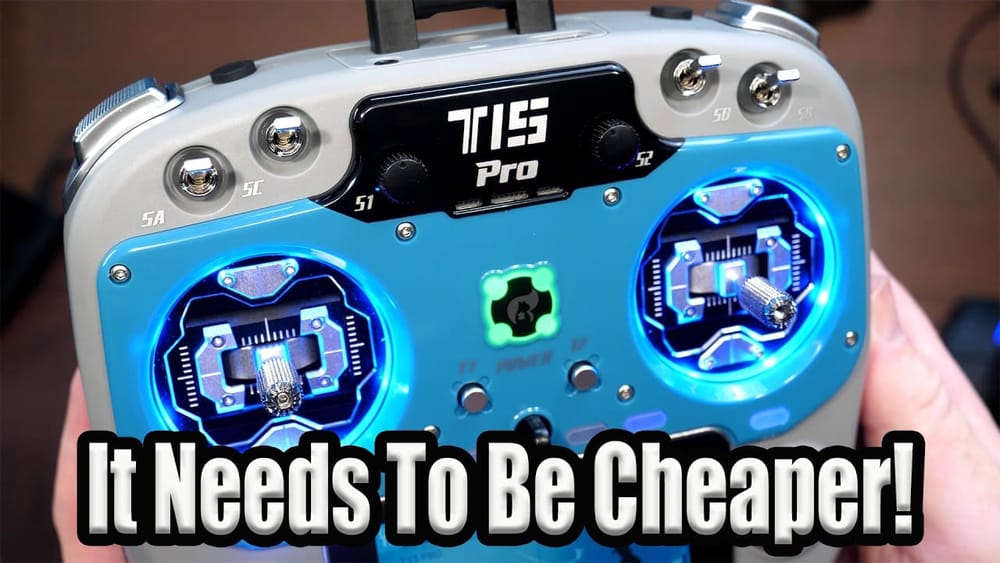
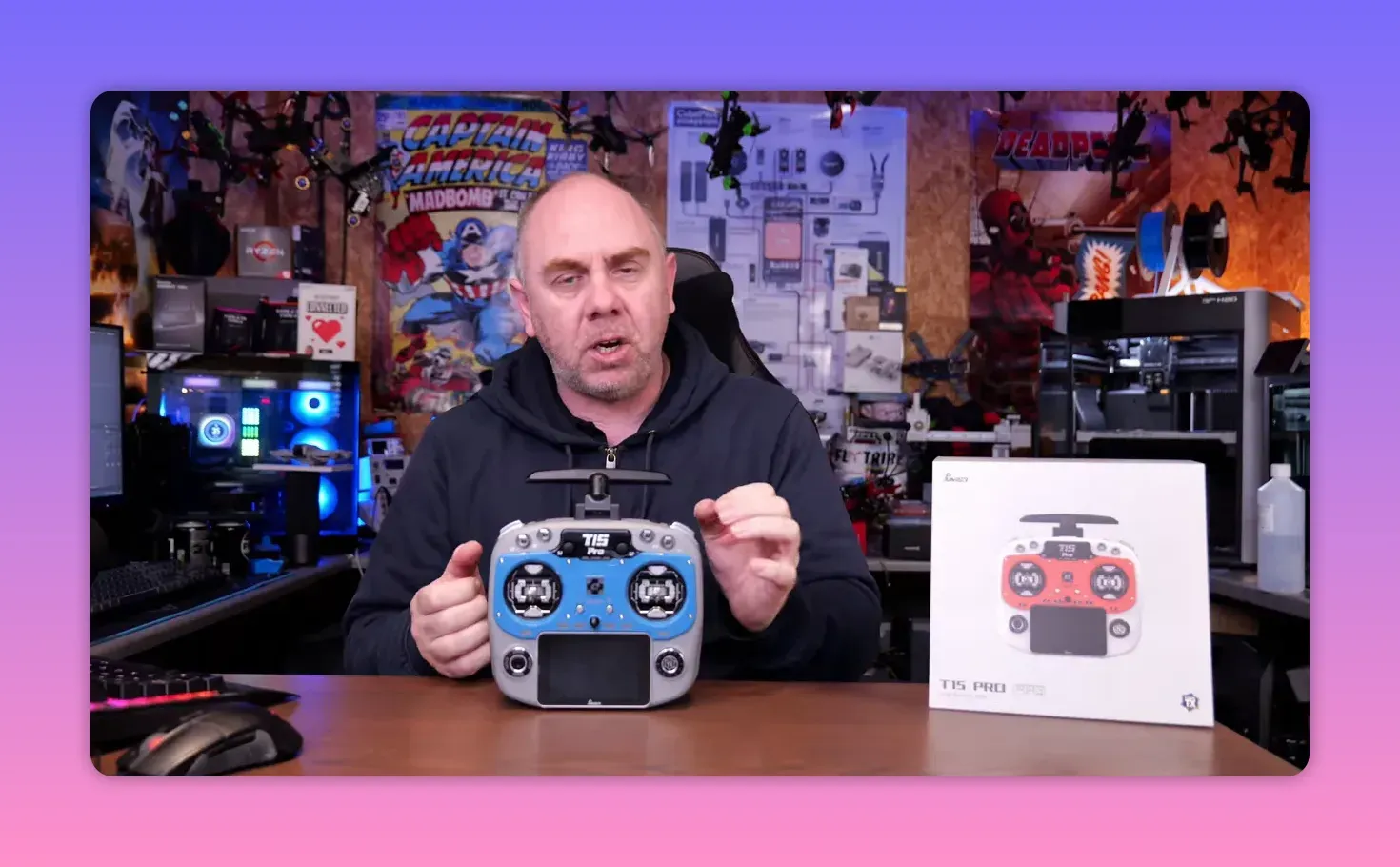
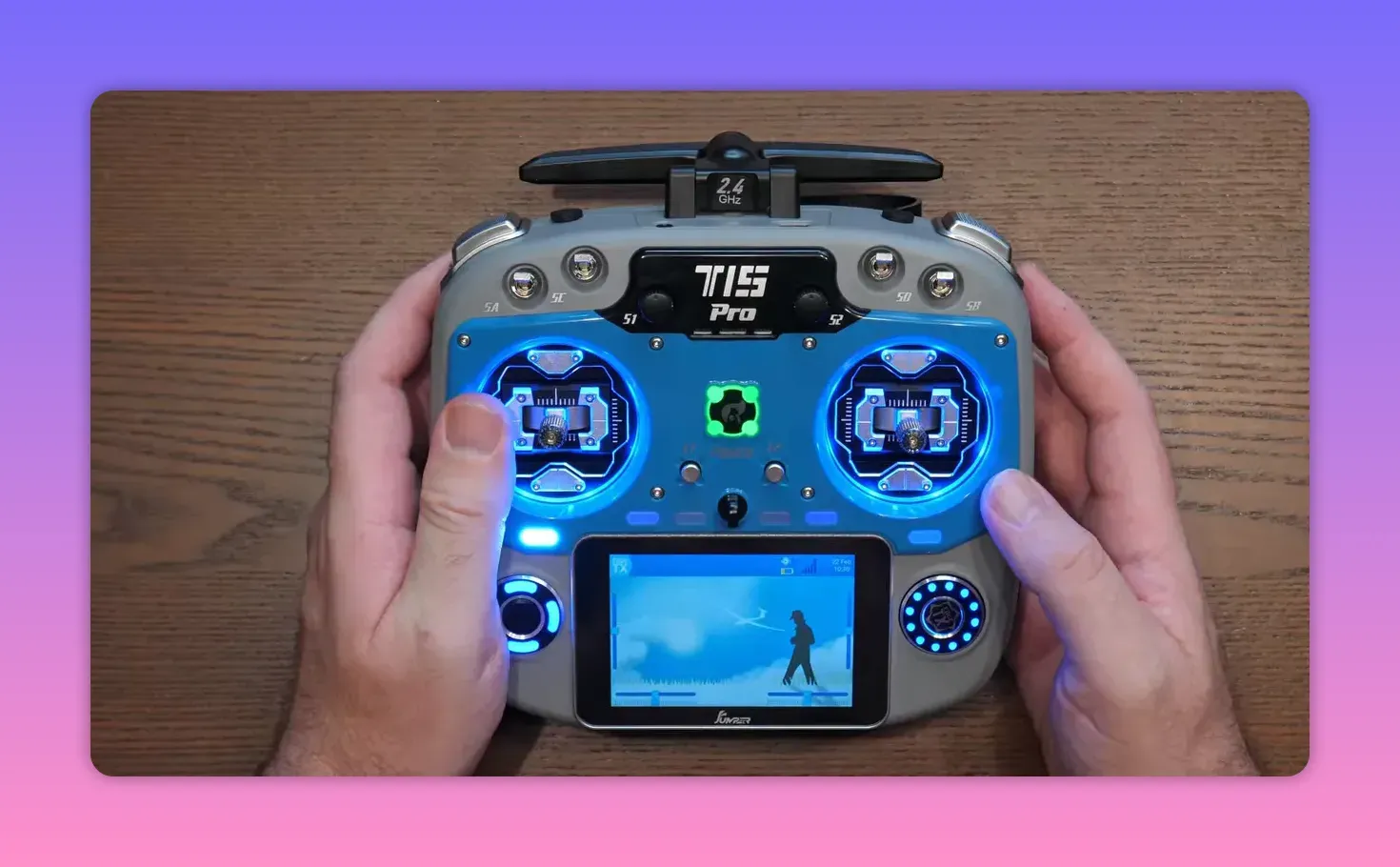
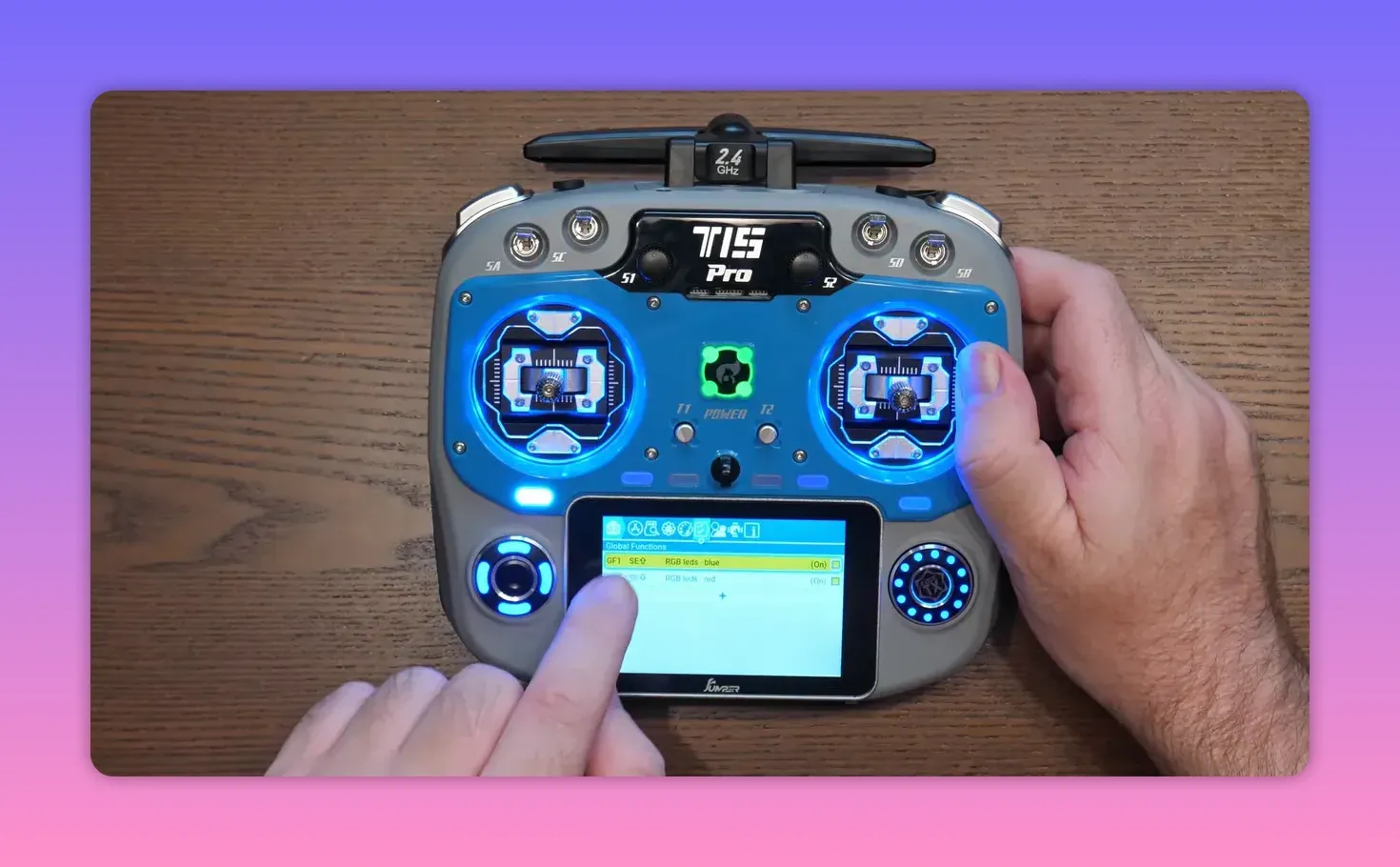
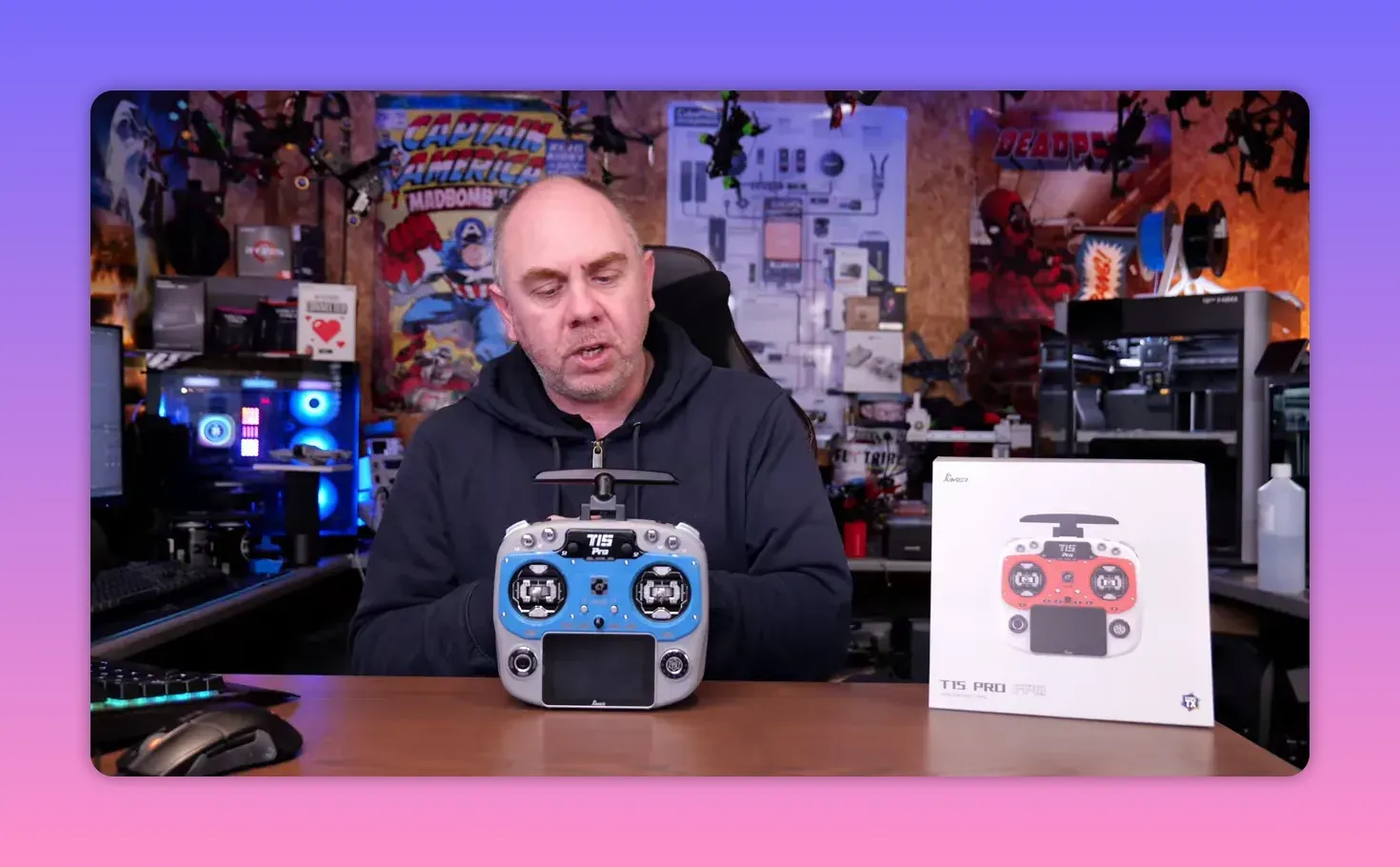
The T15 Pro uses the familiar T15 layout with a central power button, four-way trims, four external buttons, and an Edge TX rotary wheel. It ships in a semi-rigid cloth case, includes a gimbal protector, a USB-C cable, a screen protector, and accessory bits like an X-TRAP keyring. Weight is the first “yep, that’s metal” signal—793g with 2x21700 cells installed.
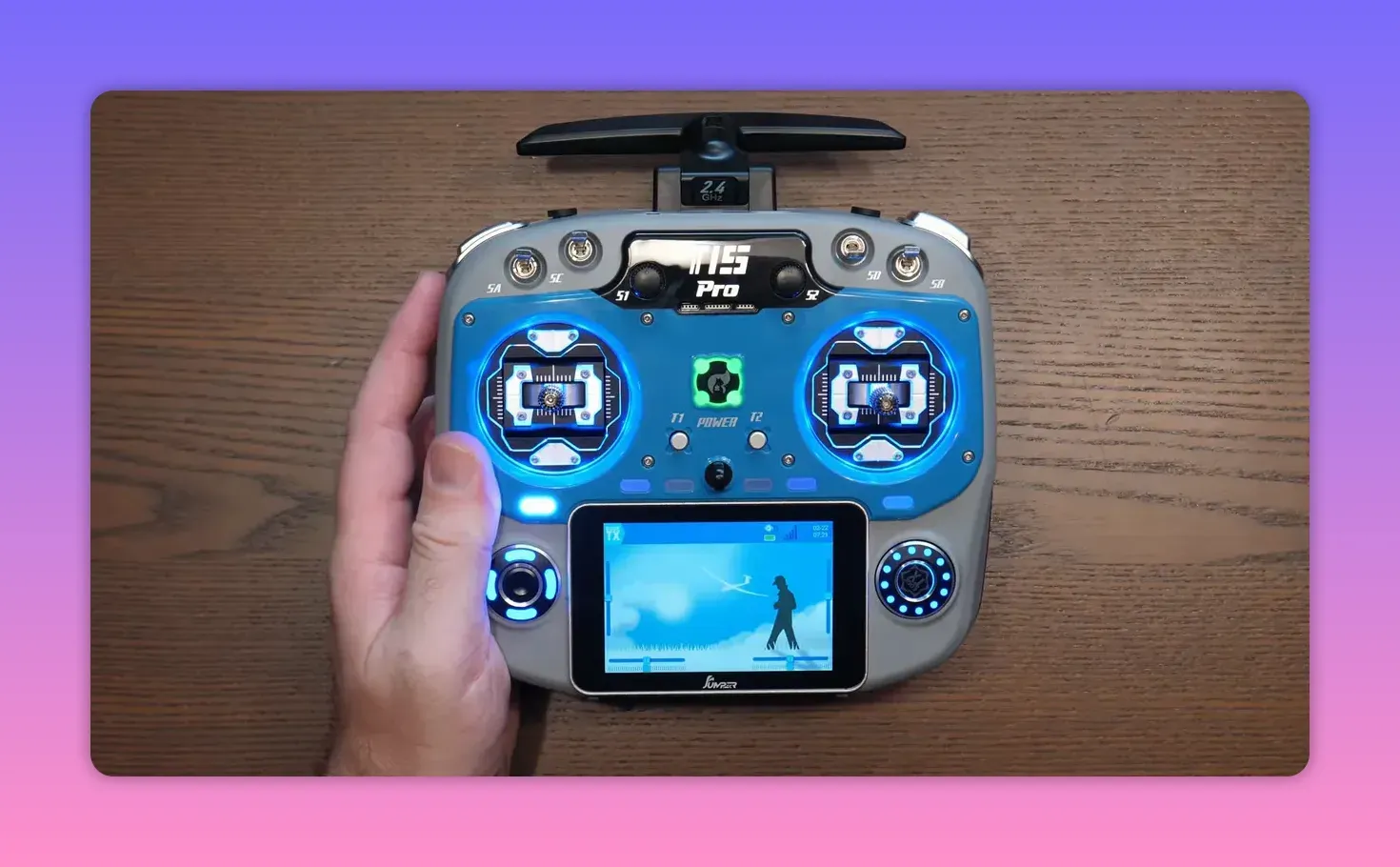
The front gimbals get LED rings, and the programmable button LEDs are aggressively bright. The screen isn’t edge-to-edge, so you get a chunky bezel and better protection, plus those illuminated dot markers around the UI. On the top you get USB-C and a headphone jack; on the rear you get a full JR module bay and a metal kickstand.
Express LRS reality check: single-band only
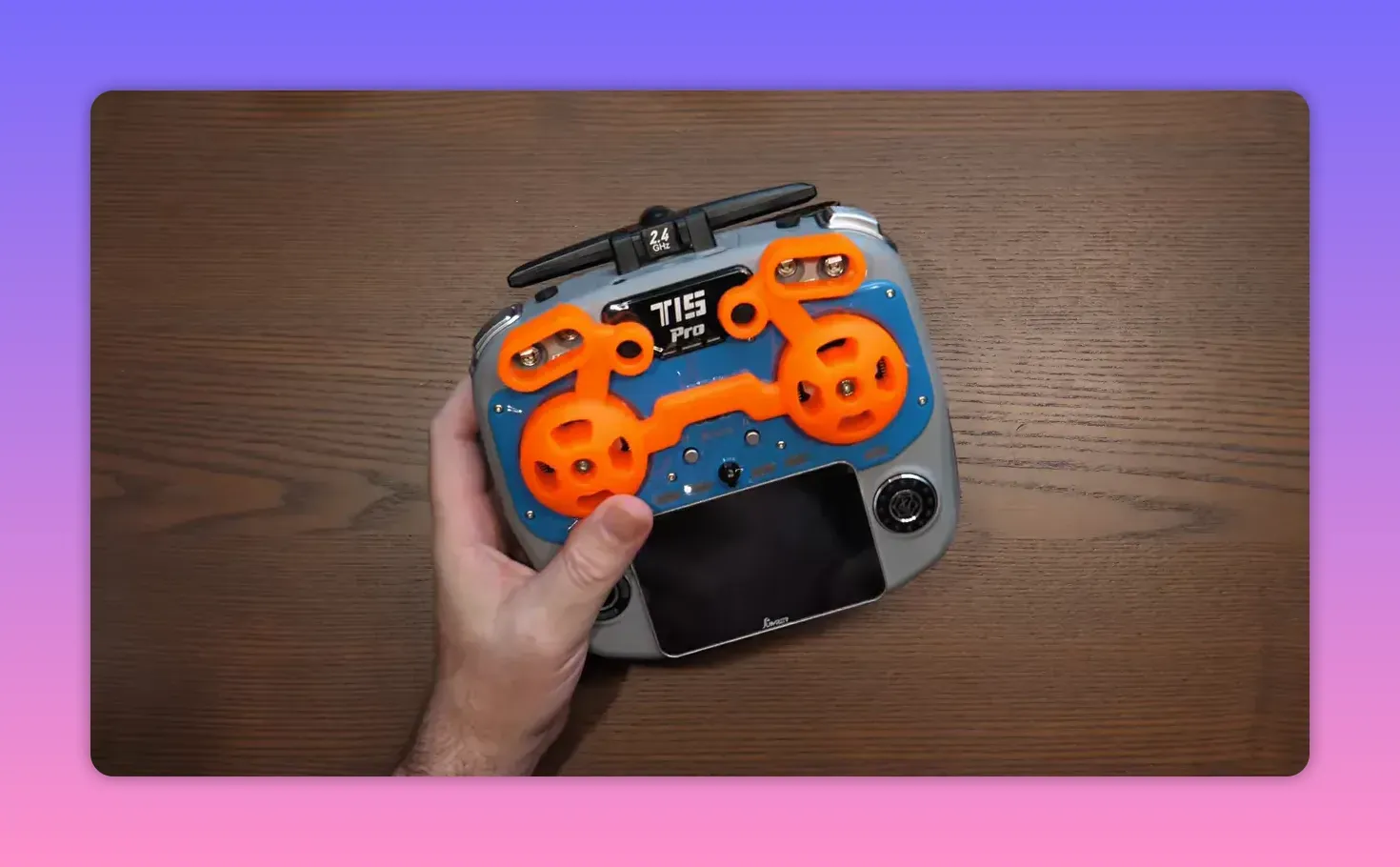
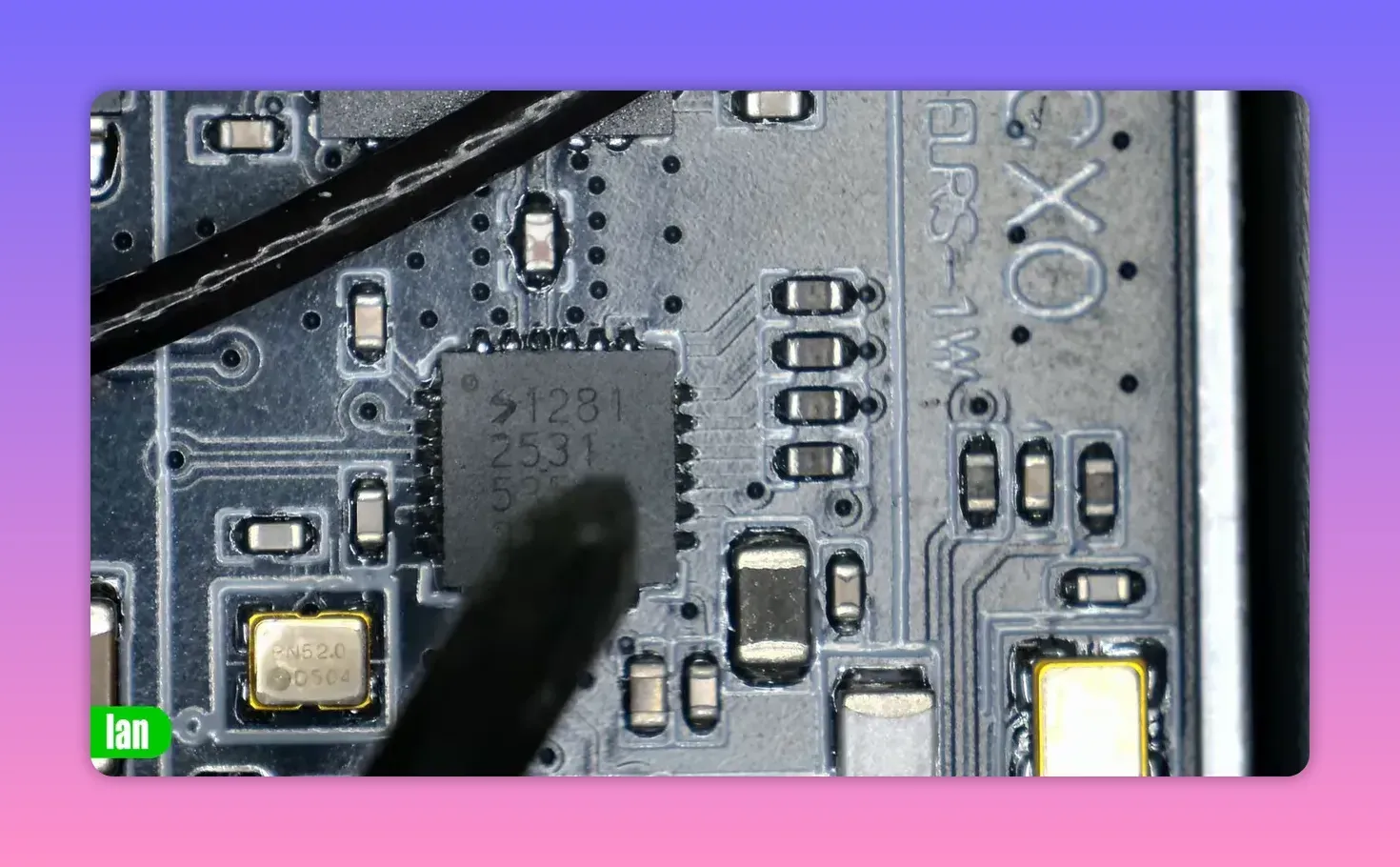
Spec confirmation matters, because manufacturers love vague box labels. This version is Express LRS at 2.4GHz only, not dual band. It’s designed around the older SX128 series approach (the SX1281-class chipset is inferred by teardown), so you choose 868-900 or 2.4GHz instead of swapping.
Operationally, the radio supports up to 1W RF power. That’s a meaningful ceiling for an FpV drone transmitter ecosystem—just not a “choose later” ceiling, because the RF chain isn’t the newer LR1121 dual-band style.
Turning it into “English Edge TX”: DFU, not settings
If your unit boots into Chinese, don’t go hunting for a language dropdown. The T15 Pro requires a firmware reflash—meaning DFU mode. DFU mode here is not bootloader mode: it’s for computer-driven programming.
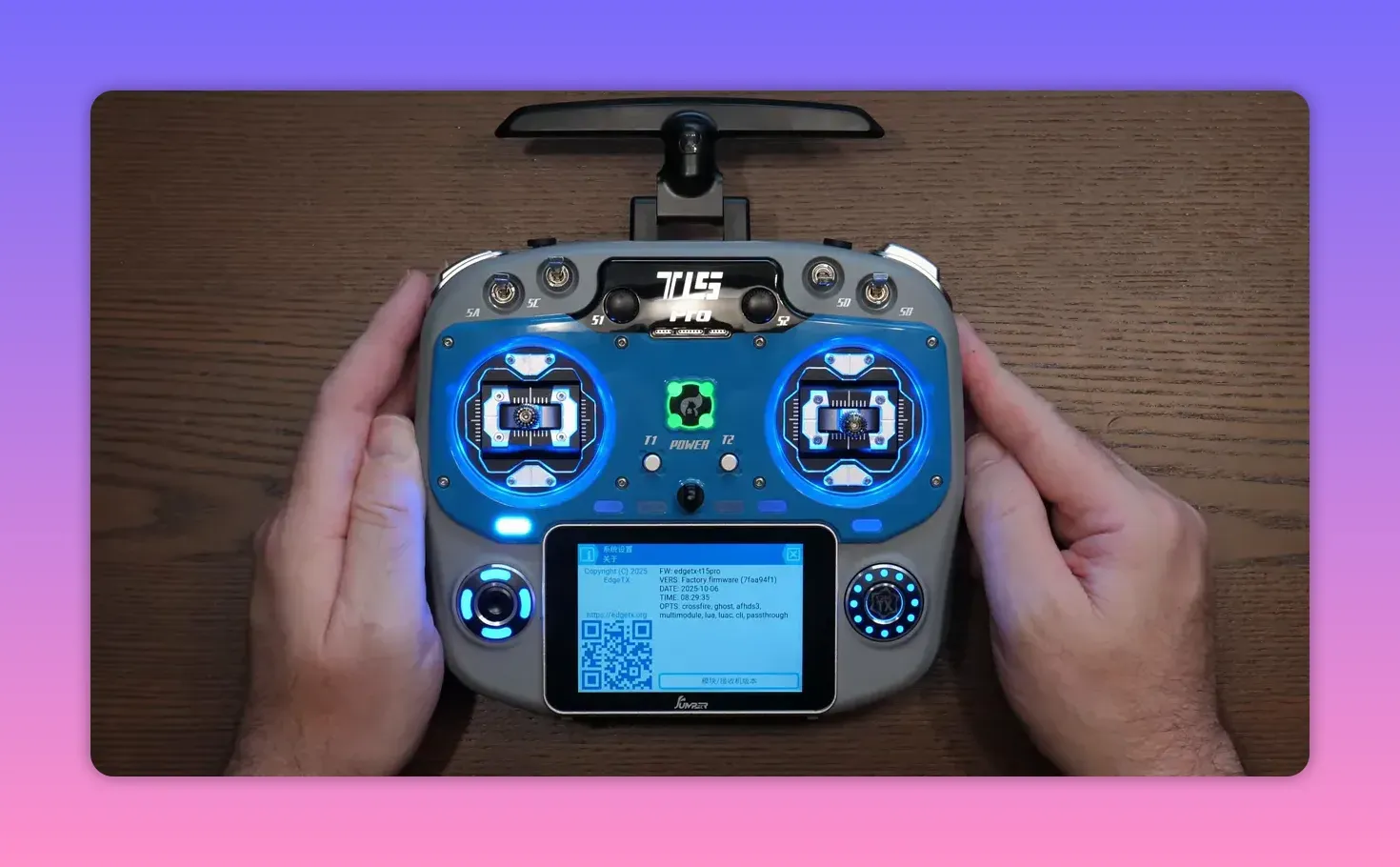
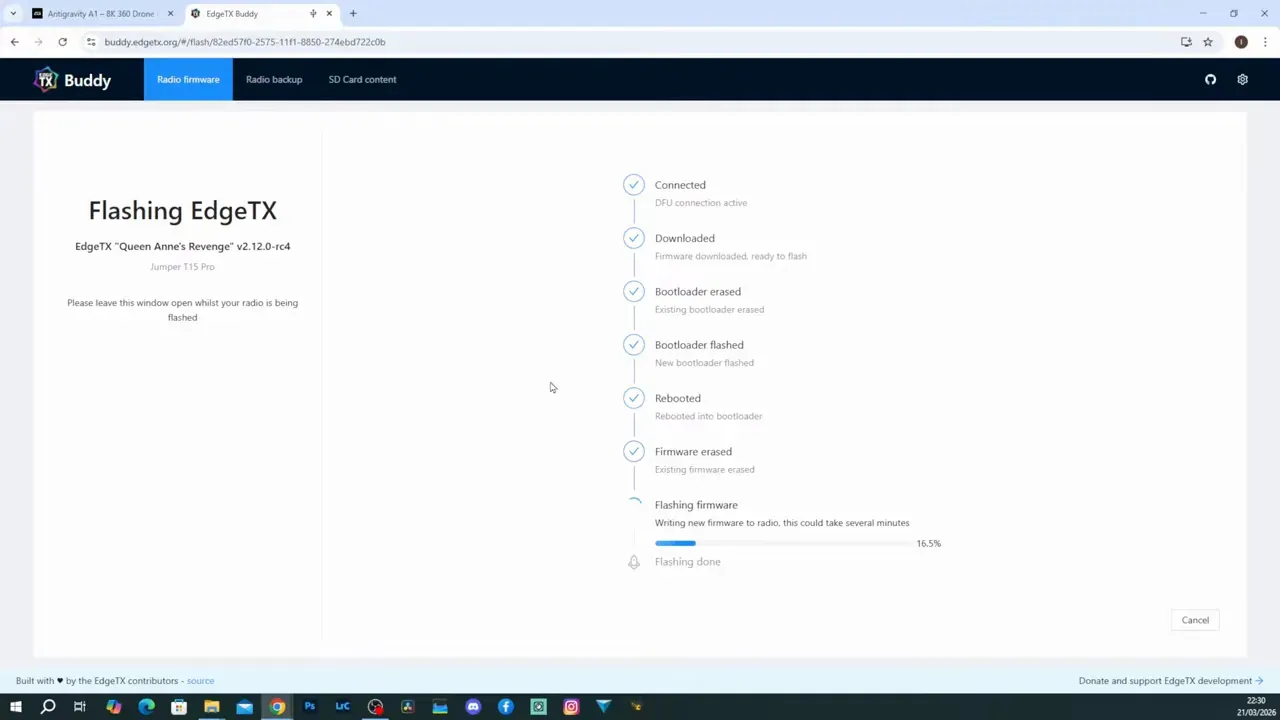
The fix is straightforward if you know where to click. Put the radio in DFU mode via the DFU button while plugging USB in, then use EdgeTX Buddy with the pre-release firmware filter for “Queen Anne’s Revenge”. After flashing, the radio comes back in English.
UI and controls: Edge TX, but wired differently
The IPS touchscreen is 3.5-inch at 480x320, and touch works well—tap slowly enough and it reads reliably. The illuminated buttons map cleanly: bottom is Back, left is Settings, top is Model, right is Telemetry, and centre changes pages. The wheel rotates through options per page, matching Edge TX behaviour while keeping the hardware layout unique.
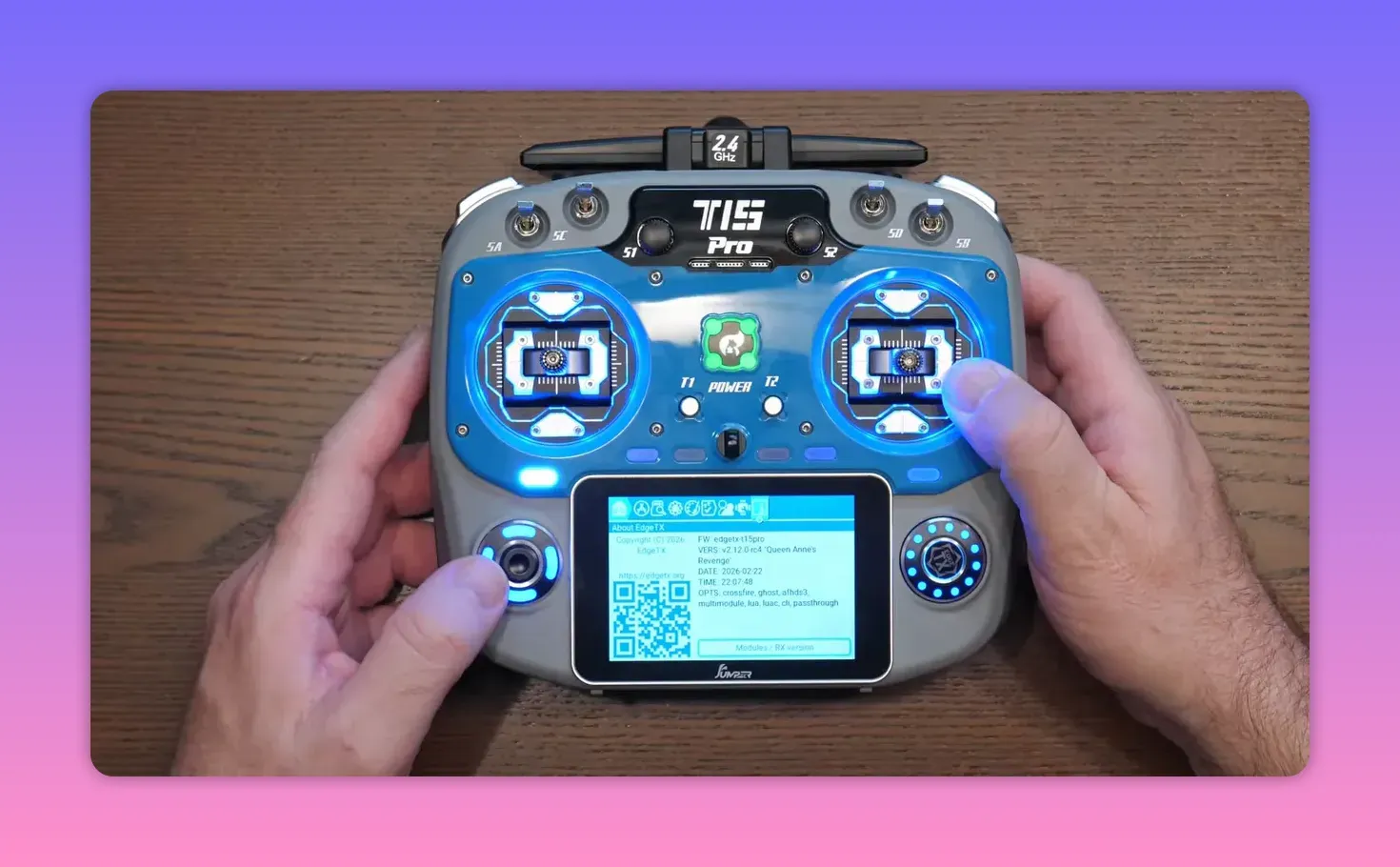
The programmable buttons are fully programmable and RGB-capable since they’re connected to the MCU. You can bind each button to channel logic with multi-position options, and even change LED output colouring. The gimbal LEDs are controlled via Lua scripting in global functions—example behaviour is blue when disarmed, red when armed.
Tear-down time: what’s inside (and why it matters)
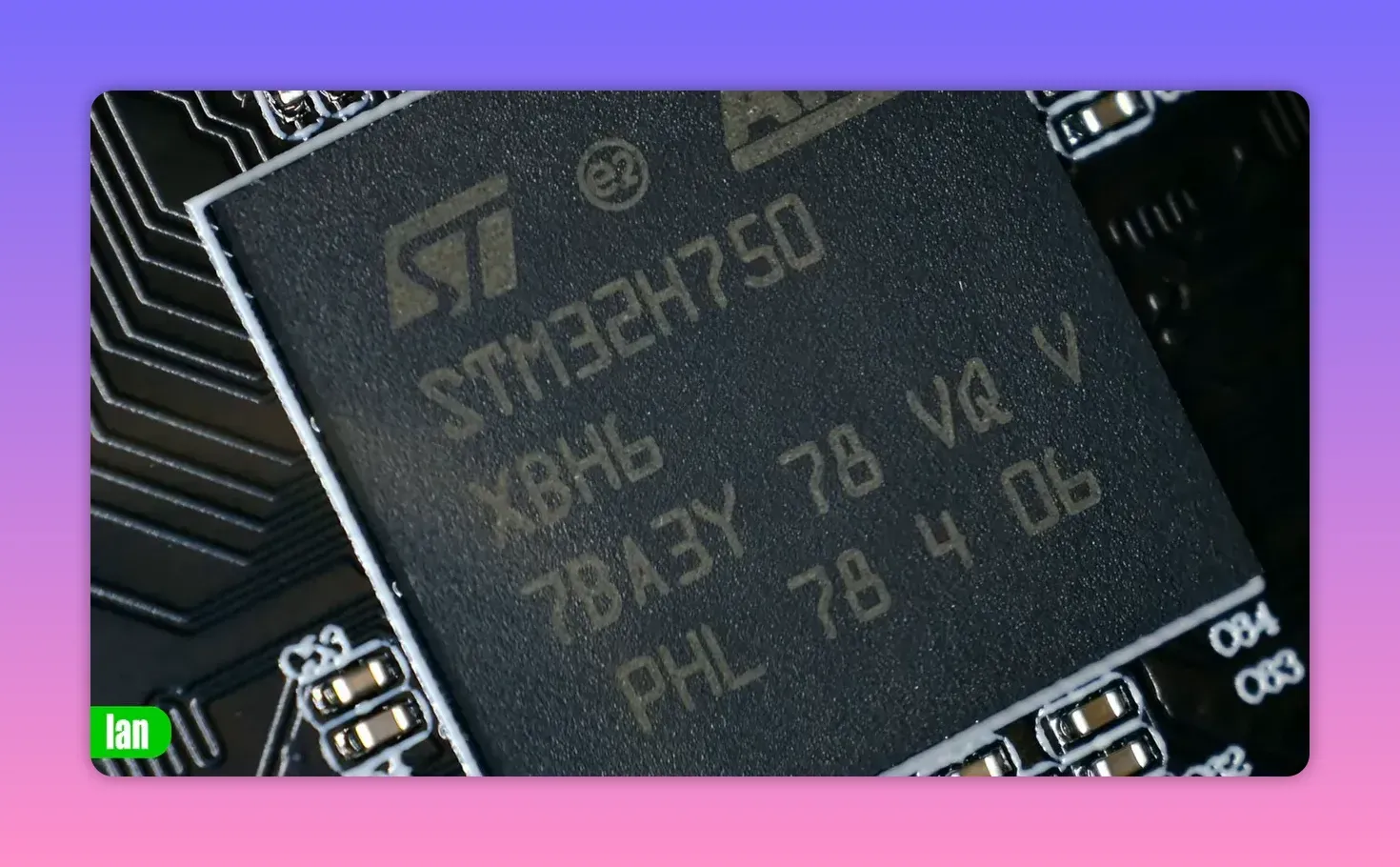
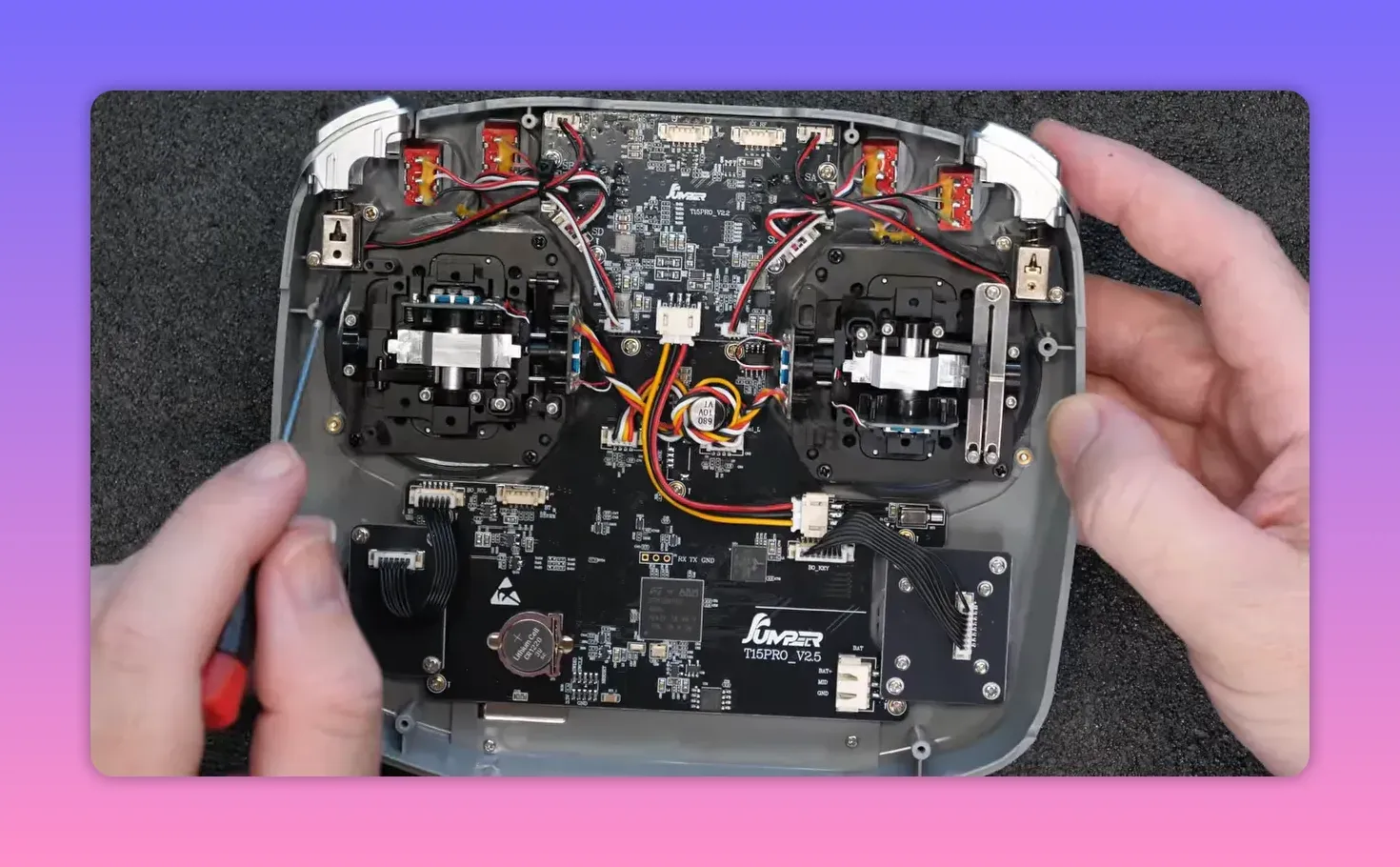
The main board is simple and neat: STM32H750 MCU, external DRAM (64 Mbit), and an identified flash chip (25Q128, i.e., 128MB). The soldering quality checks out—no obvious tombstones, and the component placement looks clean.
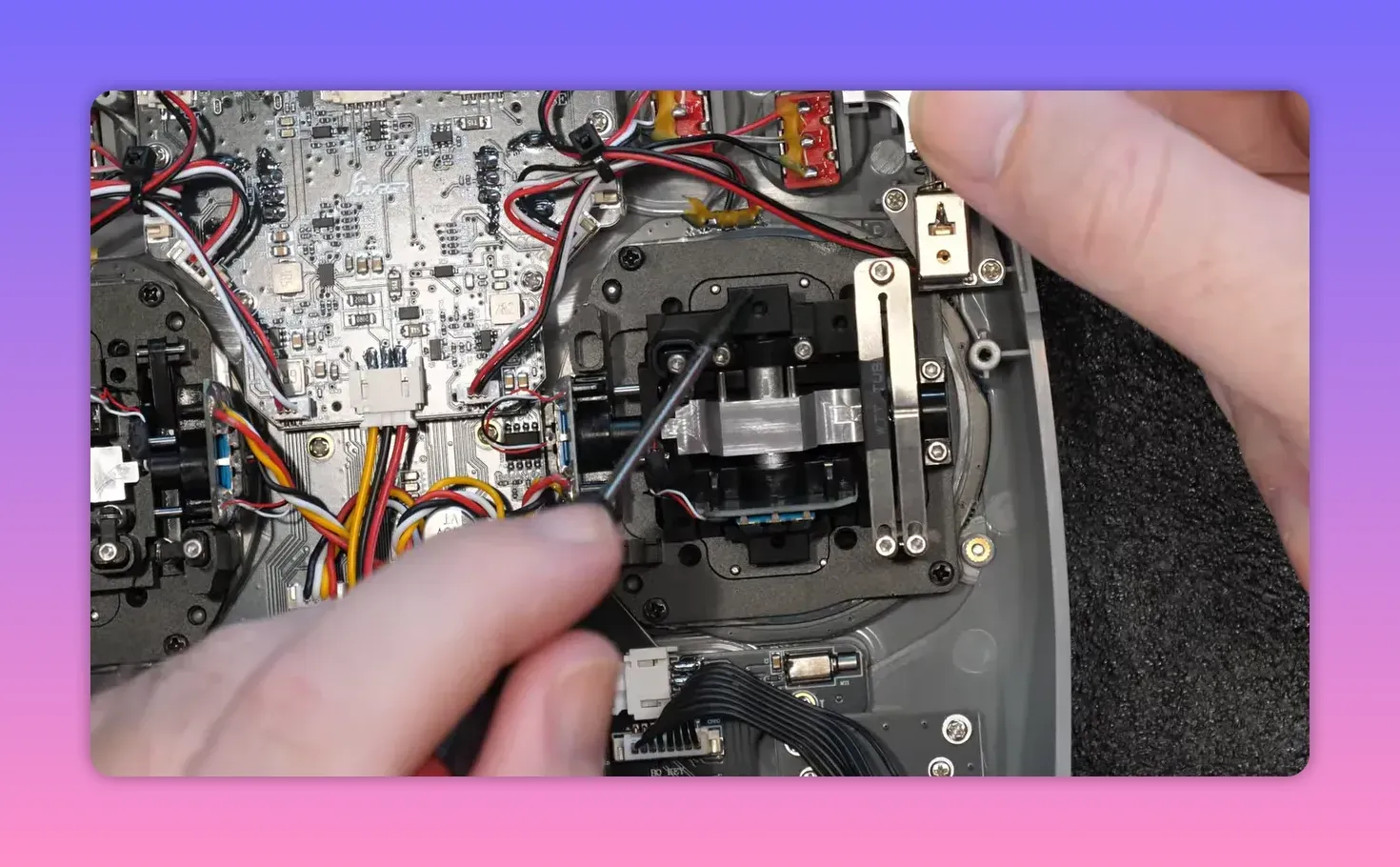
Gimbals are marketed as “CNC metal”, and the teardown broadly agrees. It’s not 100% metal—some arms and bearing holders are plastic—but the critical structure and surrounding pieces are metallic, and the gimbal pot wiring is designed to pass through the shaft to PCBs. These are potentiometers (not hall sensors), but high-quality pots remain stable enough, and the build looks careful.
The IO and switching architecture uses a top IO board that gathers the toggle inputs. The gimbals connect into the main board, while the switches route into the IO board and then distribute power via PCB links. Corner switches appear handed (not symmetric), with physical features preventing easy swap-over.
Express LRS module: compact, cooled, single-band
The Express LRS module sits on a heat sink with a small fan underneath. The board is mounted flat with thermal compound; it’s compact compared to older implementations. The RF system is expected to be single-band—consistent with the radio version and the non-LR1121 dual-band limitation.
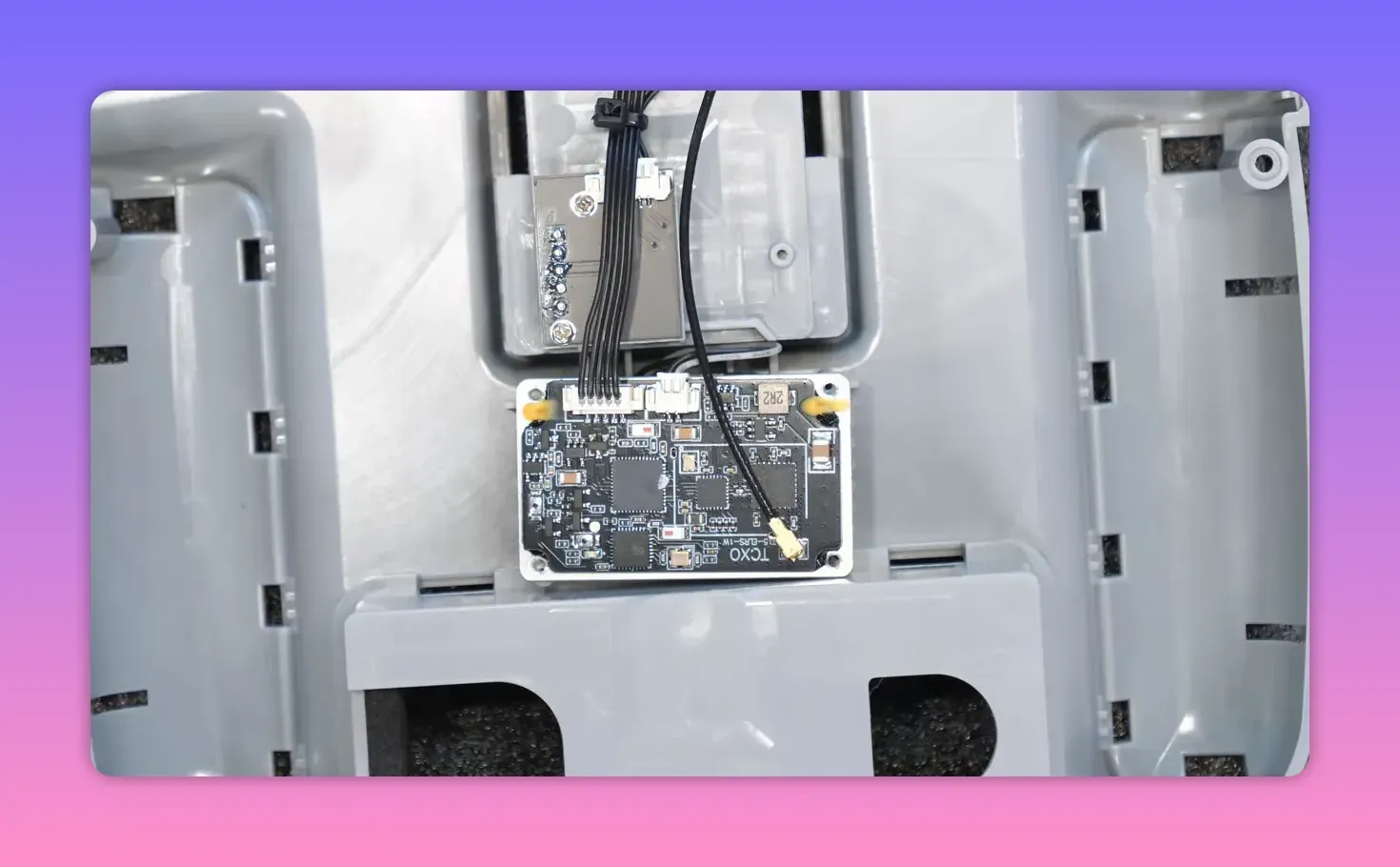
The module uses an ESP32 for the Express LRS side. An additional ESP8285 supports backpack functionality. The RF chipset is identified as SX1281-class for the 2.4GHz build, followed by a Skyworks power amplifier. A TCXO is present, printed as “TCXO” on the board, which should improve frequency stability.
The verdict: a “nice radio” that struggles on value
The T15 Pro gets a lot right: modern H7-class MCU, full colour IPS screen, Edge TX touch support, fully programmable LEDs, RGB everywhere you’d care, CNC gimbals that feel solid, built-in kickstand, and a compact cooled Express LRS module. It also hits the RF power mark at up to 1W and supports backpack via dedicated control.
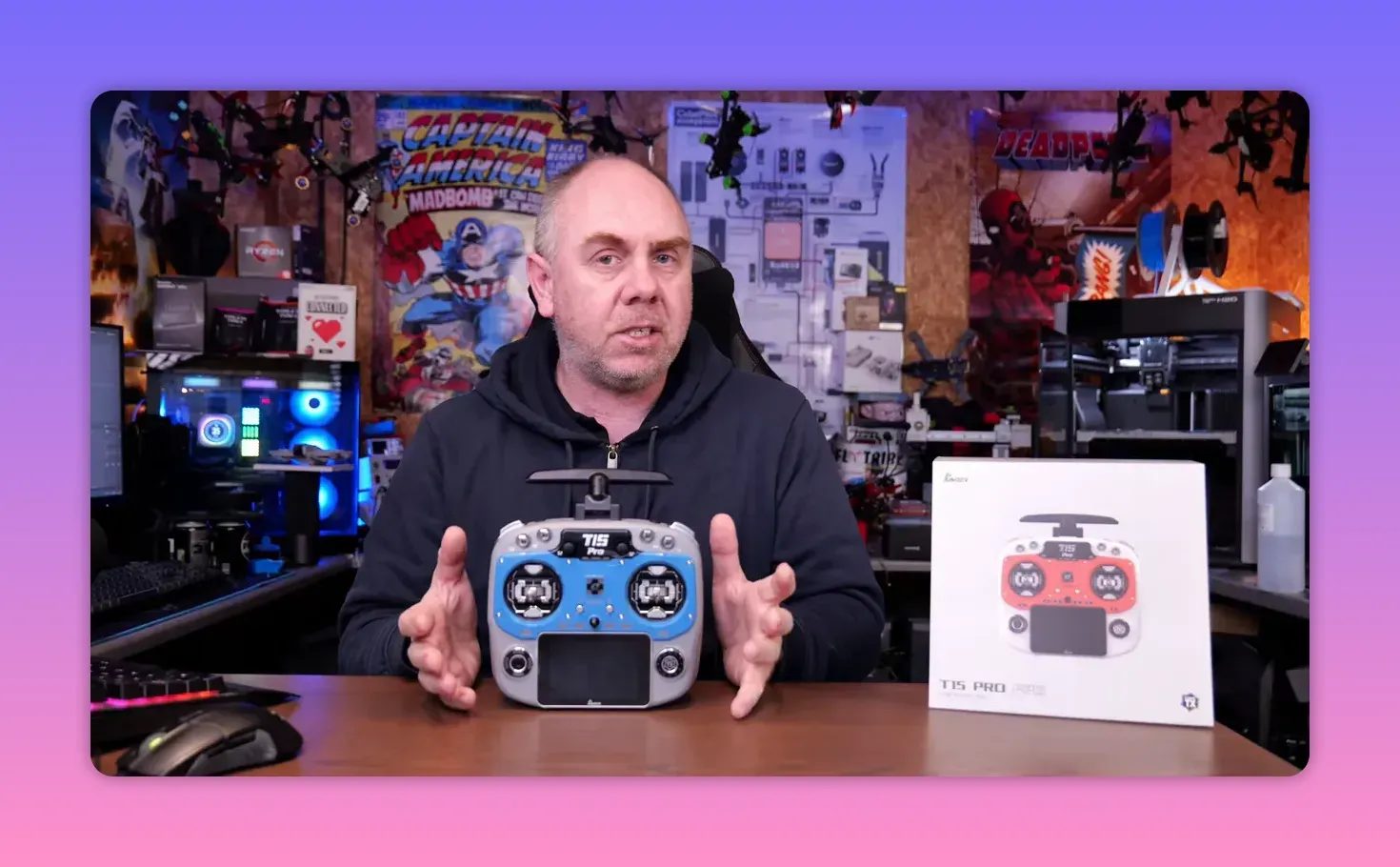
Then the problems show up. The Express LRS generation is older (SX128 series), so it’s single-band and requires committing to either 868-900 or 2.4GHz. Worse, the price positions it against radios that offer dual-band LR1121-based flexibility. Jumper did a good job; the market comparison does not.
FAQ
- Is the Jumper T15 Pro dual-band Express LRS?
- No. This version is 2.4GHz-only and does not switch bands like LR1121 dual-band radios. You’re effectively choosing your band at purchase time.
- How do you change the radio language to English?
- You can’t do it via a simple on-device setting. You must reflash firmware in DFU mode using EdgeTX Buddy with the correct pre-release firmware selection.
- What powers the gimbals—pots or hall sensors?
- The teardown indicates potentiometers (pots), not hall sensors. They can still be stable when built and wired well.
- Does it include Express LRS RF power boost?
- Yes. The build supports up to 1W RF power, depending on configuration and legal/operational limits for your region.
Takeaway box
Good FpV drone transmitter engineering, poor value math. The Jumper T15 Pro is feature-packed and well built—bright RGB UI, touchscreen Edge TX, solid CNC-style gimbals, and a cooled single-band Express LRS module. If you want dual-band flexibility, the lack of LR1121 support makes it hard to recommend over competitors at similar pricing.
Skimmer nuggets (tweet-length)
- Nice hardware: touchscreen Edge TX, RGB controls, solid-feel CNC-style gimbals.
- Express LRS here is single-band: 2.4GHz-only, no dual-band switch.
- English requires DFU firmware reflash—no “language” menu fix.
- 1W RF support is real, but value loses to LR1121 dual-band radios.
This article was based from the video Jumper T15 Pro ExpressLRS Radio - A Lot To Like Apart From The Price!