Joshua Bardwell points out a blunt truth: FPV pilots enjoy unnecessary complexity. The T8L challenges that culture by stripping down controls and costs.
Quick verdict
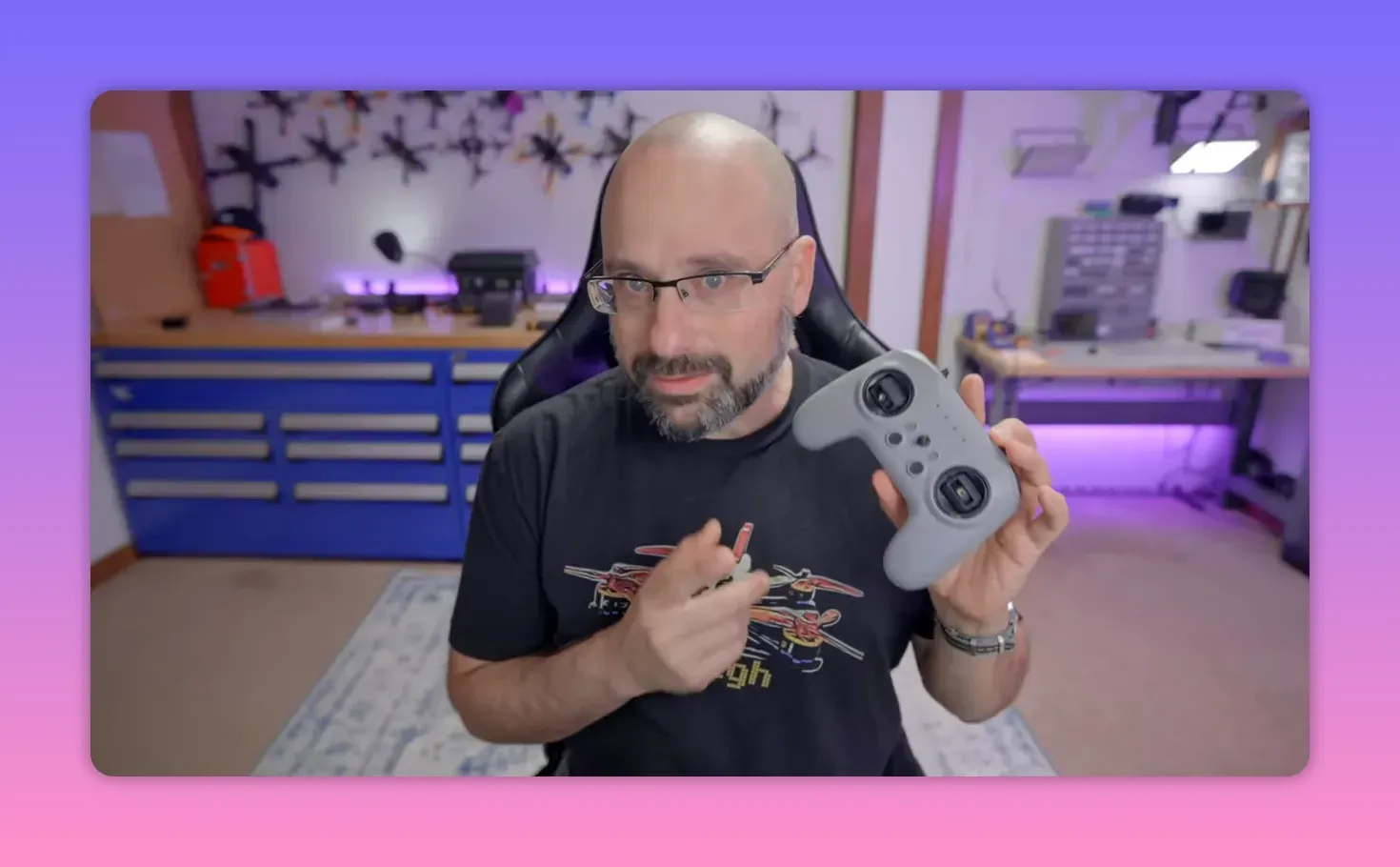
The T8L trades full-on programmability for simplicity. It keeps essential features, runs ExpressLRS, and sells for a shockingly low price.
Why this matters
A cheap, usable radio lowers entry friction. New pilots can learn on hardware that works without wrestling with complex menus and mixes.
Form factor and build
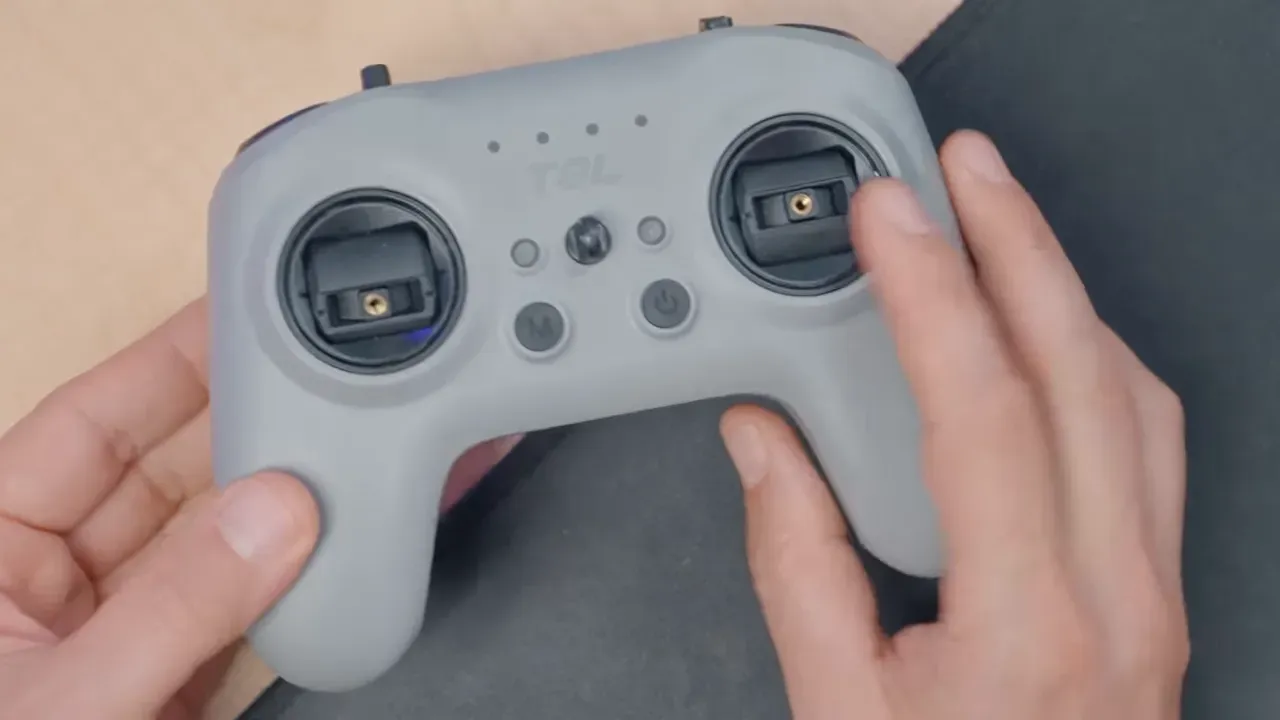
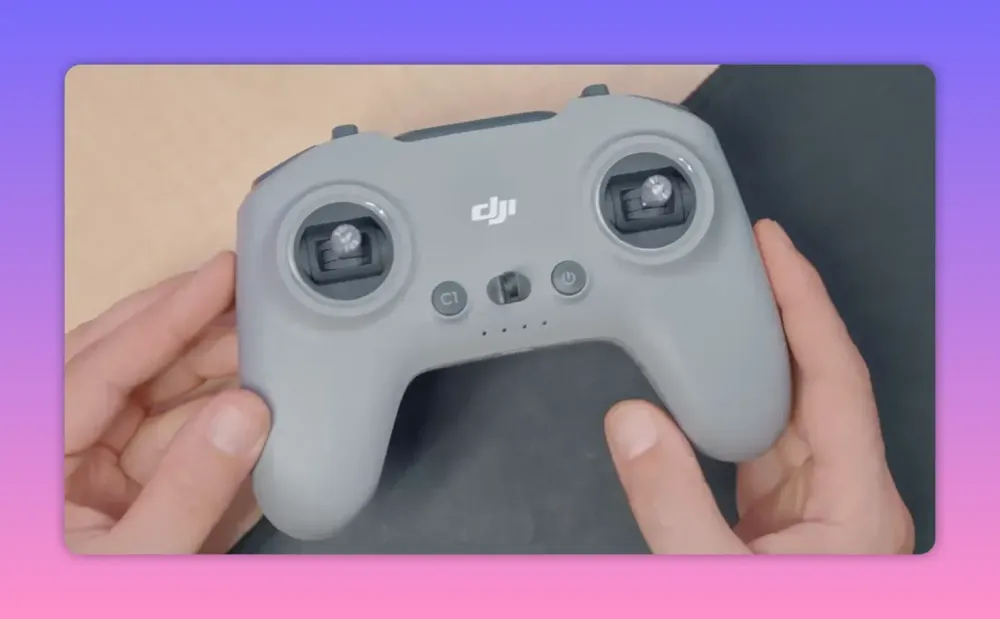
The shell and layout borrow a DJI RC vibe and favour ergonomics over flair. The case feels solid, not chintzy.
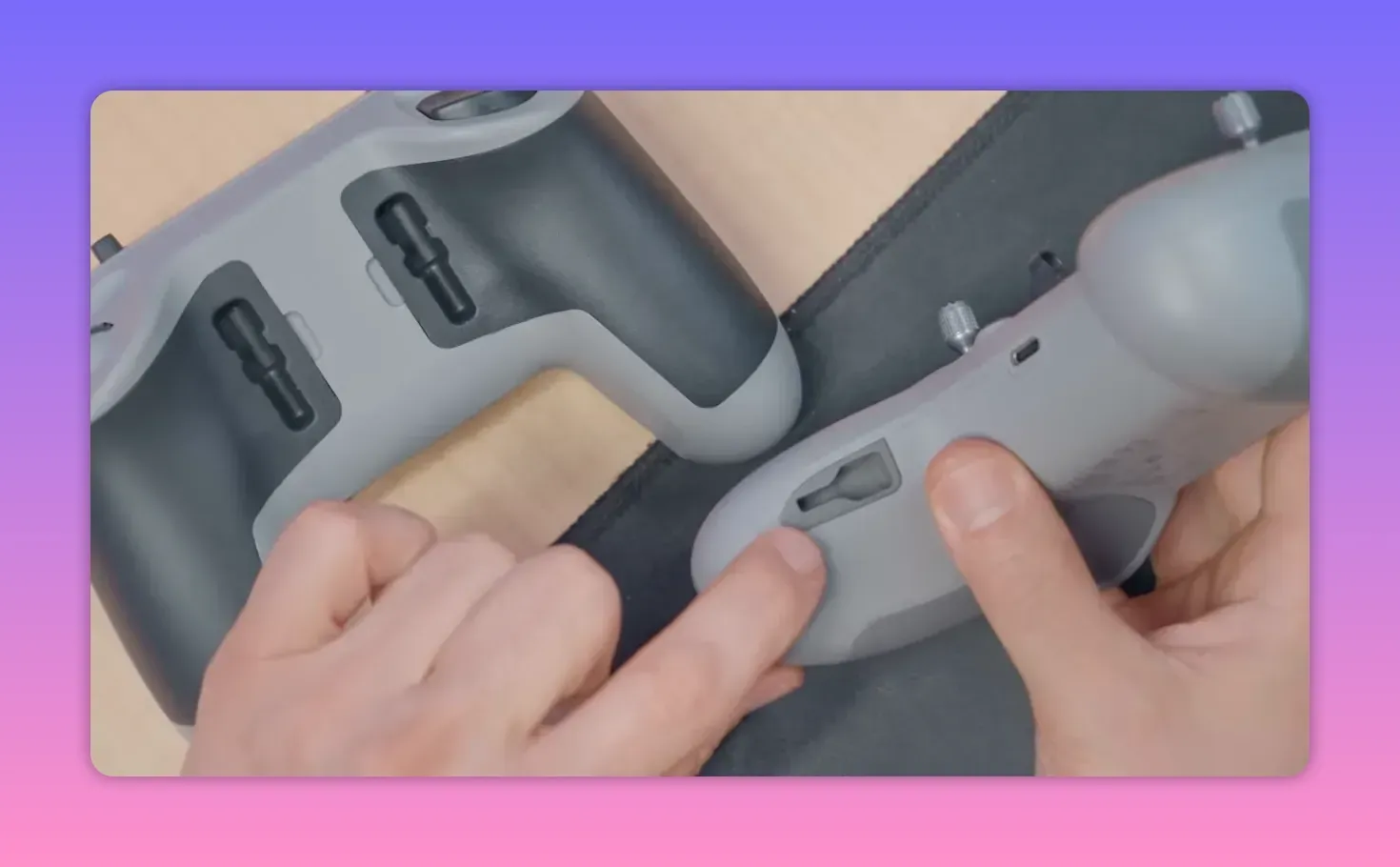
Joysticks screw in and remove for transport. They are not standard gimbal stick ends, so common aftermarket knobs will not fit.
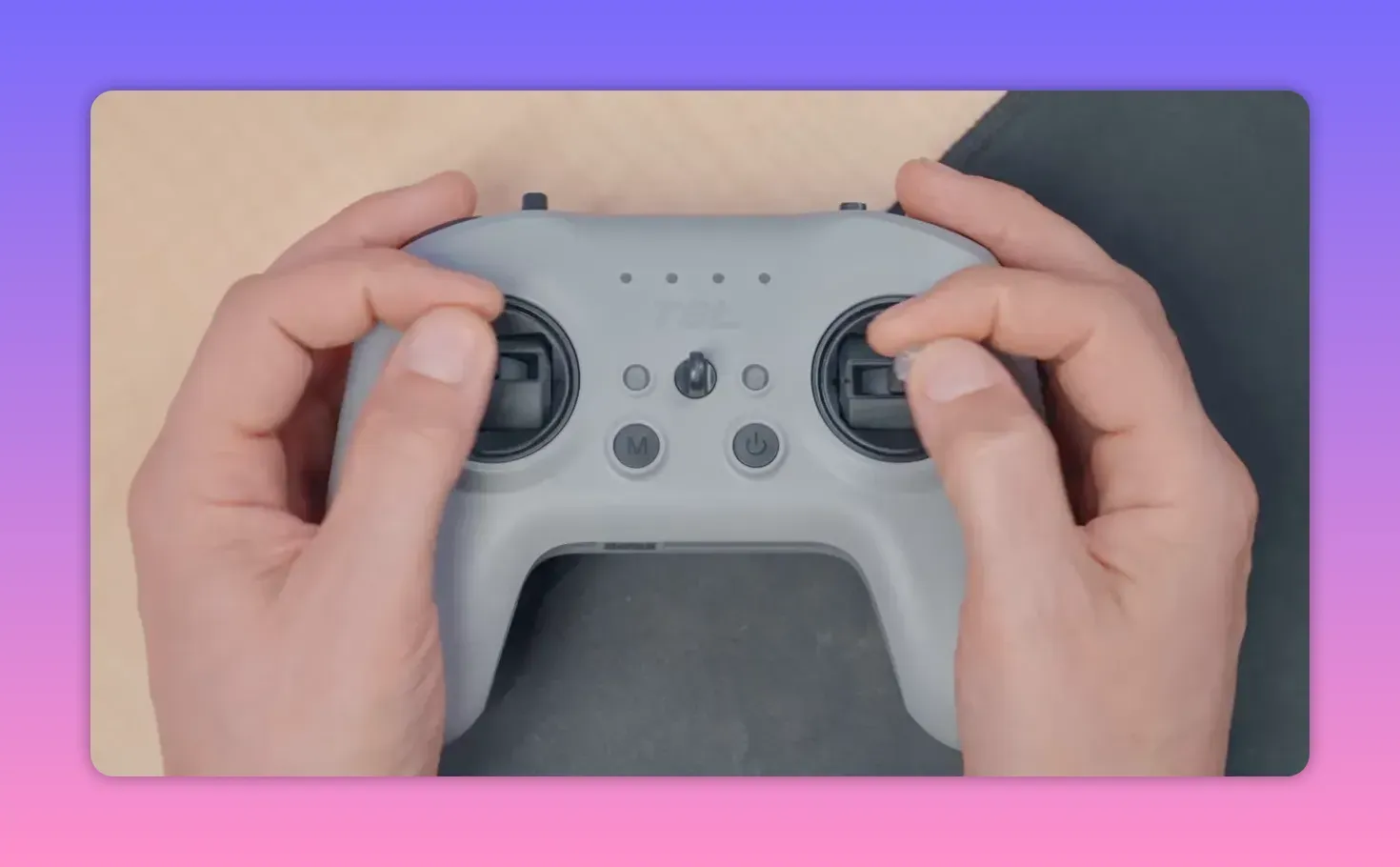
Gimbals are quad ball bearing Hall effect types. That removes potentiometers and the predictable wear points. They are small but smooth, with decent spring tension.
Controls and switches
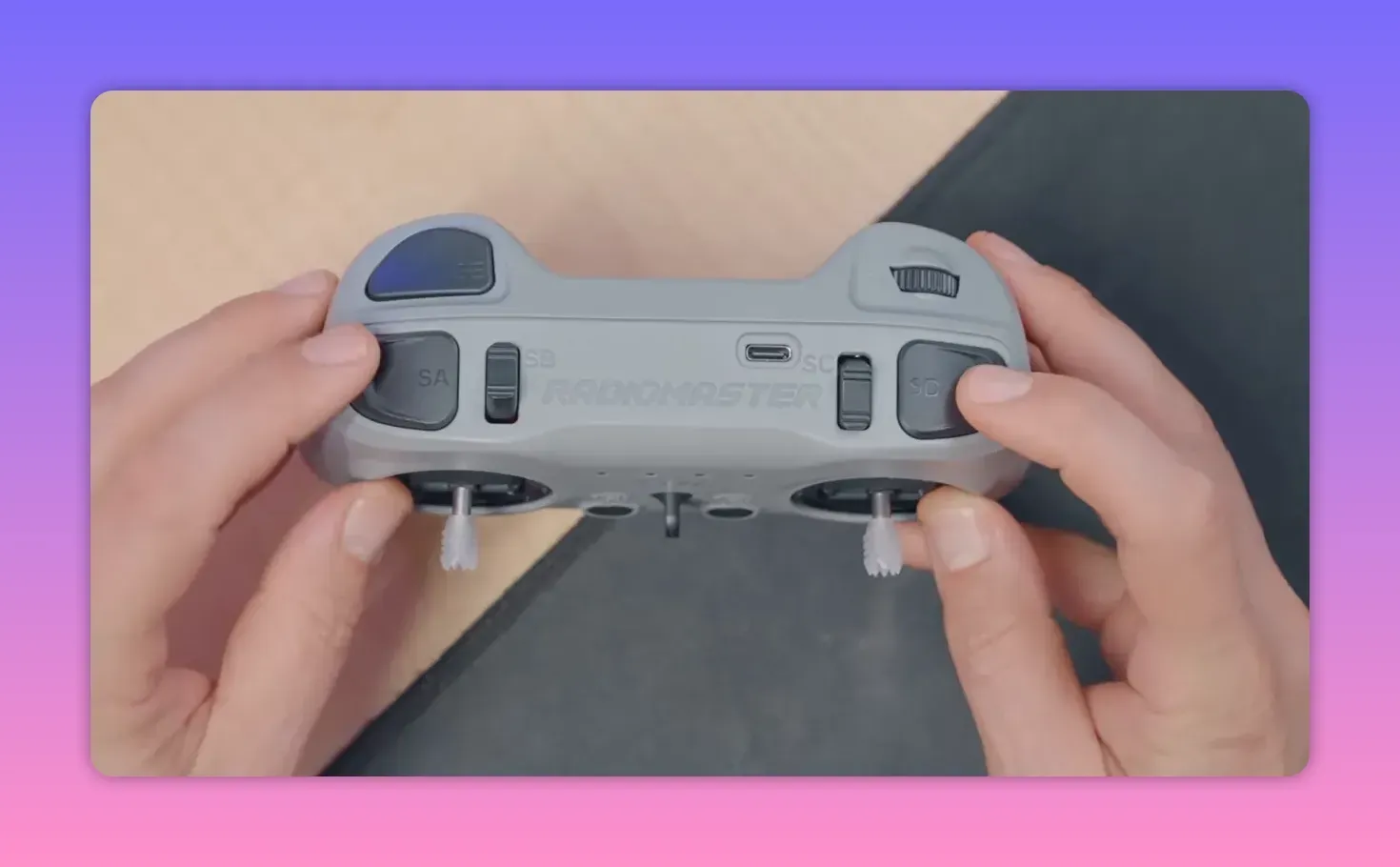
Top-row switches include two momentary buttons and several three-position rockers. One switch is latching, and there is a ratcheted potentiometer.
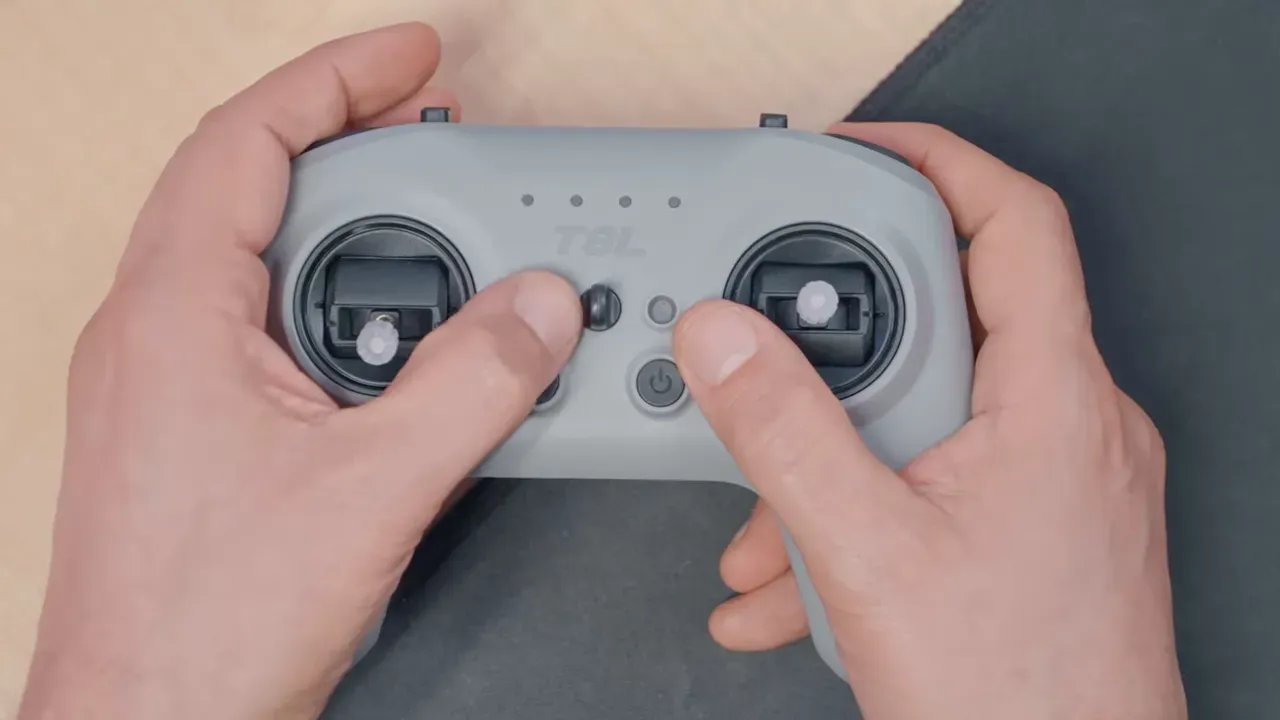
Trim is handled by four-way rockers for both sticks. That gives full in-flight trimming capability for fixed-wing flyers without a screen.
Configuring without a screen
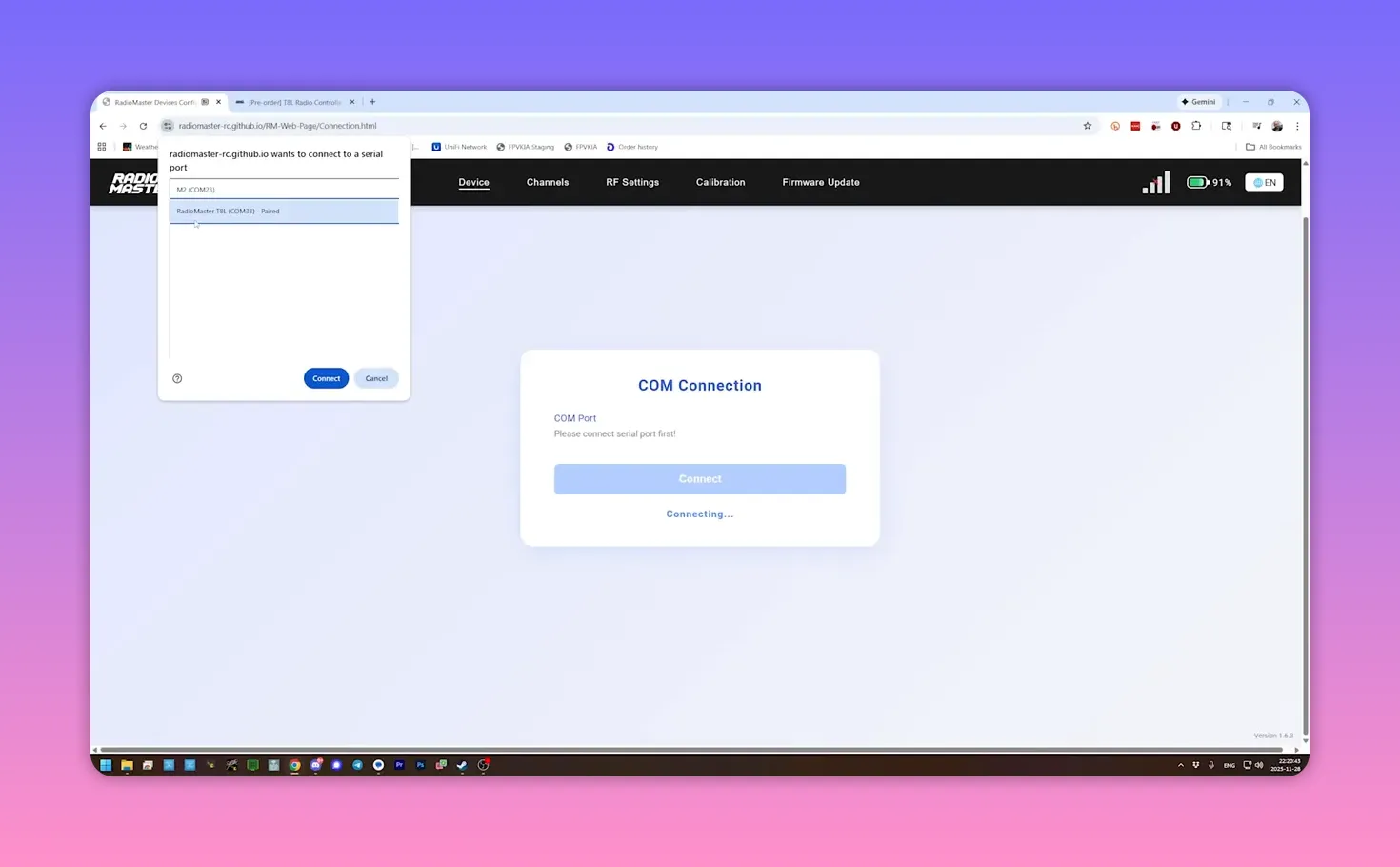
The T8L runs EdgeTX under the hood, but it drops the onboard screen. Configuration happens through a RadioMaster web configurator accessed over USB.
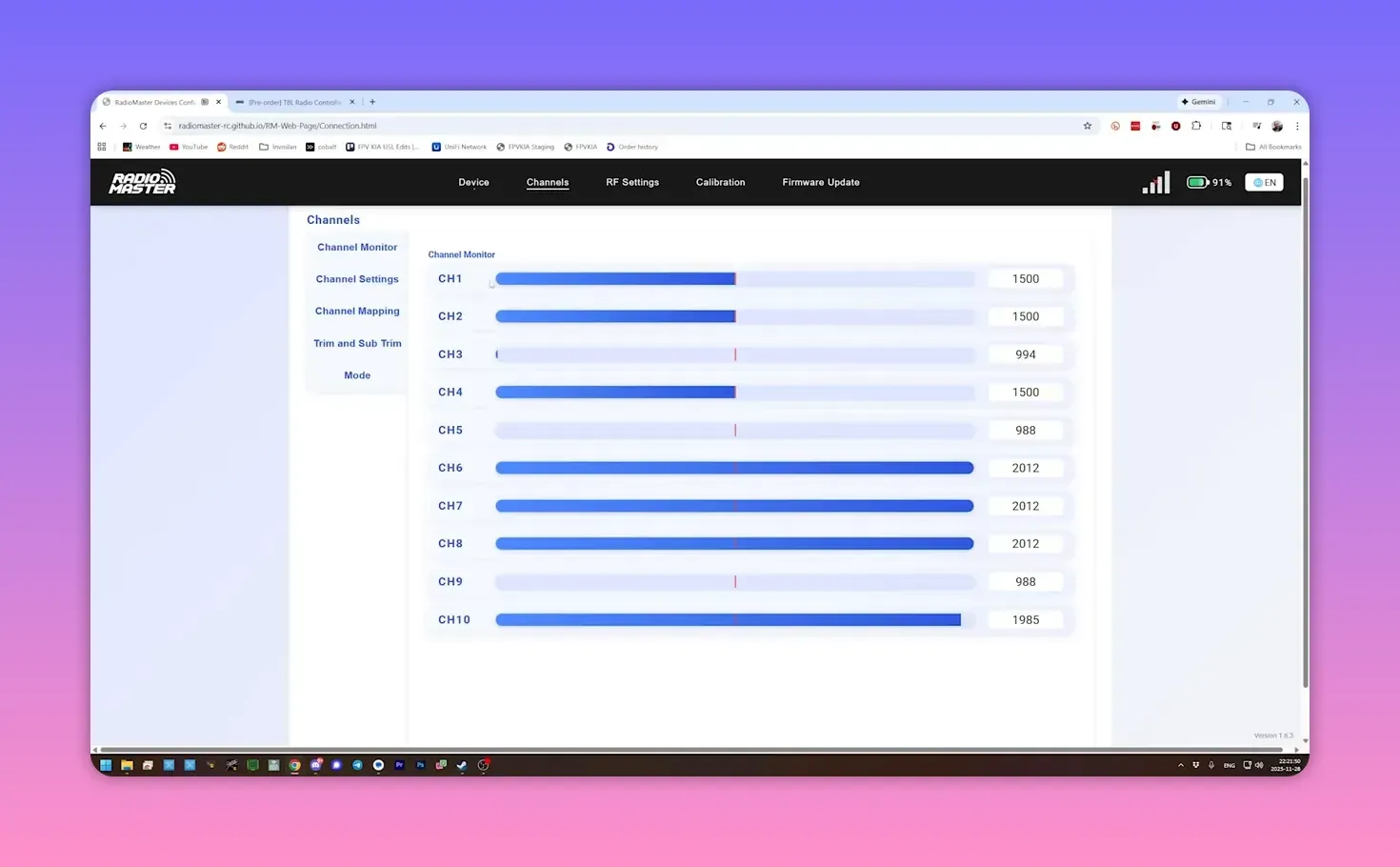
Switch behaviour can change in software. Momentary buttons become toggles or require double clicks to avoid accidental activation.
Channel setup and limits
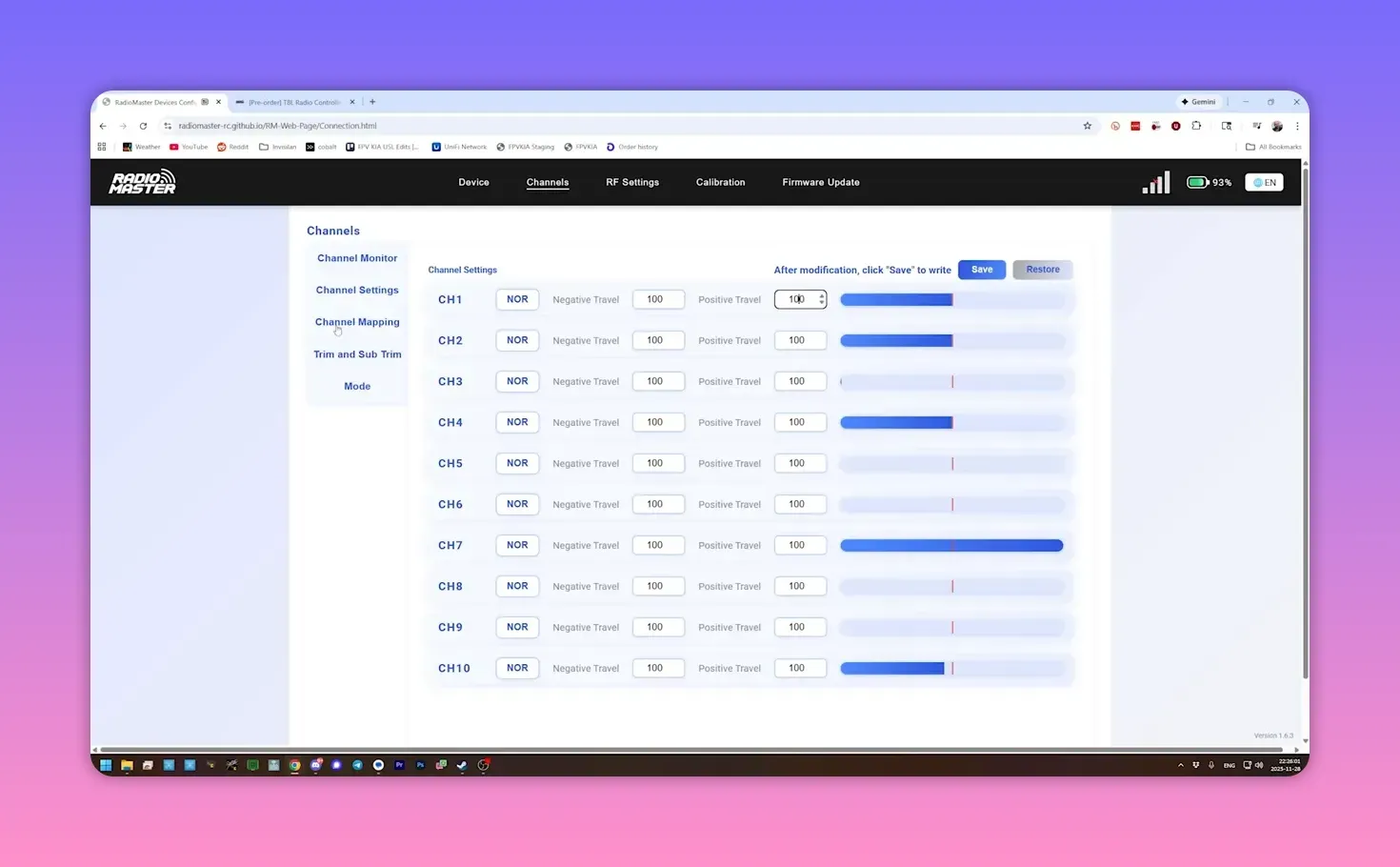
Channel mapping, endpoints, trims and subtrims are available. Complex mixes and custom curves are intentionally absent to keep the interface simple.
RF and ExpressLRS
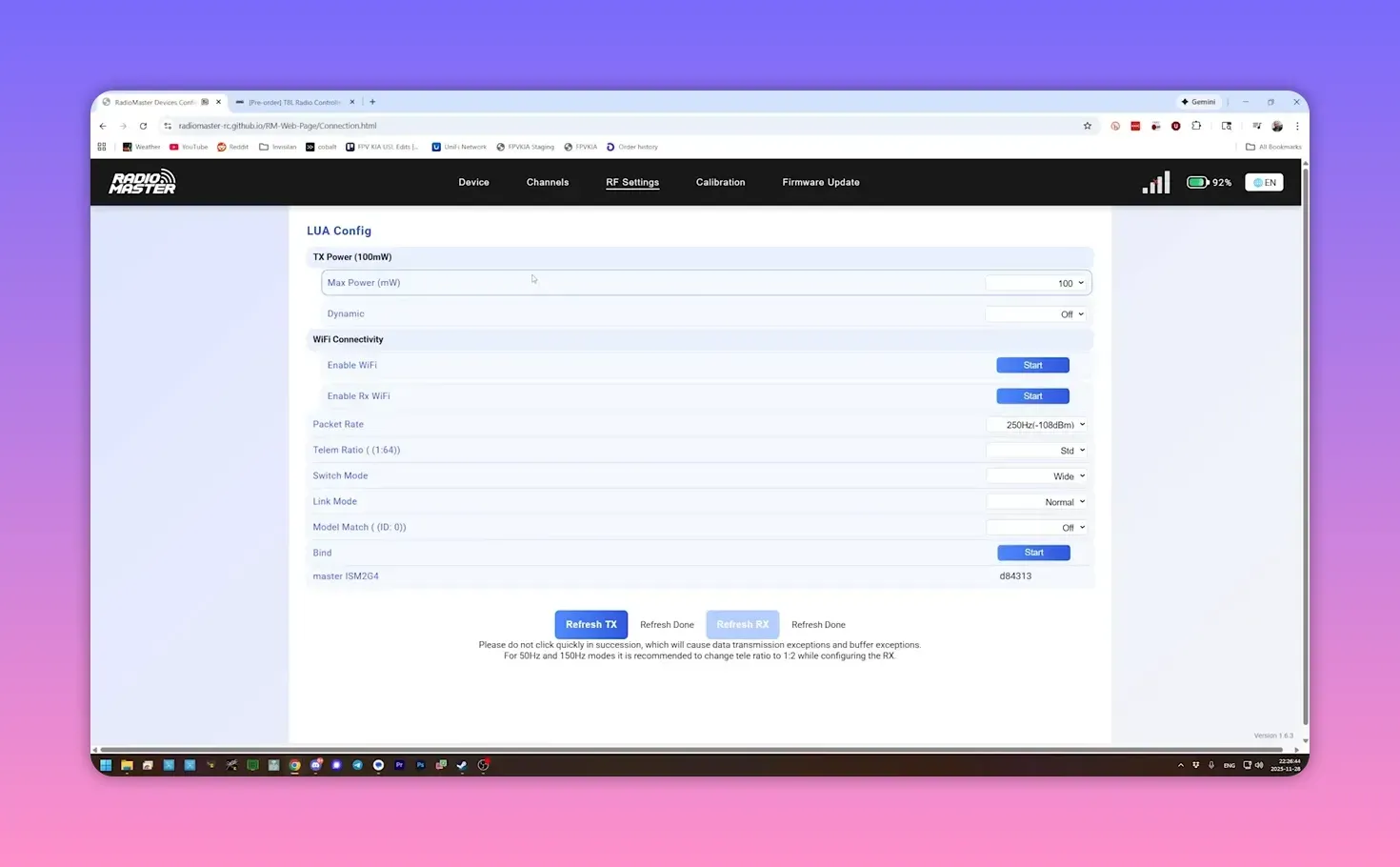
The internal ExpressLRS module exposes typical options. The T8L tops out at 100 milliwatts and uses an internal antenna.
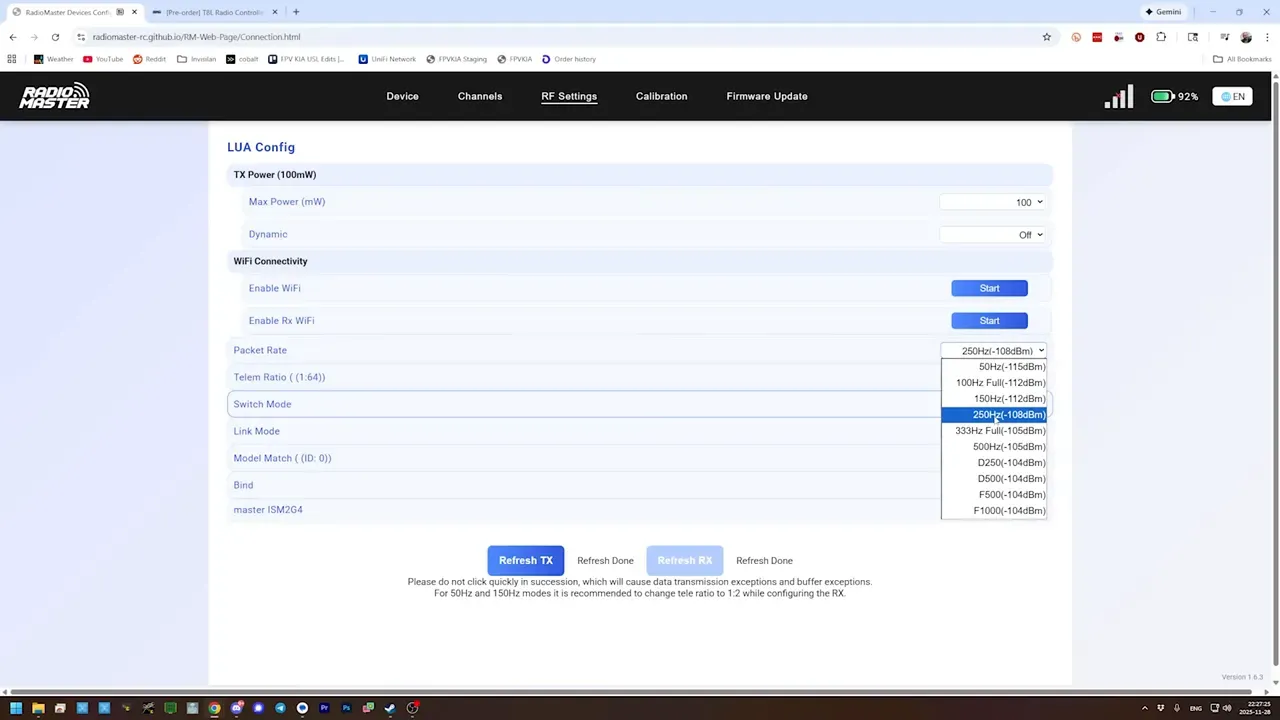
It ships with a conservative default packet rate of 250 Hz. That balances latency and range, which suits most hobby use better than a maximum 1,000 Hz setting.
Firmware updates for both the radio and the internal ELRS module can be applied straight from the web app. That removes much of the usual software faff.
Practical testing and feel
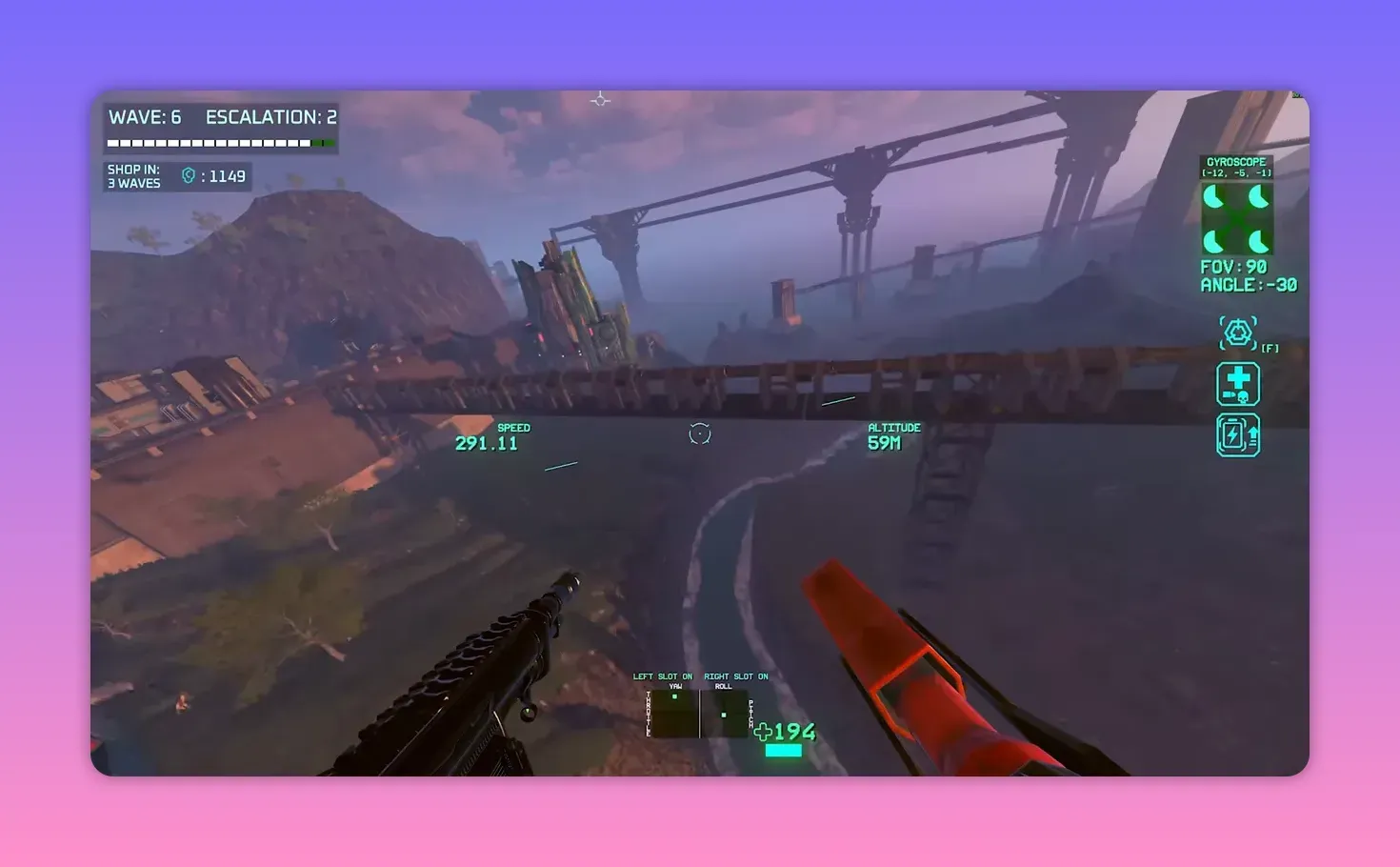
Bardwell tested the sticks in a simulator to judge control feel. Shorter sticks take a moment to adjust to, but some pilots prefer that quicker response.
There is minimal jitter on the gimbals. For $35, the tactile feedback and precision are respectable, not premium but usable for practice and flying.
Price and positioning
Retail price lands at $35 in many markets. In the US a tariff may nudge that closer to $50, but it still undercuts most budget radios.
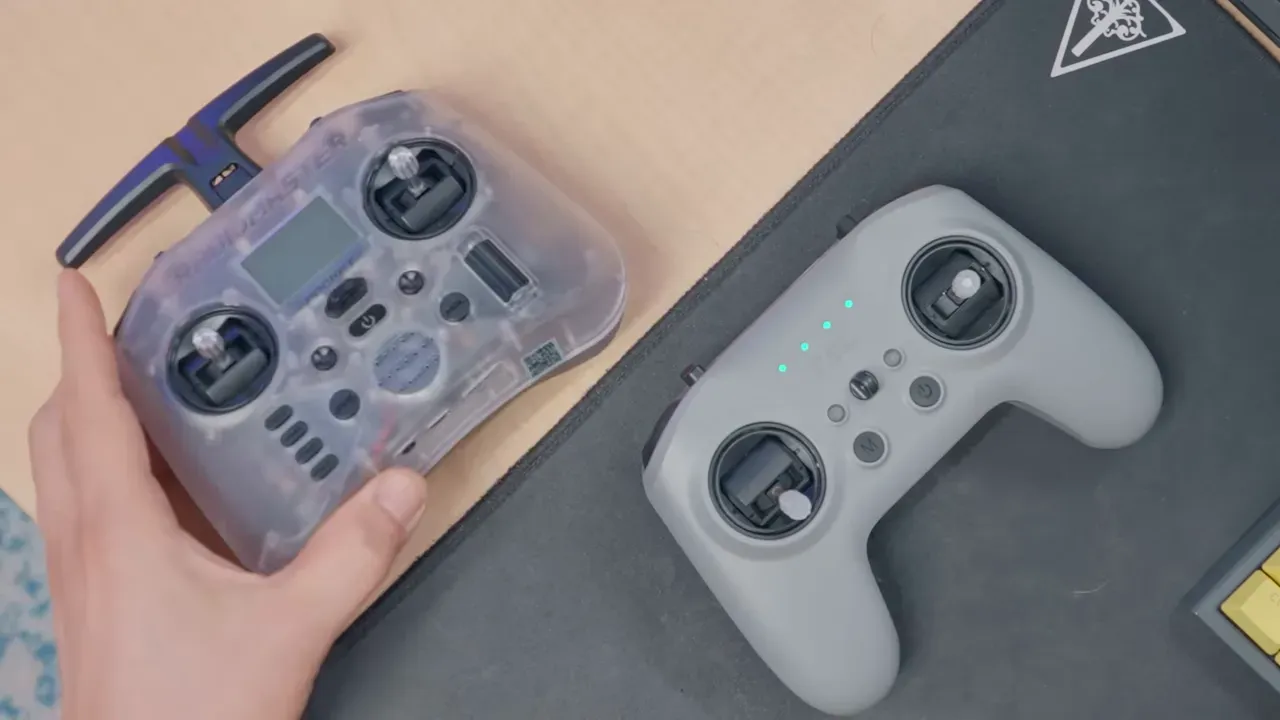
Compare the T8L with the RadioMaster Pocket. The Pocket costs about $65, runs full EdgeTX with a screen, and offers deep programmability.
If a pilot wants full mixes, custom curves, and advanced EdgeTX scripting, the Pocket or another EdgeTX radio is the better buy. If not, the T8L covers the basics well.
Who should buy the T8L
Buy the T8L if cost matters, you want straightforward controls, and you value convenience over extreme configurability. It is ideal for simulators and first radios.
FAQ
What is the T8L's maximum RF power?
The radio supports ExpressLRS up to 100 milliwatts. That suits most hobby flying but limits extreme long-range use.
Does the T8L run EdgeTX?
Yes. It runs EdgeTX under the hood, but it removes the onboard screen. Configuration uses RadioMaster's web app over USB.
Who should choose the Pocket instead?
Pilots who demand full programmability, mixes, and custom curves. The Pocket offers a screen and complete EdgeTX access.
Can the T8L handle advanced mixes or custom curves?
No. The web configurator exposes endpoints, mapping, trims and basic switch configuration, but not advanced mixes or custom curves.
Takeaway box
Cheap but usable The T8L gives a functional radio experience for $35. It upends the assumption that usable radios must cost much more.
Simple config The RadioMaster web app replaces an onboard screen. That makes setup quick and less error-prone.
Balanced RF ExpressLRS at 250 Hz with 100 milliwatts offers a sensible compromise between latency and range for hobbyists.
Practice-friendly The T8L works well for simulators and new pilots who do not need advanced EdgeTX features.
This article was based from the video Cheapest, Easiest RC Controller For Beginners: Radiomaster T8L