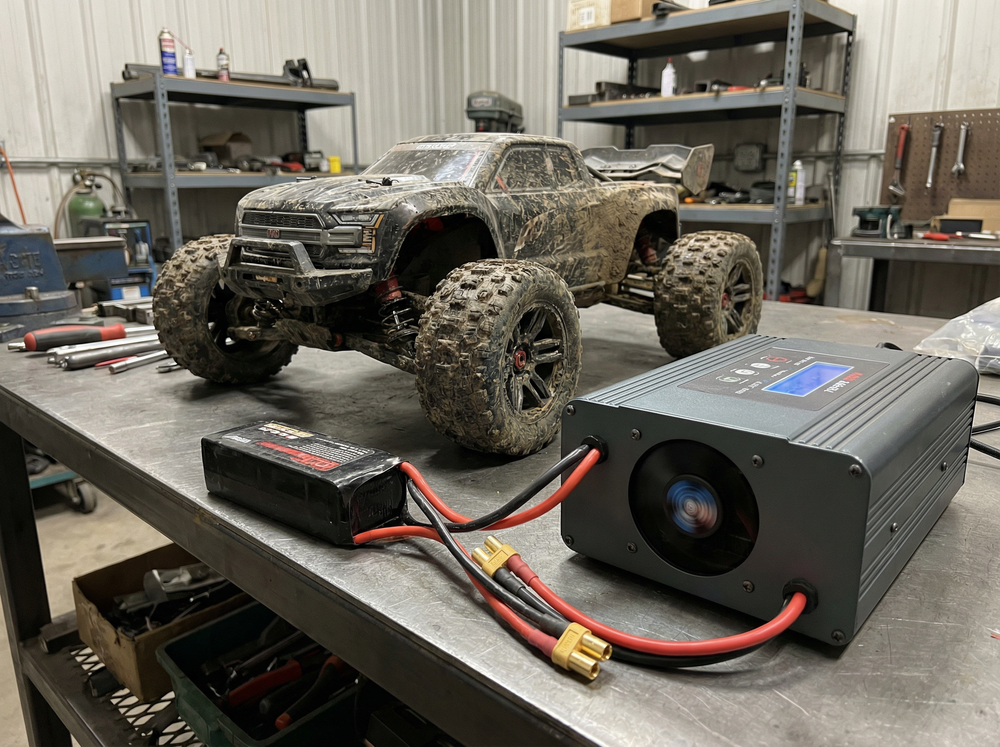
Choosing the right RC battery charger is one of the easiest ways to protect your batteries, improve performance, and avoid expensive mistakes. With hundreds of RC chargers on the market ranging from budget £30 units to professional-grade chargers costing £500+, it’s surprisingly easy to buy the wrong one.
At Unmanned Tech, we see this daily. Customers often upgrade batteries long before they upgrade chargers, then wonder why charge times are slow or packs don’t last as long as expected. This guide breaks down exactly how to choose the right RC charger in 2026, based on real-world use across cars, trucks, drones, and robotics platforms.
Should You Choose a Smart RC Charger or a Basic Charger?
Basic RC chargers are inexpensive and simple, but they quickly become limiting. Smart chargers cost more upfront but usually save money over time by extending battery lifespan and adding critical safety features.
When a Basic RC Charger Makes Sense
A basic charger (the one you get with your RC car) is suitable if you:
- Own a single RTR (Ready-to-Run) vehicle
- Use NiMH batteries only
- Run occasionally at weekends
These chargers are often the ones bundled with RTR car kits or RTF drone kits and typically cost as little as £10–£40. They charge at low fixed currents and work for basic use, but offer very little flexibility and minimal protection if something goes wrong.
Why Smart RC Chargers Are Usually the Better Choice
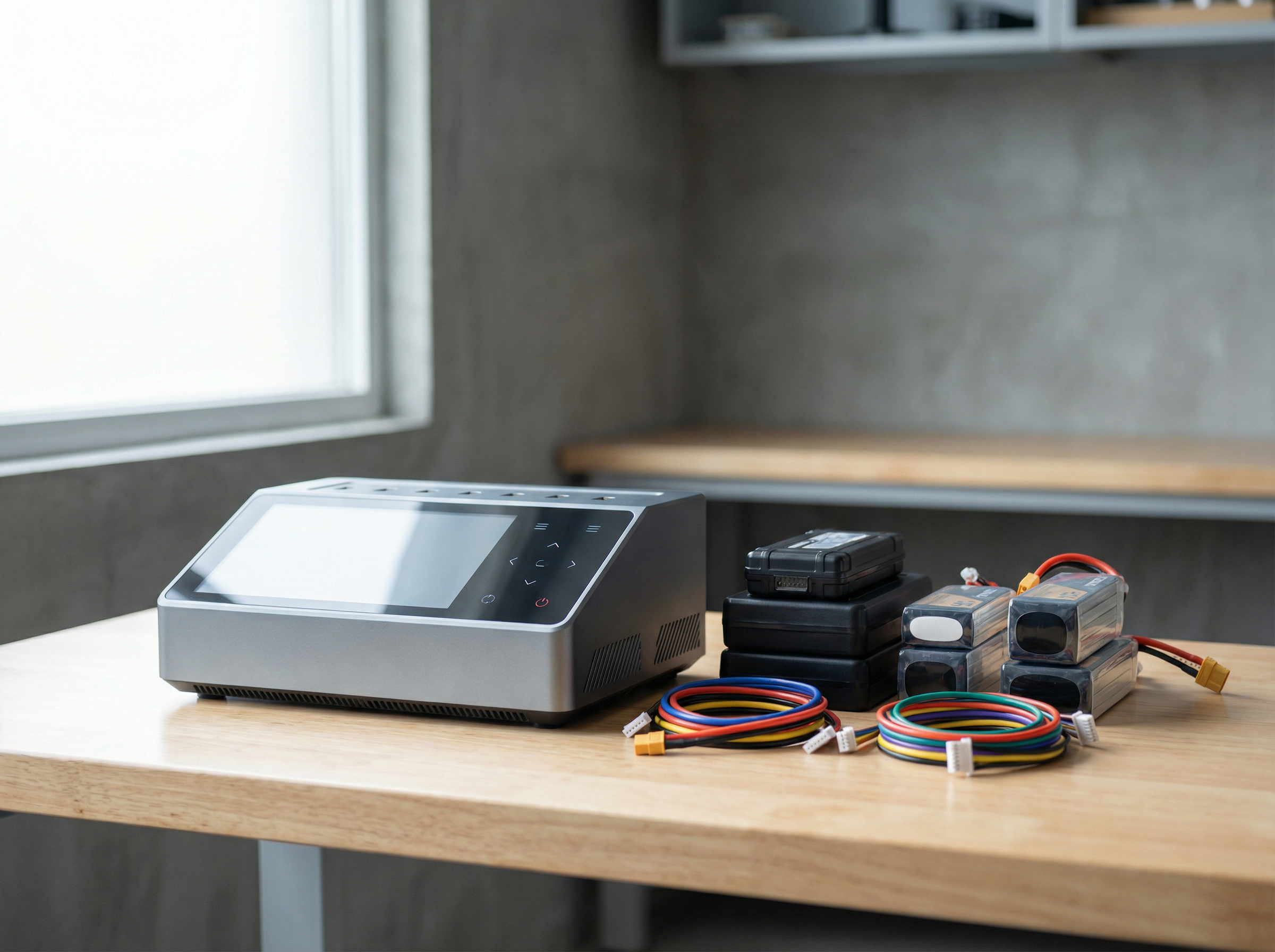
Smart chargers support multiple battery chemistries including LiPo, NiMH, NiCd, Li‑Ion, Li‑Fe, and lead-acid. One charger can handle car packs, transmitter batteries, and future upgrades.
Key benefits include:
- Accurate balance charging
- Individual cell voltage monitoring
- Automatic charge termination
- Battery recovery and storage modes
If you plan to stay in the RC hobby, a smart charger almost always pays for itself.
Types of Battery Chargers for RC Cars
Understanding charger types makes it far easier to choose the right one for your setup, and avoid pairing the wrong charger with the wrong battery.
Trickle / Basic Chargers
These are the simplest chargers and are most commonly included with RTR car kits and RTF drone kits. They supply a low, fixed current and rely on time rather than battery feedback.
They are suitable only for NiMH (and older NiCd) batteries and are not recommended for LiPo use. While cheap and simple, they offer minimal safety protection and no flexibility as your setup evolves.
Peak Detection Chargers
Peak detection chargers monitor voltage changes to automatically stop charging when a NiMH or NiCd battery is full. This prevents overcharging and significantly improves battery lifespan compared to basic chargers.
They are a solid step up for NiMH users but are not suitable for LiPo batteries unless they also support balance charging.
Balance Chargers (LiPo Chargers)
Balance chargers are essential for LiPo, Li-Ion, and Li-Fe batteries. They actively monitor and balance each individual cell, ensuring no single cell is over- or under-charged.
Most modern smart chargers fall into this category and also support NiMH charging, making them the most versatile option for RC cars, drones, and robotics platforms.
How Much Power Does an RC Battery Charger Really Need?
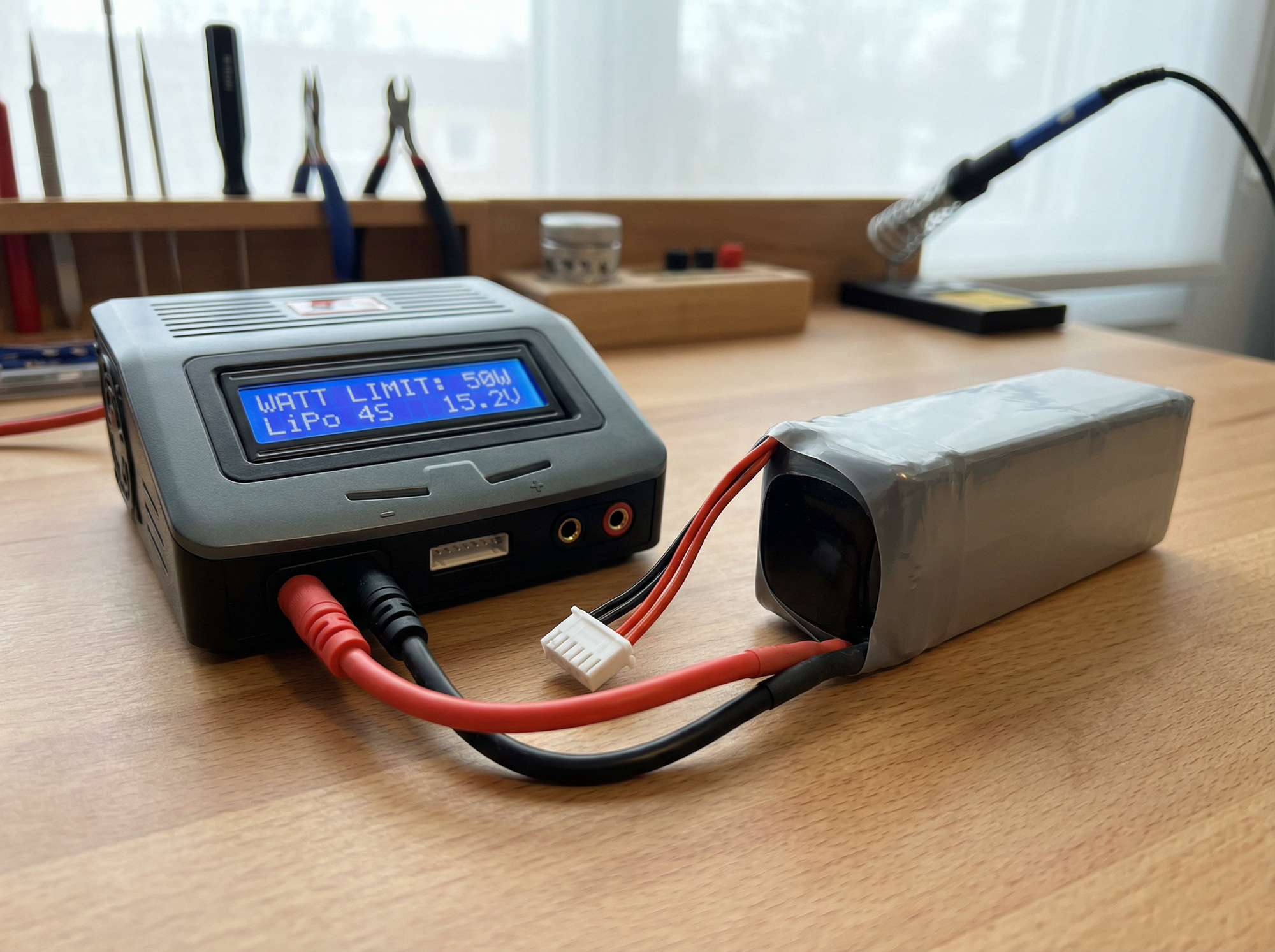
Many chargers advertise high amp ratings, but wattage is what actually matters.
Watts vs Amps Explained Simply
Power is calculated as:
Voltage × Amps = Watts
A charger rated at 10A but limited to 60W cannot actually deliver 10A at higher battery voltages.
Realistic Charging Examples
- 5000mAh 2S LiPo at 1C (5A):
- 8.4V × 5A ≈ 42W
- ~70 minutes including balancing
- 6000mAh 4S LiPo at 1C (6A):
- 16.8V × 6A ≈ 101W
Always allow at least 10–20% wattage headroom above your calculated requirement.
Should You Buy an AC or DC RC Charger?
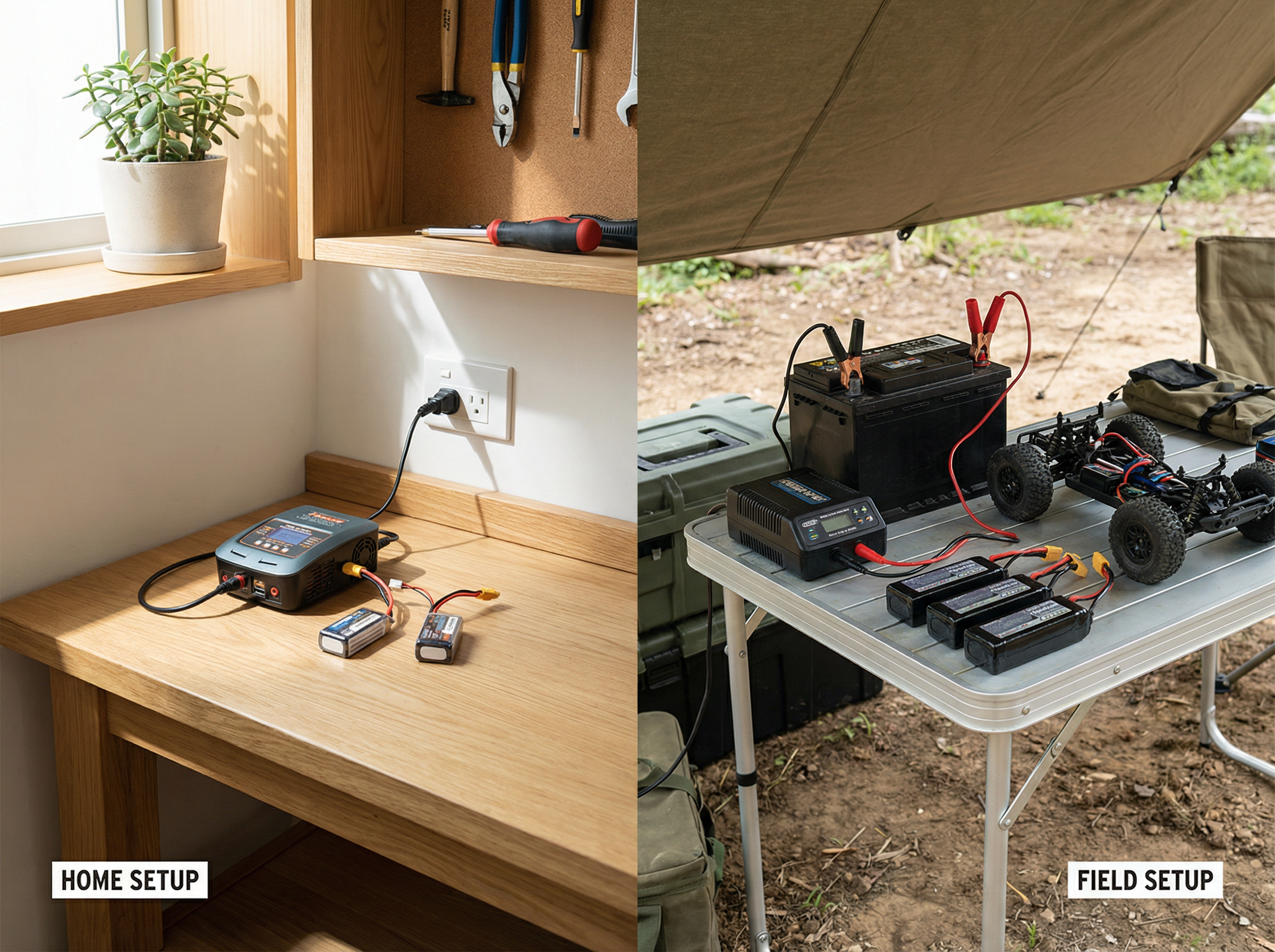
AC RC Chargers
AC chargers plug directly into the wall and are ideal for home use. They are convenient, portable, and require no extra equipment, but usually cost more per watt.
DC RC Chargers
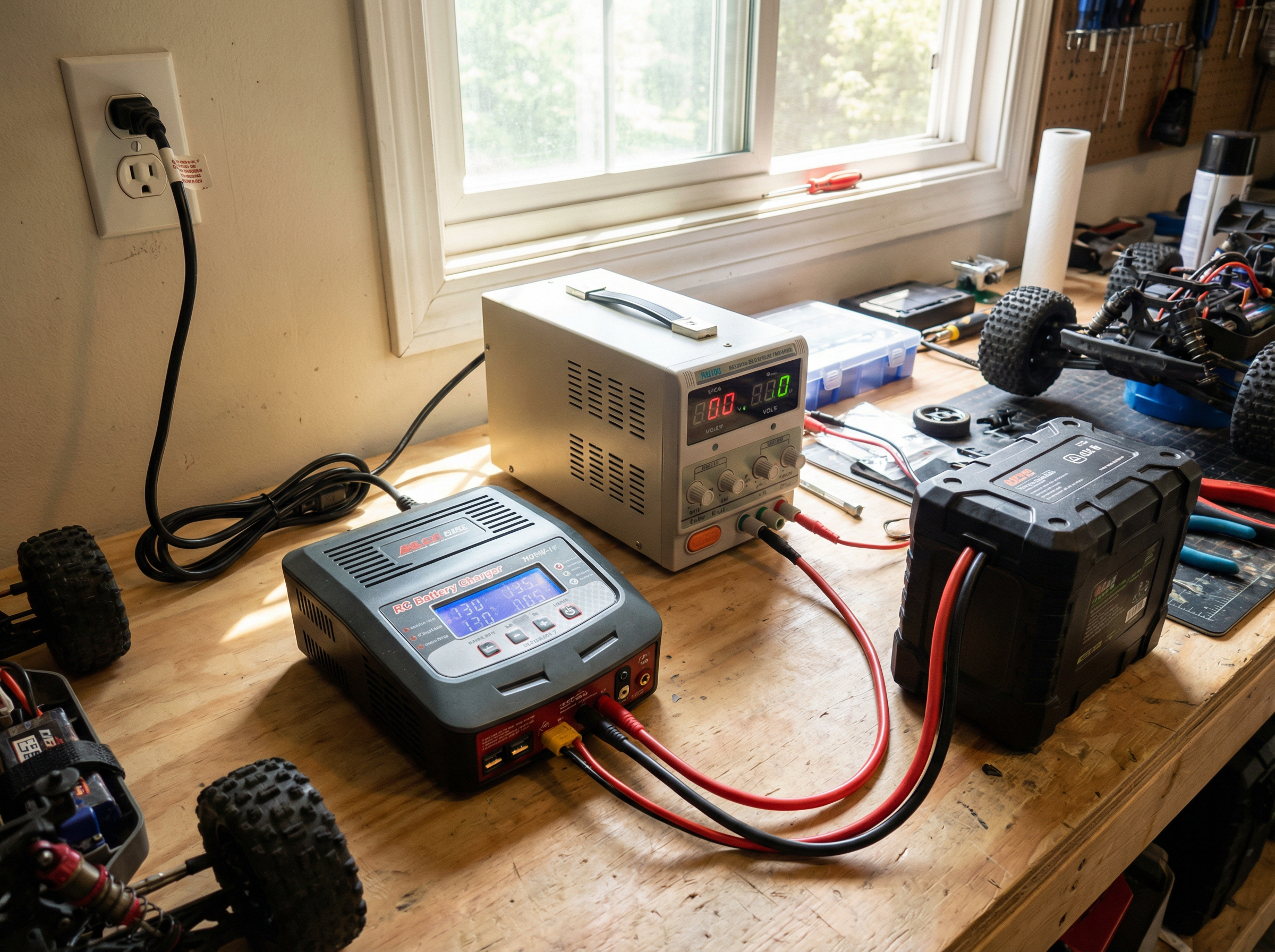
DC chargers require an external power supply or car battery but typically offer far higher output for the price. They are popular at tracks and workshops.
If you mostly charge at home, AC is simpler. If you need serious power or trackside flexibility, DC is often better.
Is a Single or Multi-Channel RC Charger Better?
Single-channel chargers are cheaper and fine for light use, but they charge one battery at a time.
Multi-channel chargers allow you to:
- Charge multiple packs simultaneously
- Reduce downtime between runs
- Scale as your battery collection grows
Dual-channel chargers are often the best long-term choice.
What Are the Best RC Battery Chargers in 2025?
Below are proven chargers commonly used by hobbyists and professionals.
| Charger | Power | Best For | Price Range | Key Feature |
|---|---|---|---|---|
| Gens Ace iMars D300 | 300W AC / 700W DC | Most users | Mid-range | Dual-channel smart charging |
| SkyRC D200neo | 200W AC / DC | Home & track | Mid-range | Compact AC/DC dual channel |
| Traxxas EZ-Peak Plus 8A | 75W | Traxxas owners | Budget | Auto iD detection |
| SkyRC PC1080 | 1080W total | Competition | Premium | Master-slave sync |
| Gens Ace iMars III | 100W | Beginners | Entry-level | Built-in AC PSU |
Key Features to Look for in a Battery Charger
Beyond raw power, several features make a real difference to safety, convenience, and battery longevity.
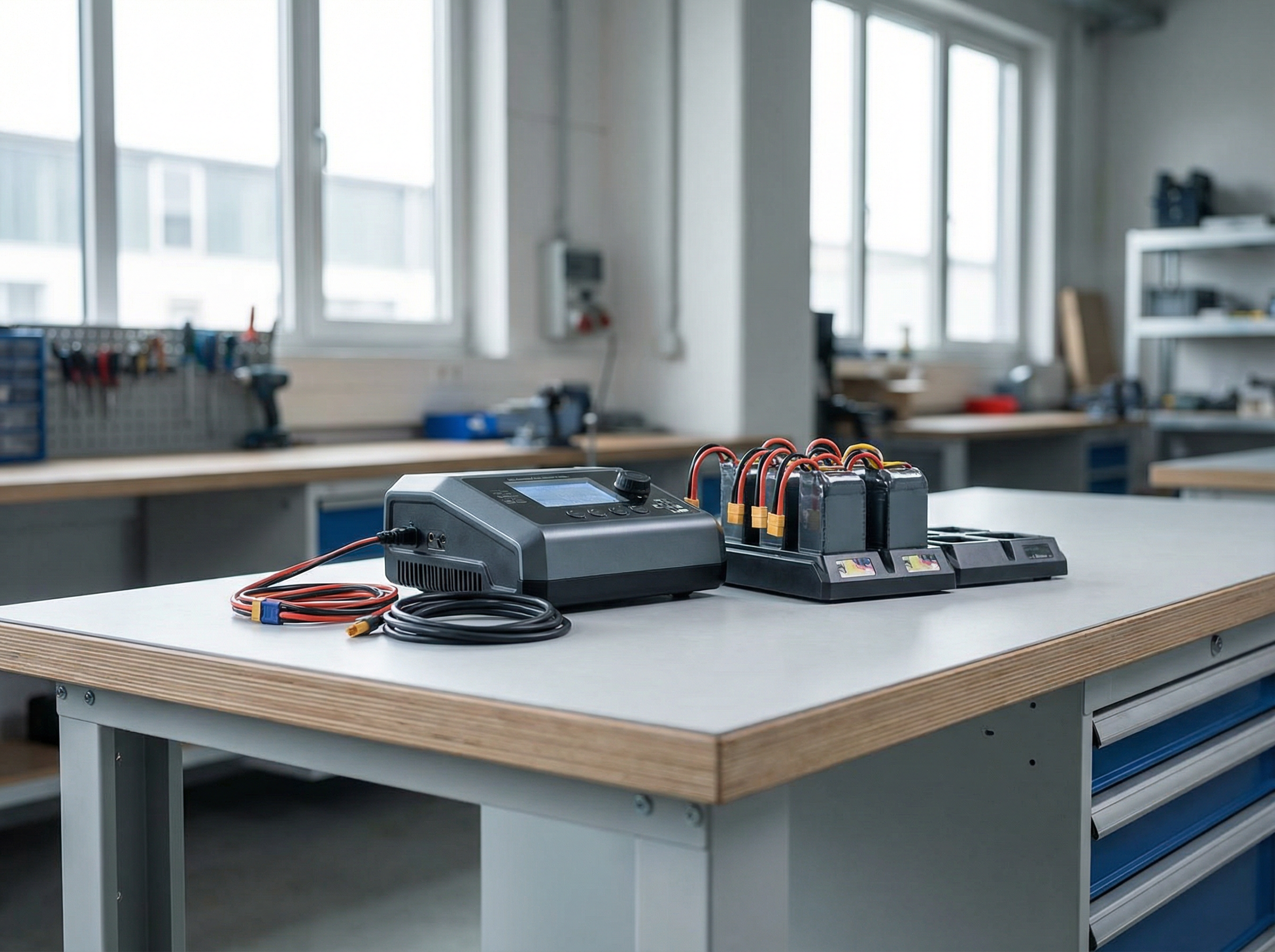
Balance Charging
Essential for all lithium-based batteries. A good charger should display individual cell voltages and maintain tight balance tolerances.
Adjustable Charge Current
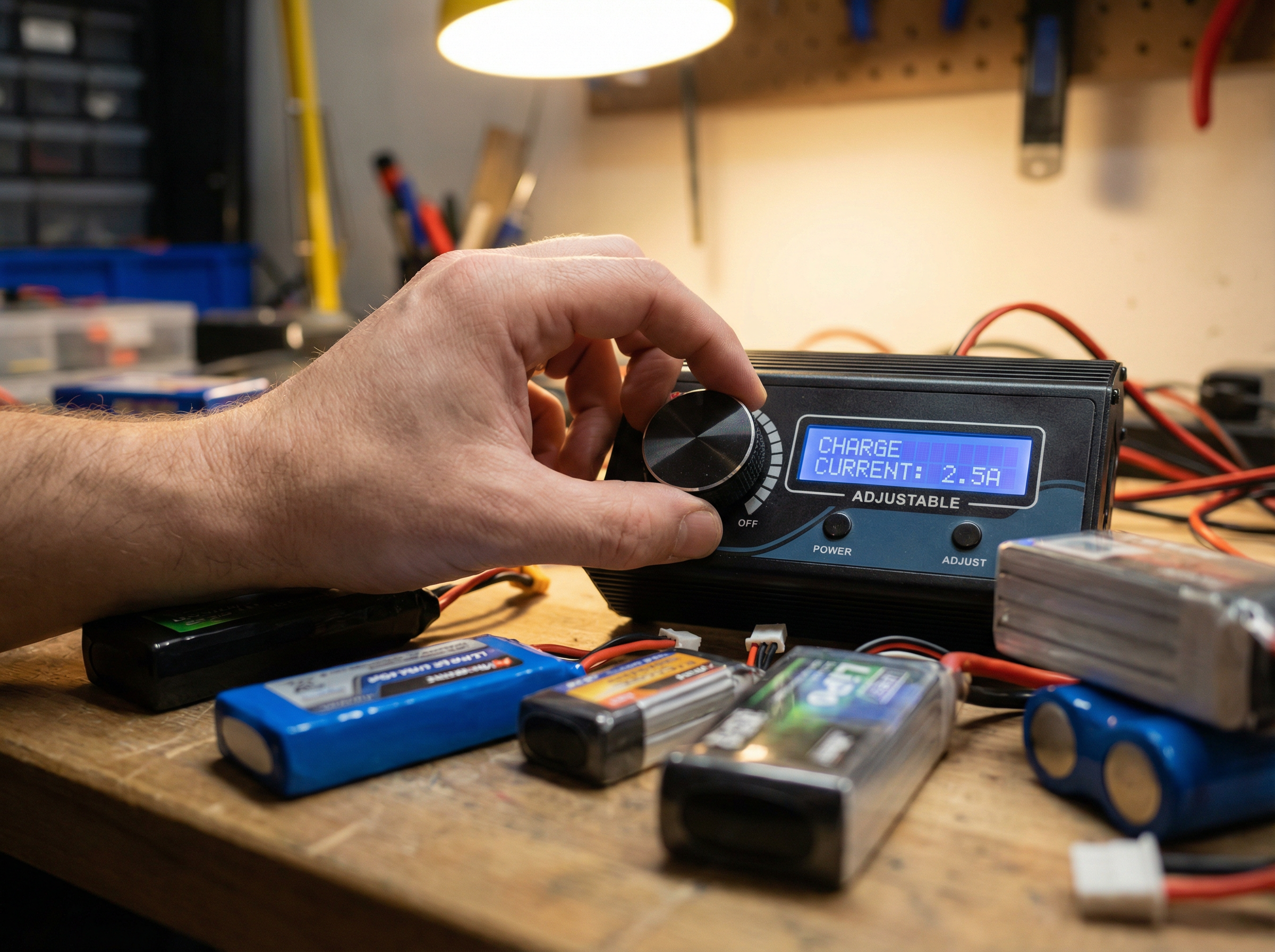
Being able to set the charge rate allows you to safely charge different battery sizes at their recommended 1C rate, rather than relying on a fixed current.
Storage Mode
Storage mode automatically charges or discharges LiPo batteries to a safe long-term voltage, which dramatically improves battery lifespan.
Safety Protections
Look for built-in protections such as reverse polarity, short-circuit, over-temperature, and time-out protection. These features protect both your batteries and your charger.
AC / DC Flexibility
Chargers that support both AC and DC inputs offer maximum flexibility for home, workshop, and trackside use.
How Do You Choose the Right Charger for Your RC Car Scale?
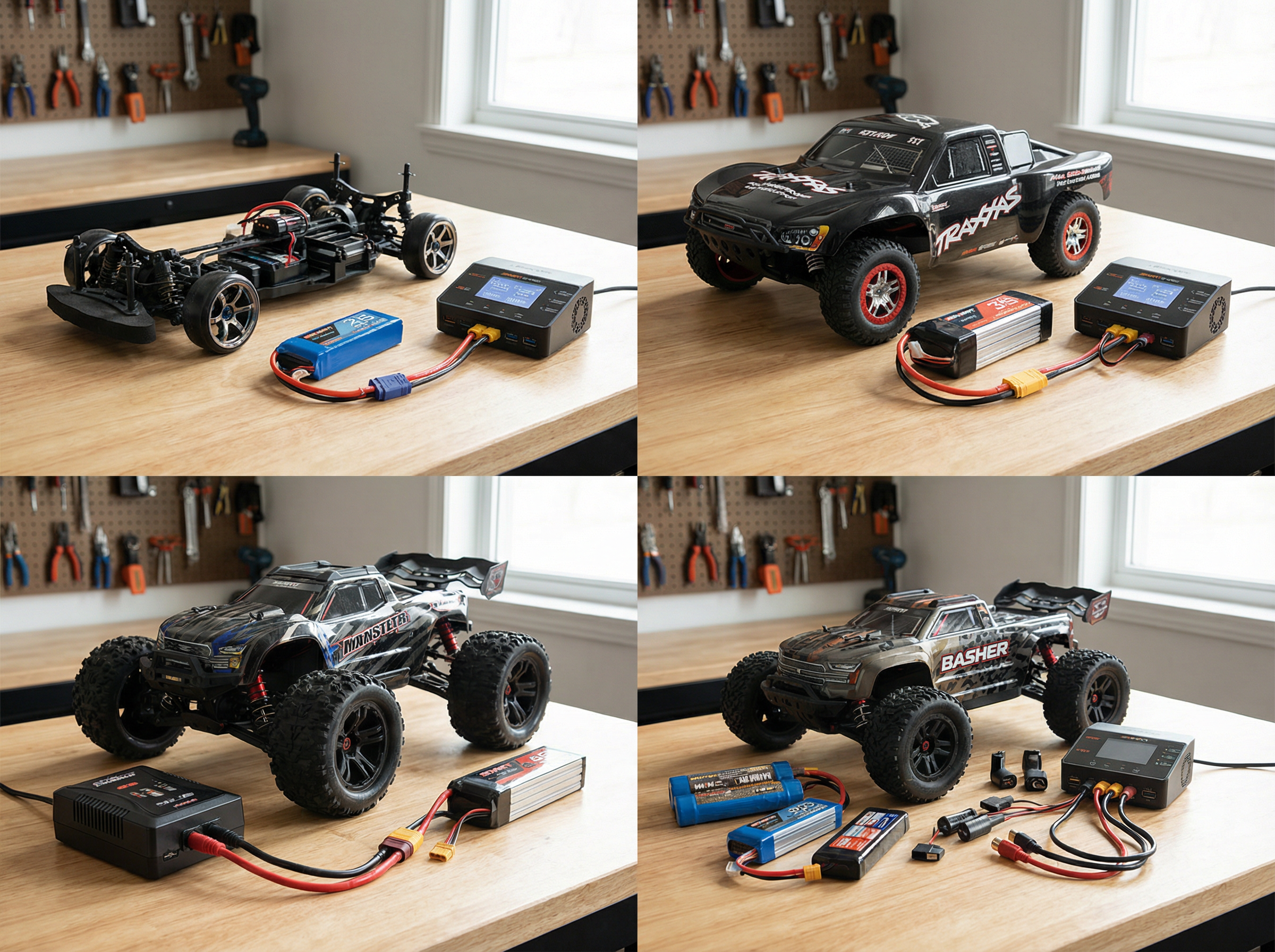
1/10 Scale On‑Road and Drift Cars
Most 2S–3S packs between 4000–8000mAh benefit from chargers providing 100–200W per channel. Accurate balancing improves consistency and runtime.
1/10 Off‑Road, Buggy, and SCT
Higher capacity 2S–4S packs charge faster and safer with 150–300W per channel. This allows efficient turnaround without overheating batteries.
1/8 Scale and Large‑Scale RC Vehicles
Large 4S–6S batteries require serious power. Look for chargers offering 300W+ per channel with active cooling.
Bashers and Monster Trucks
Versatility matters more than raw power. Multi-chemistry chargers that automatically adapt to different packs are ideal for mixed fleets.
RC Battery Charger FAQs
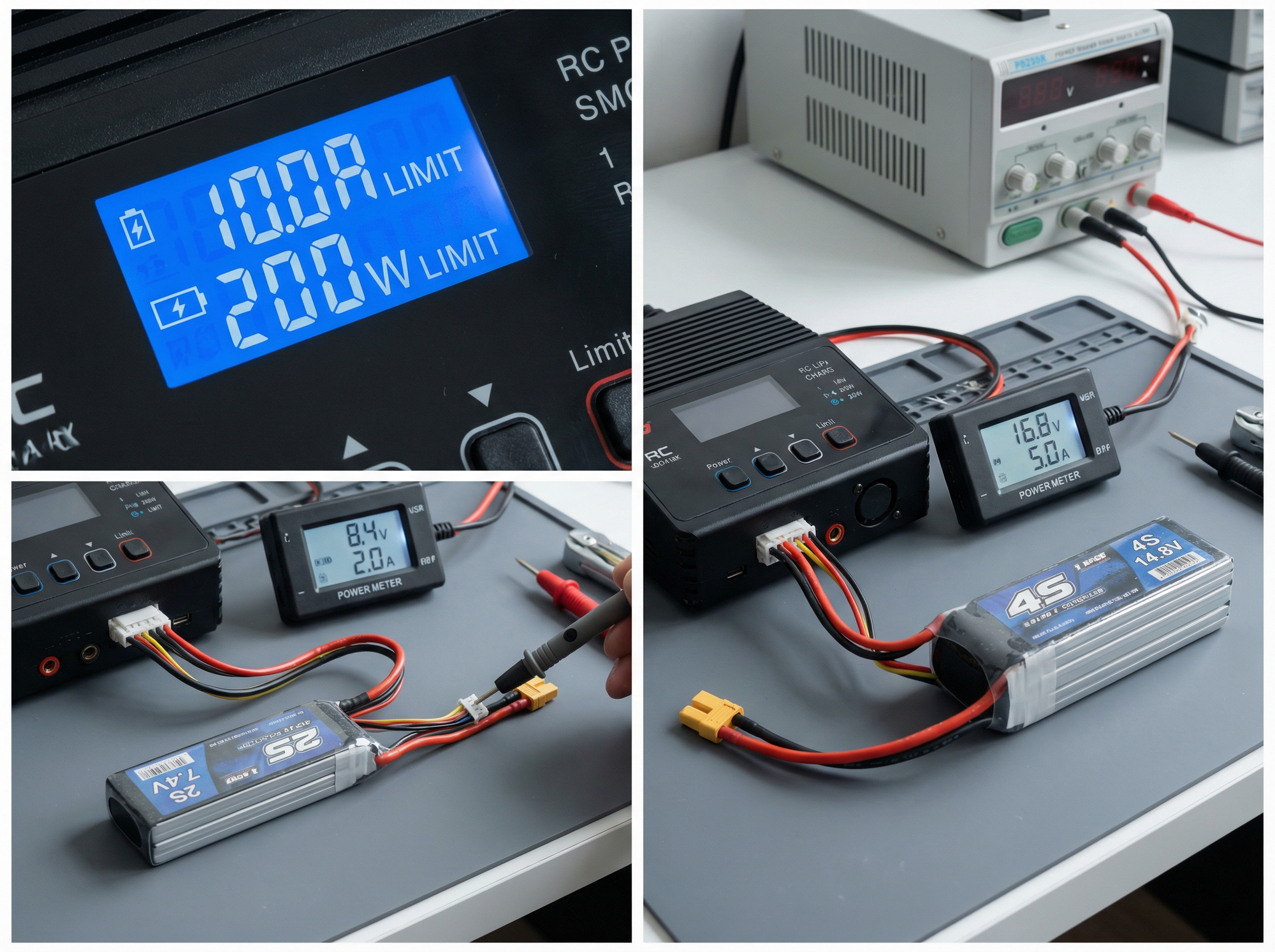
How long does a 5000mAh RC battery take to charge?
Typically 1–1.5 hours at a 1C charge rate using a proper balance charger.
How many amps should I charge my RC battery at?
1C is the safest default. For a 5000mAh battery, that’s 5 amps unless the manufacturer states otherwise.
Can you overcharge an RC battery?
Yes. Overcharging can cause swelling, overheating, or fire. Smart chargers with automatic cut-off are essential for lithium batteries.
Is it safe to leave RC batteries charging overnight?
No. Batteries should never be left charging unattended, even with modern chargers.
🛒Where To Buy Lipo Chargers
Final Thoughts: Choosing the Best RC Charger
The right RC charger protects your batteries, saves time, and avoids costly failures. Choose based on battery type, power requirements, and how you actually use your RC vehicles, not just headline specs.
Buying slightly more charger than you need today is usually cheaper than replacing batteries or upgrading later. A good charger is an investment, not an accessory.