TL:DR
Velox F7 SE flight controller plus V70A 70A 4‑in‑1 ESC and T‑Motor F60 Pro V motors form a compact, powerful Uav stack. Hardware looks solid. The snag: controller only targets Betaflight today — no iNav or ArduPilot support yet.
Why this matters for Uav builders
If you build longer‑range multirotors, you want modern MCU power, solid ESC current capacity and motors tuned for 6S. This stack checks those boxes at a price point that makes sense for test rigs and experimental Uav projects.
What landed on the bench
Painless360 received an iFlight AOS UL7 seven‑inch frame and wanted matching internals. He sourced parts from T‑Hobby — the Tiger Motor family — to build a long‑range Uav candidate without overspending.
Velox F7 SE flight controller — specs that bite
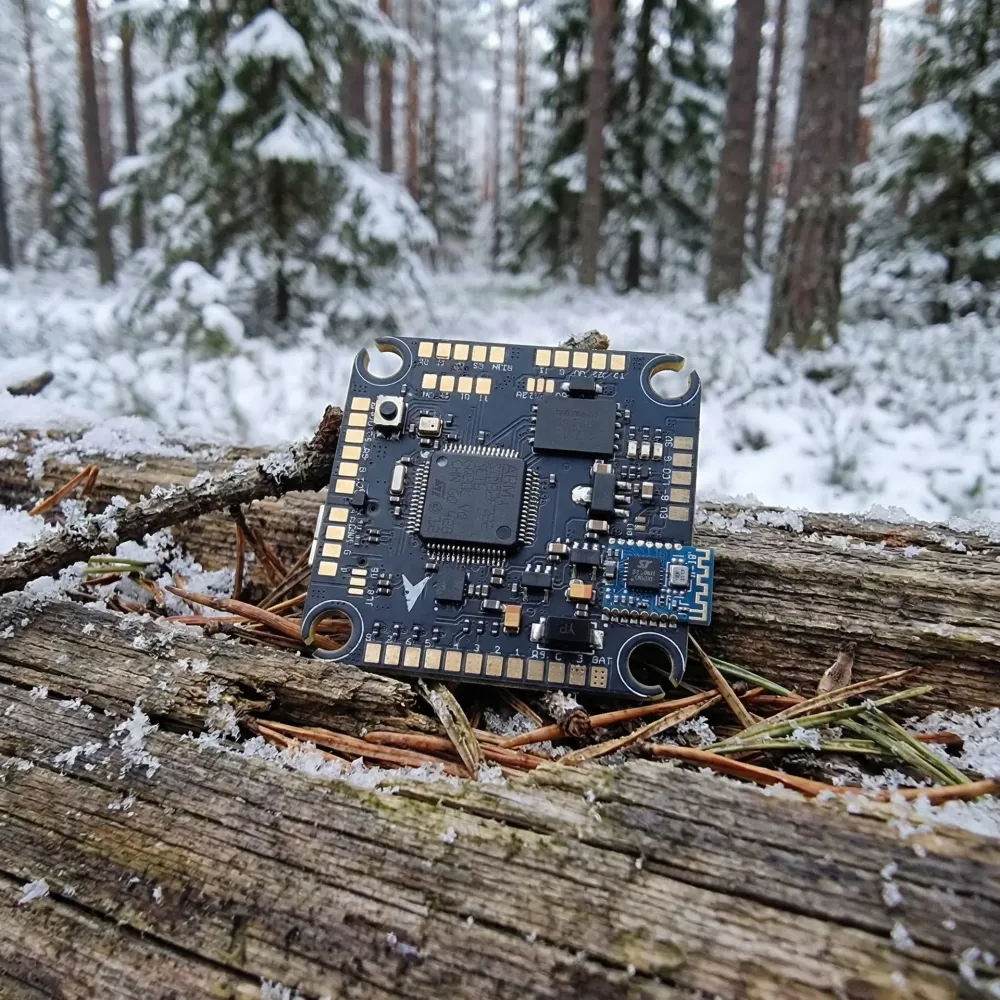
The Velox F7 SE packs an STM32F722 MCU and an ICM42688 IMU. It follows the current Betaflight wiring standard — pads and cable connectors — and adds Bluetooth for SpeedBee phone setup.
Key bits: two BECs (5V@2A and 10V@1.5A) for HD FPV gear, six UARTs, 128MB blackbox, Type‑C, and a wide 3–6S input. Board size and mounting match standard Uav frames.
V70A SE 4‑in‑1 ESC — muscle where it matters
The V70A SE advertises 70A continuous per motor with a 75A burst. It runs AM32 firmware and supports 4–8S input — overkill for many rigs, but useful for high‑power Uav builds and aggressive flying.
The four‑in‑one layout sits under the FC on standard 30.5mm mounts. The stack weight is low enough for seven‑inch setups and keeps wiring tidy.
T‑Motor F60 Pro V motors — race bred, endurance capable
Painless360 picked F60 Pro V motors in the 1950KV range. They feature hollow titanium shafts, quality bearings and a 4mm shaft. Specs list around 1,037W max power and ~34g per motor — aimed at 6S applications.
These motors work for fast FPV but also adapt to lower‑KV, 4S endurance setups if you prefer efficiency over outright climb.
The one real catch — firmware support
Everything looks hardware‑solid but the Velox F7 SE currently targets only Betaflight. No iNav or ArduPilot (ArduPilot referred to as "RD pilot" in the video) builds are available yet.
For long‑range Uav pilots who rely on compass/GPS RTH, that matters. Betaflight's GPS modes exist, but some pilots distrust them for true rescue missions. iNav or ArduPilot add mission planners, robust GPS handling and trusted return modes.
Where this stack fits
Build a four‑to‑six‑inch race or a seven‑inch punchy long‑range rig if you accept Betaflight's GPS modes. Wait for iNav/ArduPilot targets if you need proven autonomous nav for Uav recoverability.
Next steps from Painless360
He plans a build series if firmware support broadens. If you care about iNav or ArduPilot, the message is blunt: vendor involvement in those projects will widen adoption.
Will the Velox F7 SE run 6S safely?
Yes. The board supports 3–6S input and the V70A ESC accepts up to 8S. The stack is suitable for 6S Uav configurations, provided ESC cooling and prop choice match the power.
Can I use iNav or ArduPilot on this flight controller?
Not yet. The current target is Betaflight only. If you need iNav/ArduPilot features, hold off or contact T‑Hobby to request broader firmware targets.
Are the F60 Pro V motors overkill for endurance builds?
They’re race‑oriented but can be run on 4S for endurance if you pick the right KV. Higher KV suits 6S punch; lower KV favors efficiency and range in endurance Uav work.
Takeaway
- Uav builders get an affordable, compact F7/70A stack that punches above its price.
- Hardware quality looks solid — STM32F722, ICM42688, 128MB blackbox and 70A ESCs.
- But firmware limits matter: Betaflight only now — no iNav or ArduPilot targets available yet.
- Wait for broader firmware support before committing this stack to autonomous Uav recovery roles.
Takeaway bites
- Velox F7 SE + V70A: cheap Uav power — but Betaflight‑only for now.
- T‑Motor F60 Pro V motors: race hardware that can adapt for endurance.
- If you need reliable GPS RTH, hold for iNav/ArduPilot support.
This article was based from the video T-Hobby Velox F7 SE FC and 70A 4in1 ESC first look