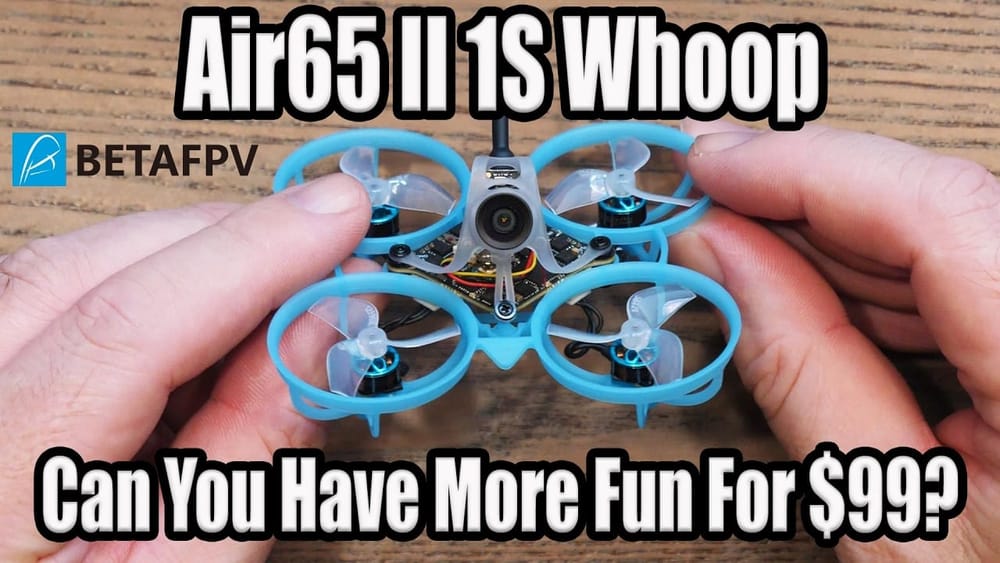
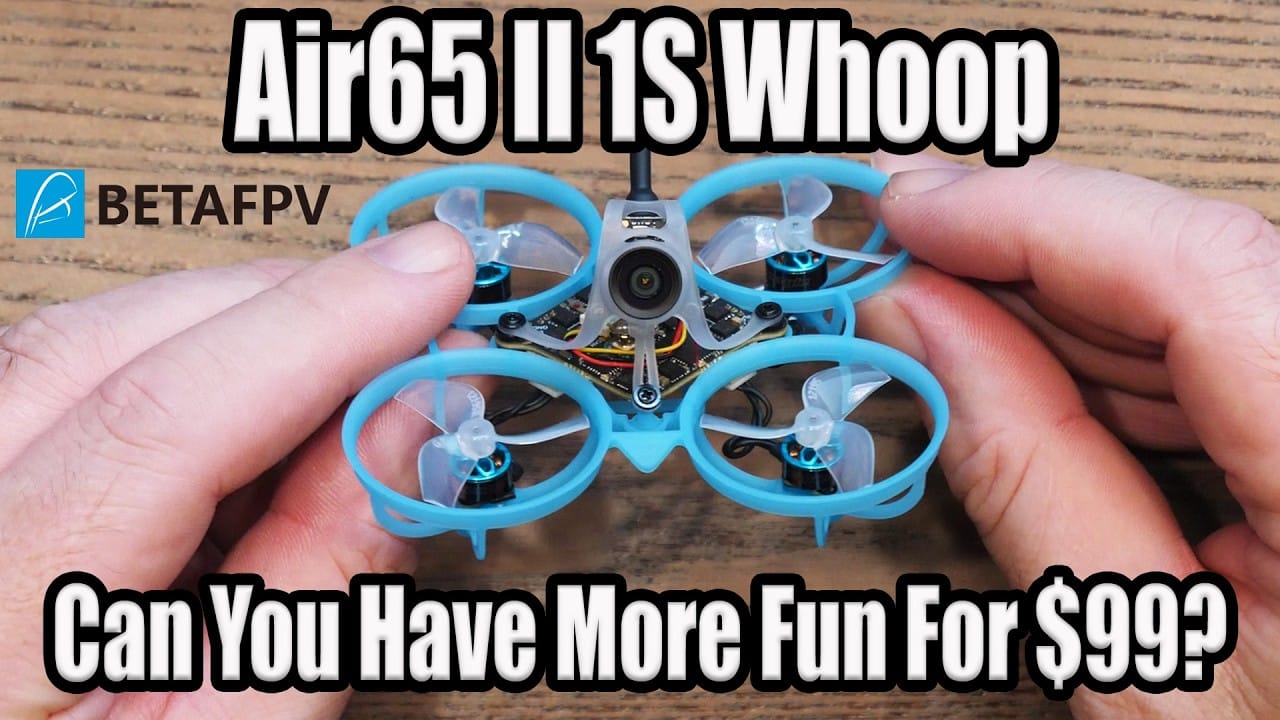
The small-whoop market is full of tiny promises and tiny compromises. This FpV drone matters because the BetaFPV Air65 II appears to do the unusual thing: arrive mostly sorted, fly well, and avoid wasting your afternoon in Betaflight.
TL:DR: BetaFPV’s Air65 II freestyle is a 1S analogue brushless whoop with onboard ELRS, a 5-in-1 flight controller, BT2.0 power, and a surprisingly tidy out-of-box tune. Angle mode needs work, the camera has a mild yellow cast, and one sample shipped with alpha firmware, which is not exactly confidence-inspiring. Even so, at $99, this FpV drone is hard to dislike.
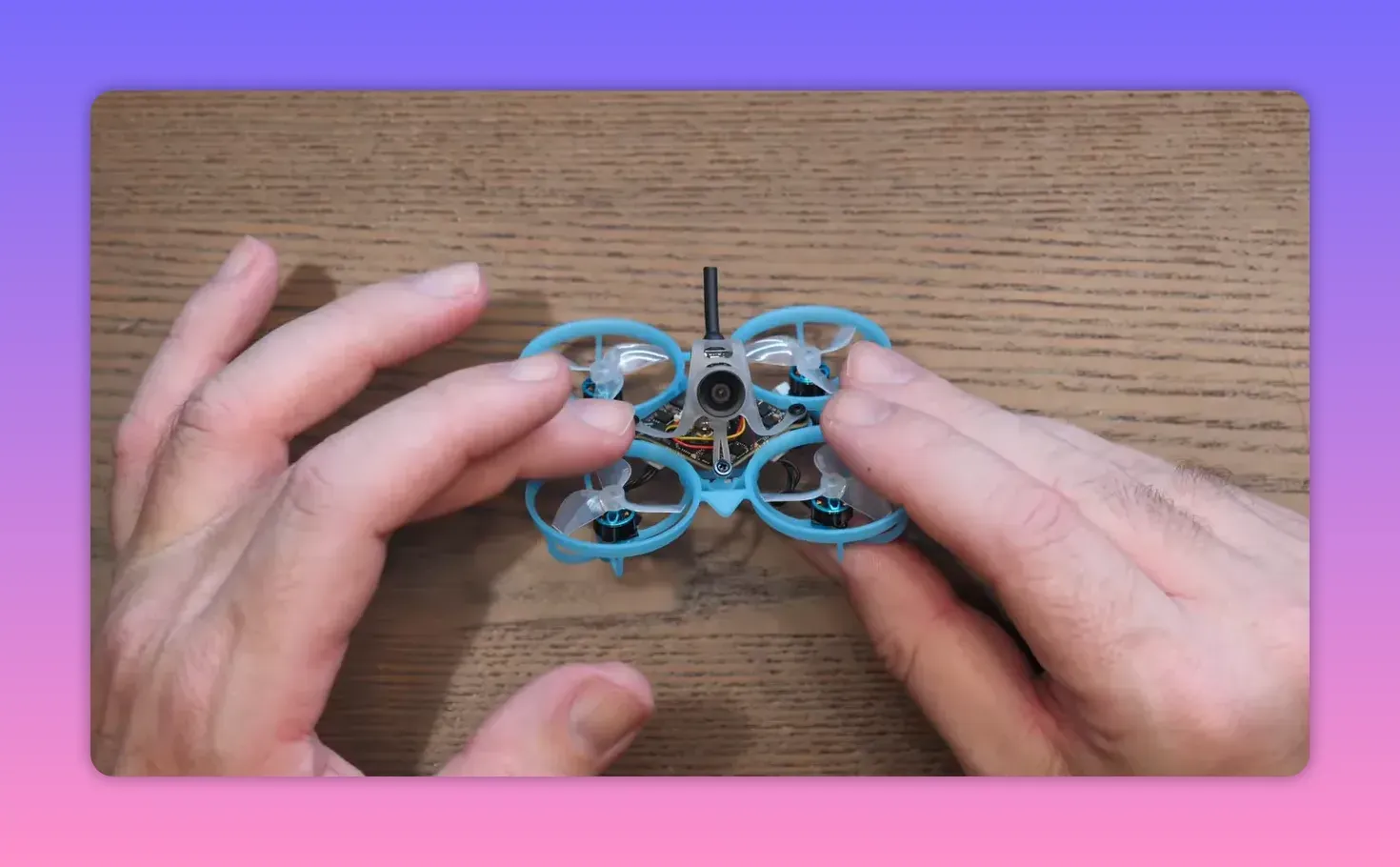
What BetaFPV is selling here
BetaFPV has split the Air65 II into three versions: Champion, Racing, and Freestyle. Same family, different intent, and the usual marketing suggestion that one more kV will fix your life.
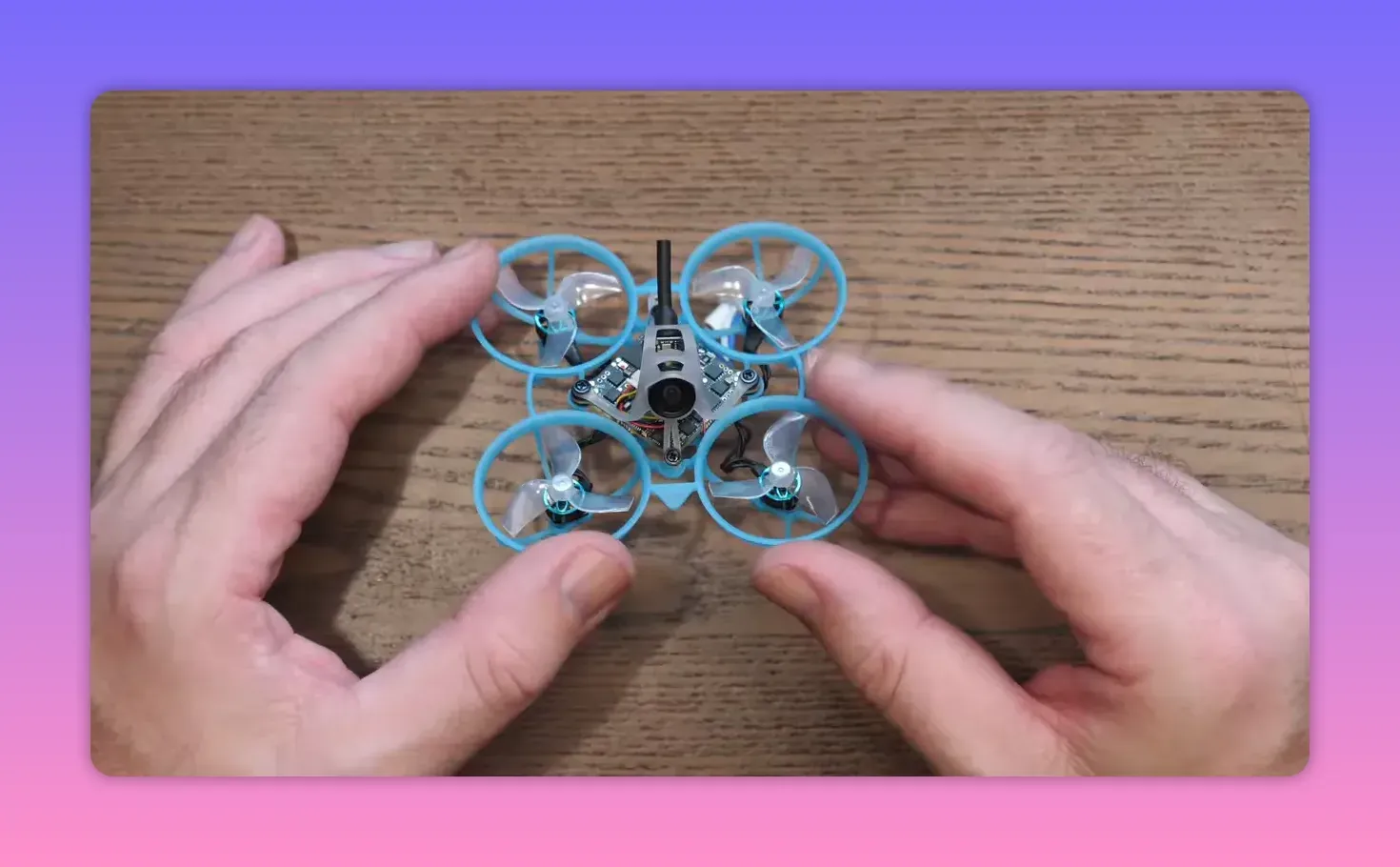
The review unit is the Freestyle version. It shares its frame with the Racing model, while the Champion uses a slightly different frame. The motor spread looks like this:
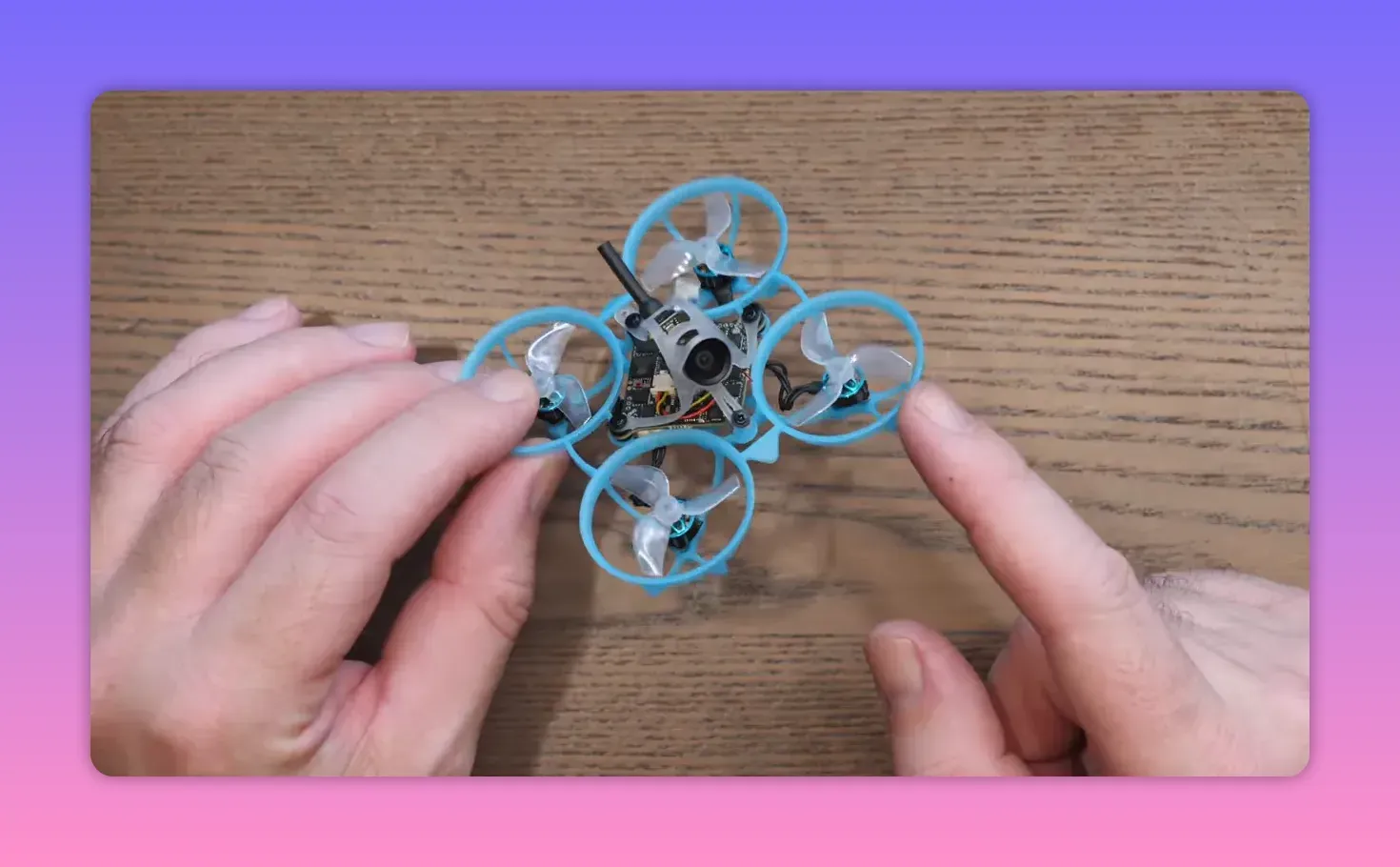
- Freestyle: 0702, 25,000KV
- Racing: 0702, 30,000KV
- Champion: 36,000KV
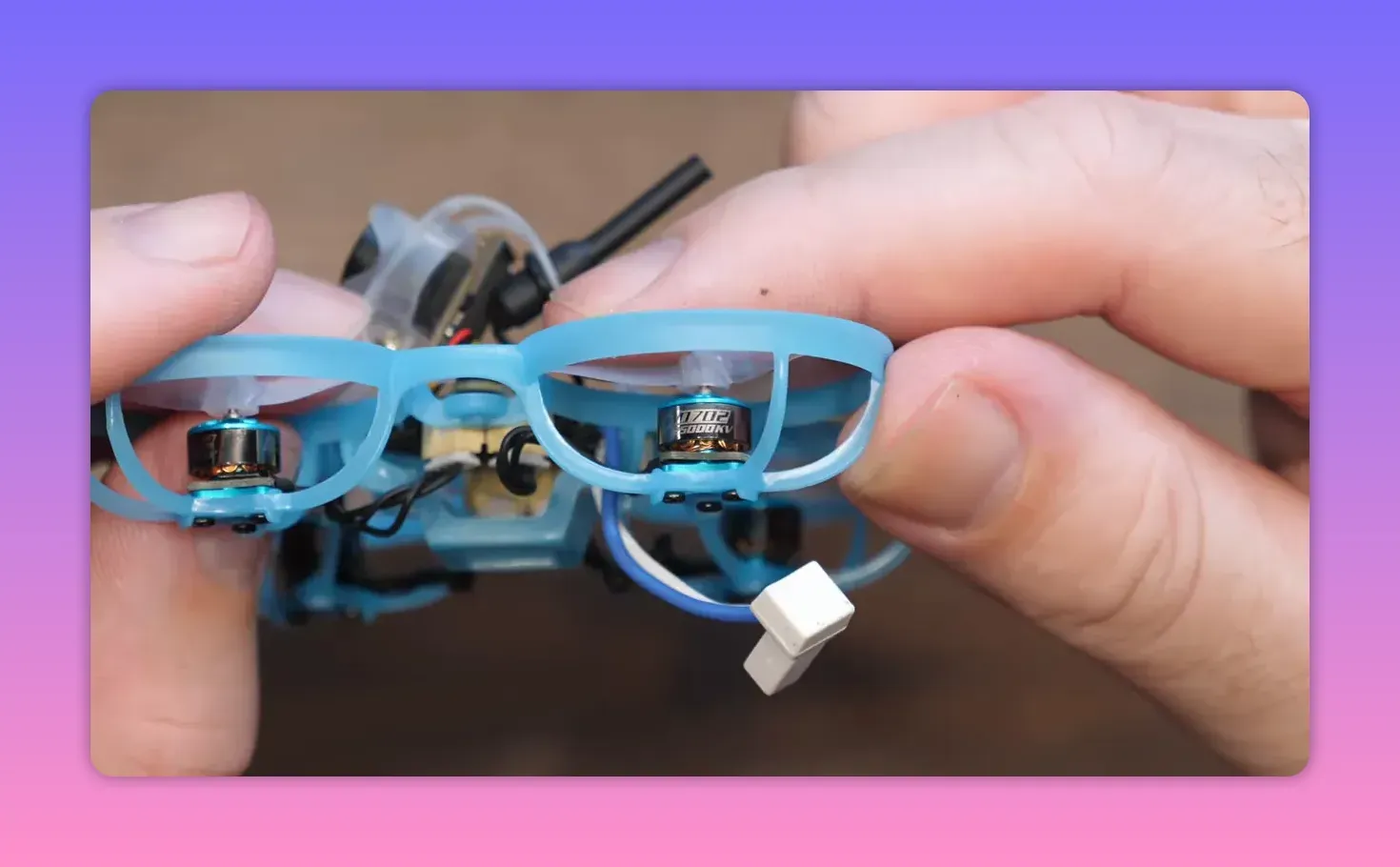
That makes the freestyle model the saner option for general flying. Not everything needs to behave like it is late for an appointment.
What comes in the box
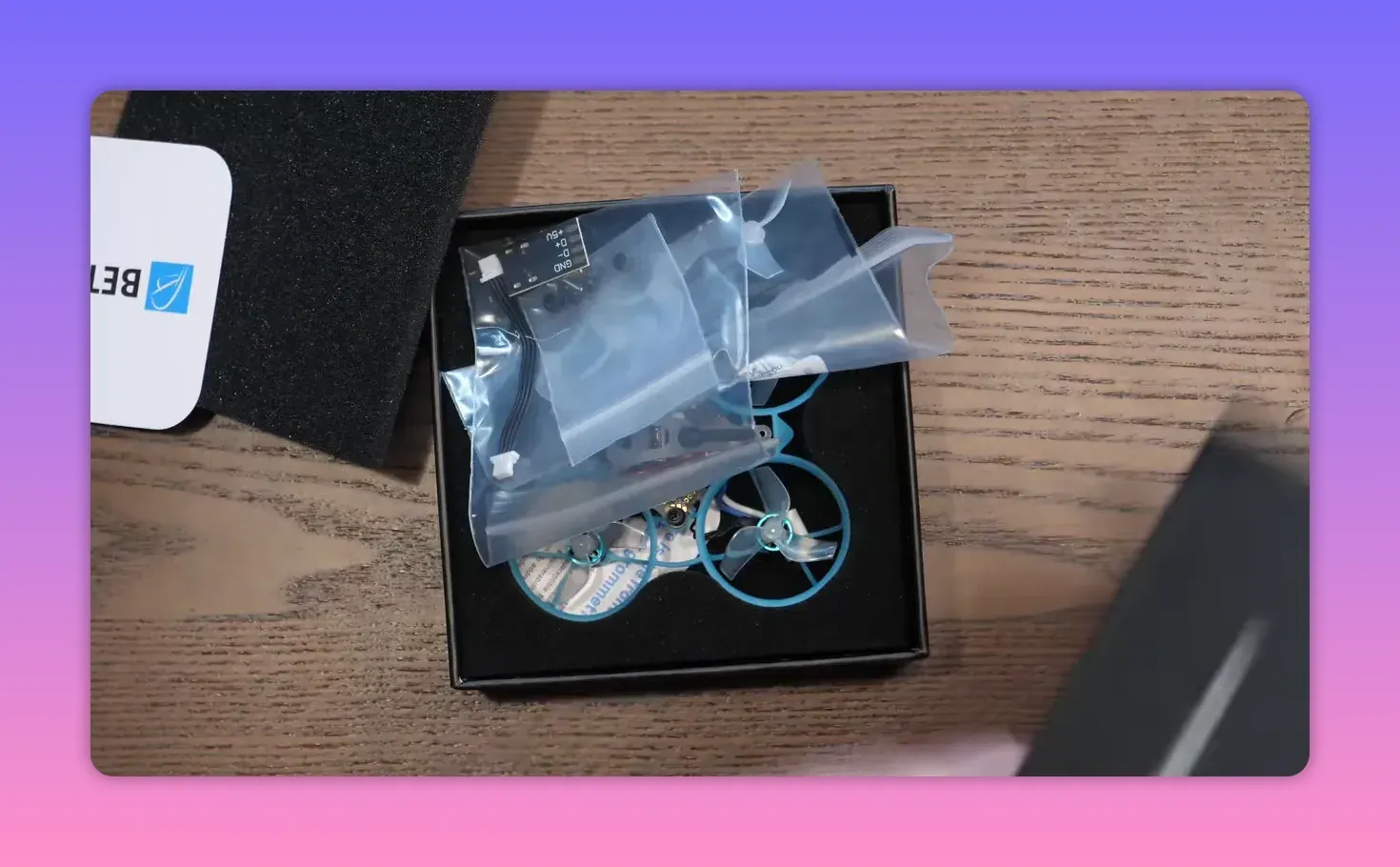
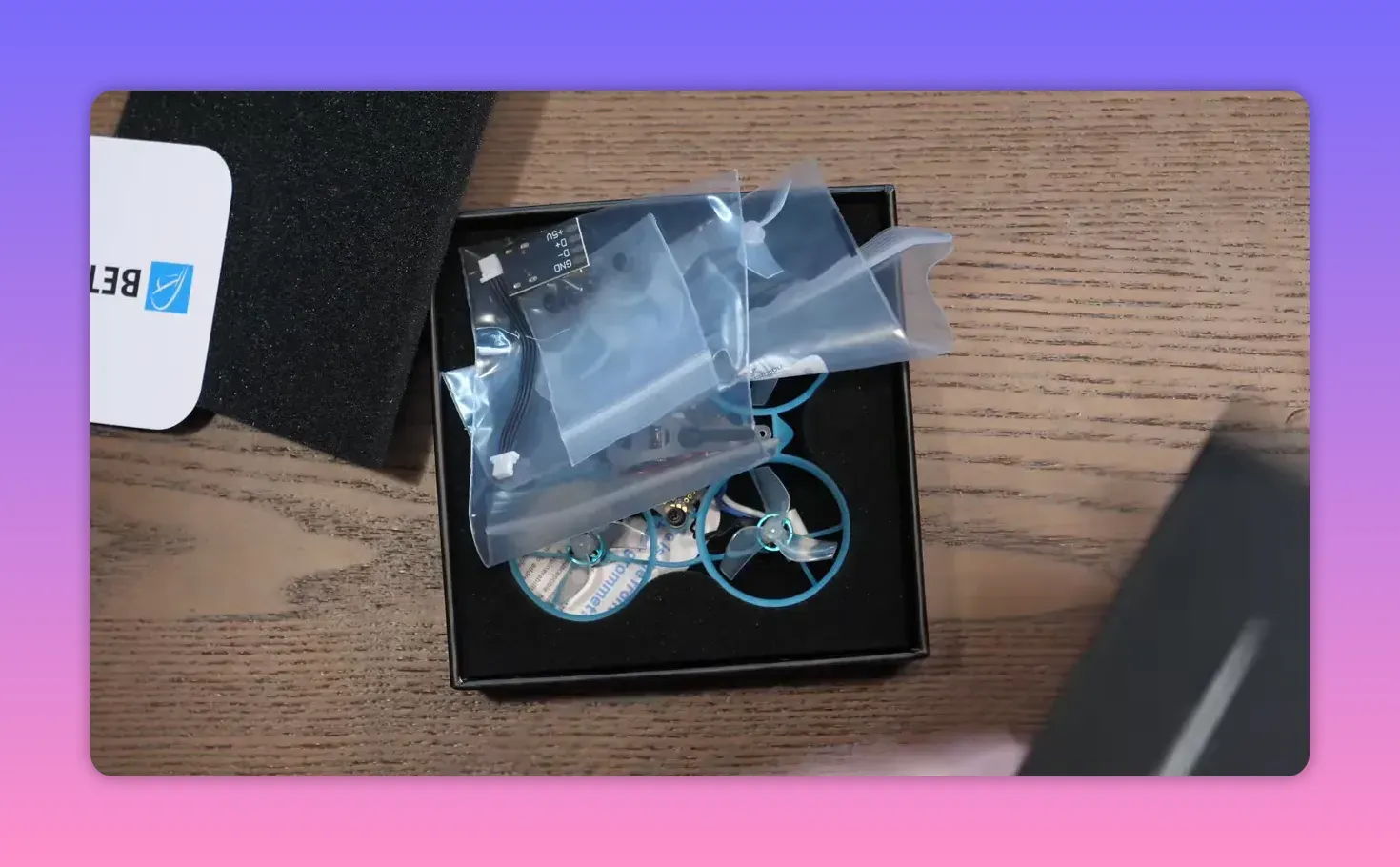
The bundle is simple and sensible. You get the Air65 II itself, spare props, a USB adapter lead, a spare canopy, a bit of foam, and a QR card. No grand theatre. Just the bits you may actually use.
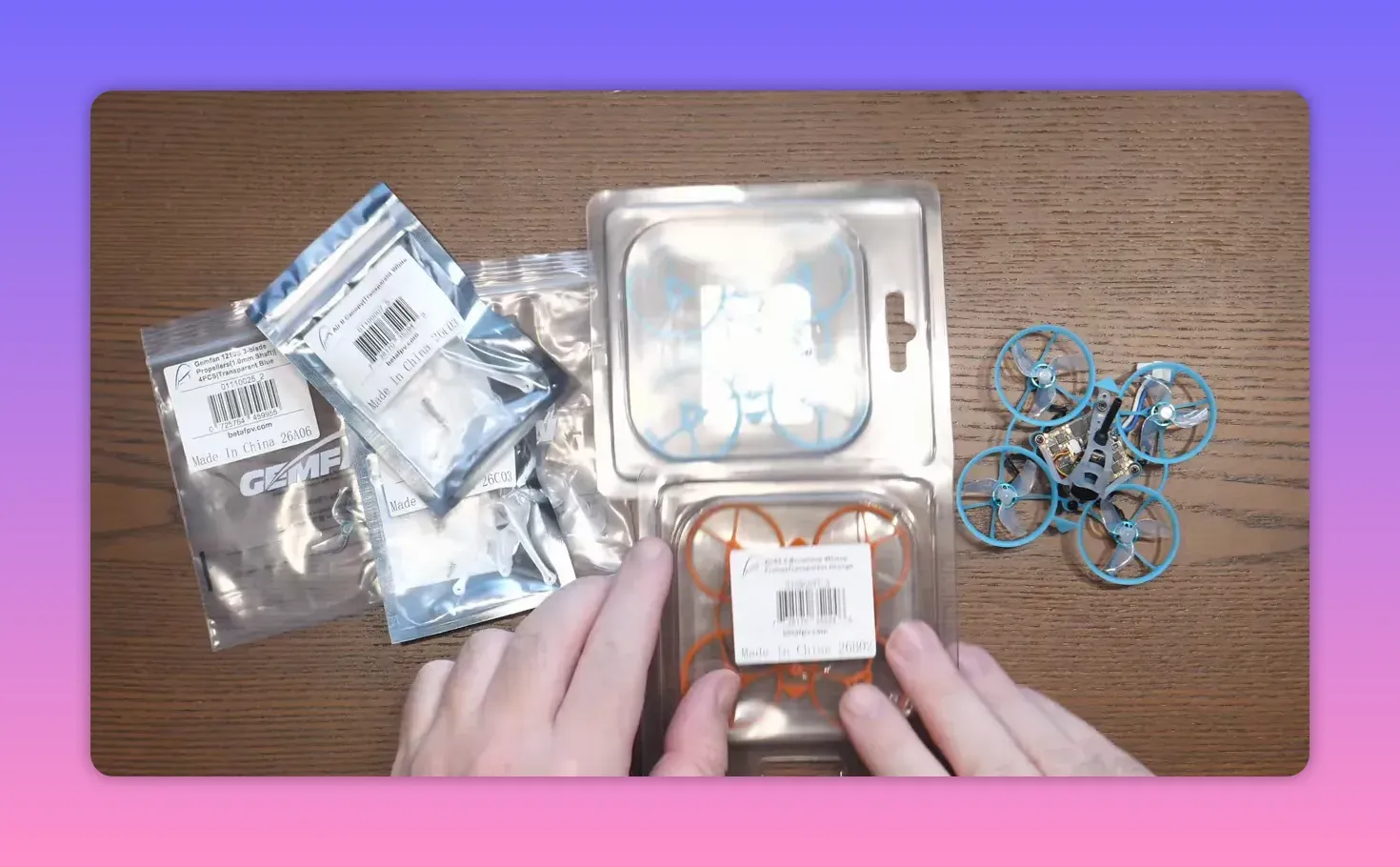
BetaFPV also sells the usual crash-tax spares: replacement frames in multiple colours, replacement canopies, and props in translucent and blue variants. That matters on a whoop, because tiny FpV drone parts have a habit of leaving the scene without notice.
Air65 II hardware: small board, full feature list
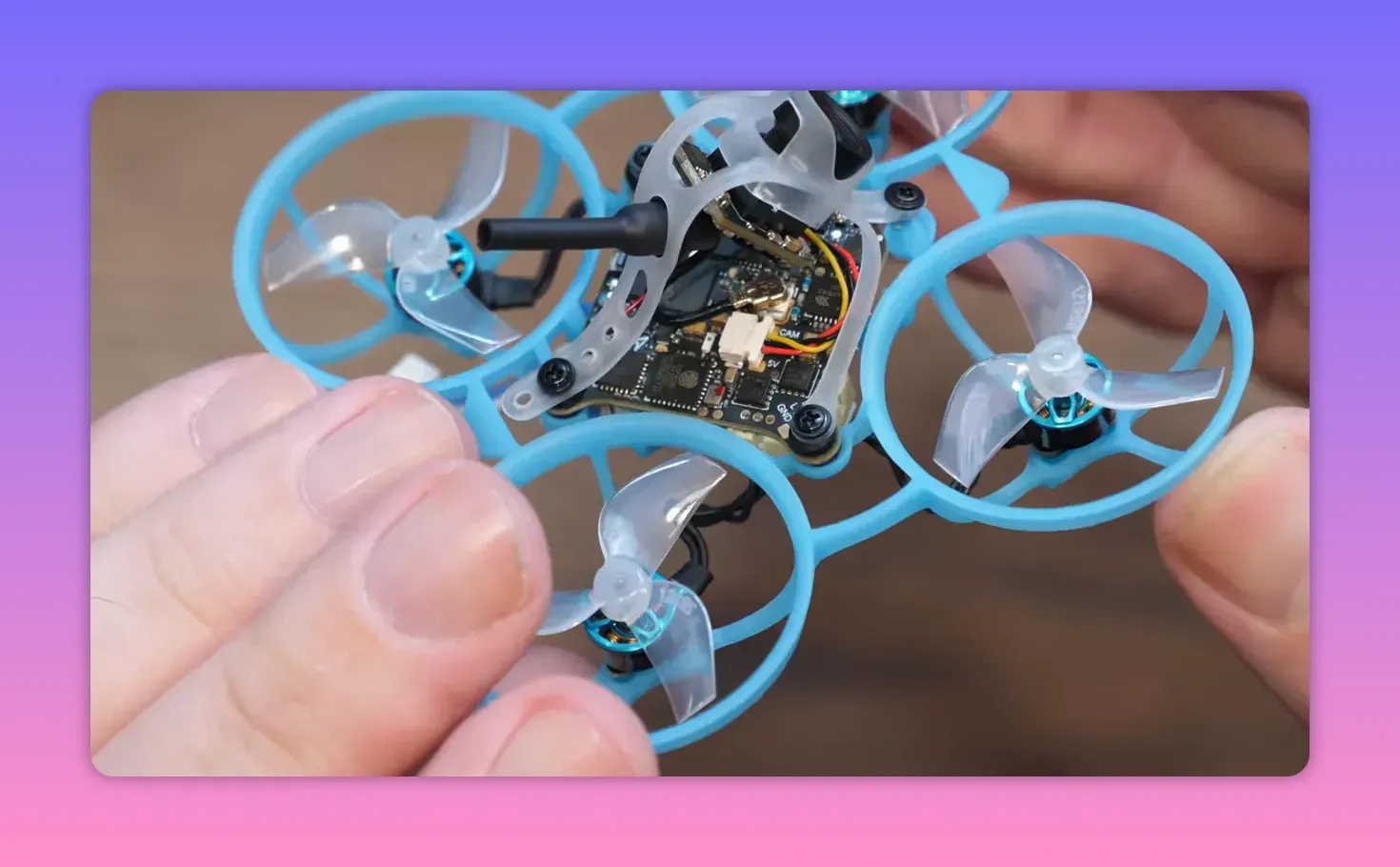
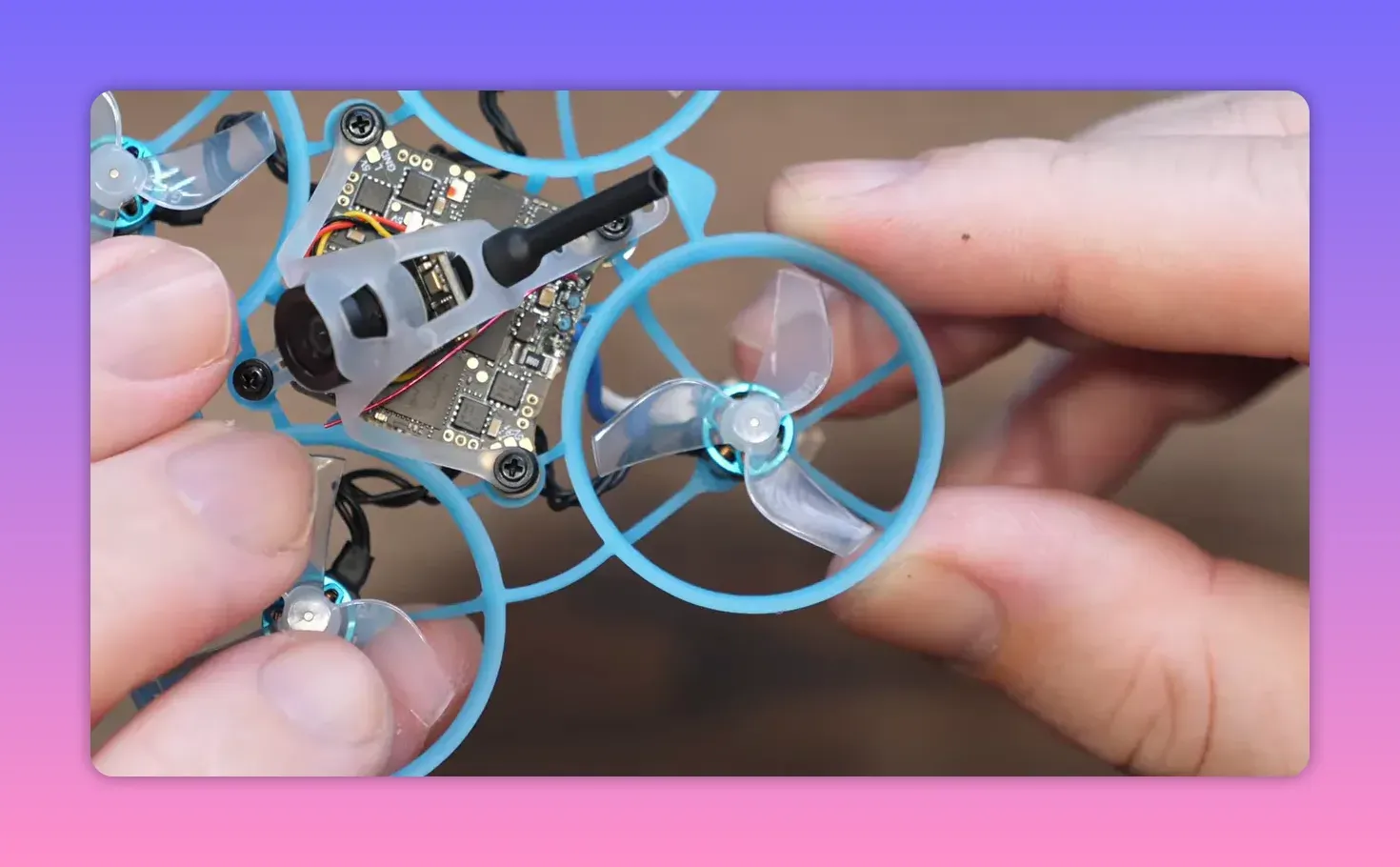
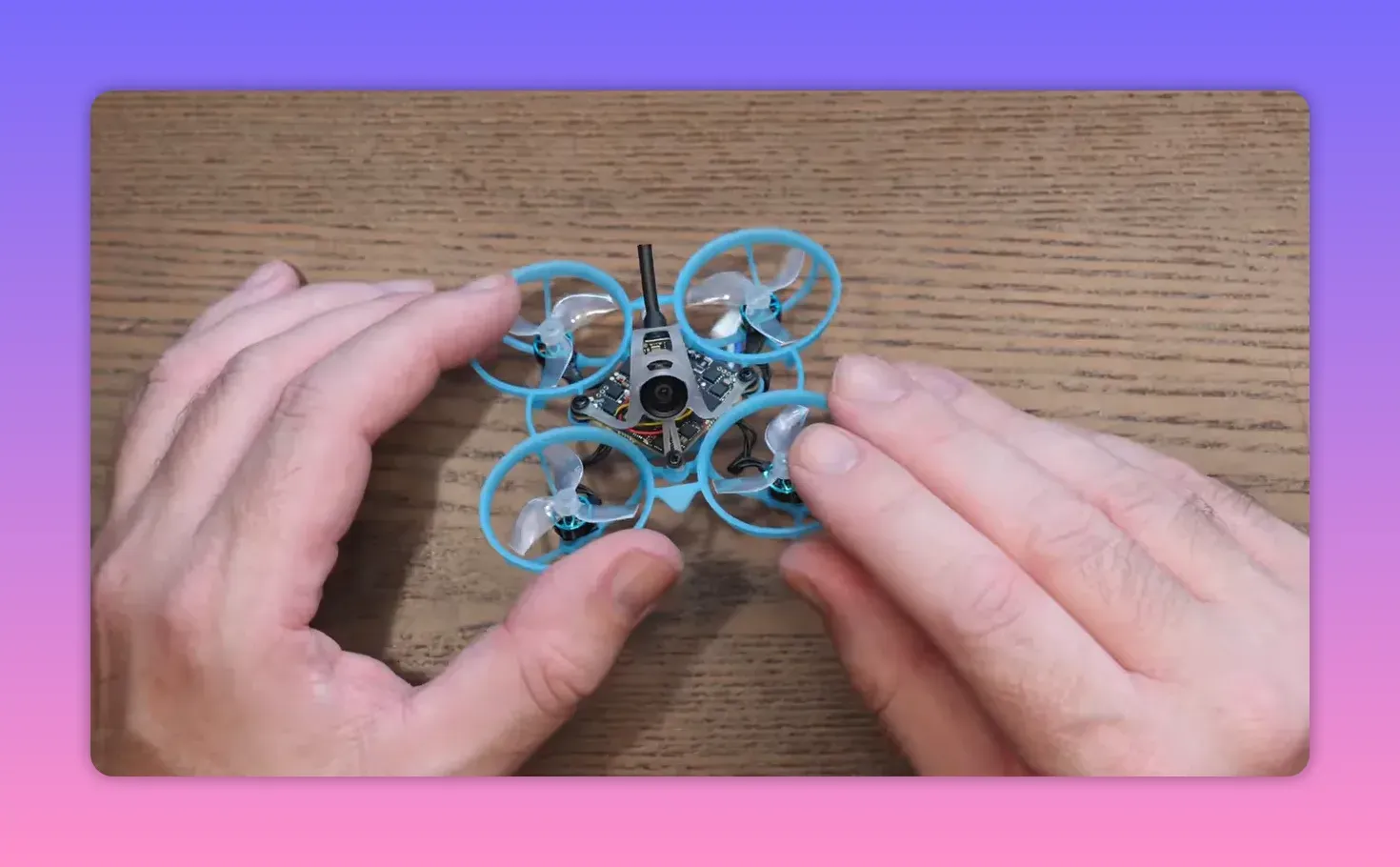
This is an analogue 1S FpV drone built around a 5-in-1 board. That single board carries the flight controller, ESC, receiver, VTX, OSD, and the rest of the tiny-electronics circus down in the belly.
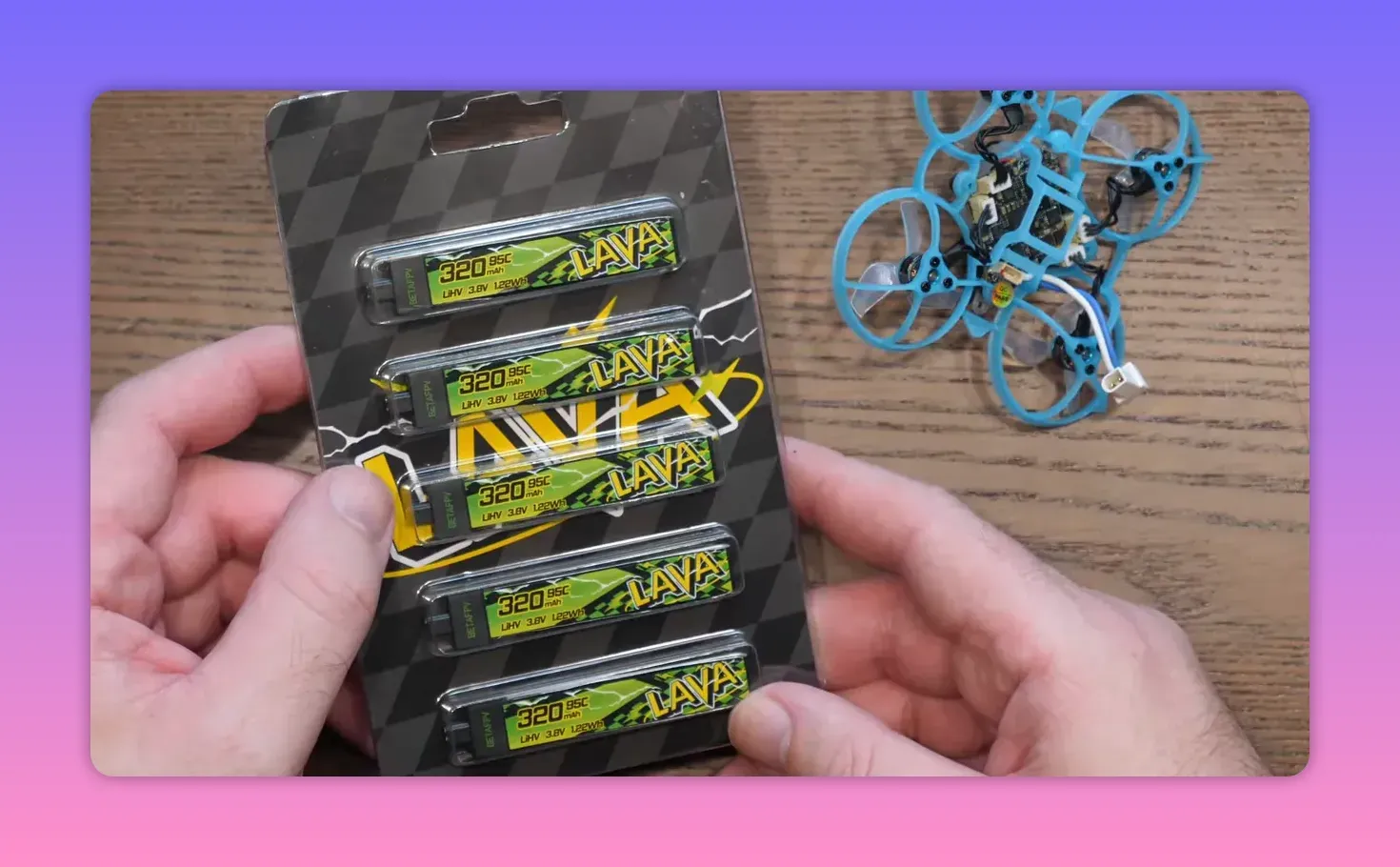
Power comes through a BT2.0 connector, and the quad is designed for BetaFPV’s Lava 320mAh 1S packs. Claimed flight time for the freestyle version is about five minutes. Racing drops to around 4:30, and Champion sits at roughly 4:40.
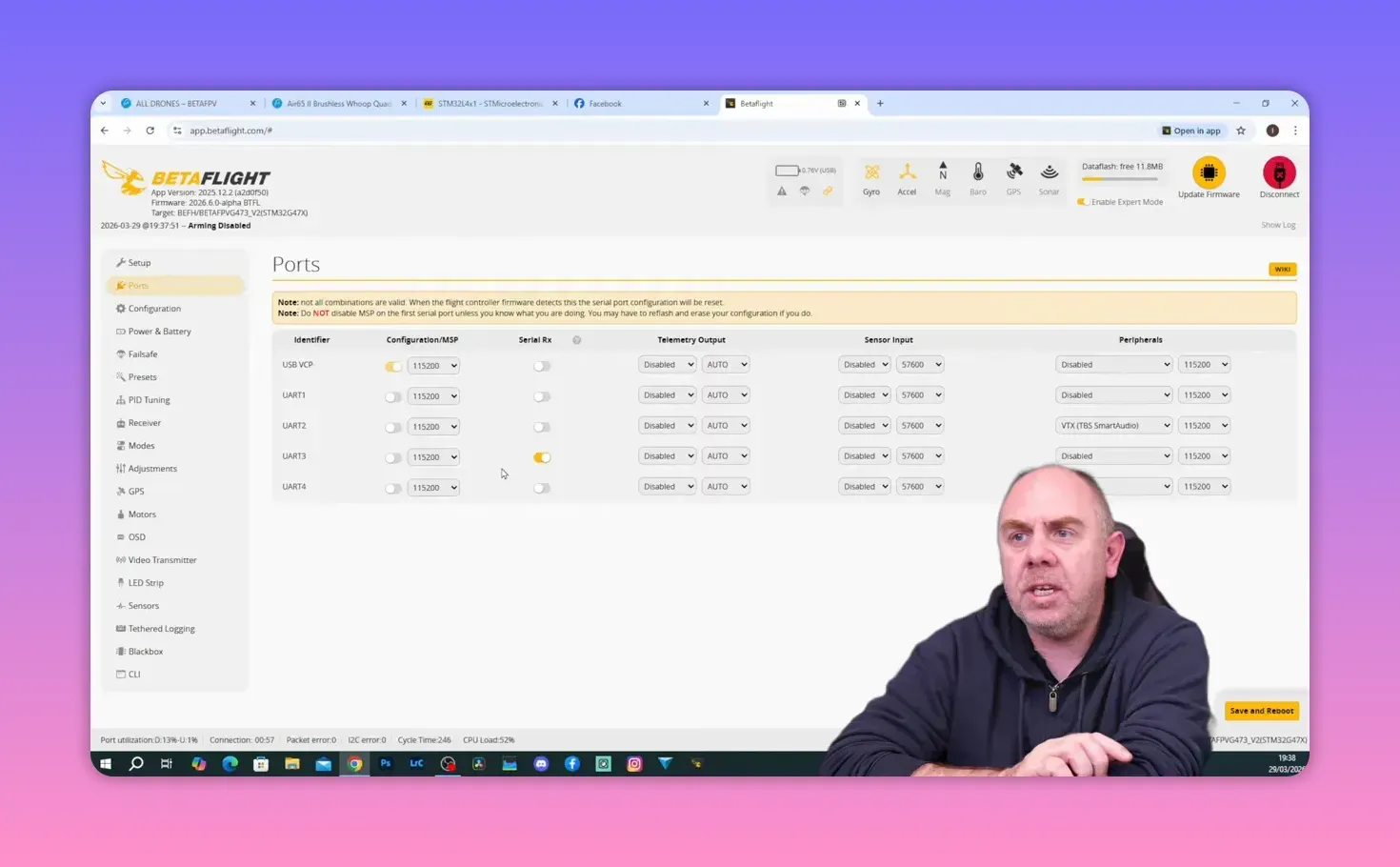
Radio-wise, you get an onboard ExpressLRS 2.4GHz receiver. Better still, it is UART-based rather than SPI. That is good news for anyone who prefers fewer limitations and less board-level nonsense.
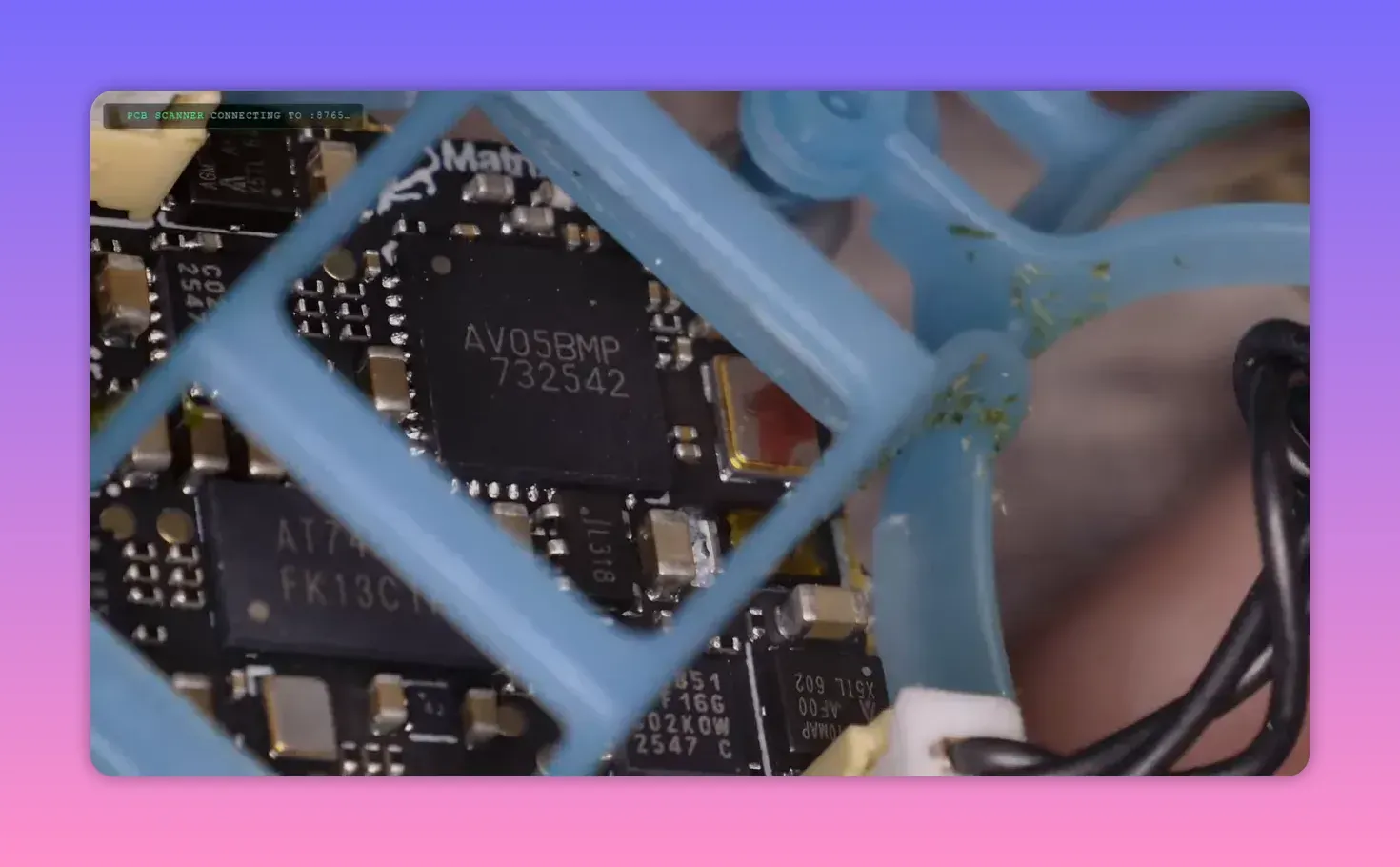
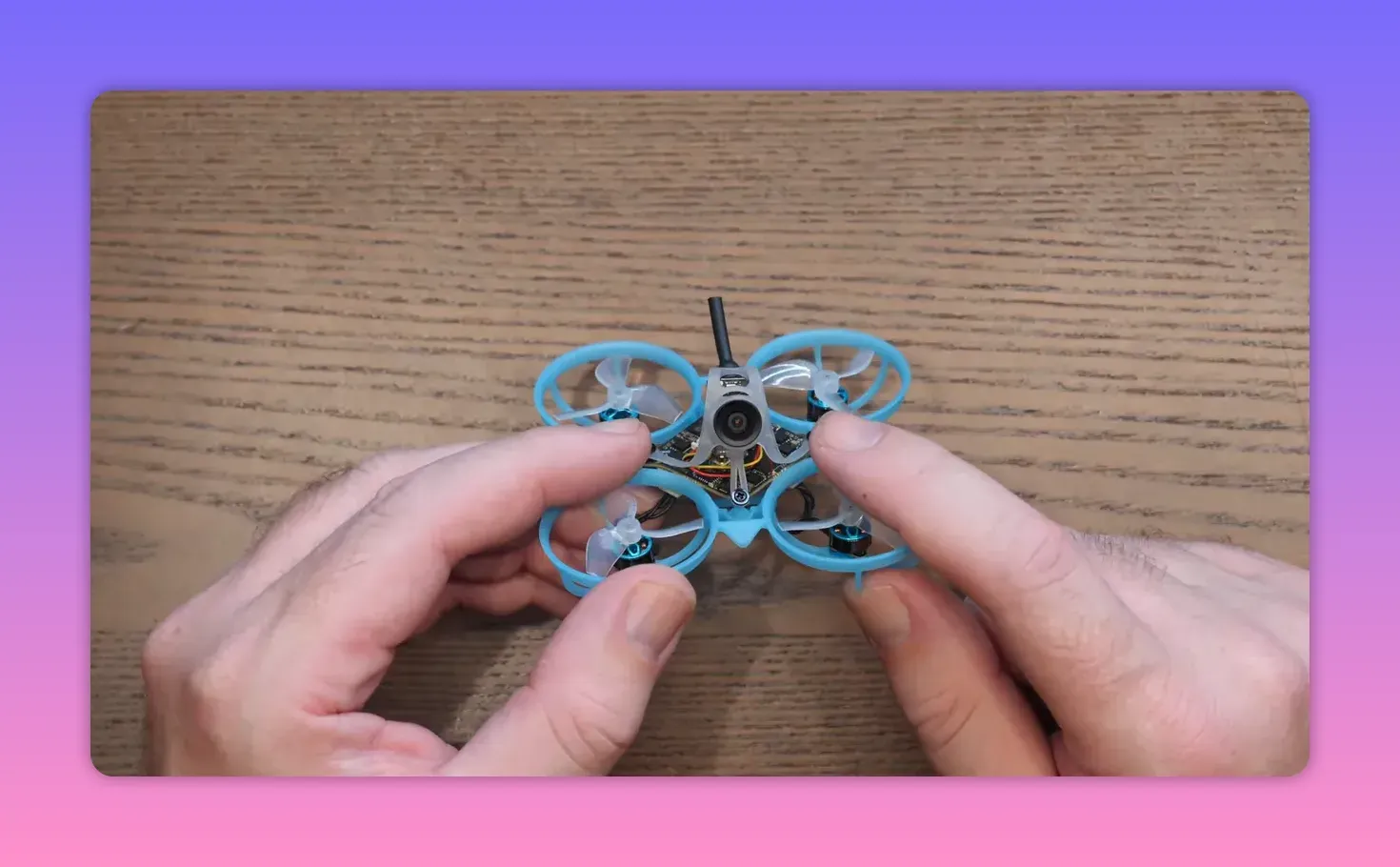
Video is analogue, using BetaFPV’s C03 camera and an onboard VTX rated up to 400mW. The transmitter supports 48 channels, Raceband, 25/100/200/400mW output, pit mode, SmartAudio, and PLL. In other words, a proper feature set rather than the usual “good enough if you squint”.
Board specs worth knowing
The Matrix 1S 5-in-1 V2 board is not just a checkbox exercise. The important bits are actually decent for a machine this size.
- MCU: STM32G473
- Gyro: ICM42688P
- Blackbox: 16MB onboard
- Sensors: Voltage and current sensing
- BEC: 5V up to 3A
- Receiver: ELRS 2.4GHz via ESP8285
- ESC: 16-bit Bluejay, up to 12A
- OSD chip: AT7456E
- VTX chipset: AV05 BMP, up to 400mW
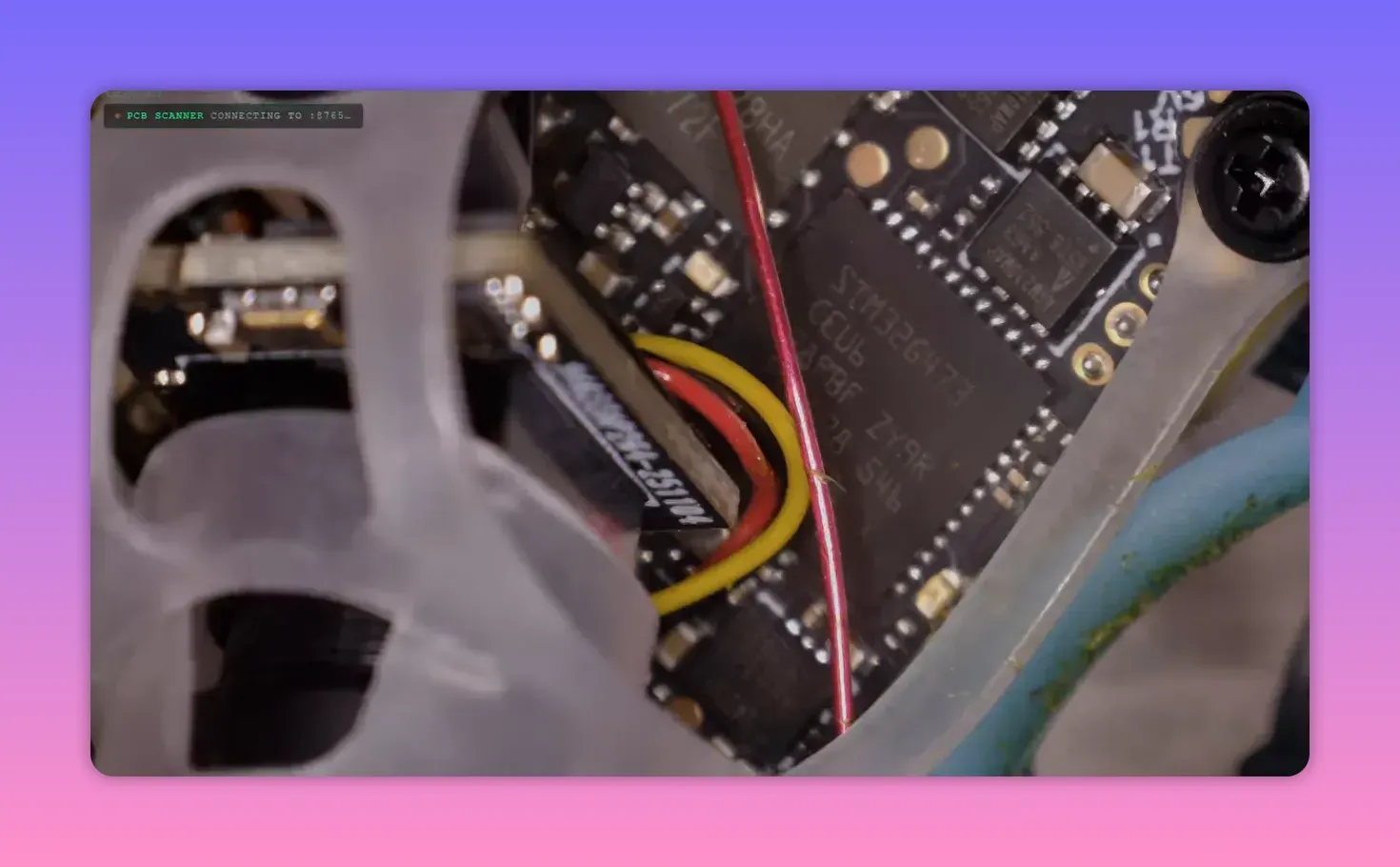
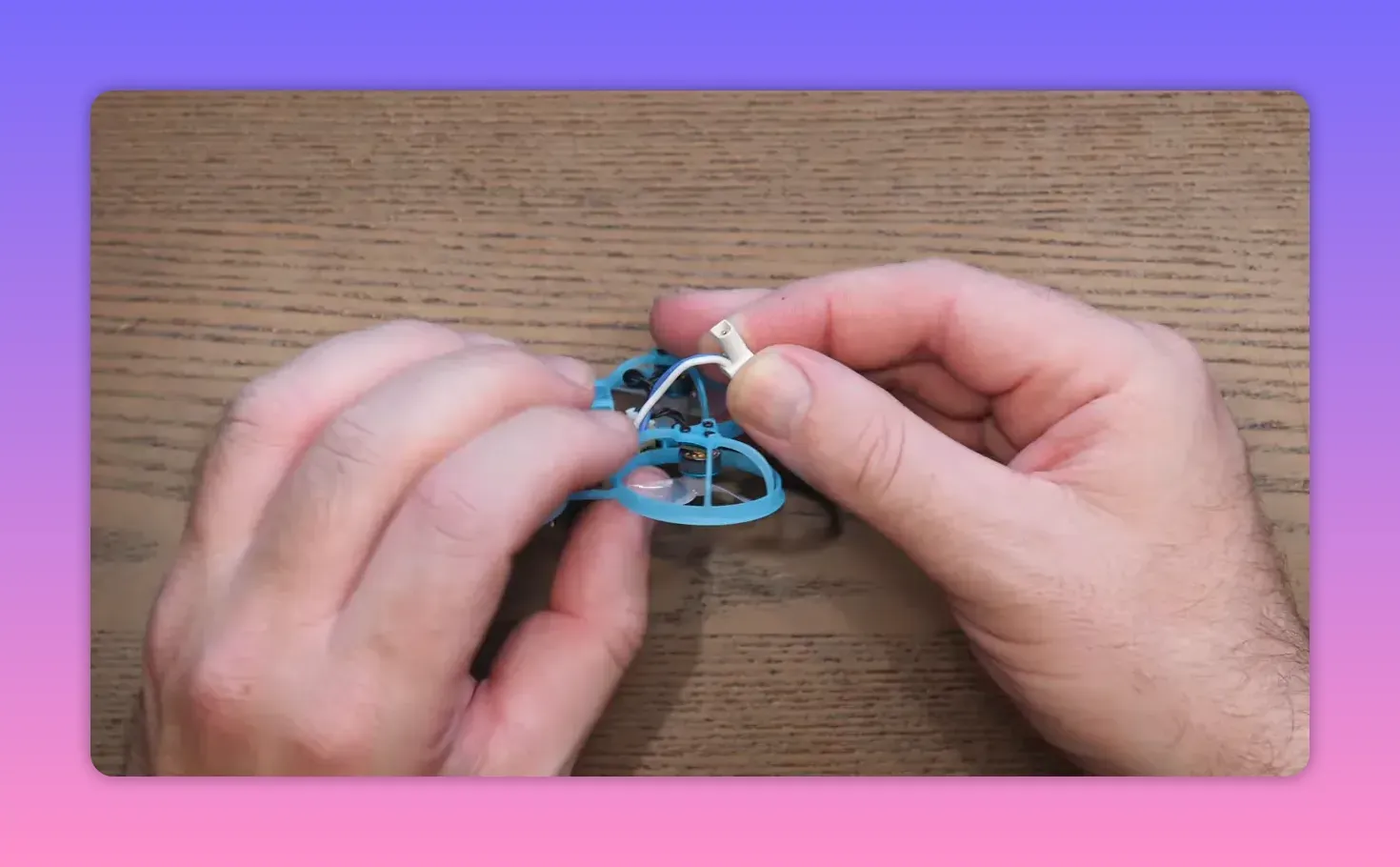
The hardware layout also looks tidy. The camera connects via plug, the VTX antenna uses UFL, and the ELRS antenna routes cleanly off the board. Nothing here screams “assembled in a rush before lunch”.
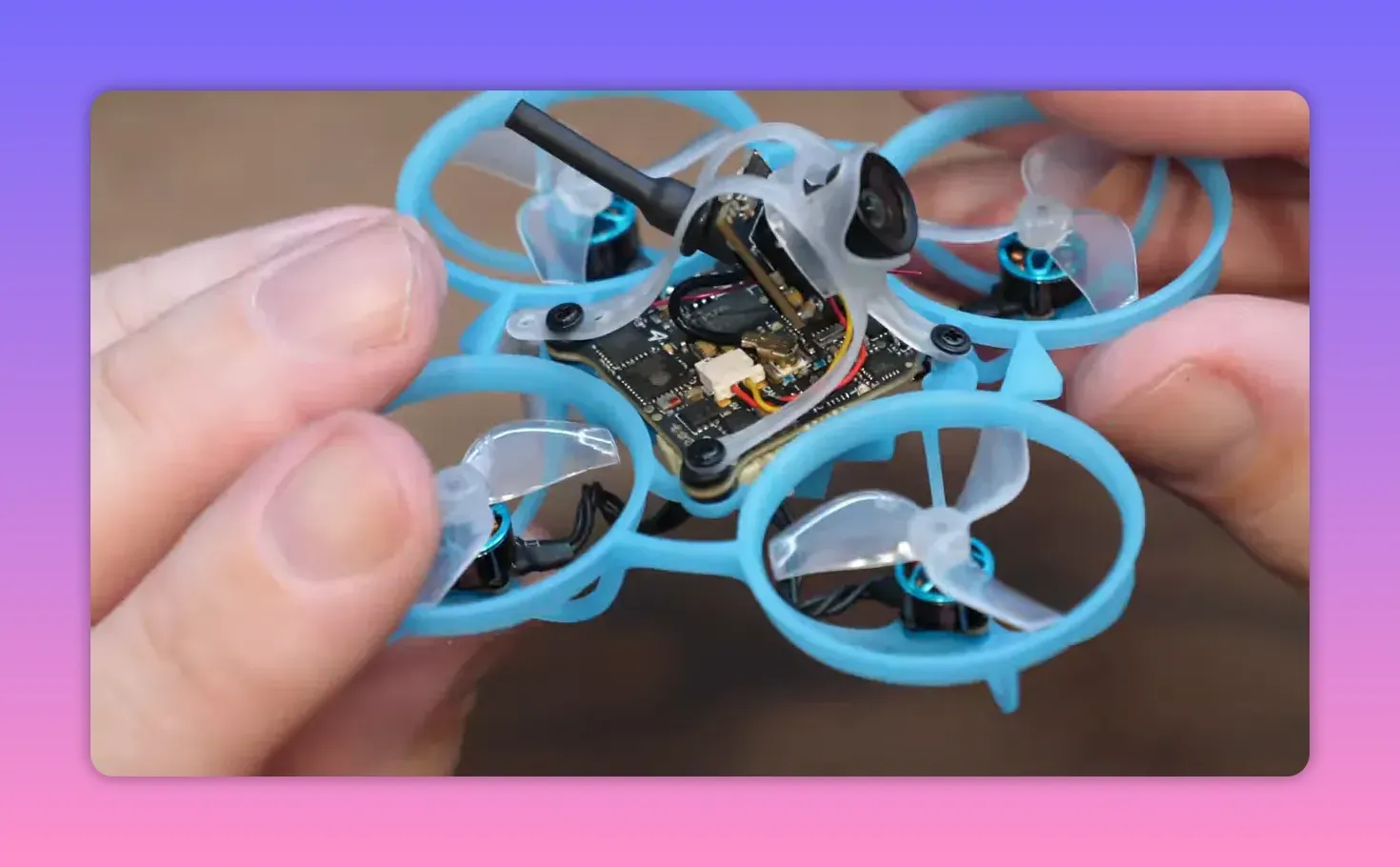
Weight, connectors, and the Champion’s diet plan
The freestyle and race versions use motor plugs. The Champion dumps the plugs and solders the motors directly to save weight. That shaves a little mass, though it also removes some convenience when things break, which they will.
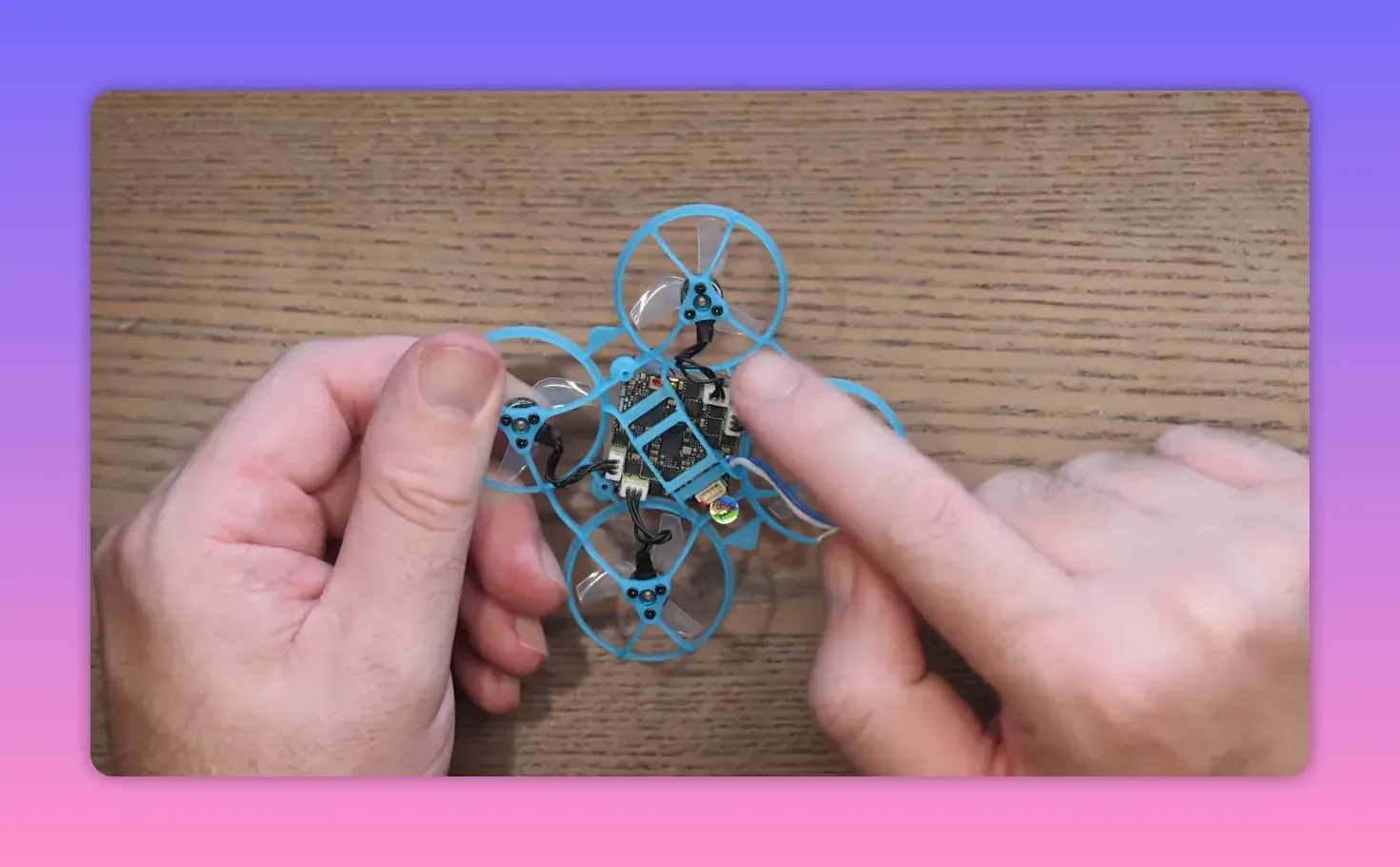
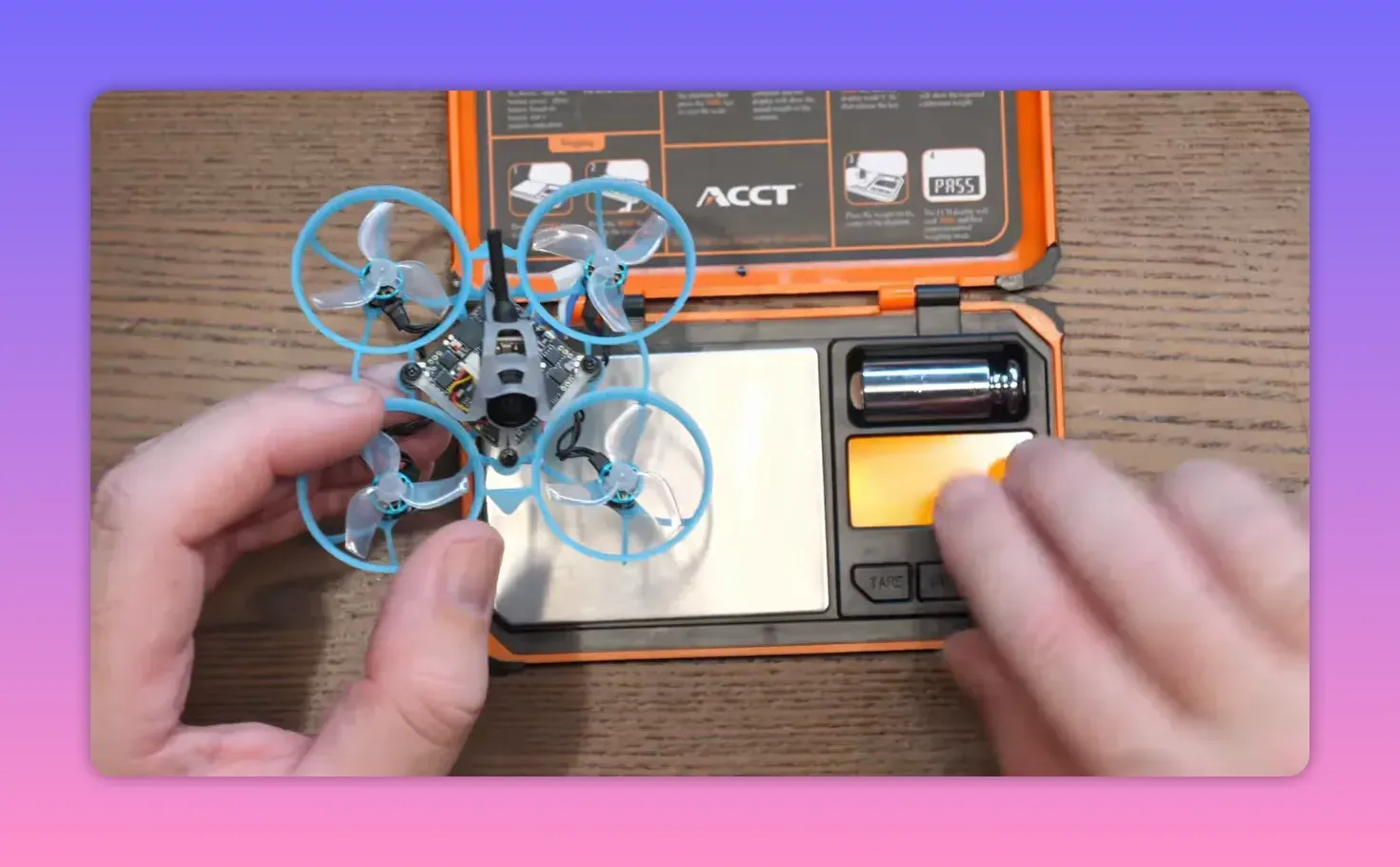
Claimed weights are:
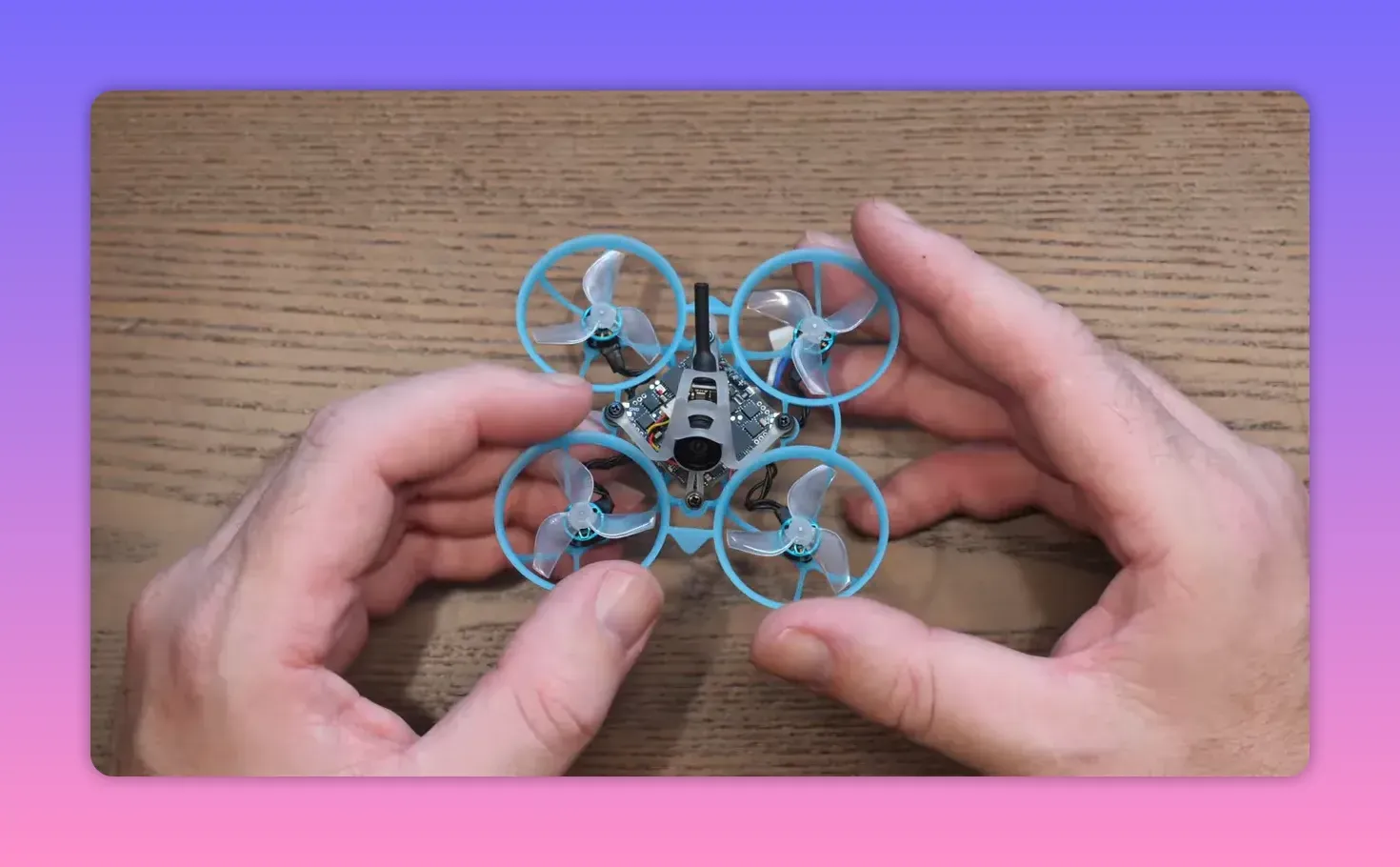
- Freestyle: 17.8g
- Race: 17.7g
- Champion: 16.6g
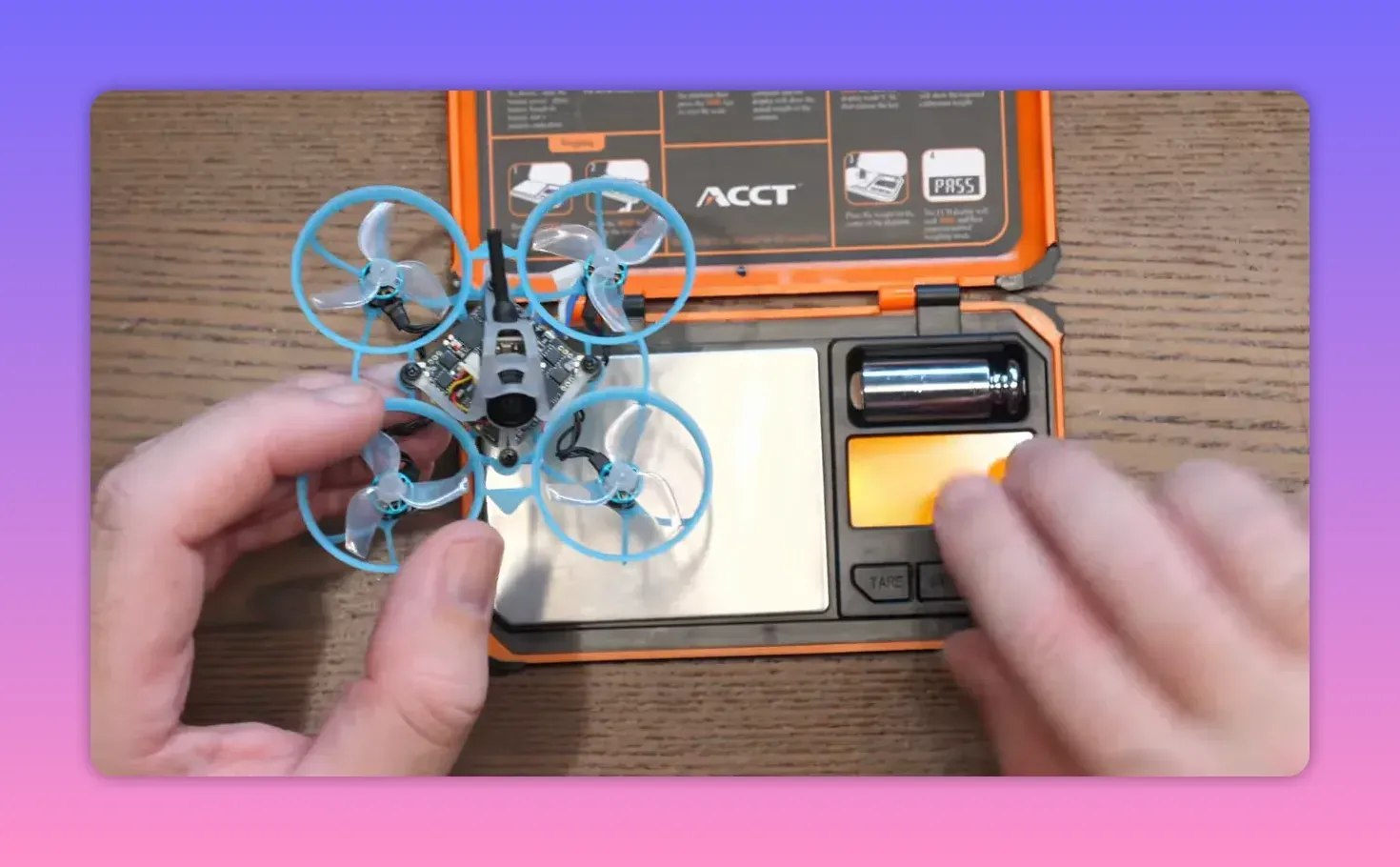
The measured weight of the review freestyle unit, with BT2.0 fitted, came in at 17.86g. That is close enough to call honest, which is more than can be said for some product pages on the internet.
Betaflight setup: mostly right, one annoying caveat
The Air65 II ships pre-configured with Betaflight and is ready to bind and fly. On paper, that is exactly what a beginner-friendly FpV drone should do.
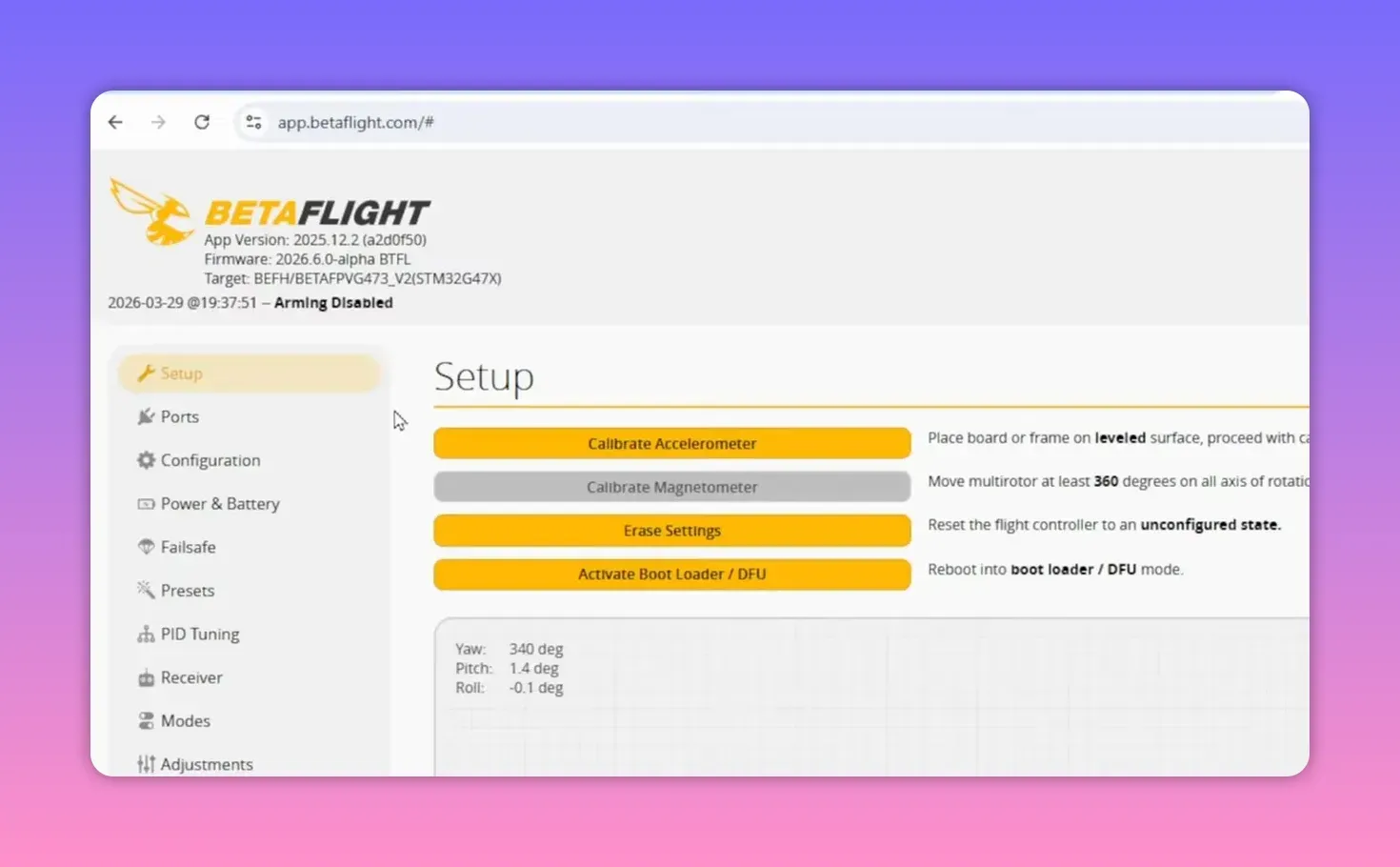
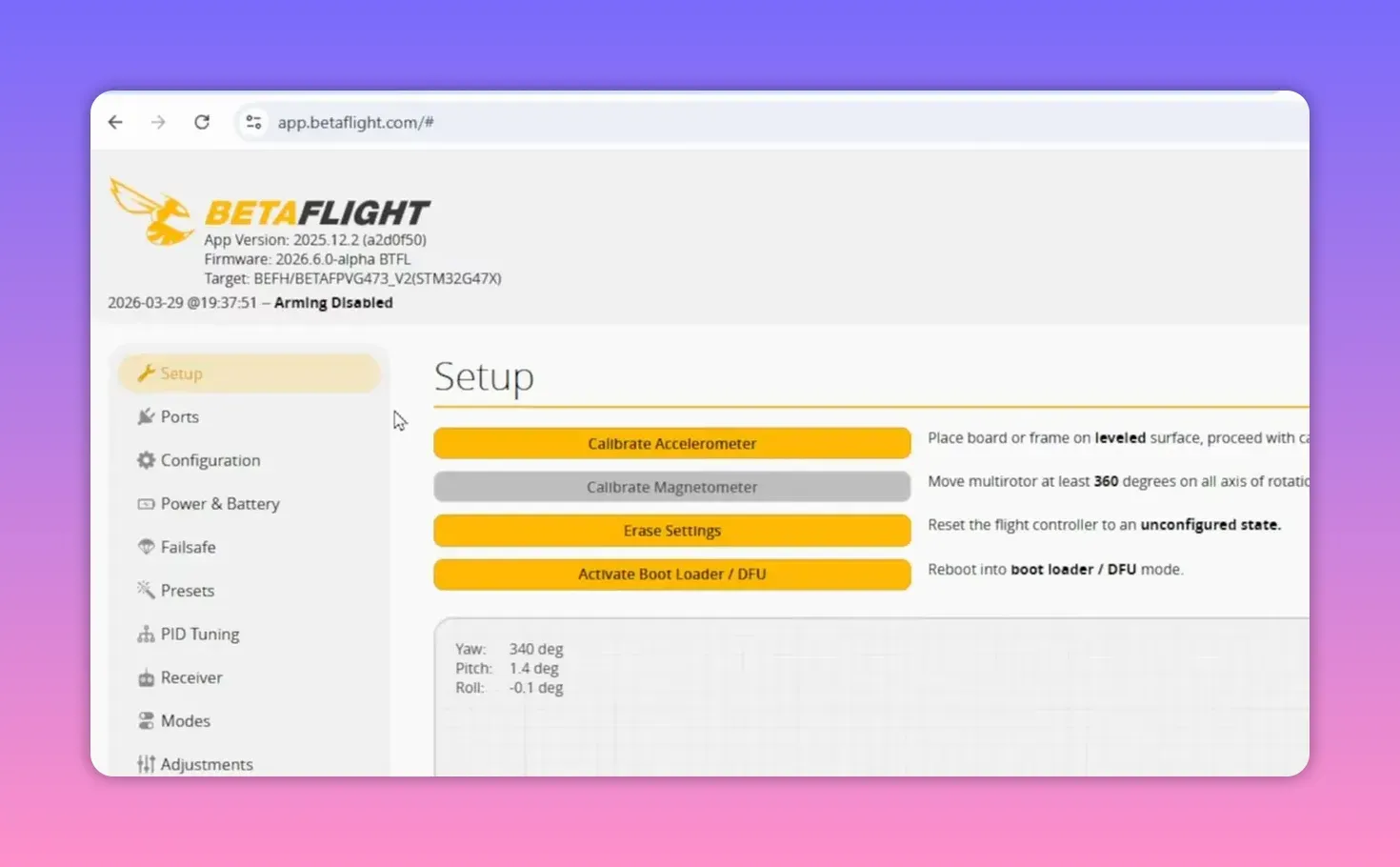
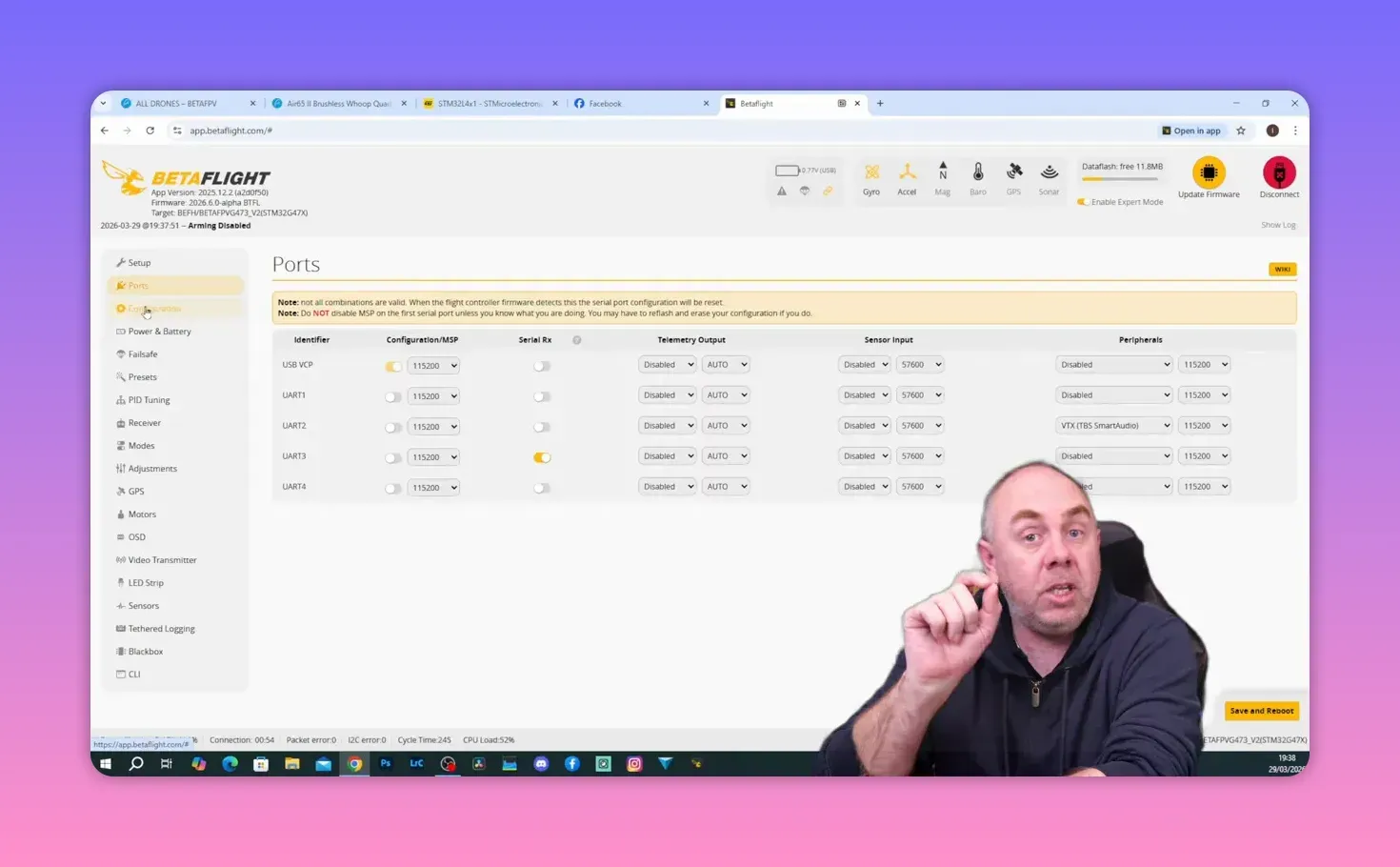
There is, however, one eyebrow-raising detail: the review sample shipped with an alpha version of Betaflight under the new naming scheme, listed as 0.6.2026. Shipping alpha firmware on a ready-to-fly product is not a charming quirk. It is a risk. Whether that applies to all units or only this one is not clear, but it is worth flagging.
Receiver setup looks sensible. The ELRS receiver runs as a serial receiver on UART3, using CRSF. That is the right answer and avoids the usual SPI caveats.
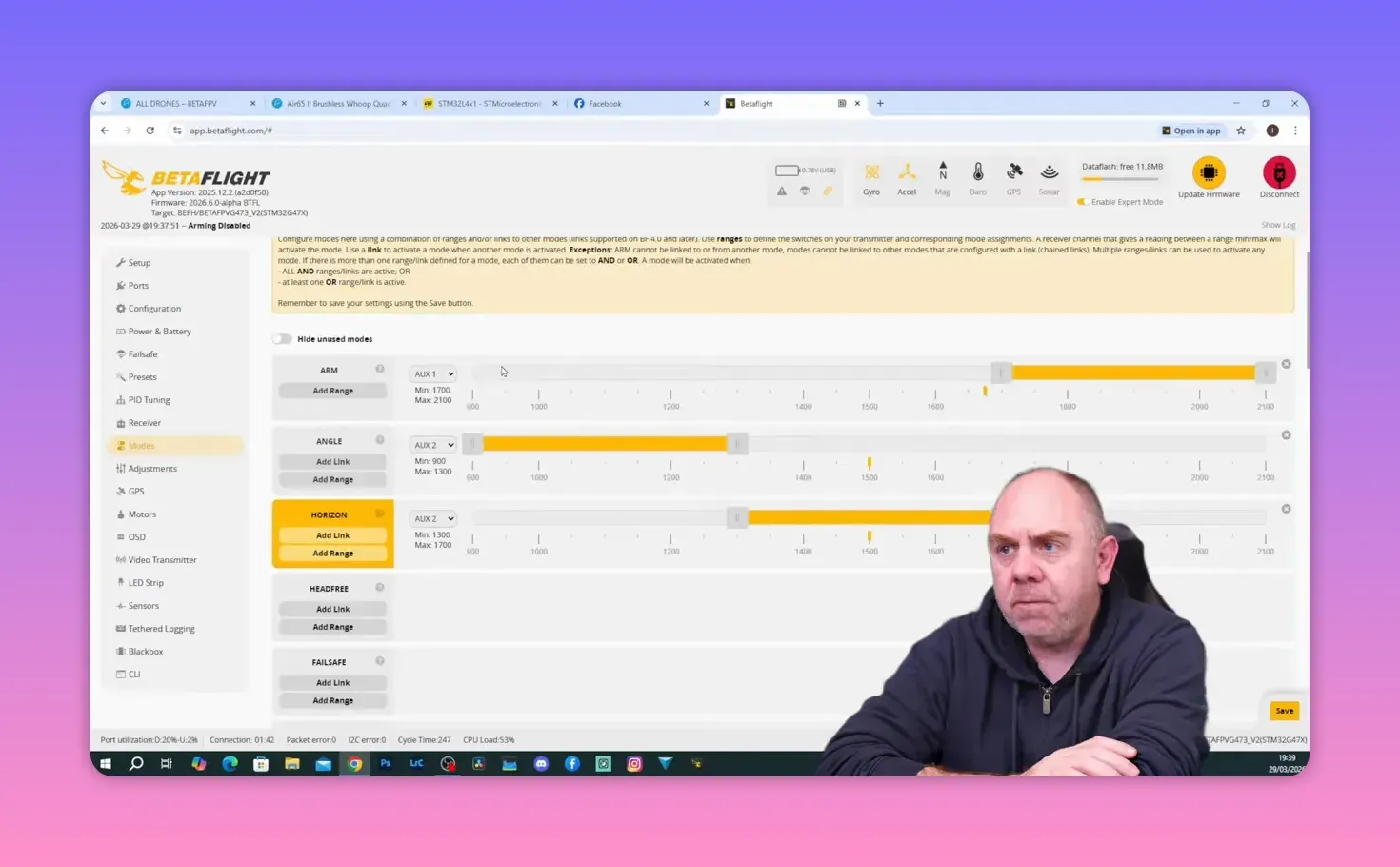
The stock mode setup includes:
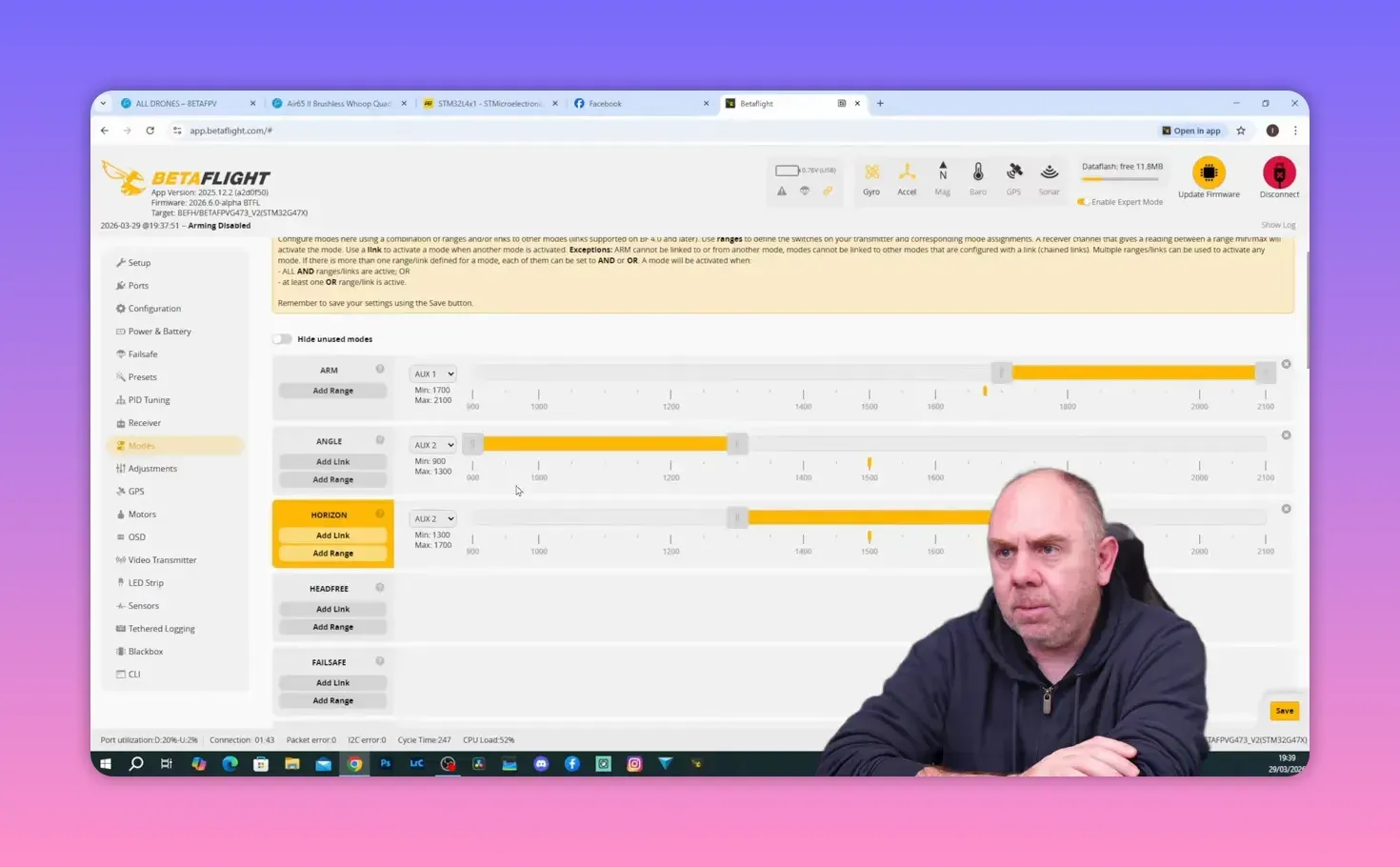
- Arm on the usual aux channel
- Angle mode
- Horizon mode
- Beeper
- Flip over after crash (turtle mode)
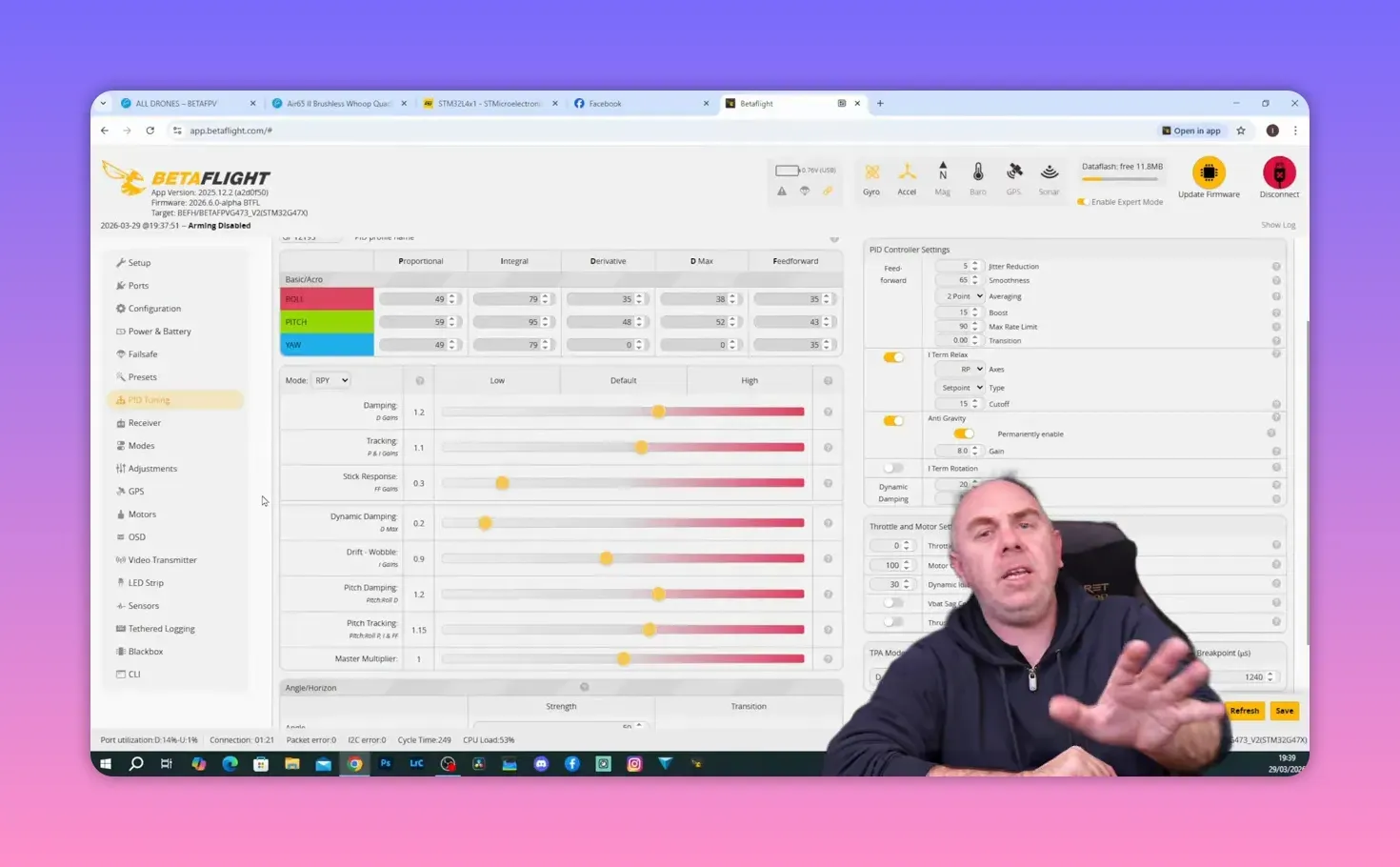
PID settings were left stock for flying, and that turns out to matter because the default tune is one of the best arguments for this little FpV drone.
In the air: the bit where it earns its keep
First flights were done with stock settings and no tuning changes. That is the test that matters. Any quad can look clever after an hour of menu work and selective memory.
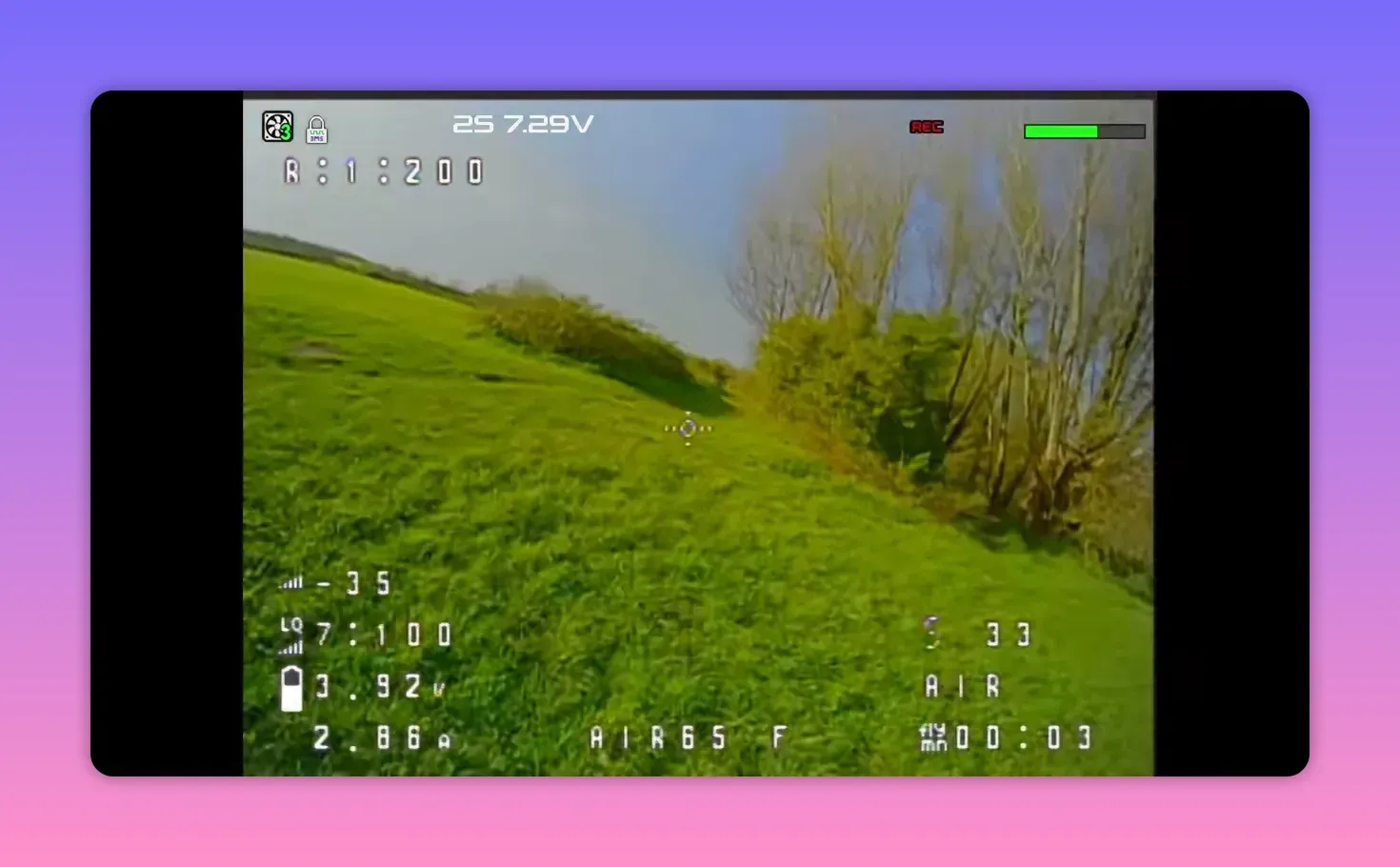
Out of the box, the Air65 II freestyle flies very well. It feels composed, responsive, and far more settled than many small whoops that spend their lives bouncing between “nervous” and “mushy”.
The one handling note early on was a sense of too much expo. Stick movement felt slightly muted, with more throw needed than expected to move the quad around. That may be partly pilot reacclimatisation, but the impression was there all the same.
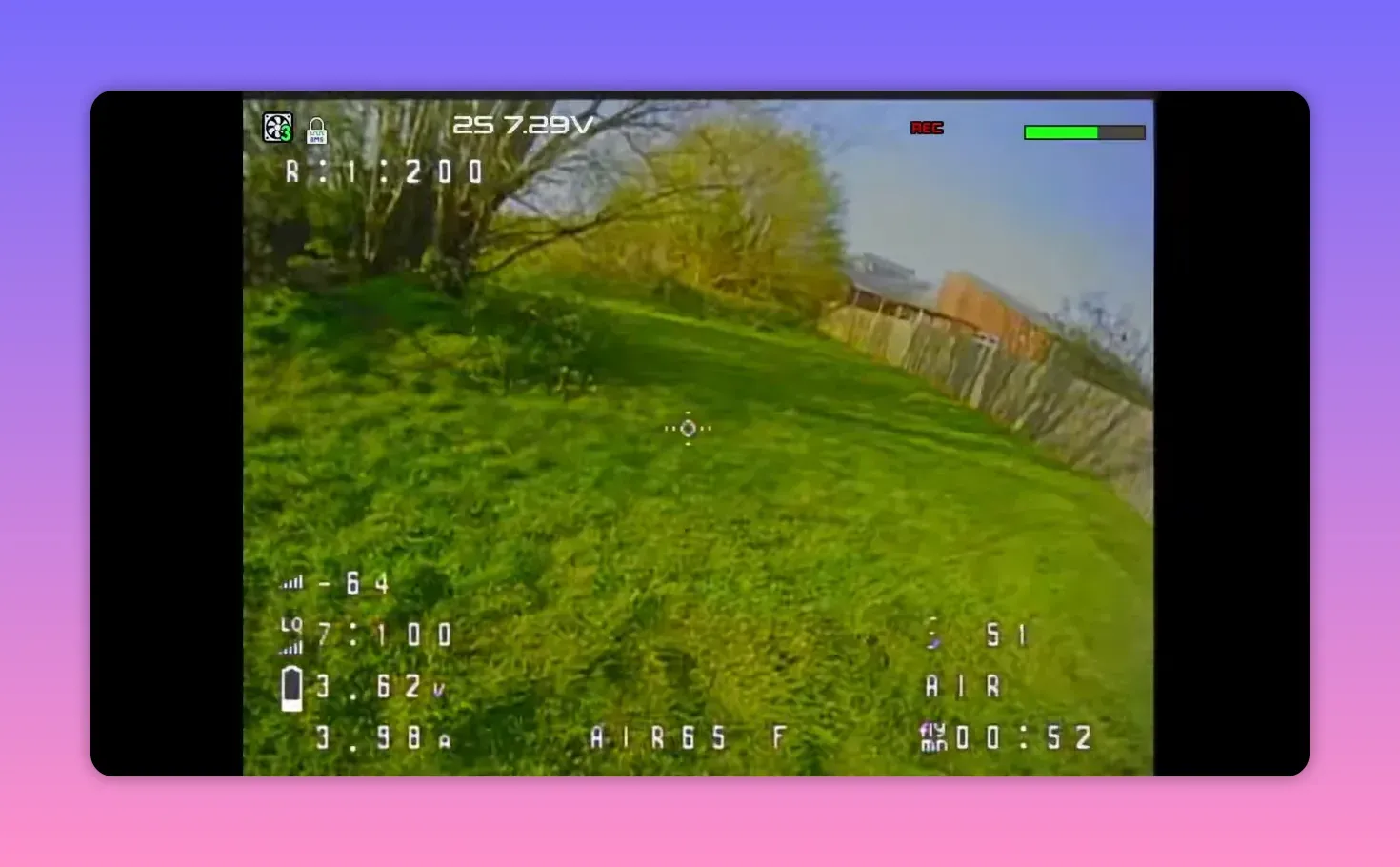
Even so, the broad verdict stayed positive: this FpV drone felt well put together by people who understand how a small quad should fly. That is not always guaranteed in the microsphere.
Video performance and channel changes
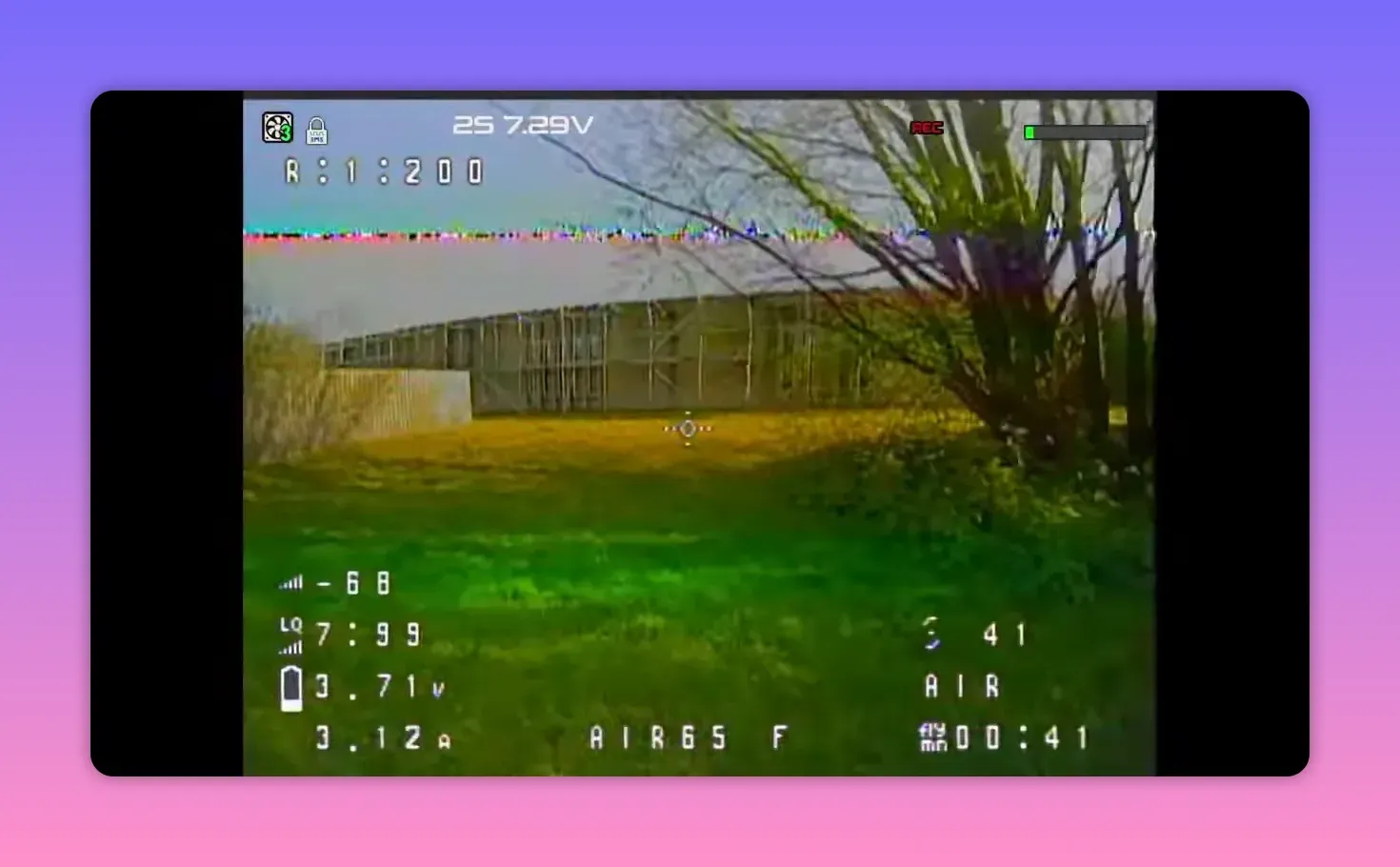
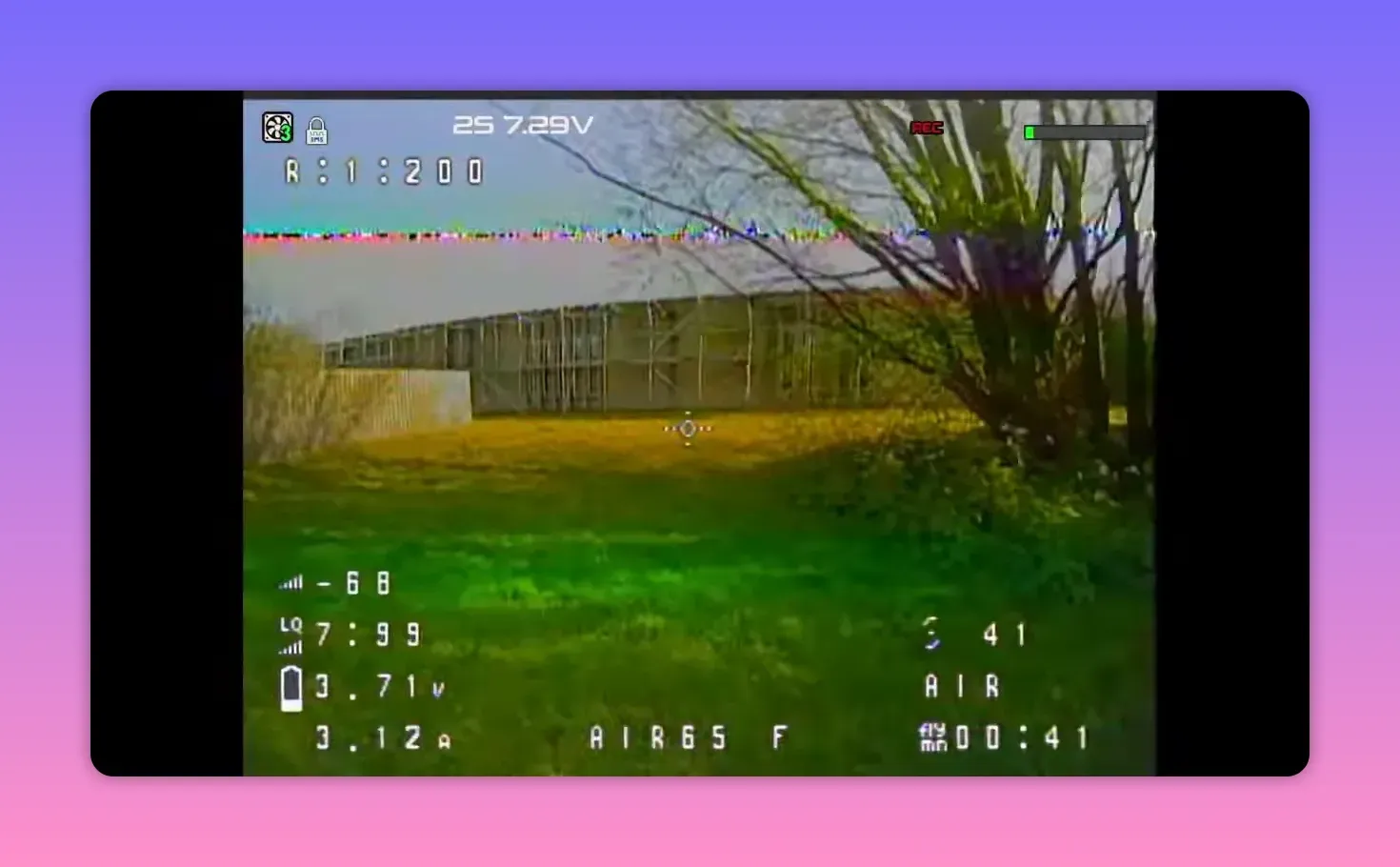
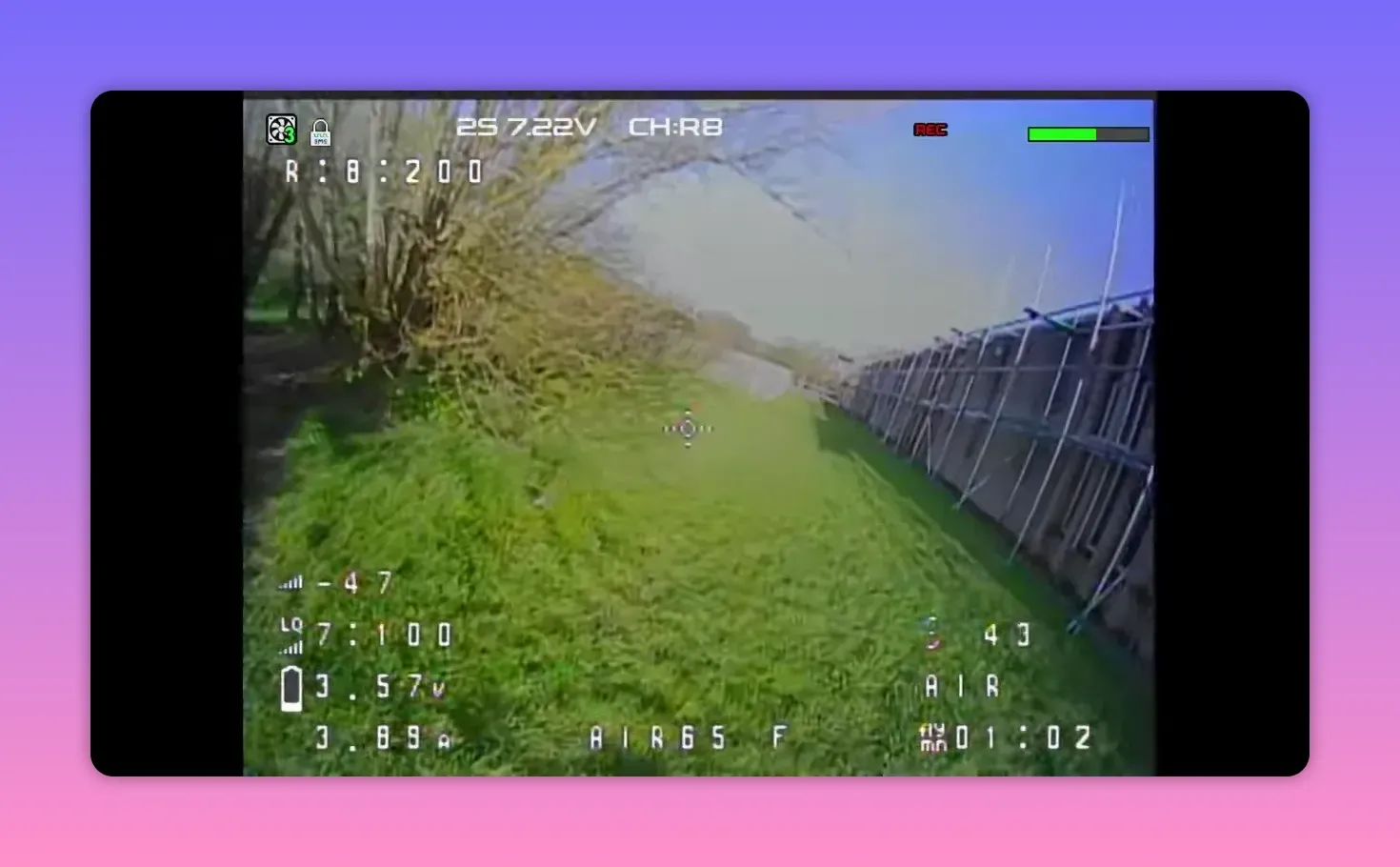
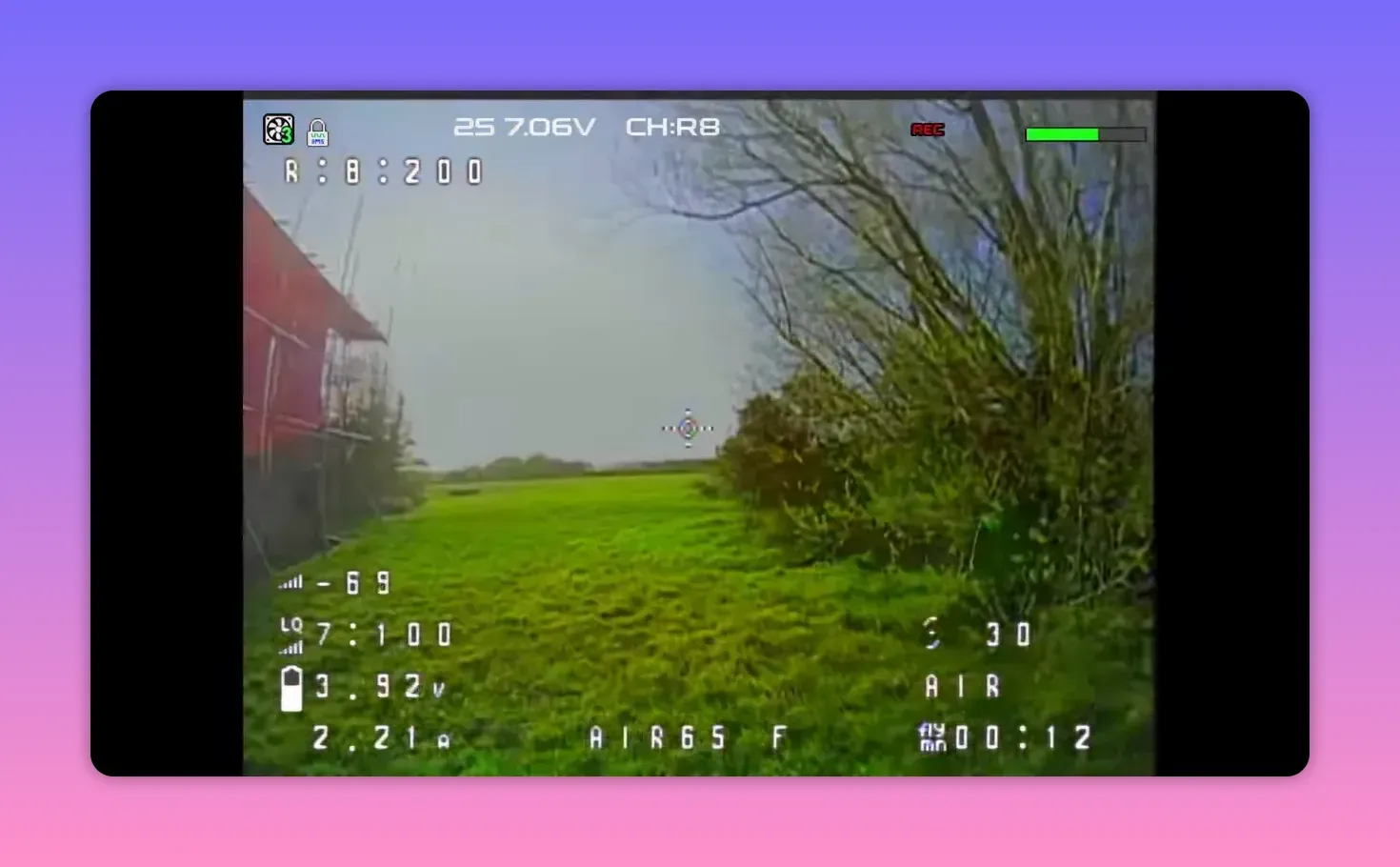
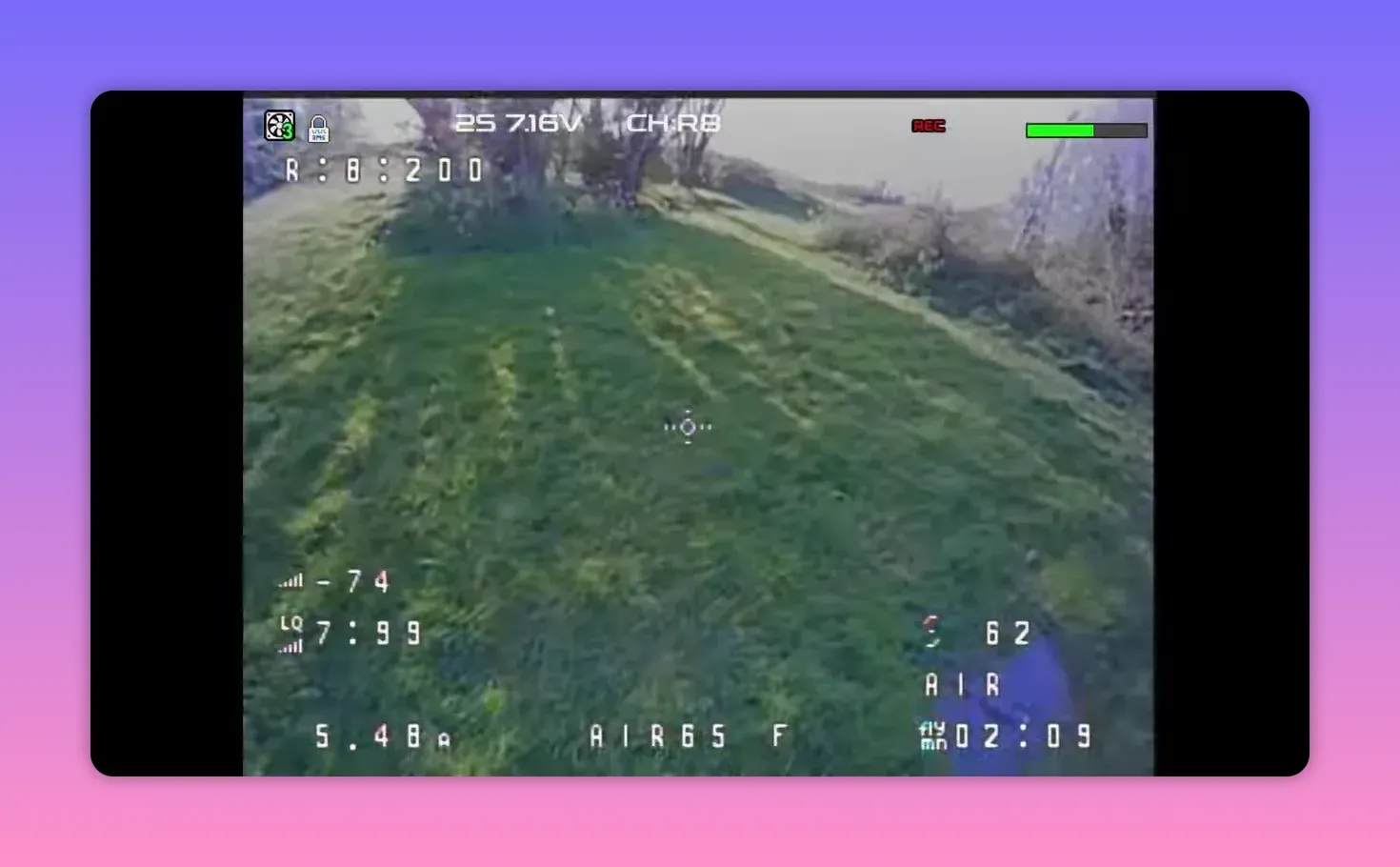
Initial analogue video on Raceband channel R1 showed some intermittent breakup. The feed looked clean overall, but there were rhythmic flickers in one area that strongly suggested local Wi-Fi interference rather than a quad fault.
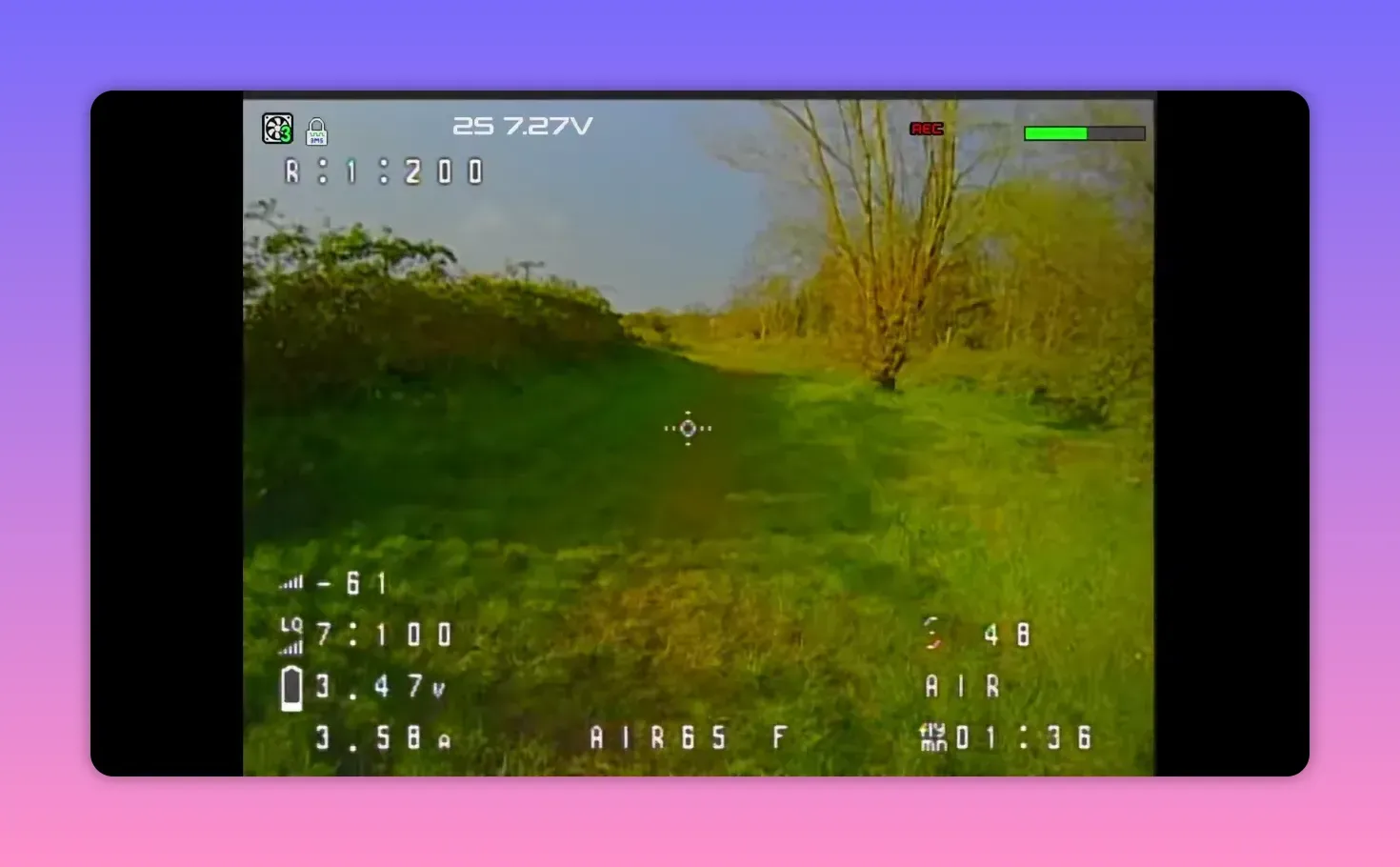
Switching to R5 did not fully solve it. Moving again to R8 improved things noticeably, which backs the interference theory. In short: the VTX appears fine, but local RF conditions may still ruin your day because physics remains rude.
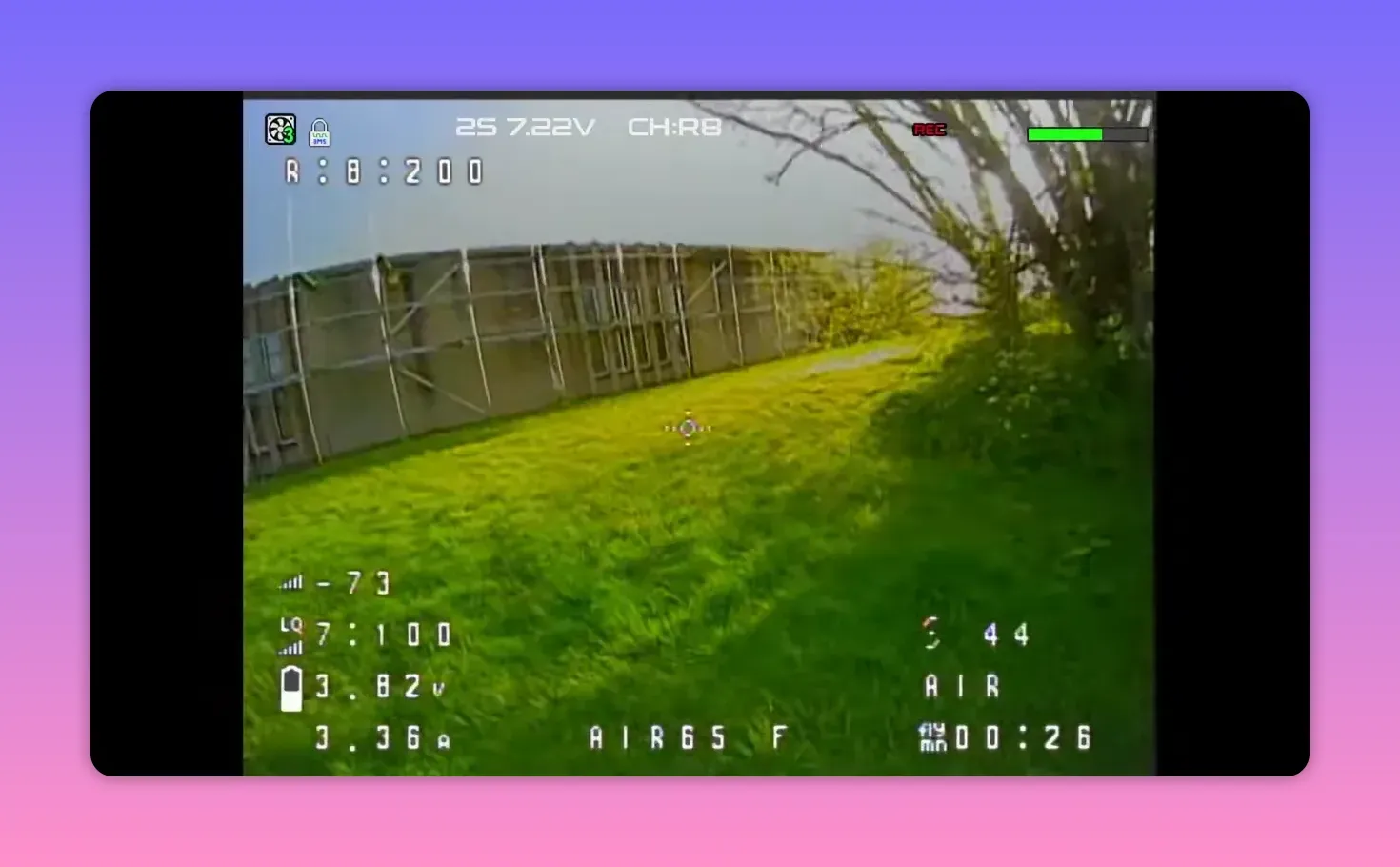
Acro good, angle mode less so
In Acro, the Air65 II feels sorted. It has enough power, tracks well, and does not demand immediate tuning surgery. For a $99 FpV drone, that is a pleasant surprise.
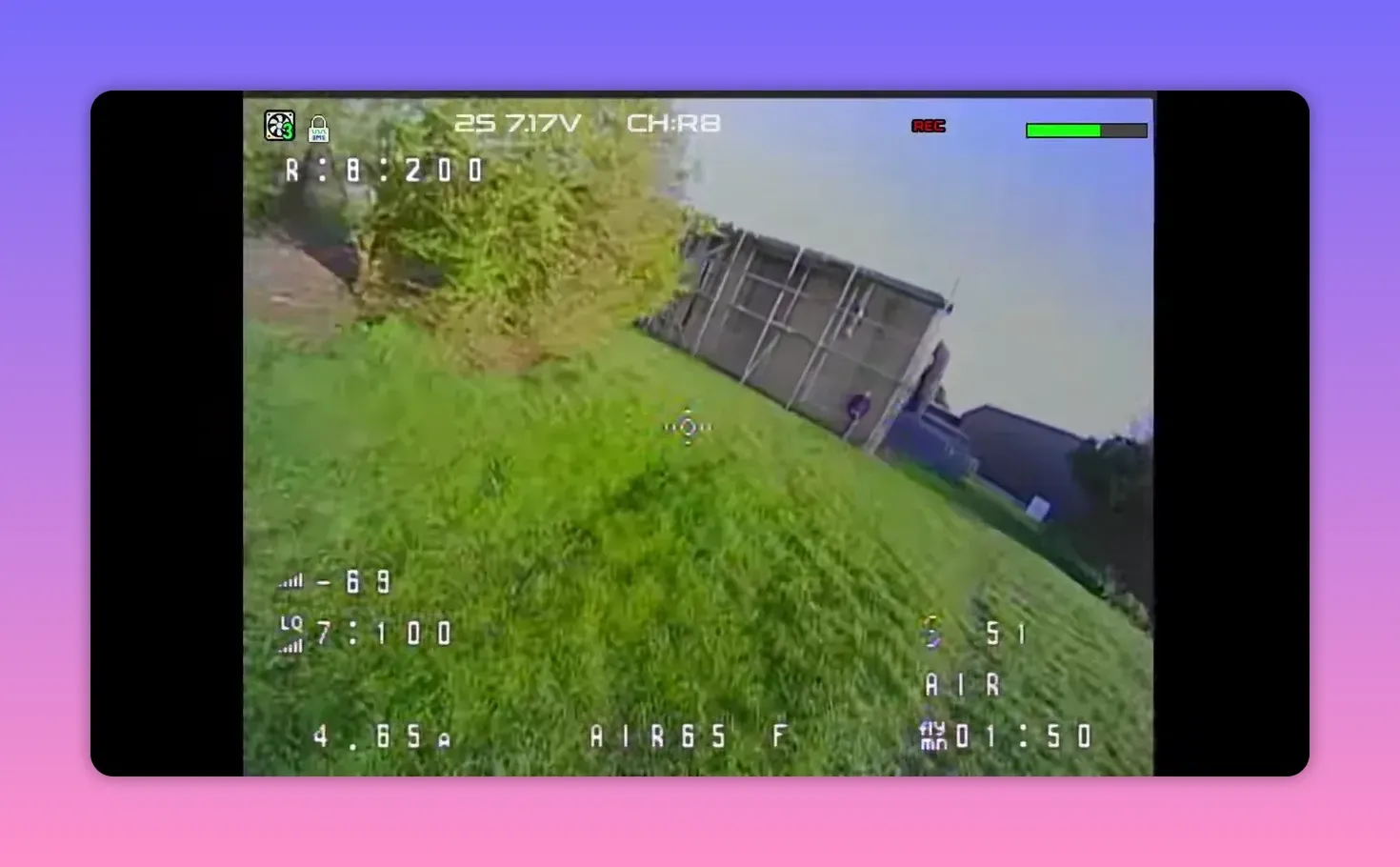
Angle mode is another story. Stick travel feels excessive, response is oddly limited, and the result is awkward rather than confidence-building. It is flyable, but it needs work. Horizon mode is present too, though it was not the star of the session either.
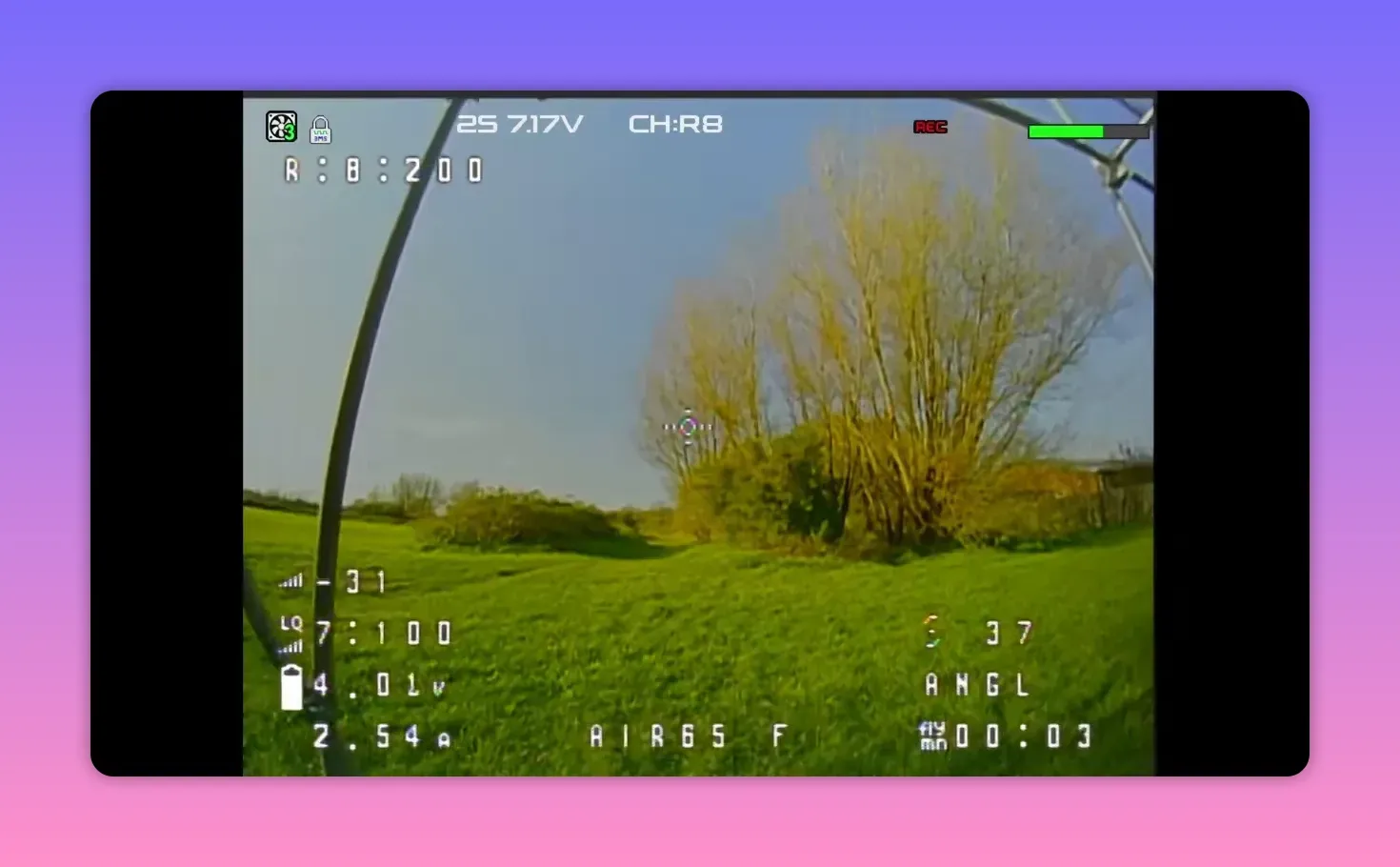
Back in Acro, things improve at once. That stock freestyle tune is simply much better there, and it is where this quad makes sense.
Camera quality: acceptable, with caveats
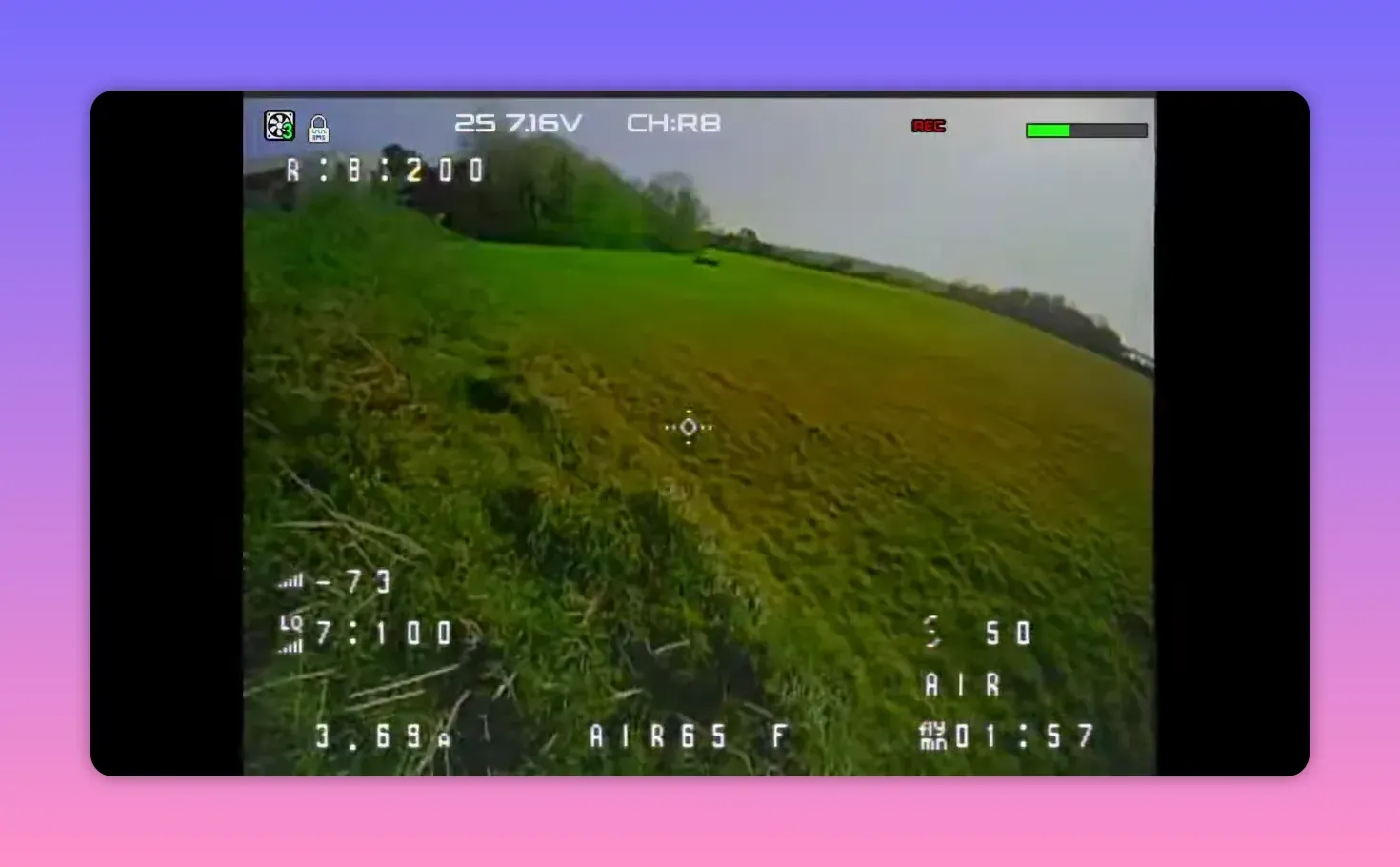
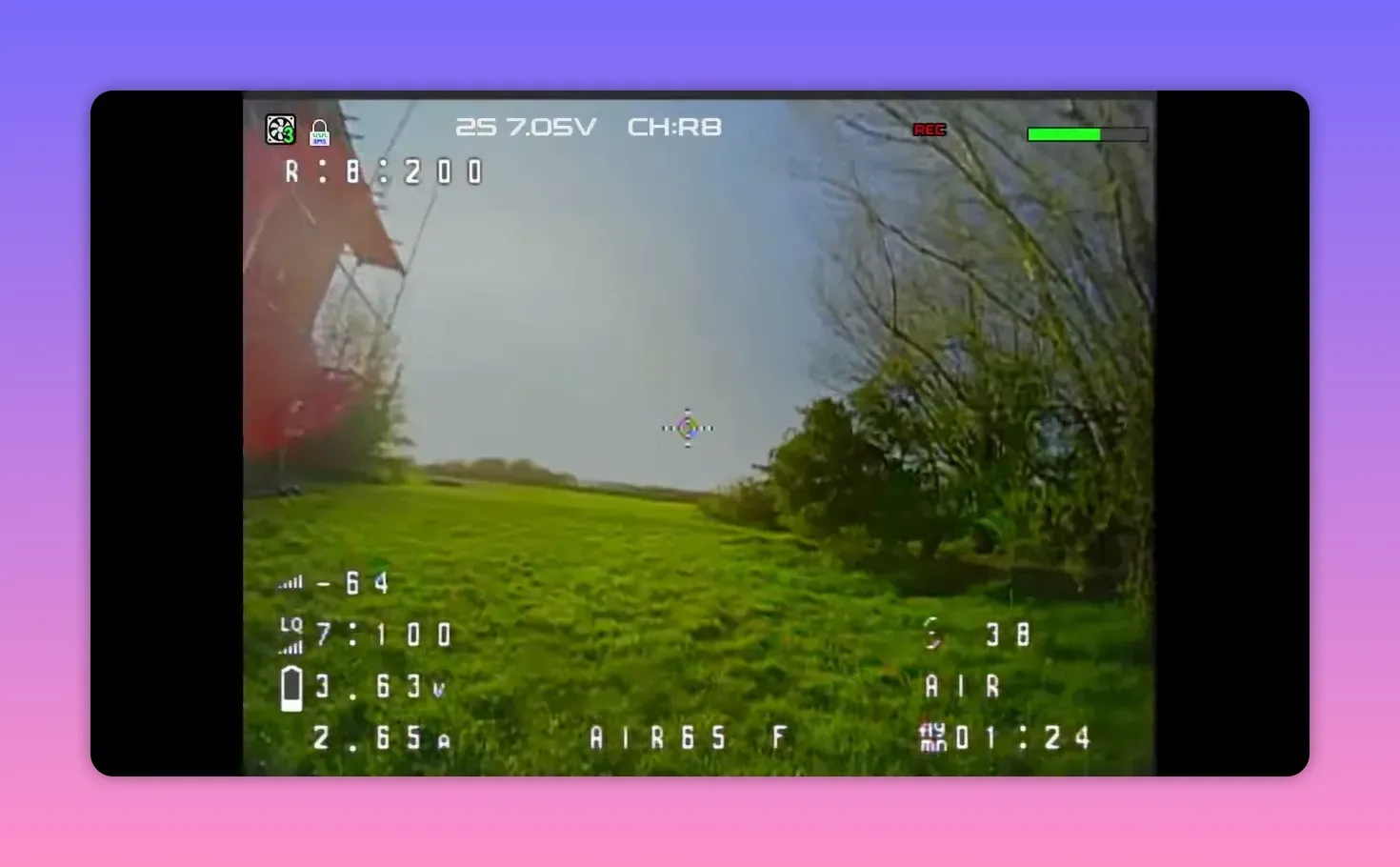
The C03 camera is usable and better than some tiny analogue units, though not perfect. The image shows a slight yellow tint, and there is some fisheye distortion in bright outdoor conditions.
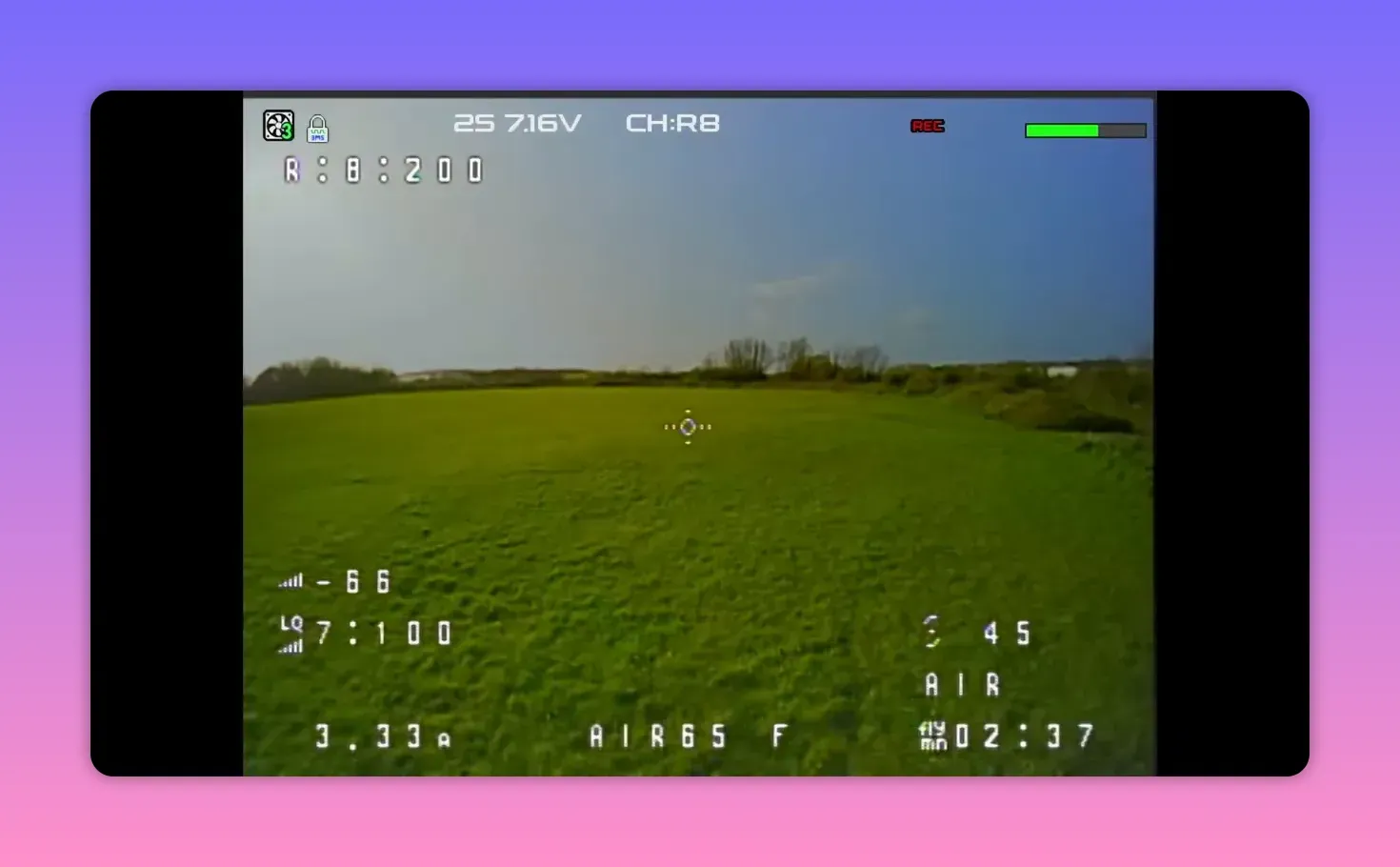
That said, it is far from the worst micro camera on the market. Exposure handling in bright sun looked respectable, and for the class, the result is perfectly serviceable.
Durability and crash behaviour
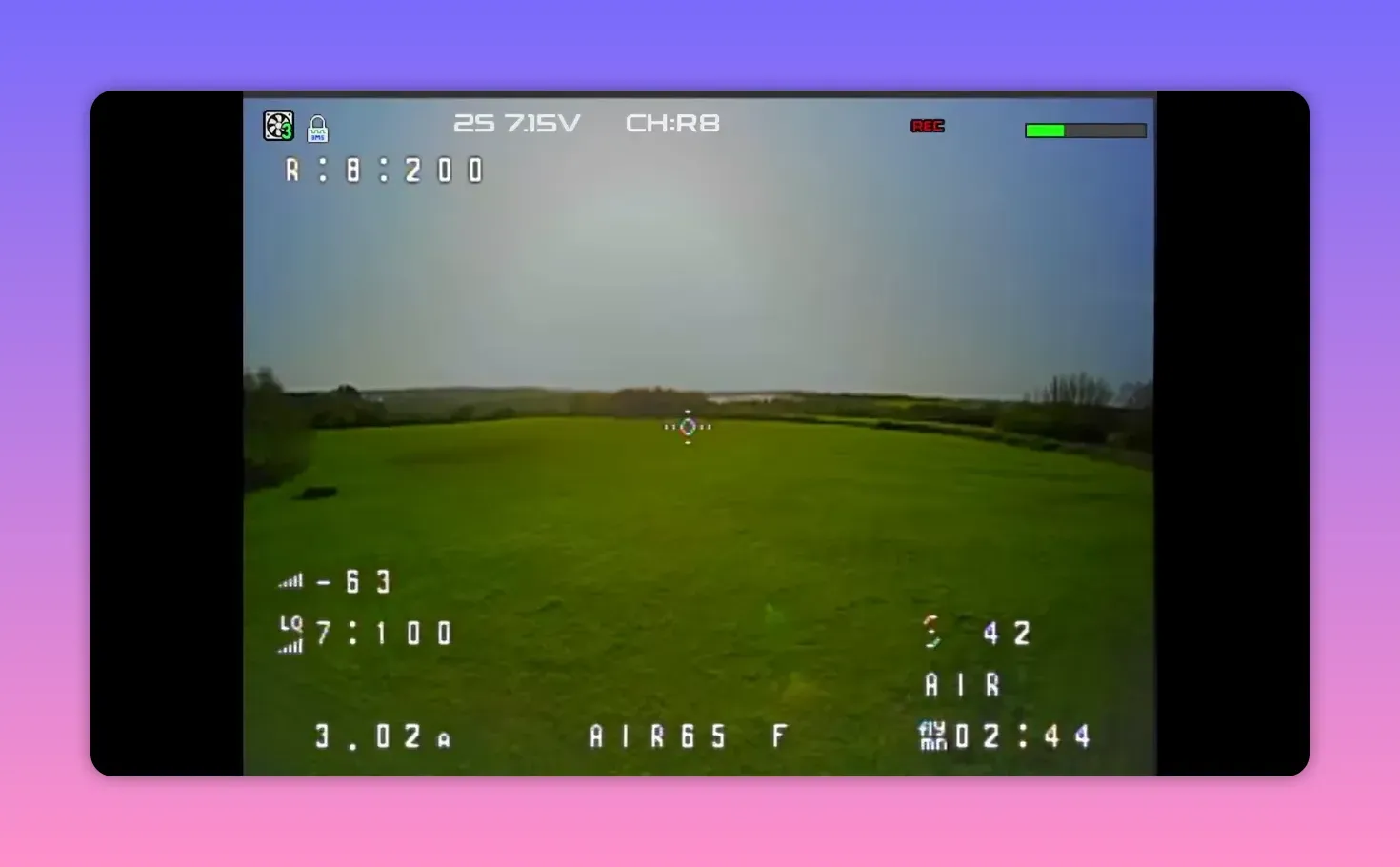
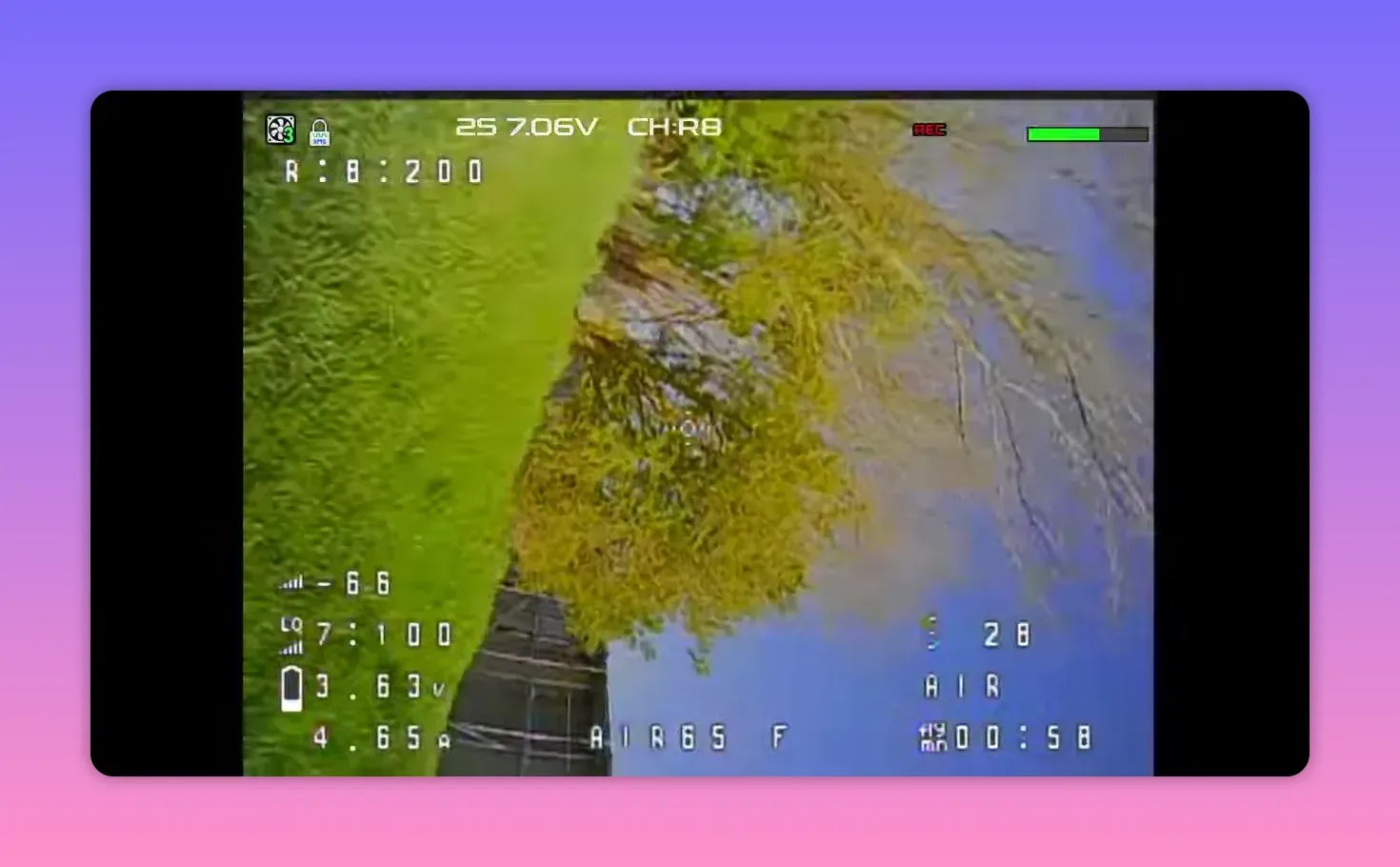
This little FpV drone got crashed into bushes and trees several times during testing. The frame held up well, with no cracks or visible damage reported afterwards. That is exactly what a 65mm whoop should do: bounce, complain quietly, and continue.
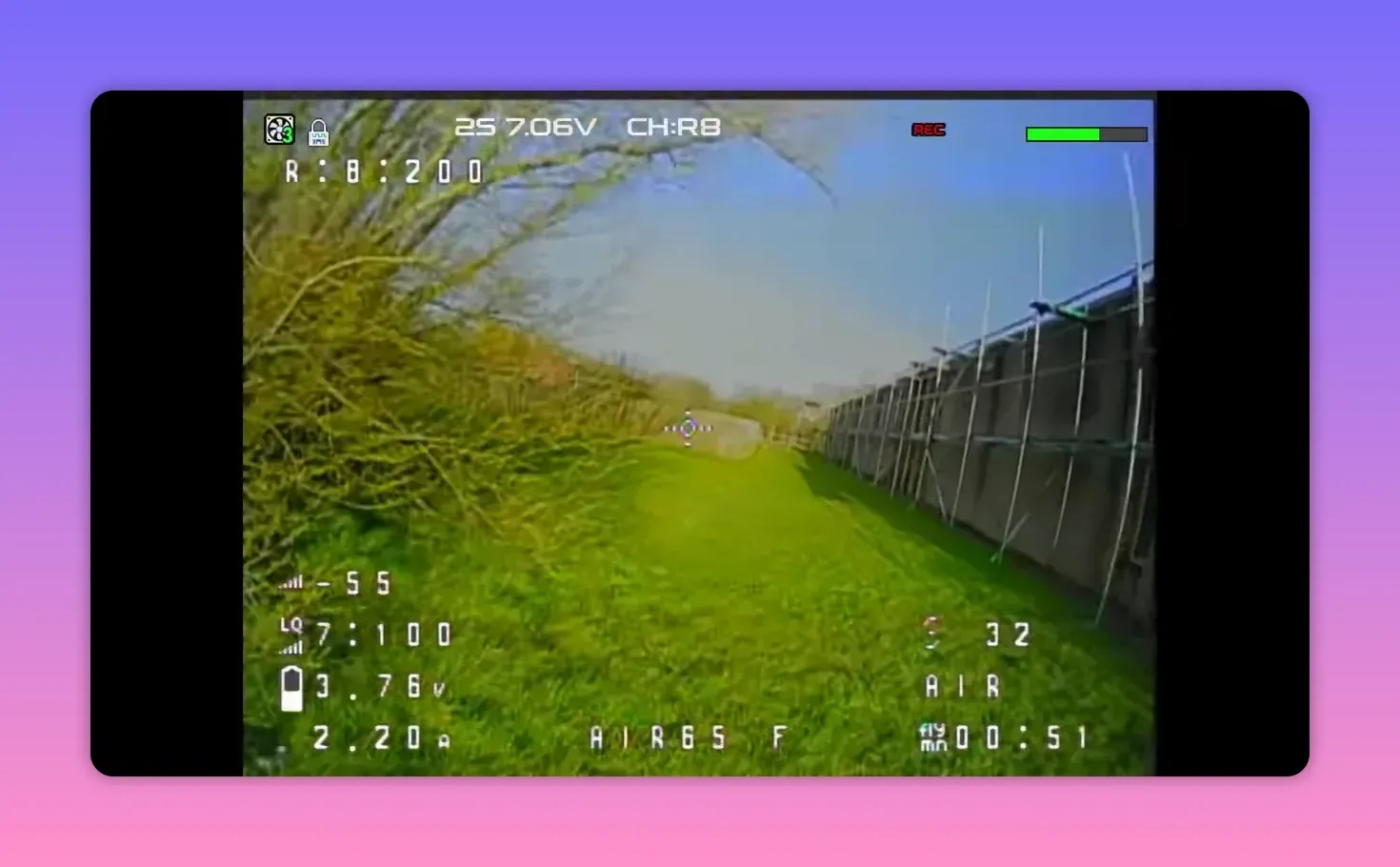
Turtle mode also worked when needed, helping the quad right itself after an upside-down landing in the grass. Small thing, useful thing.
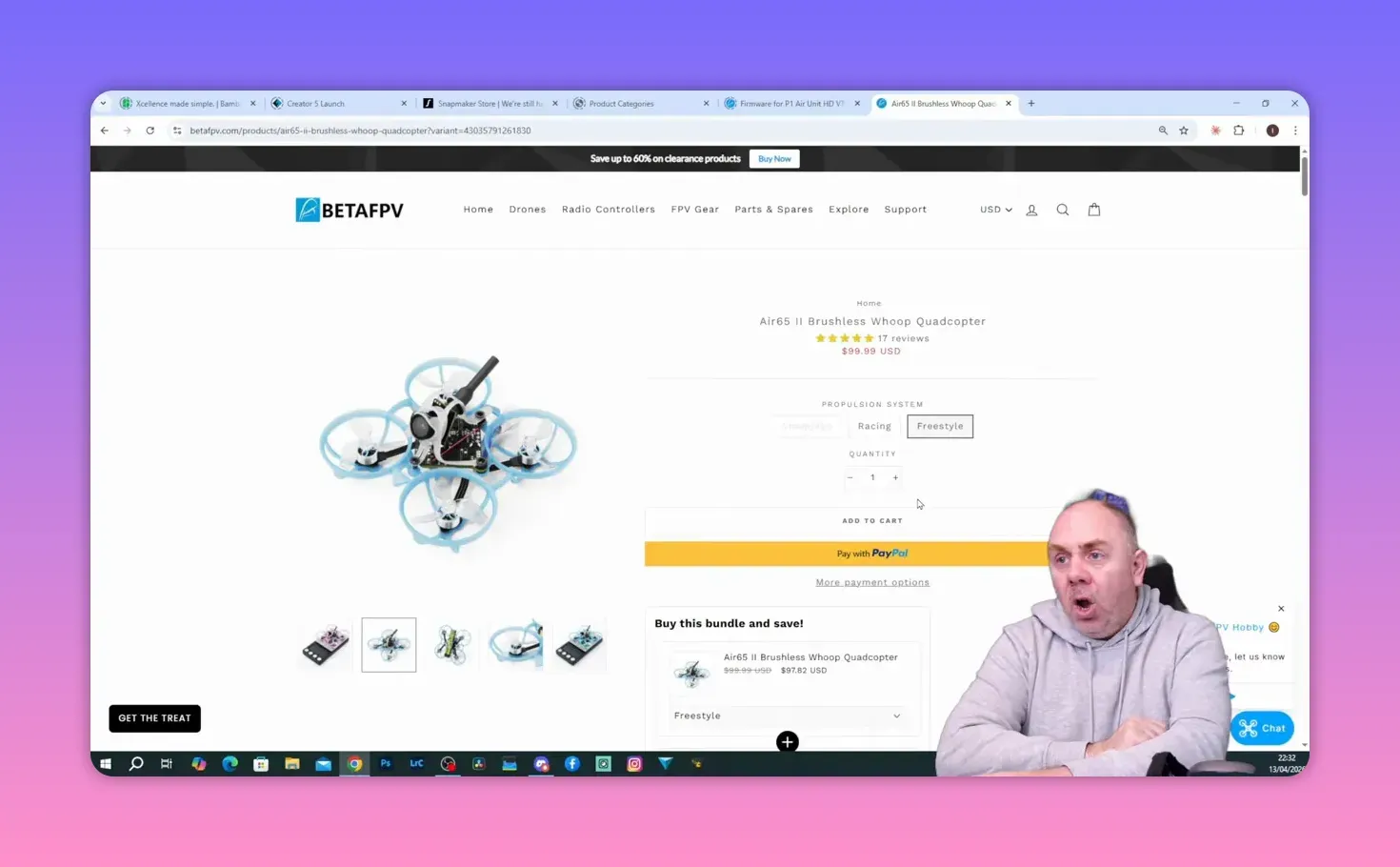
If you do manage to destroy the frame, replacements are cheap. BetaFPV lists replacement airframes at $4.99, which is the sort of spare-parts pricing that stops repair from feeling like self-harm.

What could be better
No product escapes without a list. The Air65 II is good, but not saintly.
- Angle mode needs tuning: It feels too restricted and awkward on the sticks.
- Alpha firmware is a poor choice: Shipping a prebuilt quad on alpha software is unnecessary drama.
- Camera angle is fairly fixed: Fine for faster flying, less ideal for slow close-quarters work.
- Minor camera quirks: Yellow tint and some fisheye remain visible.
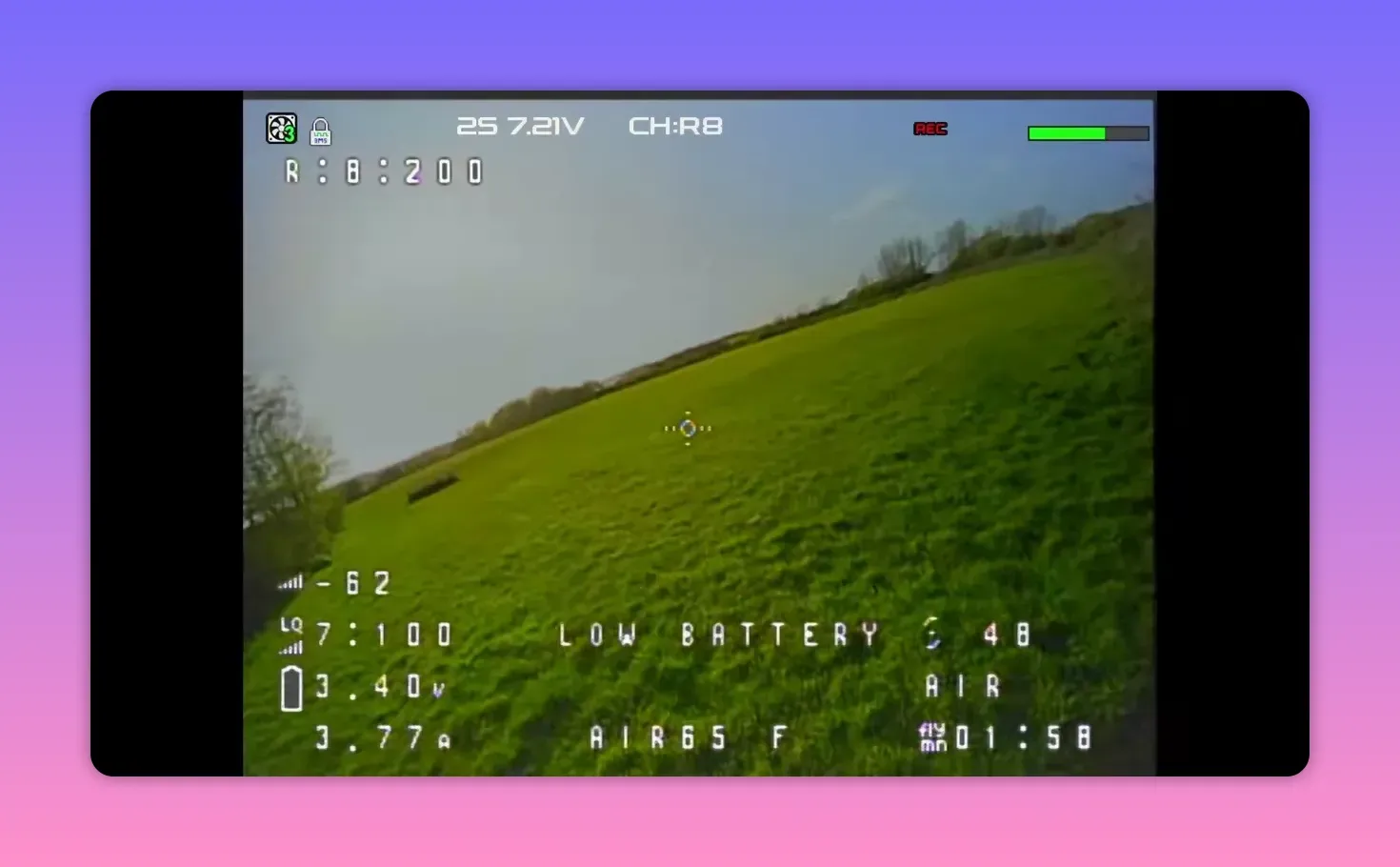
There is also a preference issue with camera tilt. For general cruising around bushes, trees, and tighter spaces, a slightly lower angle would make the quad calmer at slower speeds. The current setup favours a brisker pace.
Price and value
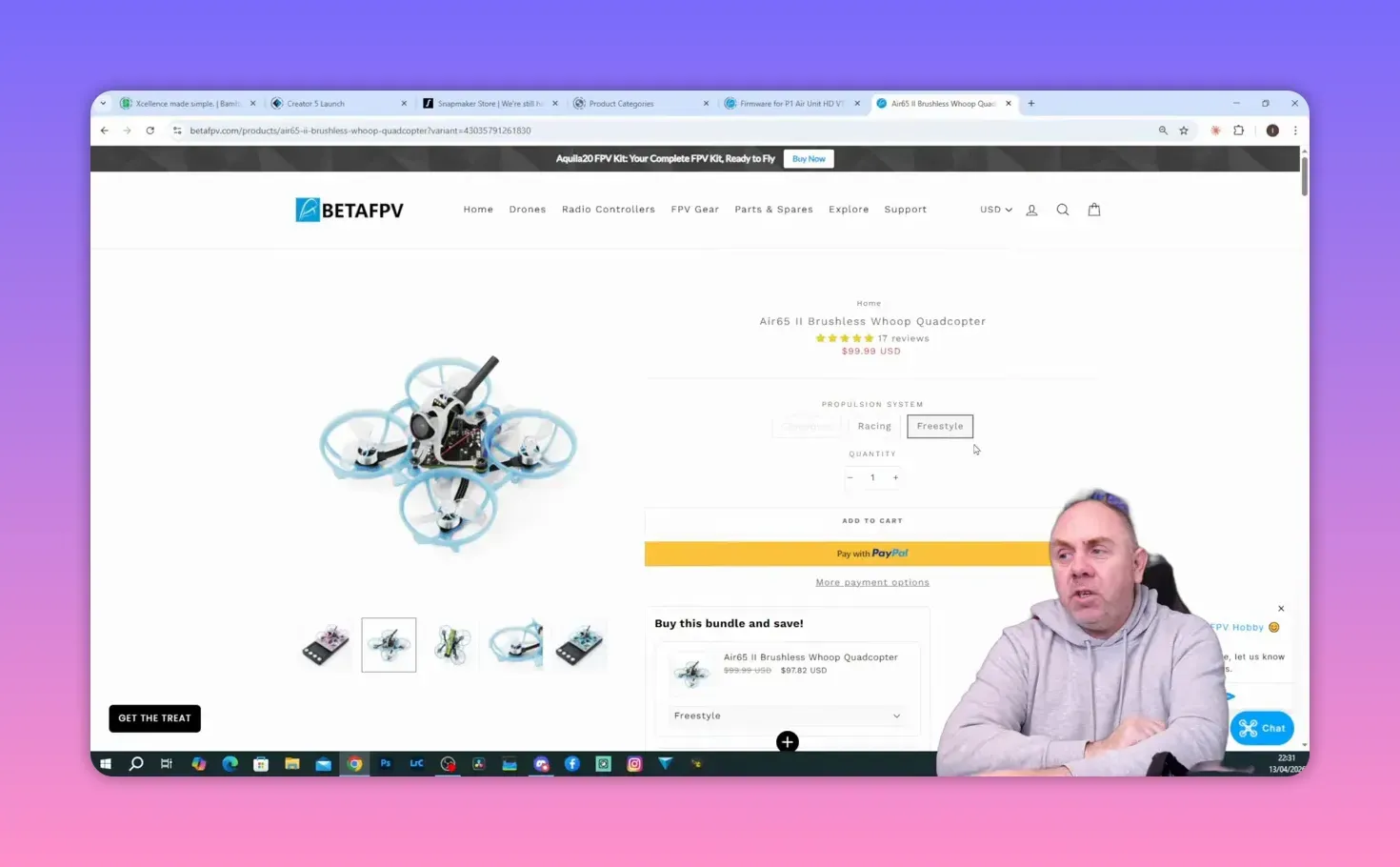
The Freestyle and Racing versions both sell for $99. The Champion comes in at $104, though it was out of stock at the time covered here.
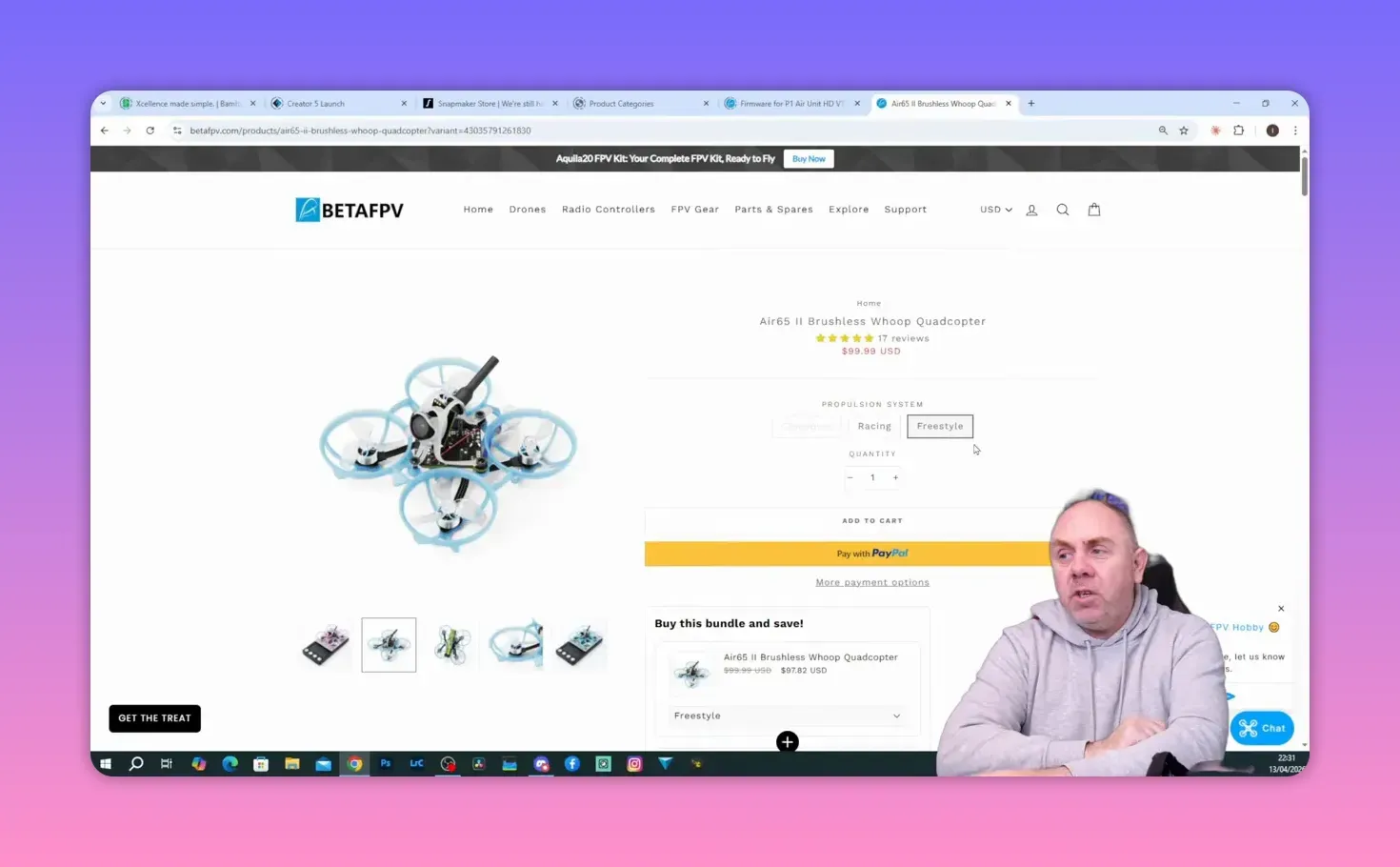
At that price, the Air65 II freestyle makes a very strong case for itself. It flies well without immediate tweaking, battery life is decent, the spare parts exist, and the frame survives ordinary abuse. That combination is rarer than it should be.
Final verdict on this FpV drone
The BetaFPV Air65 II freestyle gets the important bits right. It is light, properly featured, sensibly priced, and tuned well enough to be enjoyable straight away. For many pilots, that is the whole job.
It is not flawless. Angle mode needs attention, the camera is merely decent, and the firmware choice deserves a stern look. But judged on what matters most—how the thing flies—this FpV drone is very easy to recommend.
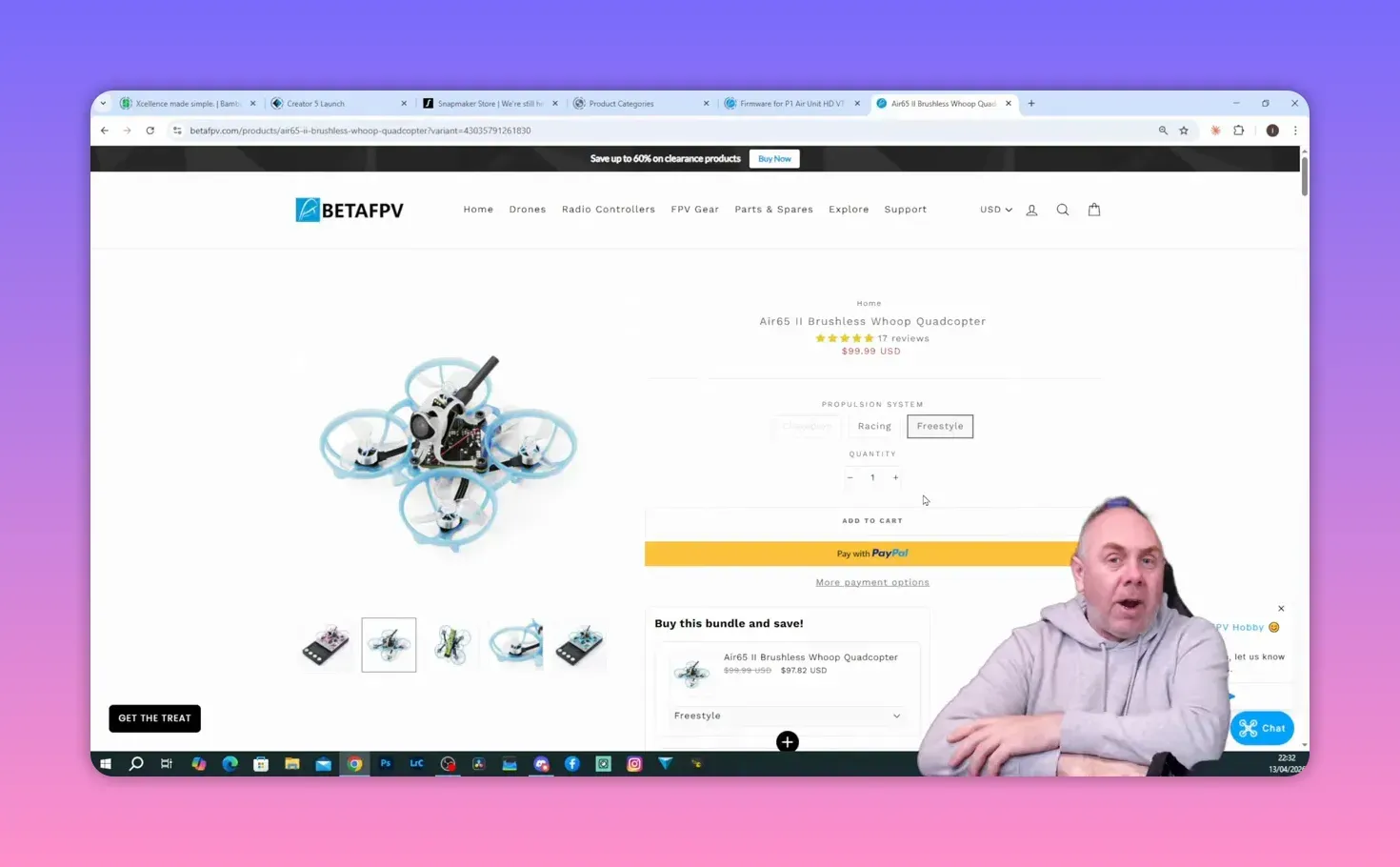
Put plainly: there are not many better ways to spend $99 on a small analogue whoop unless your hobby is buying disappointment in bulk.

FAQ
Which version of the BetaFPV Air65 II makes the most sense for general flying?
The freestyle version is the sensible middle ground. It uses 25,000KV 0702 motors, keeps the same frame as the race model, and offers a more relaxed setup for everyday use.
Is the Air65 II an analogue or digital FpV drone?
It is an analogue FpV drone. It uses BetaFPV’s C03 camera and an onboard VTX with output levels from 25mW up to 400mW.
Does the Air65 II include ExpressLRS?
Yes. It has a built-in 2.4GHz ExpressLRS receiver, and it is connected as a UART-based serial receiver rather than SPI.
How long does the BetaFPV Air65 II fly on one battery?
BetaFPV claims around five minutes for the freestyle version when using the recommended 320mAh 1S Lava battery with the BT2.0 connector.
Is the stock tune any good?
Yes, in Acro mode it appears very good out of the box. The quad flies cleanly and feels well sorted. Angle mode is much weaker and could use tuning.
Are spare parts easy to get?
Yes. BetaFPV sells replacement frames, canopies, and props. The replacement frame was listed at $4.99, which is refreshingly reasonable.
Takeaway box
- $99 gets you a genuinely good 1S analogue FpV drone—not a repair project pretending to be a product.
- Acro mode is the headline feature—the stock tune flies far better than many micros at this price.
- Angle mode is the weak link—usable, but it feels undercooked and oddly restricted.
- Hardware spec is strong for the class—UART ELRS, 400mW VTX, blackbox, current sensor, and BT2.0 all show up.
- Cheap spares help a lot—because every tiny quad meets a bush that thinks it is a net.
This article was based from the video BetaFPV Air65 II 1S Whoop - Not Many Better Ways To Spend $99