What happened and why you should care
Mads Tech lost a review quad because his goggles battery dropped to 2.75 volts and the low-battery warning was off. This matters because it stopped video, complicated recovery, and cost him a review unit he still needed to test.
TLDR: What you actually need to know
- Goggles battery dropped to 2.75V, low-battery warning had been disabled during bench tests.
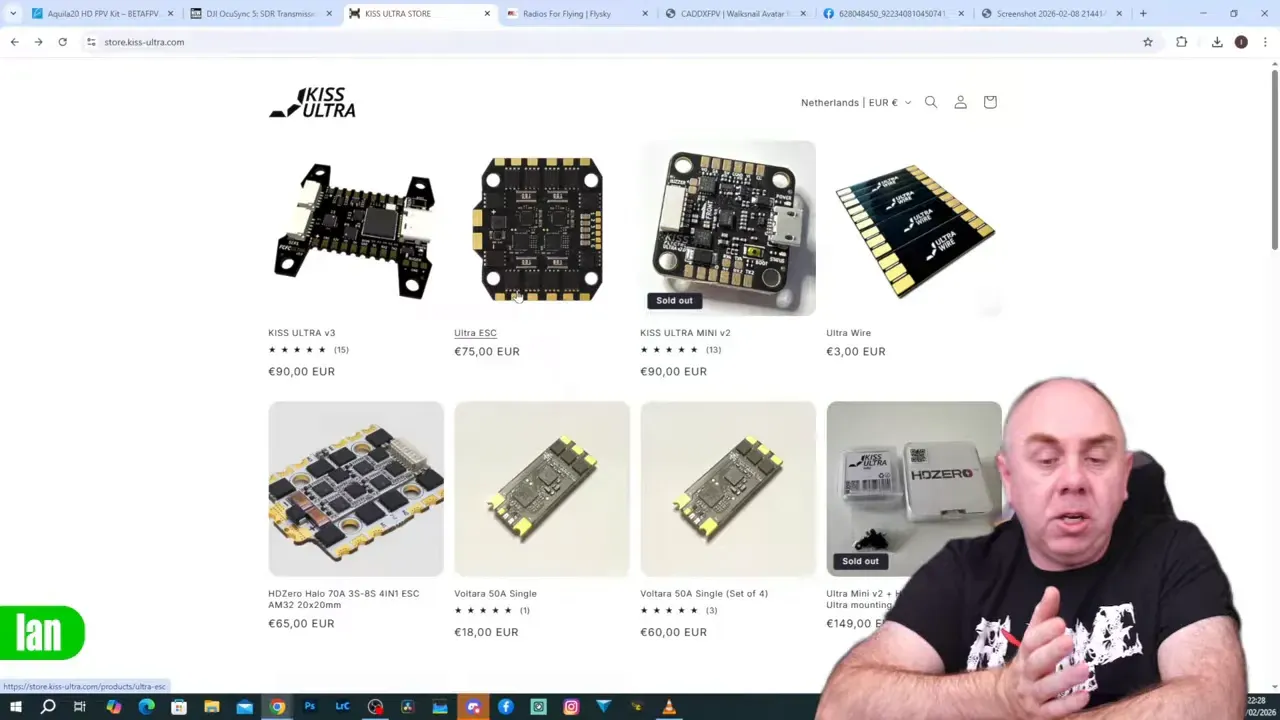
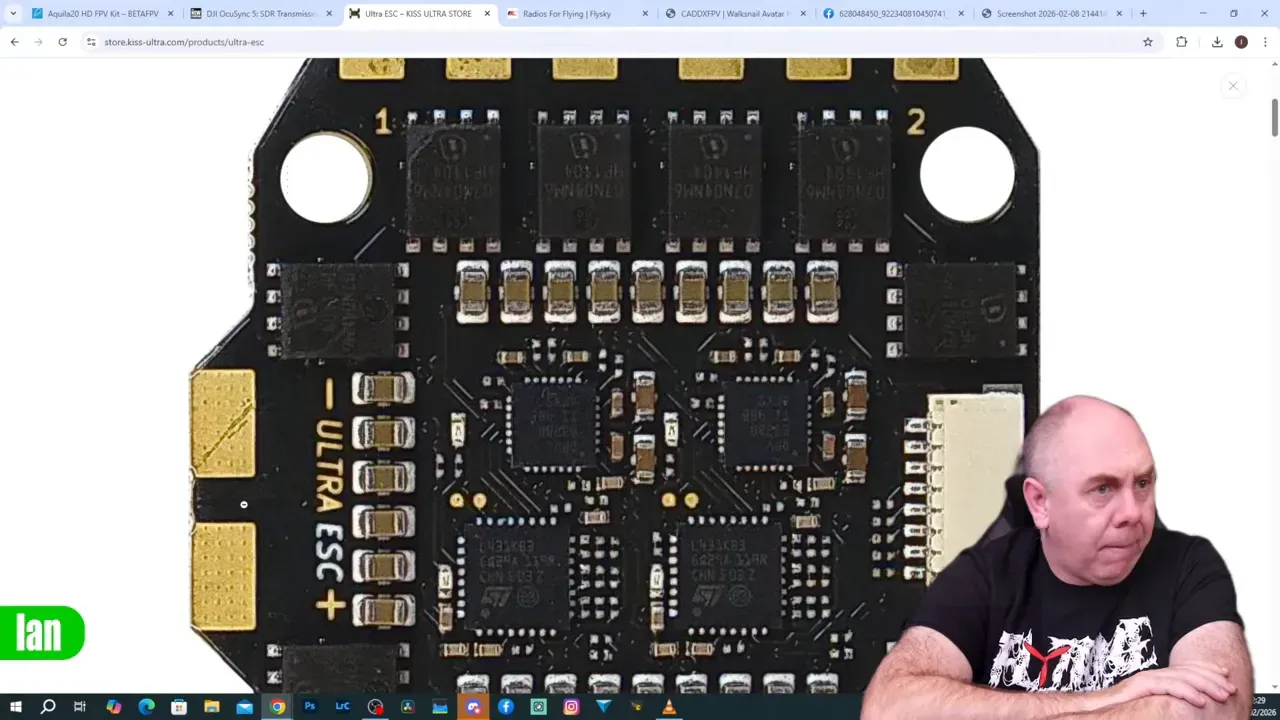
- KISS Ultra released a dedicated ESC, 16g, 3–8S capable, 80A rating, priced at €75.
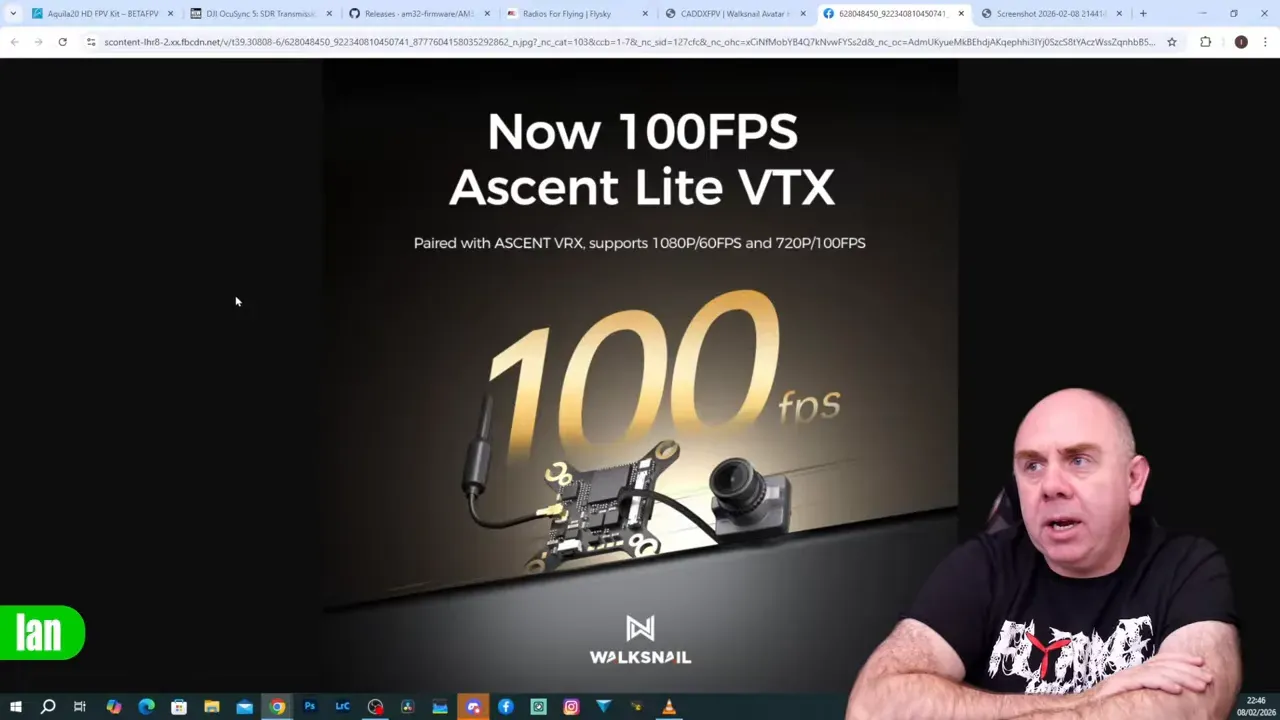
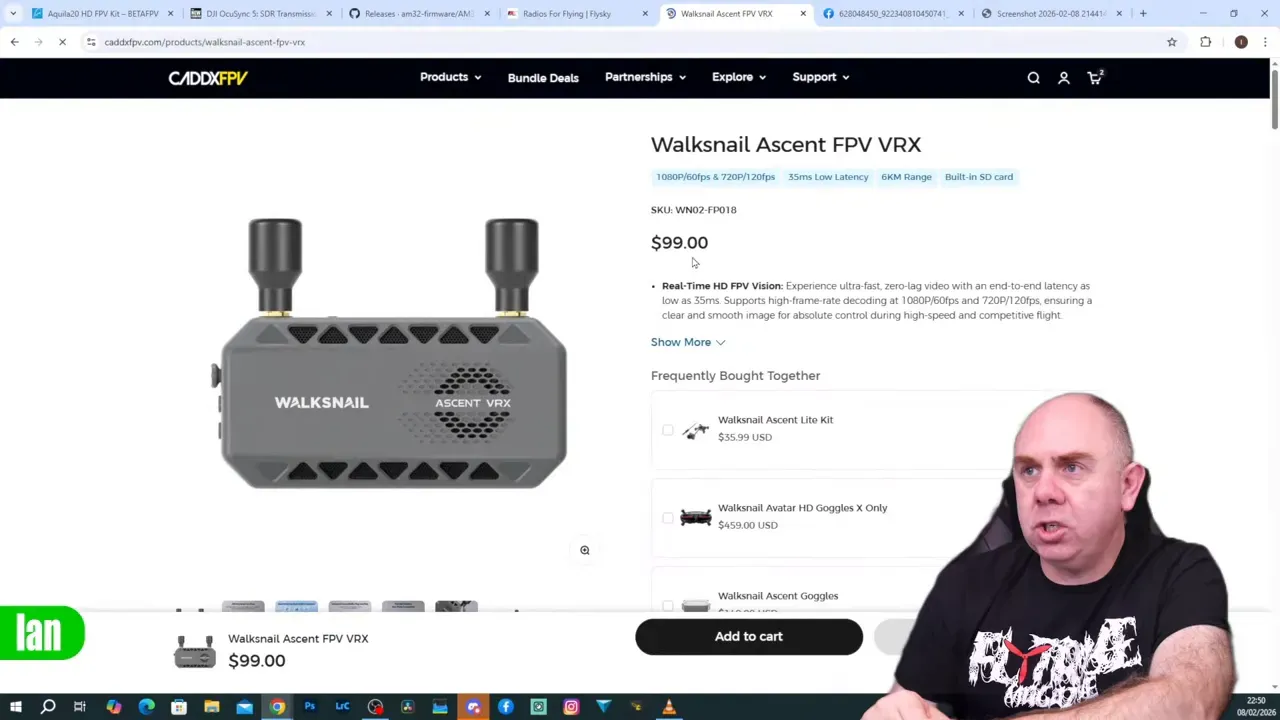
- Caddx Ascent firmware now supports 1080p60 and 720p100 when paired with the new VRX module.
- Ascent VRX + goggles could hit ~28–30ms lab latency if BRX module delivers as claimed, not yet independently verified.
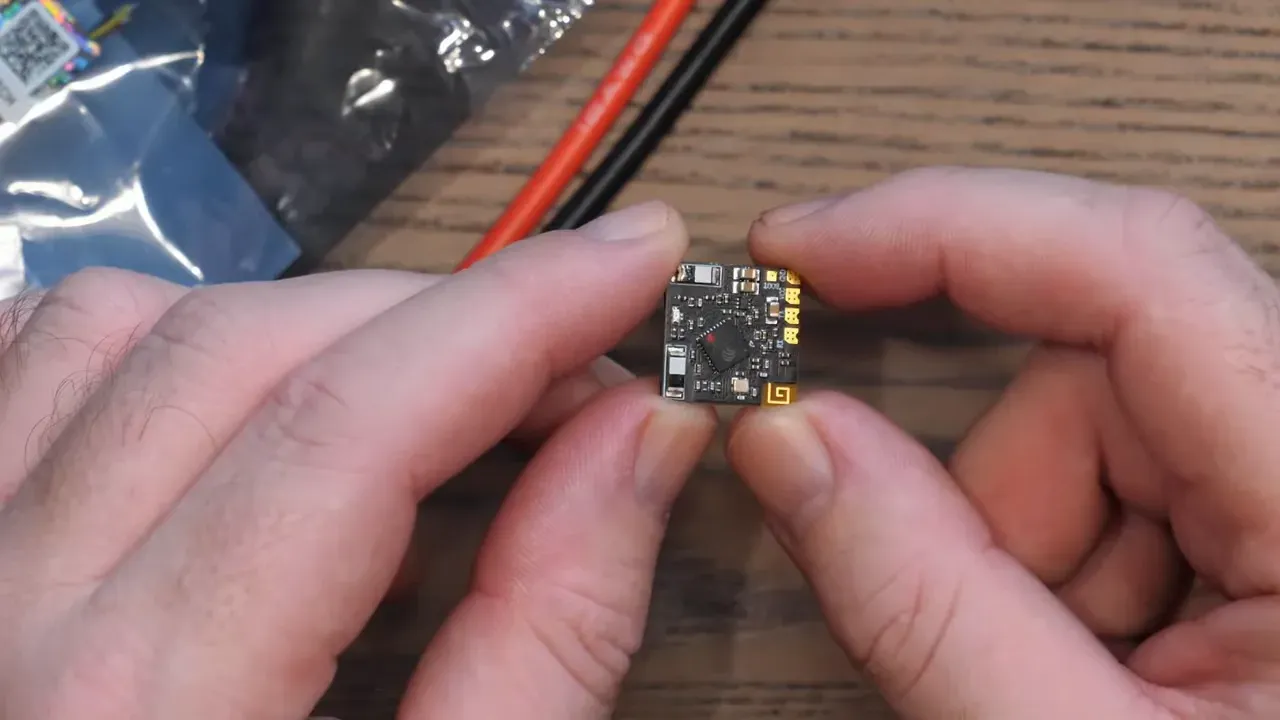
- FlySky released a dual chip-antenna ExpressLRS SX1280 receiver, diversity at 90 degrees.
- Best for: Buyers who want lower-cost digital VTX options and are willing to accept ecosystem trade-offs.
- Avoid if: You need a plug-and-play digital system that works perfectly out of the box with guaranteed ecosystem upgrade paths.
How did Mads lose a review quad?
Answer: the goggles battery died unexpectedly, and the low-battery alert had been turned off for bench testing. Mads says the unit reached 2.75 volts and the OSD indicators were not noticed. He tried to recover visually in sport mode but could not get the orientation or return, and an instant disarm would likely have landed the quad in mud rather than cost it. So what: double-check your ground gear before flying, especially when testing latency or bench setups.
What is the KISS Ultra ESC and should I care?
Answer: KISS Ultra released its own purpose-built ESC for the Ultra flight stack, not a Voltara rebrand. The board uses premium Infineon MOSFETs, weighs about 16g, supports 3–8S and quotes an 80A rating, and costs €75. It runs KISS proprietary firmware rather than an open-source fork, with per-motor shunt measurement visible on the PCB. So what: if you fly KISS Ultra and want a matched stack, this is a tidy option, but long-term firmware support and real-world reliability still need a year of user data.
What changed in Caddx Ascent 100FPS update?
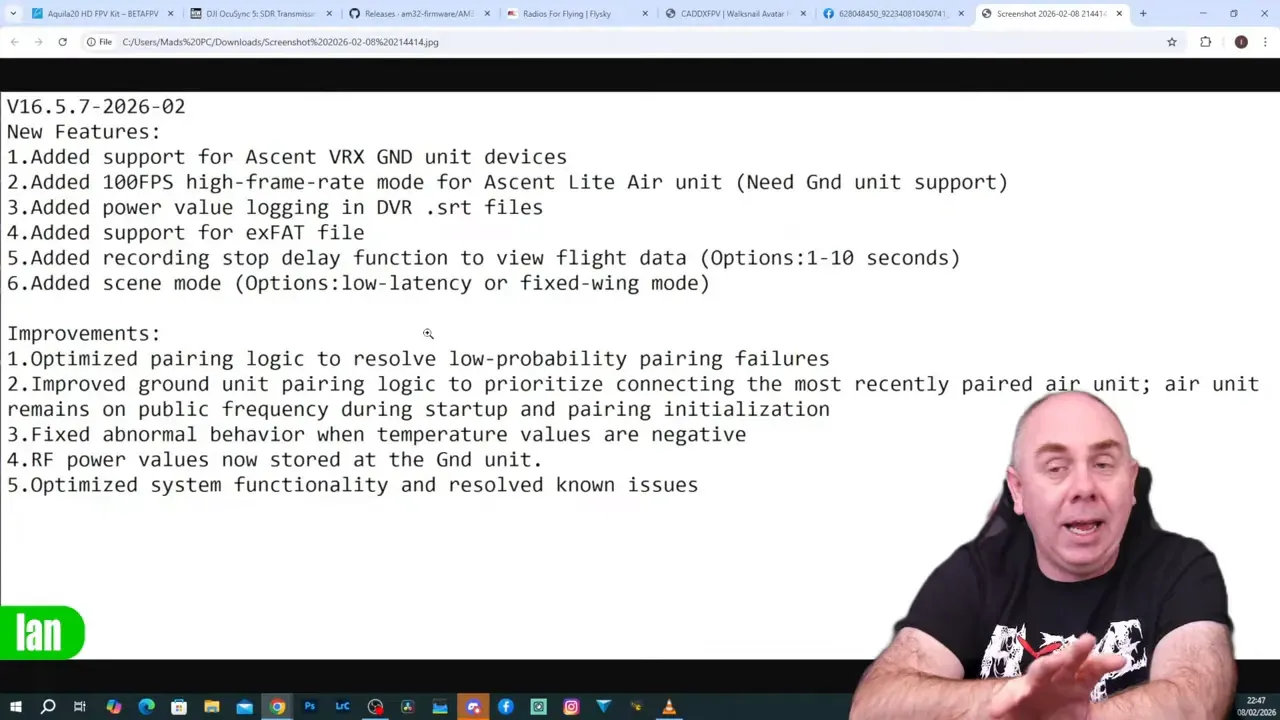
Answer: Caddx shipped a firmware update that adds 1080p60 and a BRX-linked 720p100 mode for Ascent VTXs when used with the new VRX module. The release notes mention VRX support, power logging, XFAT recording, and a scene mode that trades image quality for reduced latency. Mads notes the Ascent camera remains noisy and stuttering was previously an issue, so the update is promising but unproven in the field until latency and stability tests are run. So what: the update narrows the technical gap, but real-world performance will determine whether Ascent becomes a viable low-cost digital alternative.
Is Caddx Ascent latency now close to Avatar or DJI?
Answer: Not proven, but possible if the BRX VRX module and goggles deliver on their claims. Mads suggests Ascent could hit 28–30ms lab latency with the BRX module, which would be competitive. He also warns VRX modules typically remove some goggle-side latency, so the combination matters more than the VTX alone. So what: wait for independent latency and reliability testing before switching ecosystems; the update is a step, not a conclusion.
Are the DJI O5 rumours real?
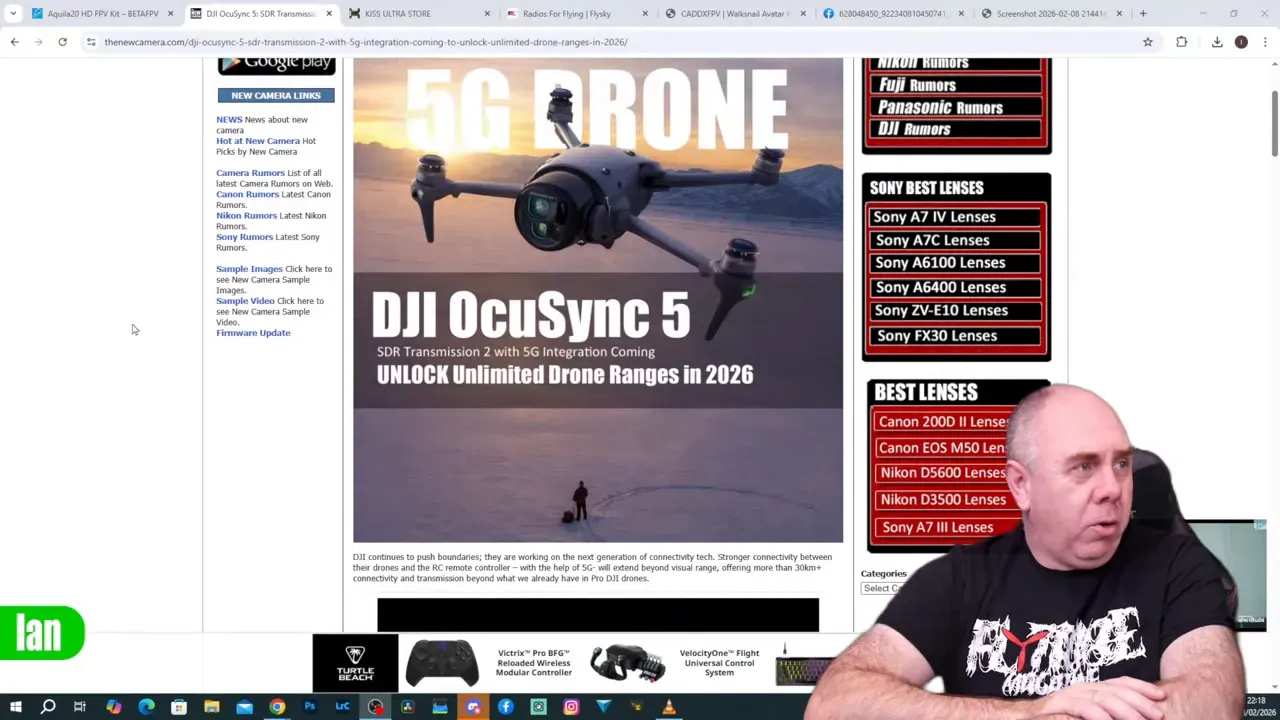
Answer: No reliable evidence was found for an O5 branding; much of the online chatter appears to be inaccurate or AI-generated. Mads explains DJI ground-transmitters currently use P1/S2 chipsets and filings label devices as SDR, not OcuSync 5. Claims about baked-in 5G and absurd range are implausible because cellular makes little sense for most drone users. So what: treat O5 rumours as noise until DJI releases formal specs or FCC filings that clearly show a new consumer product.
What are FlySky’s new ExpressLRS receivers and why are they odd?
Answer: FlySky released their first officially supported ExpressLRS receiver with dual chip antennas on an SX1280 platform, offering diversity at roughly 90 degrees. The dual-chip design aims to reduce nulls compared to single-chip antennas, trading size for improved link resilience. Mads points out a dual-chip approach can solve null problems more elegantly than two short U.FL whips, but real-world range and reliability data are not yet public. So what: this is interesting for frames where antenna height is limited, but test before committing for long-range or critical flights.
Has Anti-Gravity A1 improved RF performance?
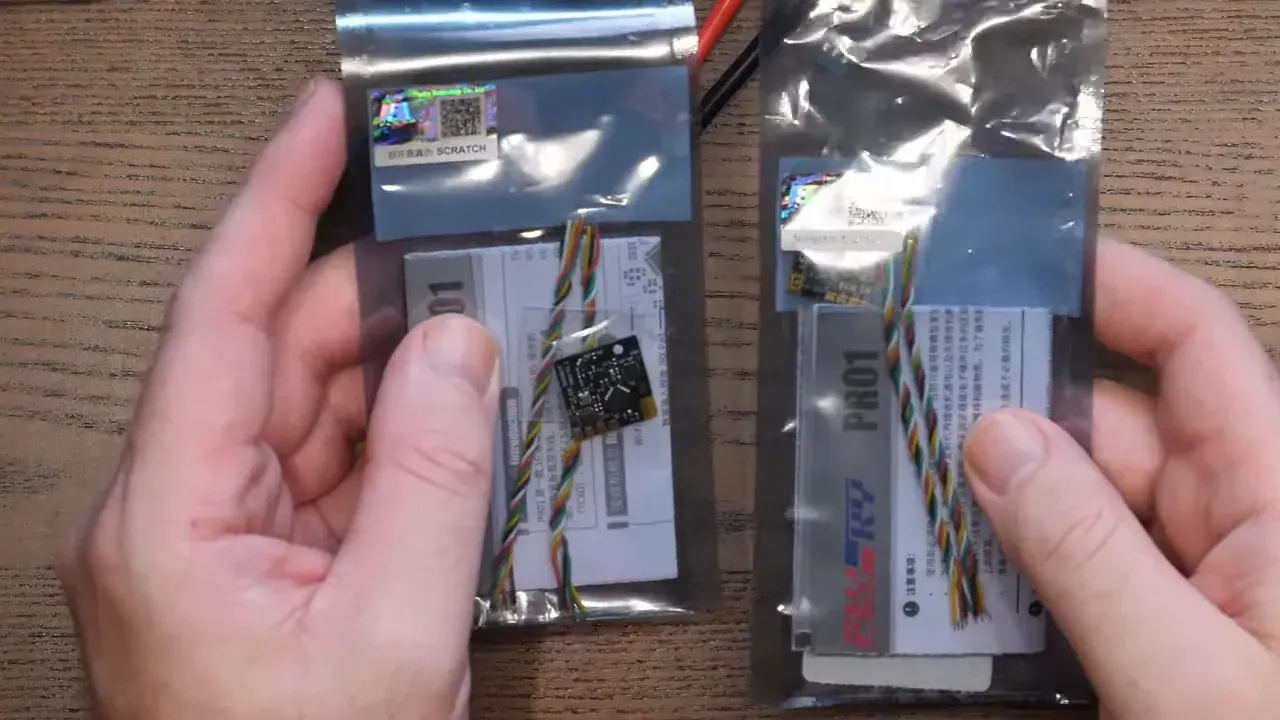
Answer: Possibly, yes; Anti-Gravity claims the latest firmware includes RF performance fixes tied to earlier signal issues Mads demonstrated. The company told Mads the release now contains simulator features plus RF adjustments. He plans re-tests once the weather allows, and wonders why those RF fixes were not loudly announced. So what: owners should update and test, but independent verification from pilots in varied RF environments is still needed.
Why does open versus closed source matter for digital FPV?
Answer: It matters less than whether a system works reliably out of the box and receives ongoing support. Mads is sceptical that open-source alone will save digital FPV, because hardware fragmentation and unsupported forks create chaos. He argues the user experience baseline has been set by systems that just work, and any new entrant—open or closed—must match that standard. So what: prefer ecosystems with proven, predictable results over ideological purity.
Key specs and claims mentioned
- Goggles battery recorded at 2.75 volts when flat.
- KISS Ultra ESC: 16 grams, 3–8S, 80A, premium Infineon MOSFETs, €75.
- Caddx Ascent: now supports 1080p60 and 720p100 with BRX VRX module.
- Ascent VRX + goggles claimed potential latency: 28–30ms (not verified).
- FlySky ExpressLRS receiver: SX1280-based, dual chip antennas, diversity at 90 degrees.
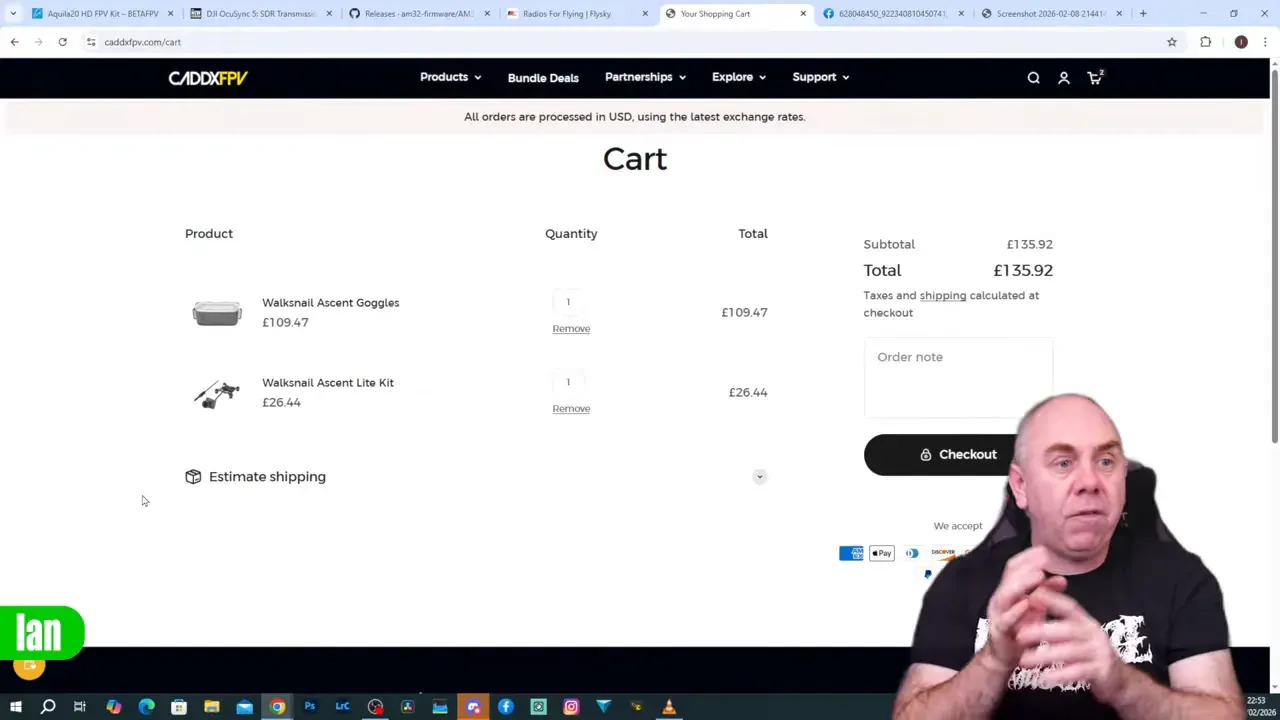
- Avatar VRX light kit listed around $194; Caddx VRX option around $136 in the example.
FAQ
How do I avoid goggles battery surprises?
Always re-enable low-battery warnings after bench tests and check voltage before flight. Mads’ case shows a 2.75V goggle battery can kill your link and your quad. Not stated in the video: a second, dedicated battery monitor on your bench helps.
Will KISS Ultra ESC outperform Voltara or BLHeli?
Not stated in the video, real-world performance and long-term firmware support are unknown. The ESC is a logical match for KISS Ultra users, but objective superiority requires broad user data over months.
Can Caddx Ascent really run 100FPS reliably?
Possibly with the BRX VRX module, but Mads has not independently verified field latency or stability yet. The firmware enables 720p100, but camera noise and historical stuttering are caveats.
Are FlySky’s dual chip antennas better than a single chip?
They should reduce nulls because the antennas face different angles, improving link resilience in compact frames. Real range and comparative tests were not provided in the video.
Should I switch to a cheaper digital VTX ecosystem now?
It depends on upgrade plans and tolerance for fragmentation. Caddx and others lower entry cost, but Mads warns about limited upgrade paths and potential abandonment. If you need a stable, upgradeable ecosystem now, Avatar or DJI remain better bets.
How do I test whether an O4 or O5 ear unit is a new production run?
Check production dates on the box and compare PCB photos if you can. Mads requests images of new O4 Pro PCBs to validate suspected hardware changes. If you do not know how to teardown safely, do not risk a new unit.
This article was based from the video Kiss Ultra New ESC - Caddx Ascent 100FPS - FlySky Elrs Receiver - Antigravity A1 Update Q&A & More