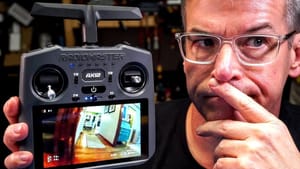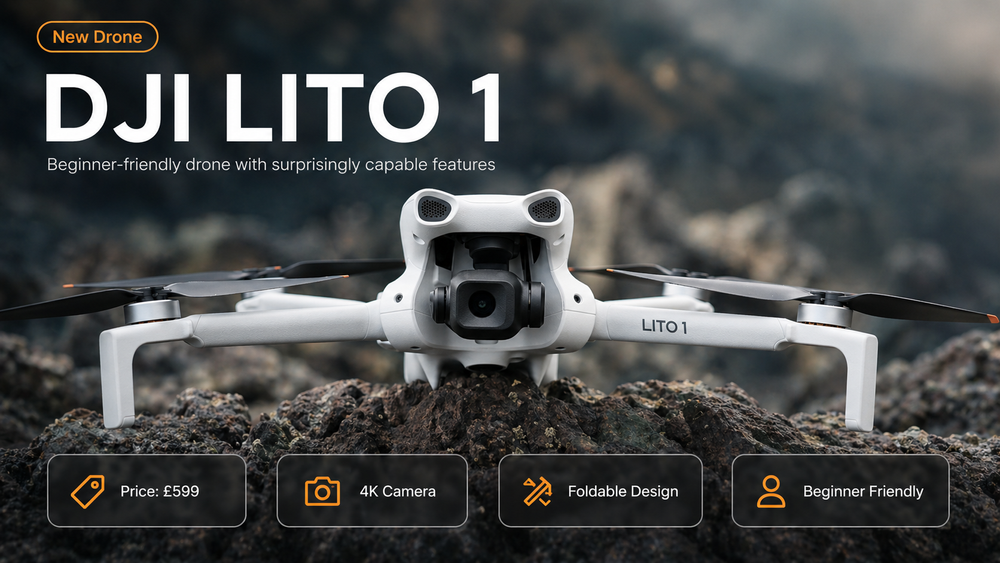
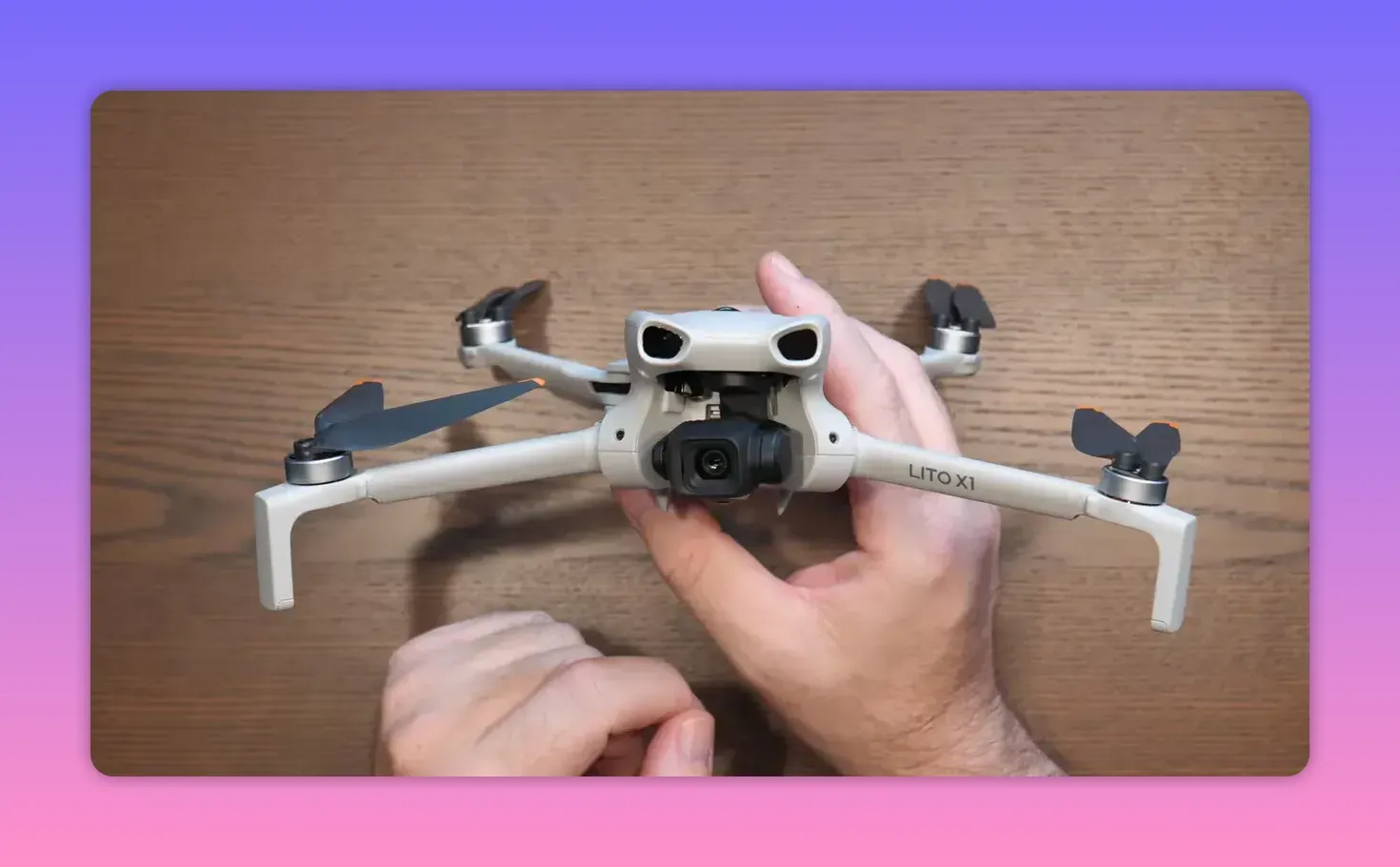
If you want an FpV drone or camera drone without paying Mini 5 Pro money, DJI has a new answer. The Lito X1 takes much of the newer DJI tech, chops the price, and leaves surprisingly little on the cutting-room floor.
TL;DR: The DJI Lito X1 is a sub-250g folding drone aimed at the same crowd that once bought the standard Mini models. It gets a 1/1.3-inch sensor, 4K up to 60fps, 4K slow motion up to 100fps, autofocus, omnidirectional obstacle sensing, front LiDAR, ActiveTrack 360, DJI O4 transmission, and waypoint support on the X1. The Fly More Combo with RC2 lands at £599 in the UK, which makes it a far less painful way into DJI’s current feature set. If night flying, better image quality, and smarter tracking matter, buy the X1. If not, the cheaper Lito 1 may do the job.
DJI’s new Lito range: the Mini replacement in all but name
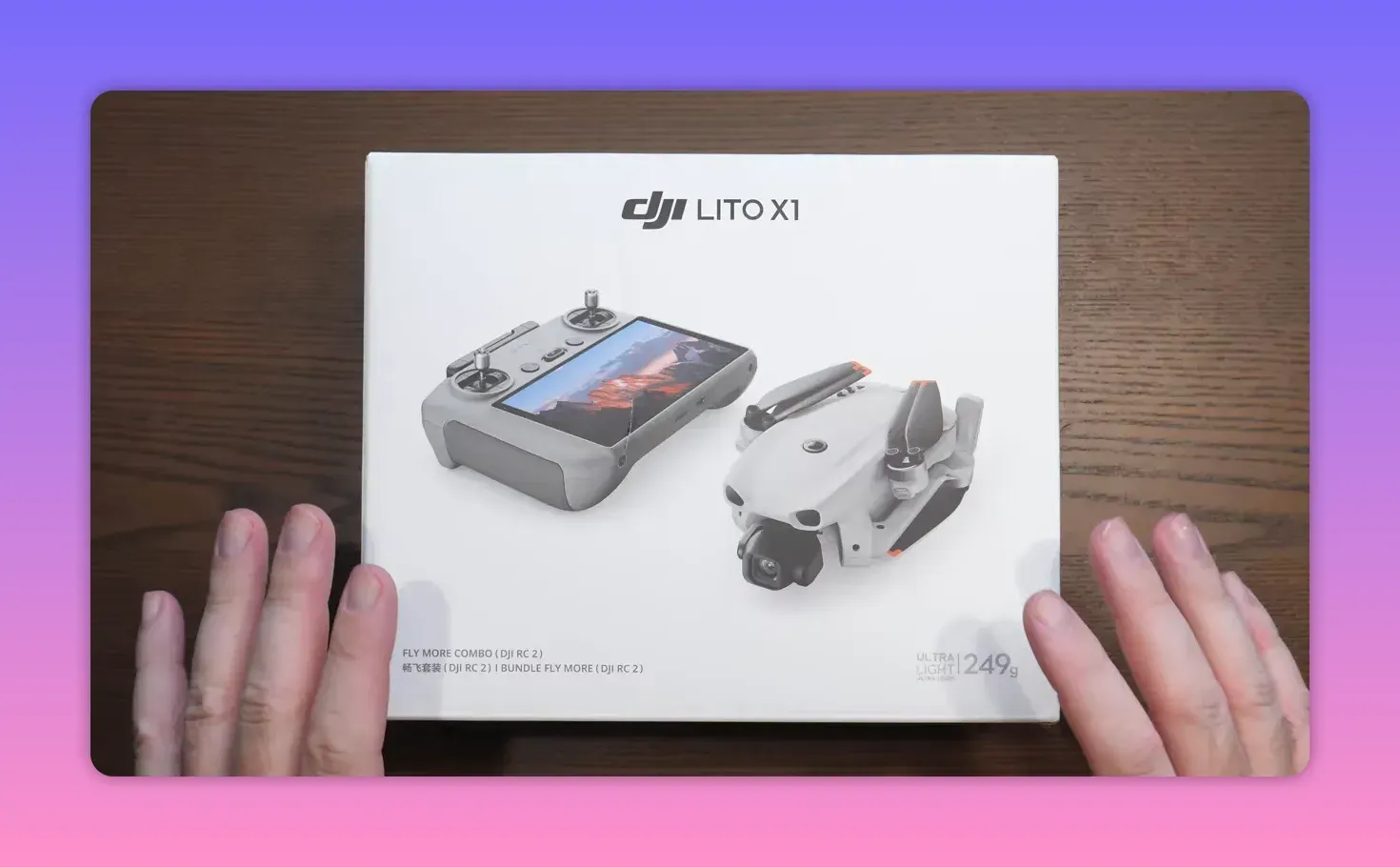
DJI has launched a new Lito series with two models: the Lito 1 and the Lito X1. Think of them as the spiritual successors to the older standard Mini drones, except DJI has stopped pretending everything small must be called “Mini”.
The positioning is straightforward. The Mini 5 Pro sits higher up the ladder with its one-inch sensor and larger feature set. The Lito range steps in below that, targeting buyers who want modern DJI hardware without funding the entire gimbal-industrial complex.
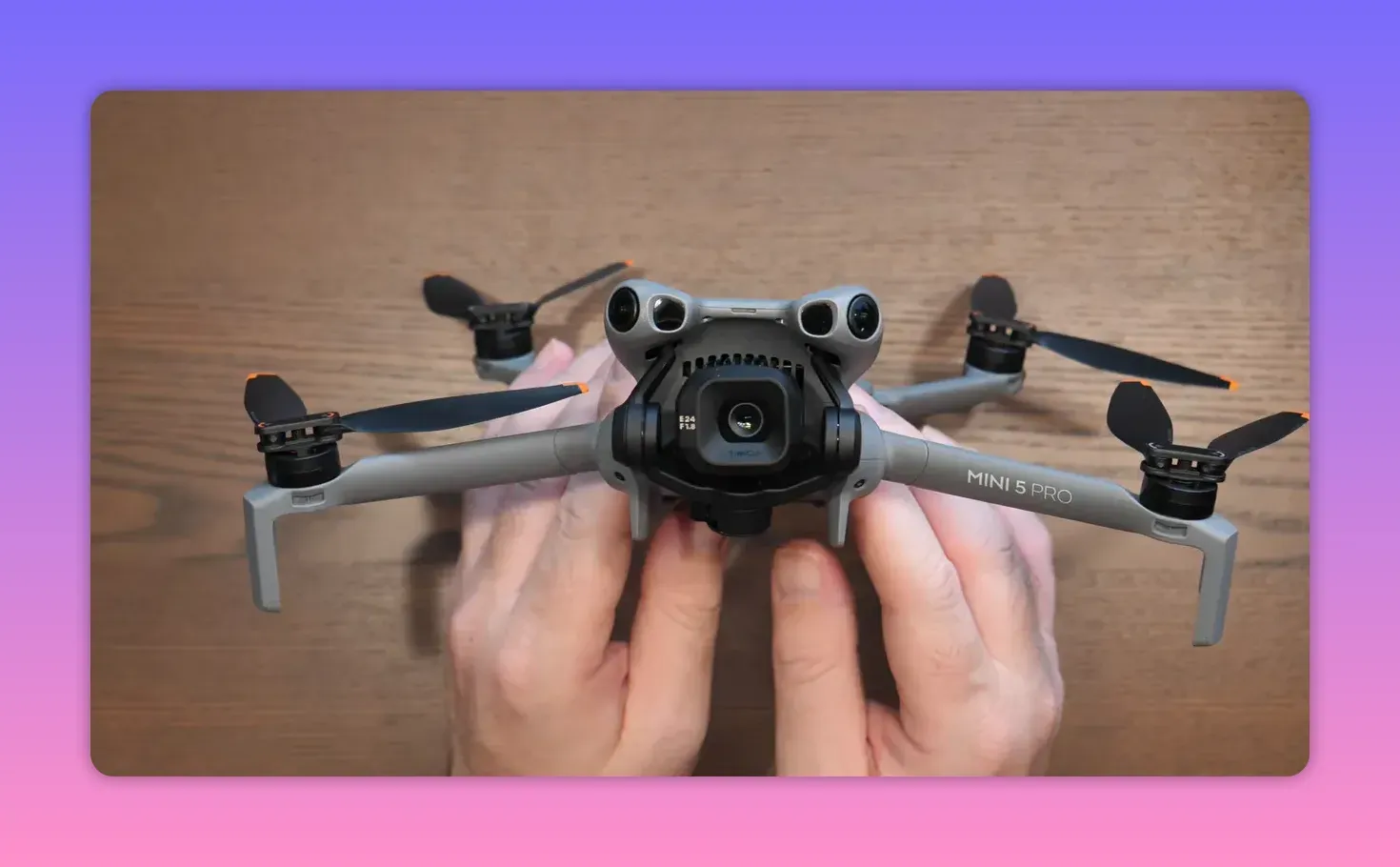
That matters if your shortlist includes an FpV drone, a beginner camera drone, or a portable second aircraft for travel. Sub-250g still matters for convenience, and DJI knows it.
What comes in the box, and what it costs
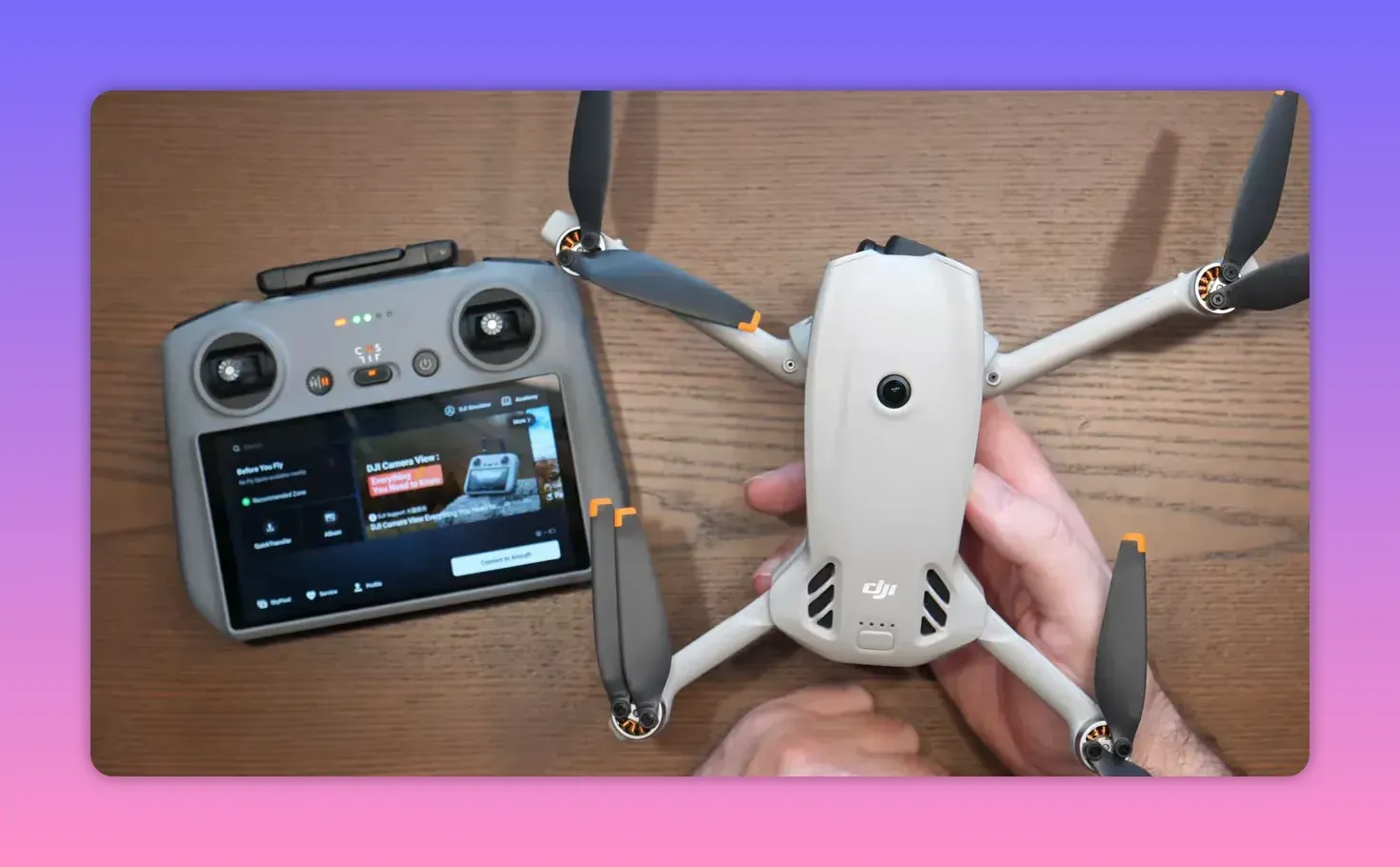
The version tested here is the Lito X1 Fly More Combo with the DJI RC2. In the UK, that package is priced at £599—roughly £400 less than the equivalent Mini 5 Pro kit. Your wallet still flinches, just less dramatically.
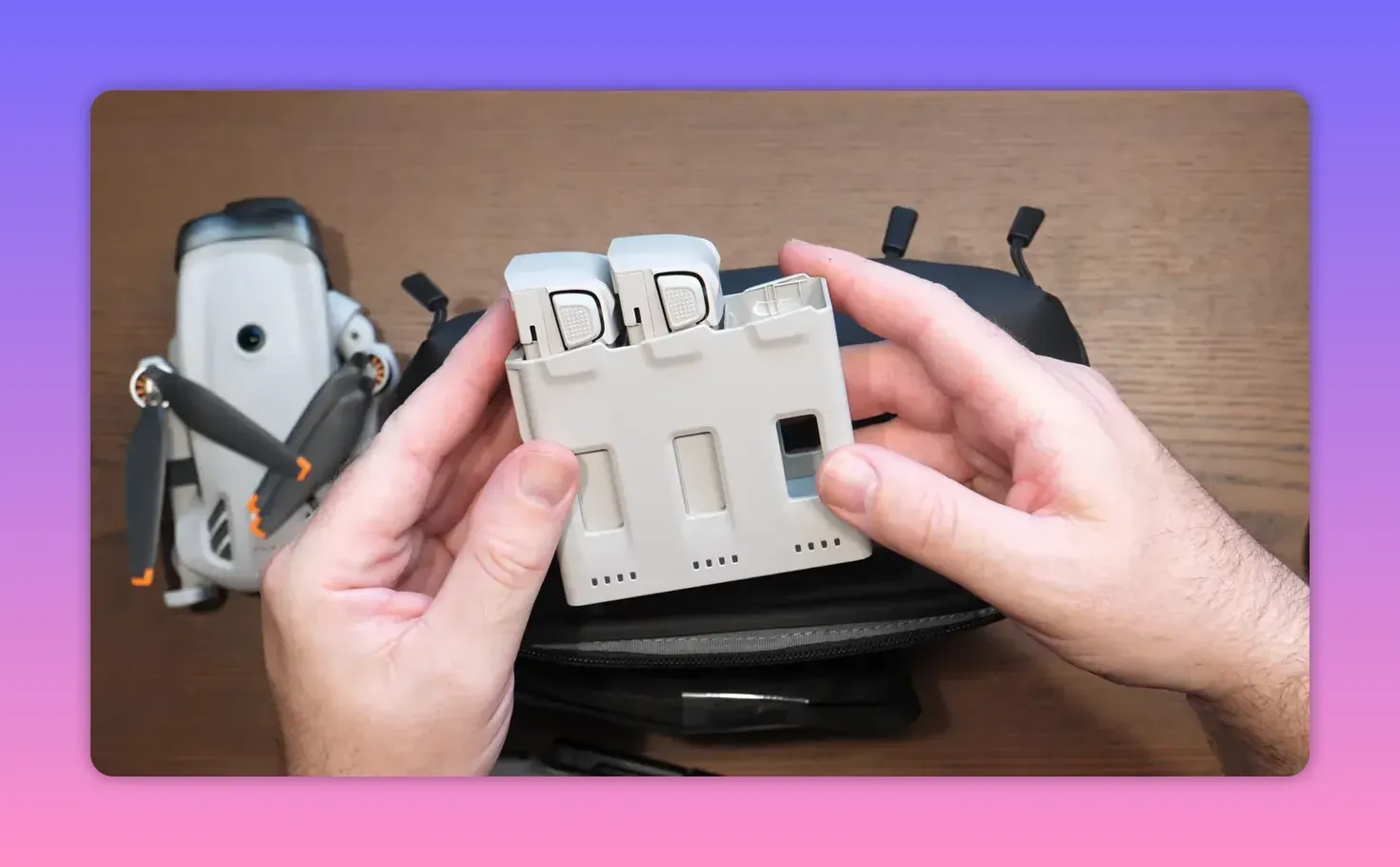
Inside the carry bag you get:
- The Lito X1 drone
- One flight battery in the drone
- DJI RC2 controller
- Two extra batteries
- A charging hub
- A screwdriver
- Six spare propeller blades
- Manual and sticker pack
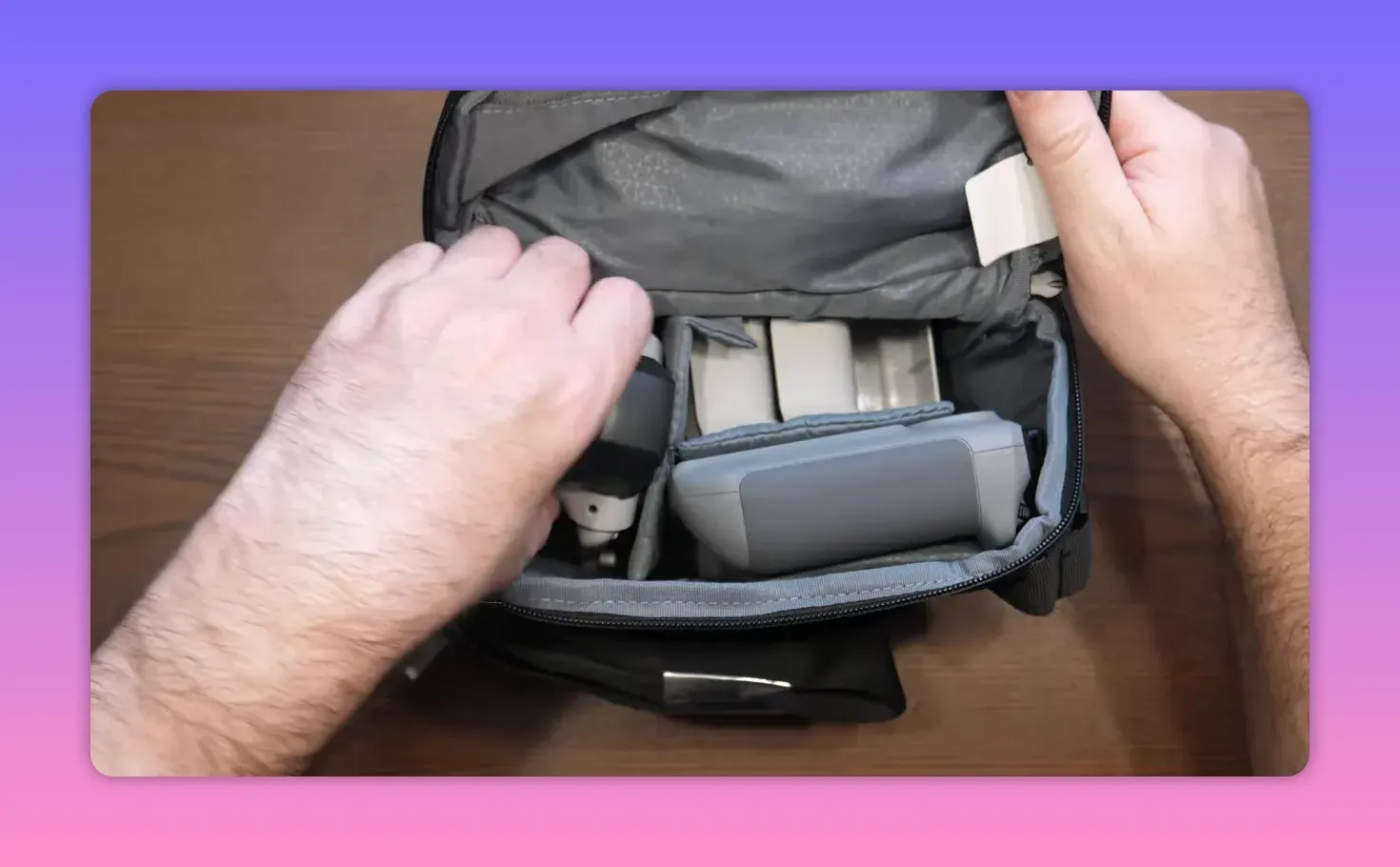
It is a sensible kit. Three batteries and a proper RC2 controller make this a more complete package than the usual “starter bundle” nonsense that starts cheap, then invoices you for every missing basic.
Size, weight, and why the sub-250g class still matters
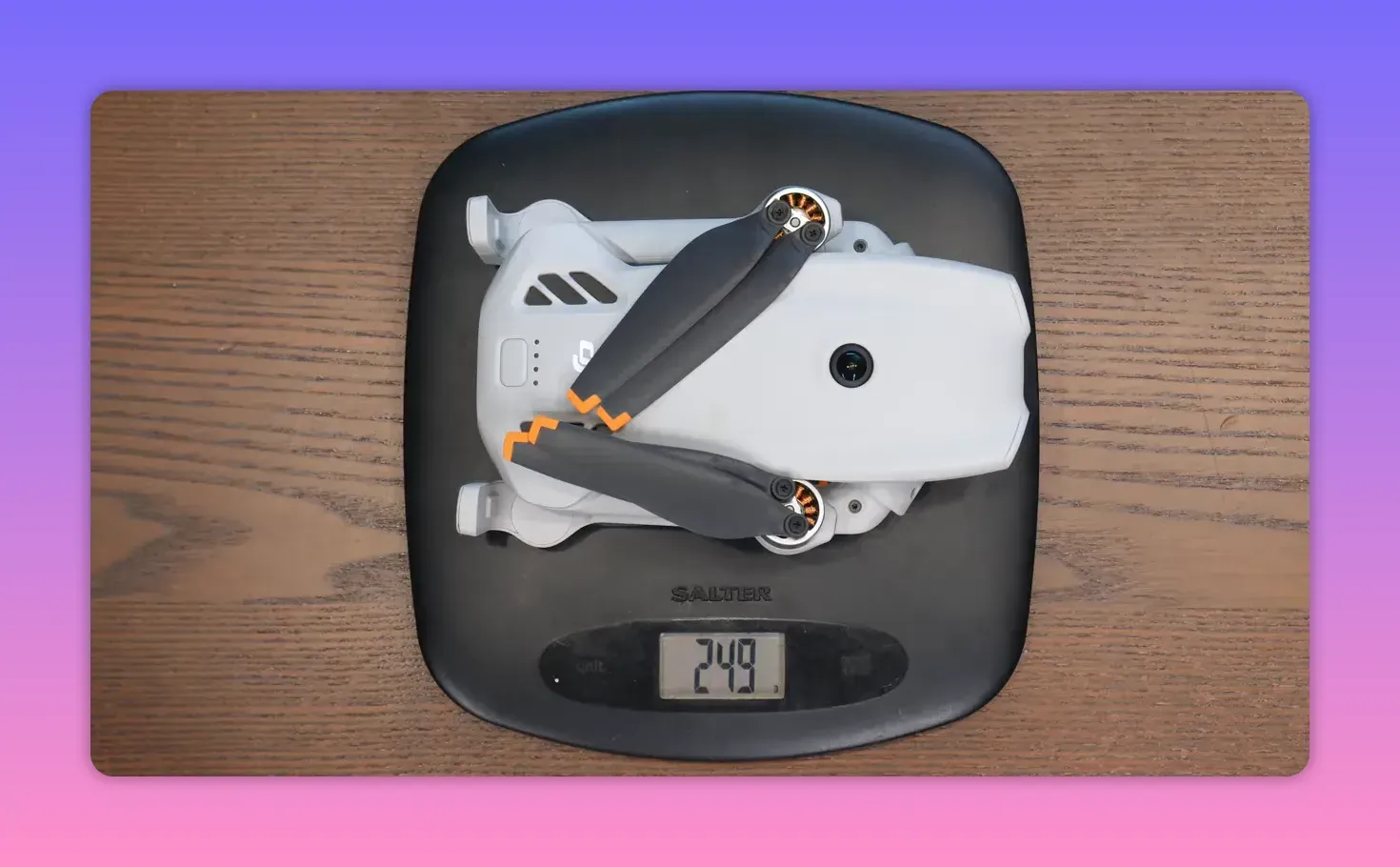
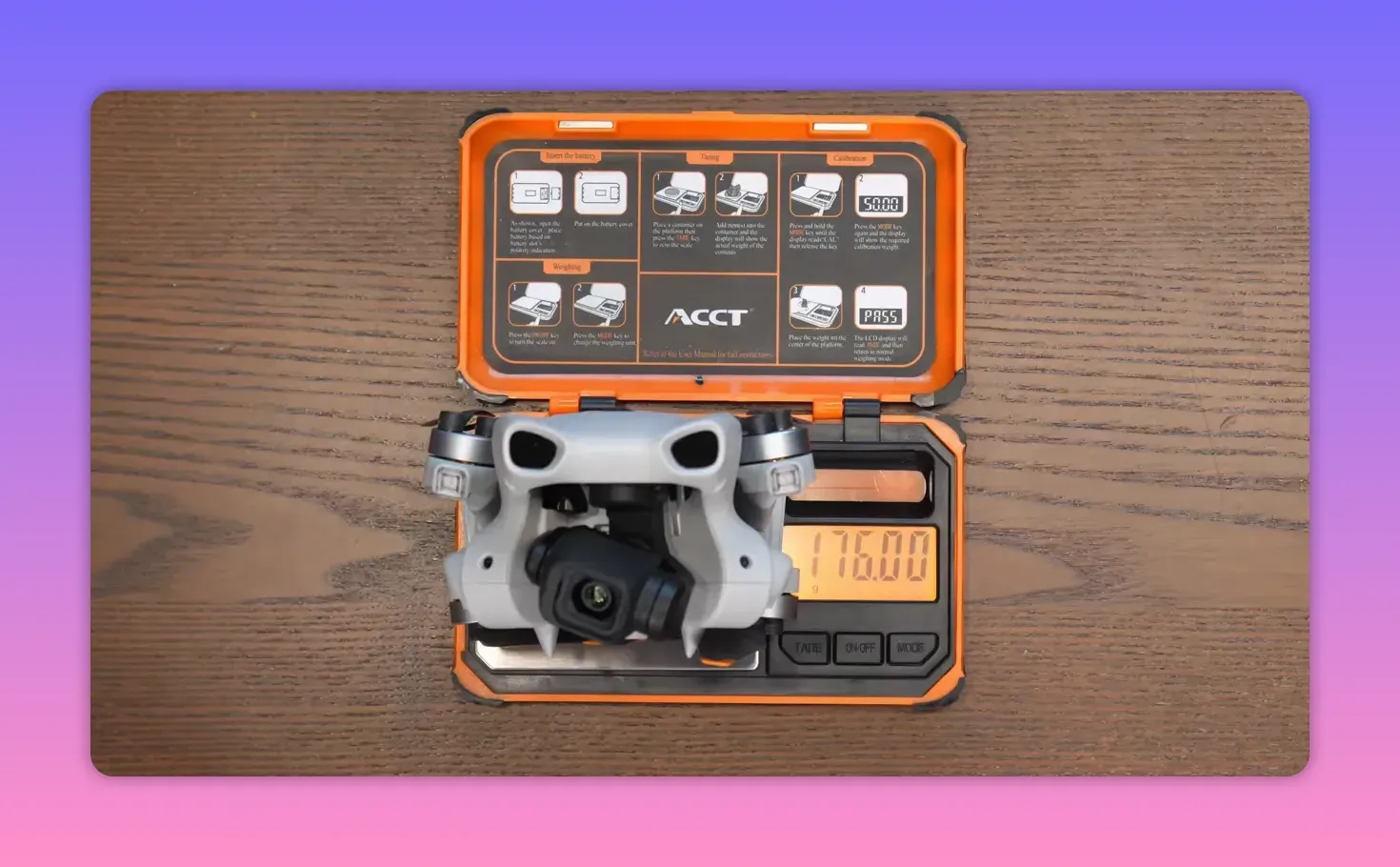
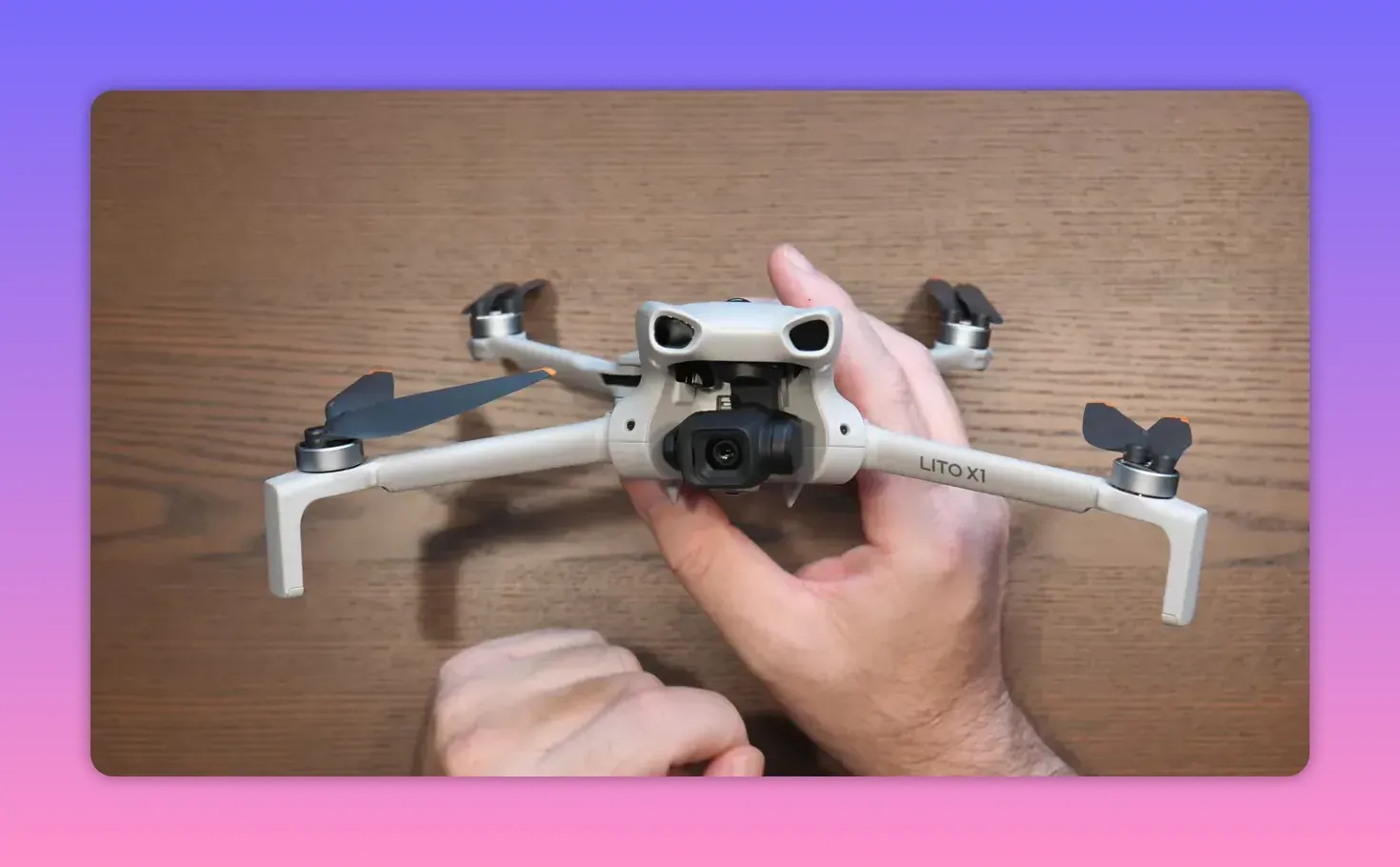
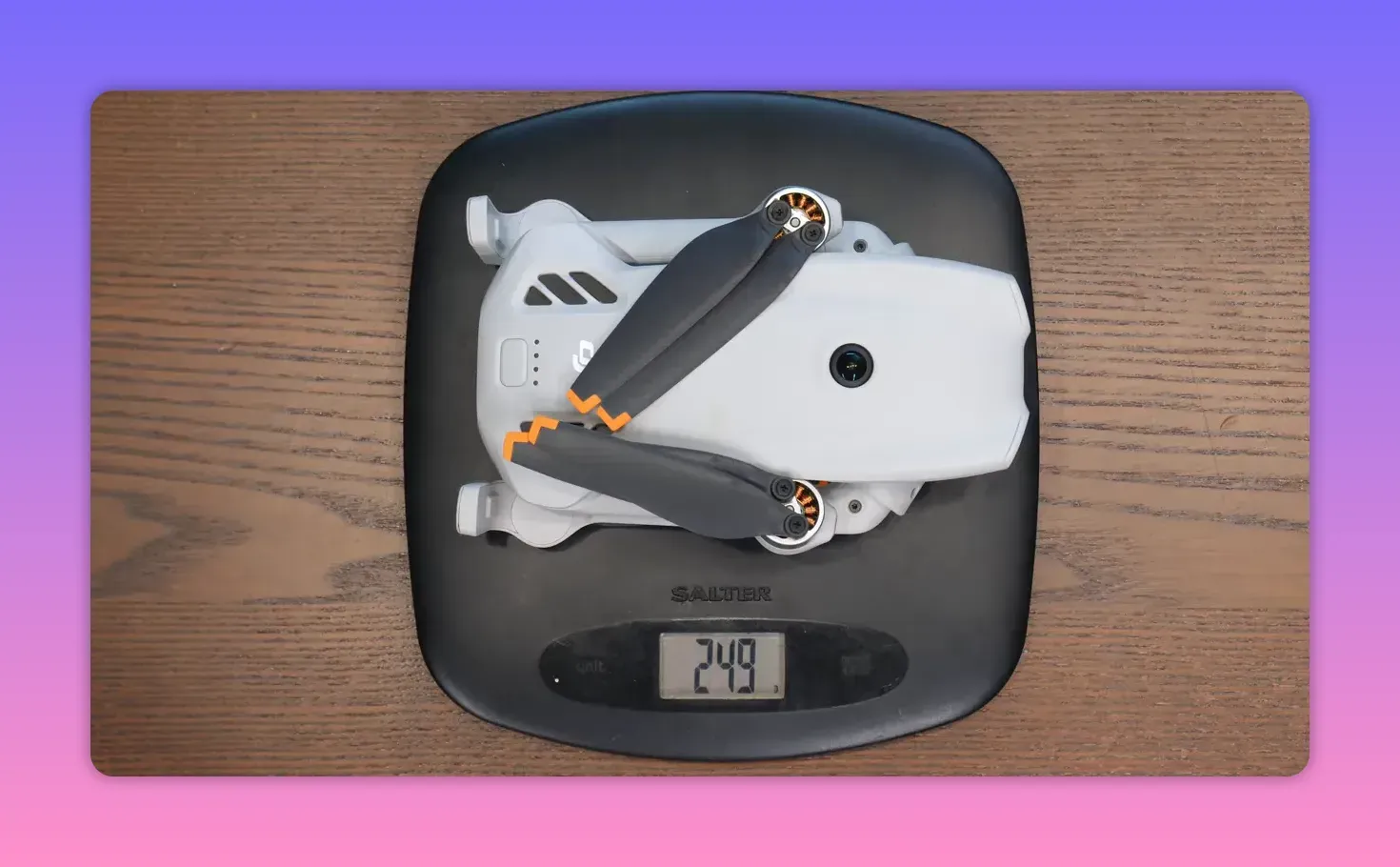
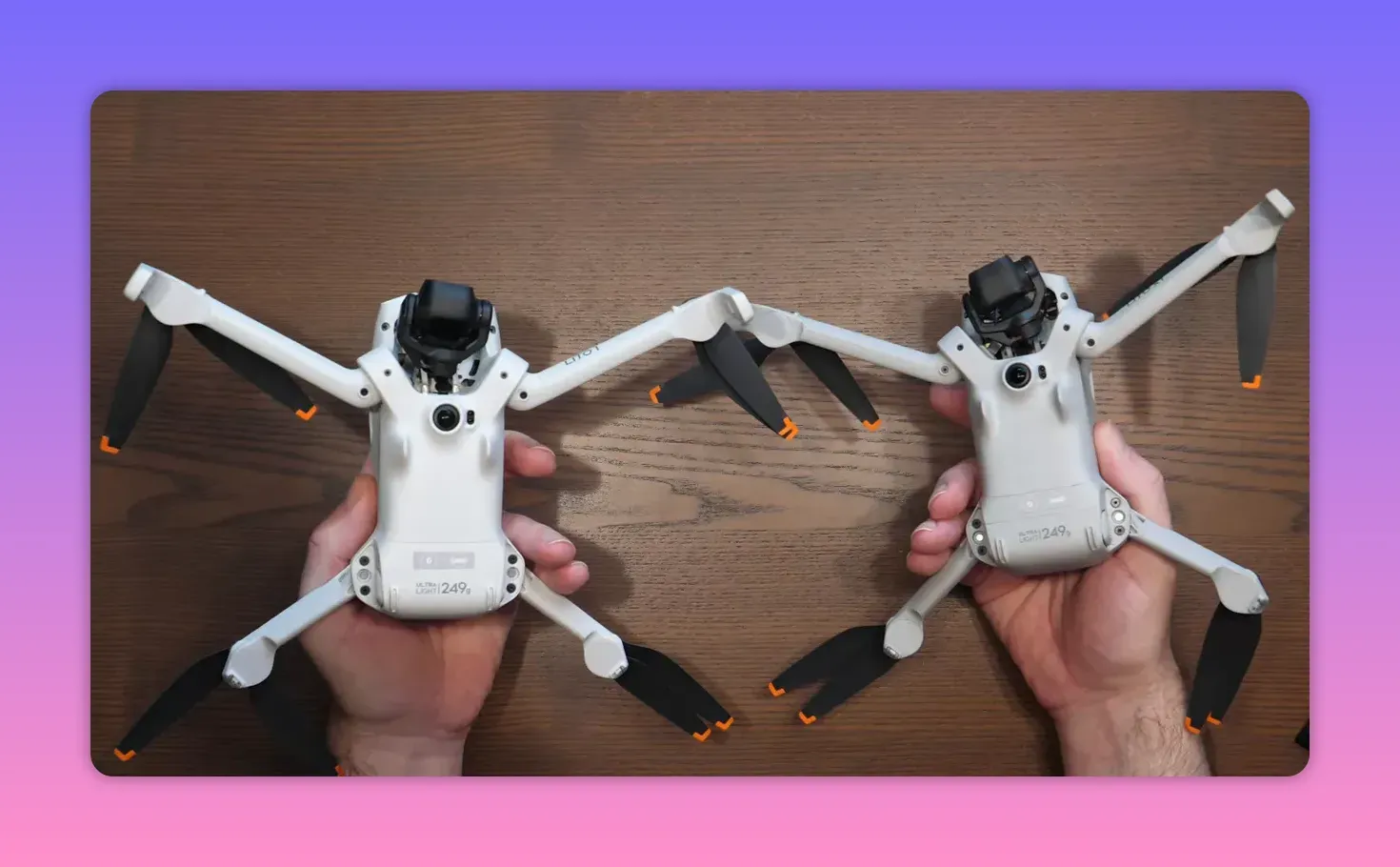
The Lito X1 is a small folding drone in the same class as DJI’s Mini range. It weighs under 250g and carries a C0 / UK0 rating. That keeps it in the friendlier end of drone regulation, which is not nothing.
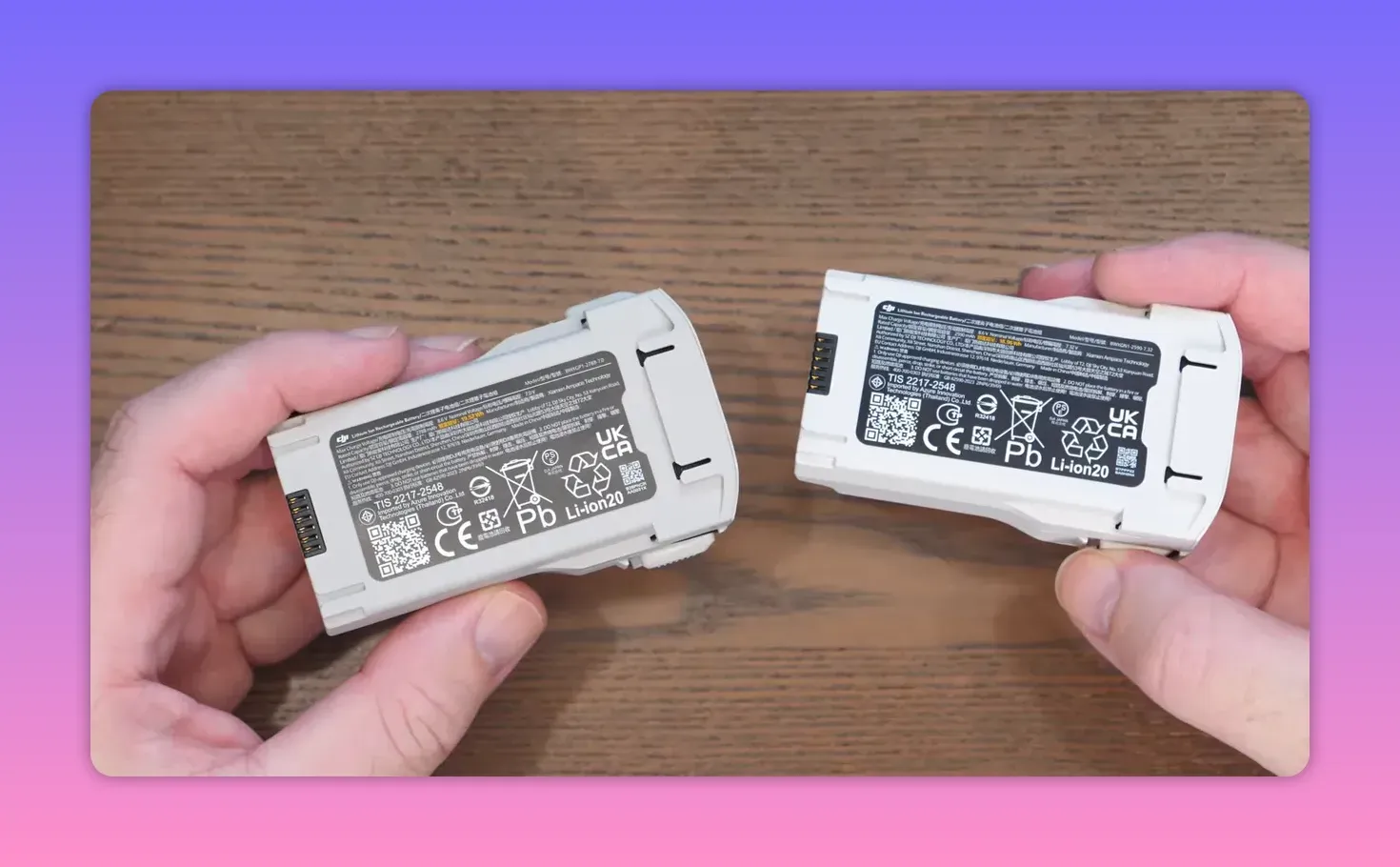
Mads measured the airframe at 176g without battery. The battery came in at 72.45g, for a total of about 248.5g. Call it 249g and move on with your life.
For anyone balancing portability against capability, this is the point of the machine. It folds, travels easily, and still carries a camera and obstacle sensing package that would have looked excessive not long ago.
The camera: proper sensor, proper features, no rotating gimbal
The Lito X1 gets a 1/1.3-inch image sensor. It records 4K at up to 60fps in normal mode and 4K at up to 100fps in slow motion. That places it comfortably above “entry-level” in actual output, even if DJI is pitching it as the cheaper option.
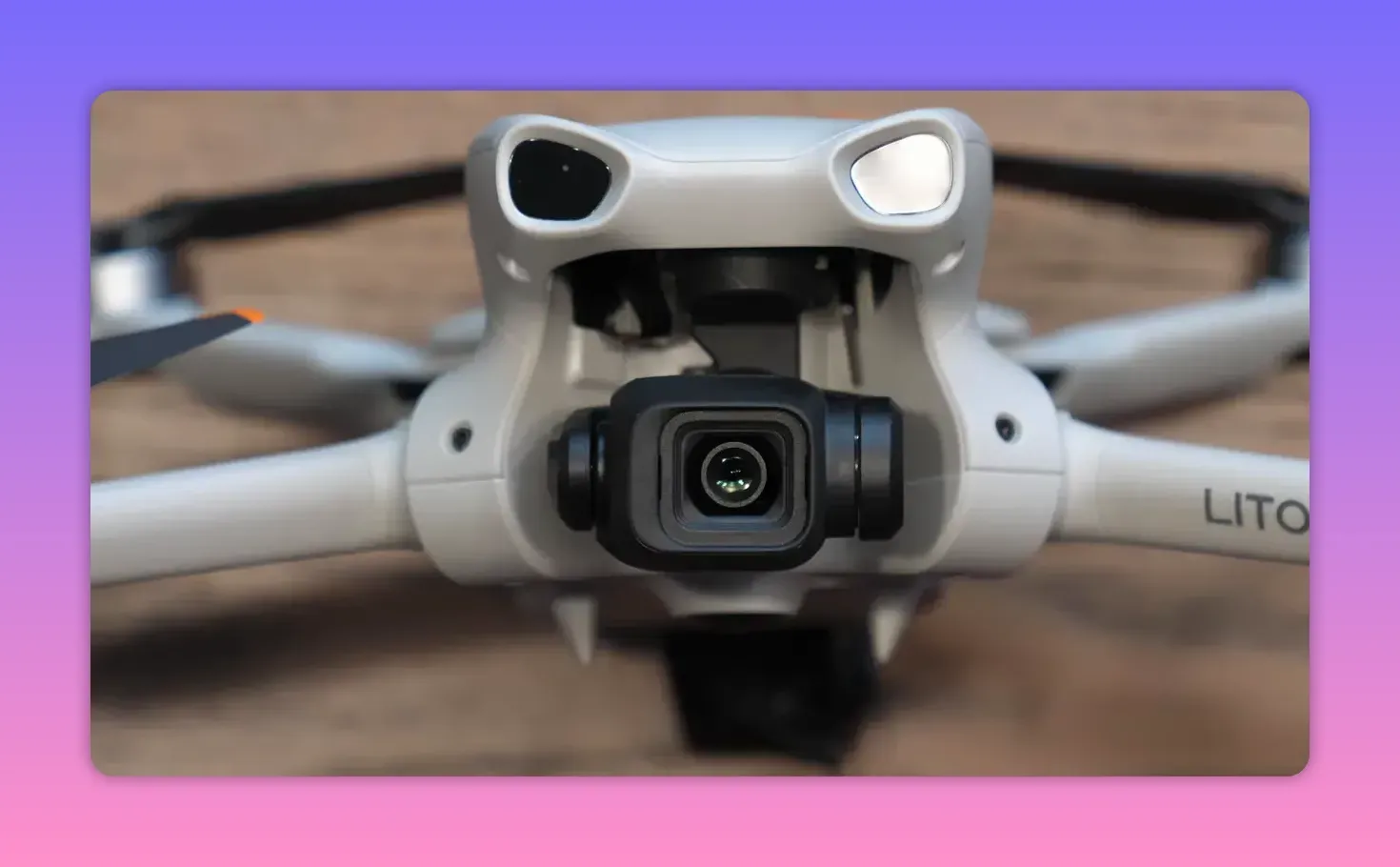
The lens supports autofocus and manual focus control through the DJI app. It also supports HDR and 10-bit D-Log M, which is welcome if you intend to grade footage rather than dump it straight into social media and hope for the best.
The camera sits on a stabilised three-axis gimbal handling roll, pitch, and yaw stabilisation. That said, it is a landscape-only gimbal. No mechanical vertical rotation here.
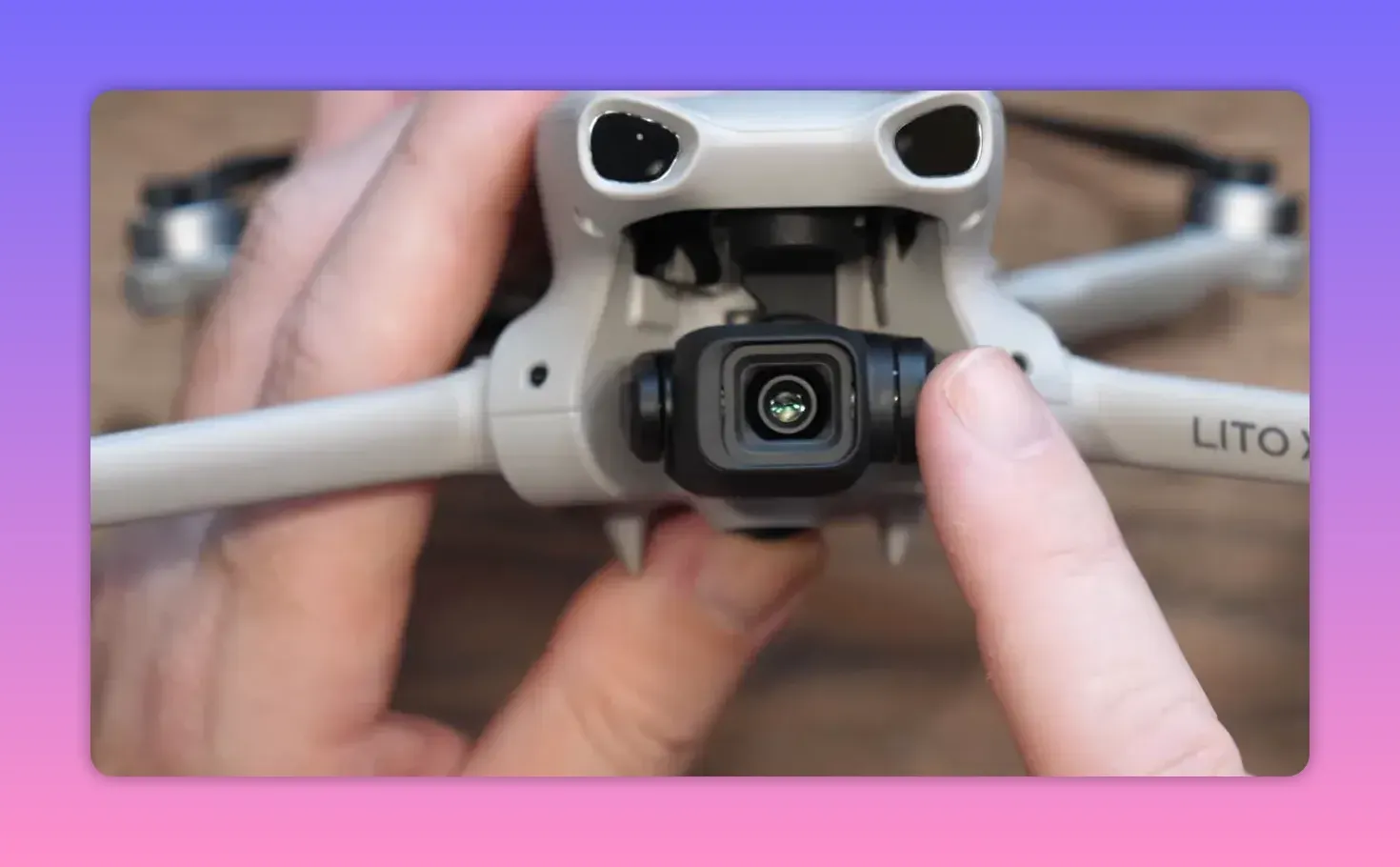
DJI works around that with a cropped vertical shooting mode. It does not rotate the camera physically. It trims in from the horizontal image and uses a vertical section of the sensor. So yes, you can get portrait footage. No, it is not the same as a true rotating gimbal.

Storage is also sensible. The X1 includes 42GB of onboard storage, and it also takes a microSD card via the slot next to the USB-C port on the rear.
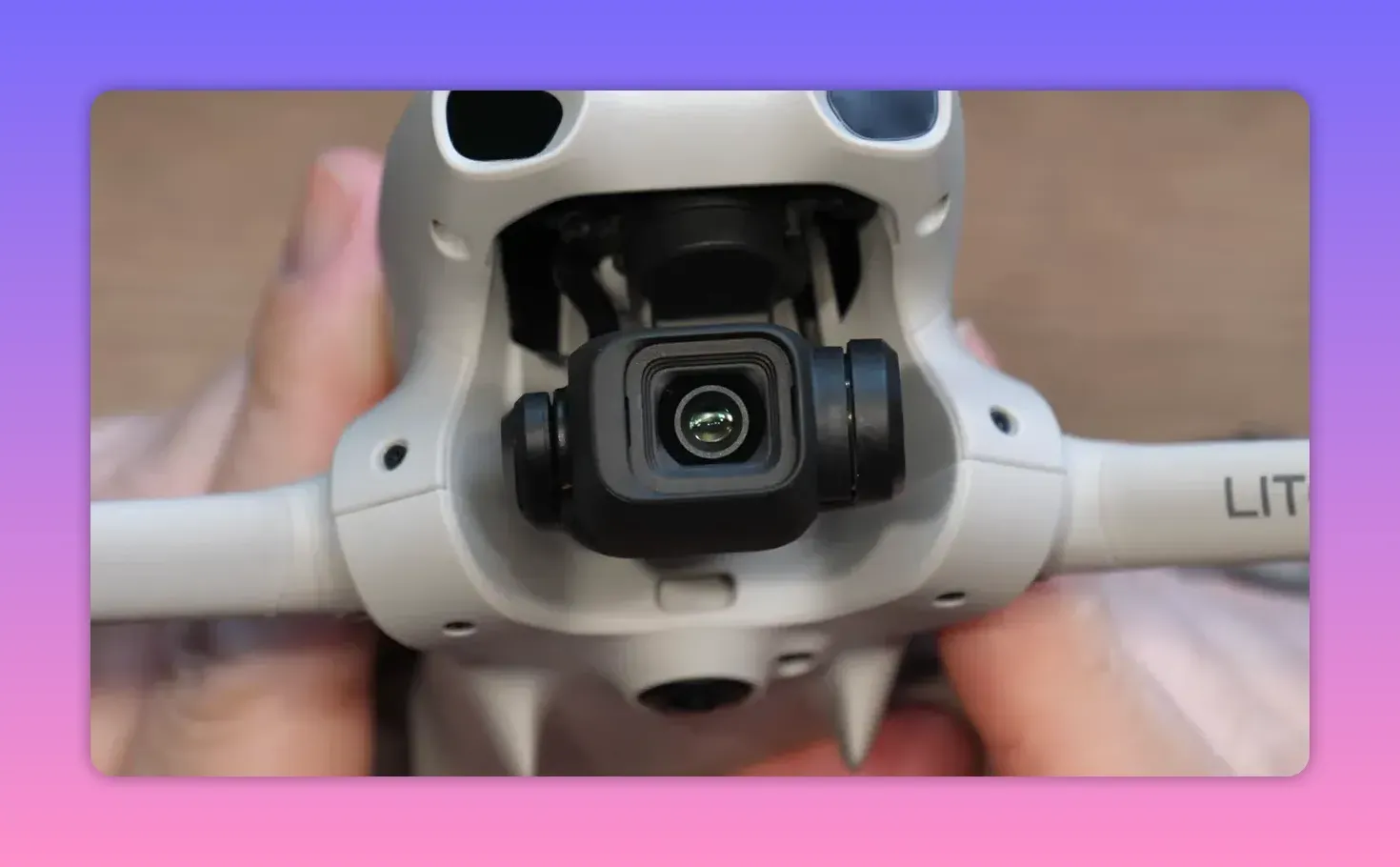
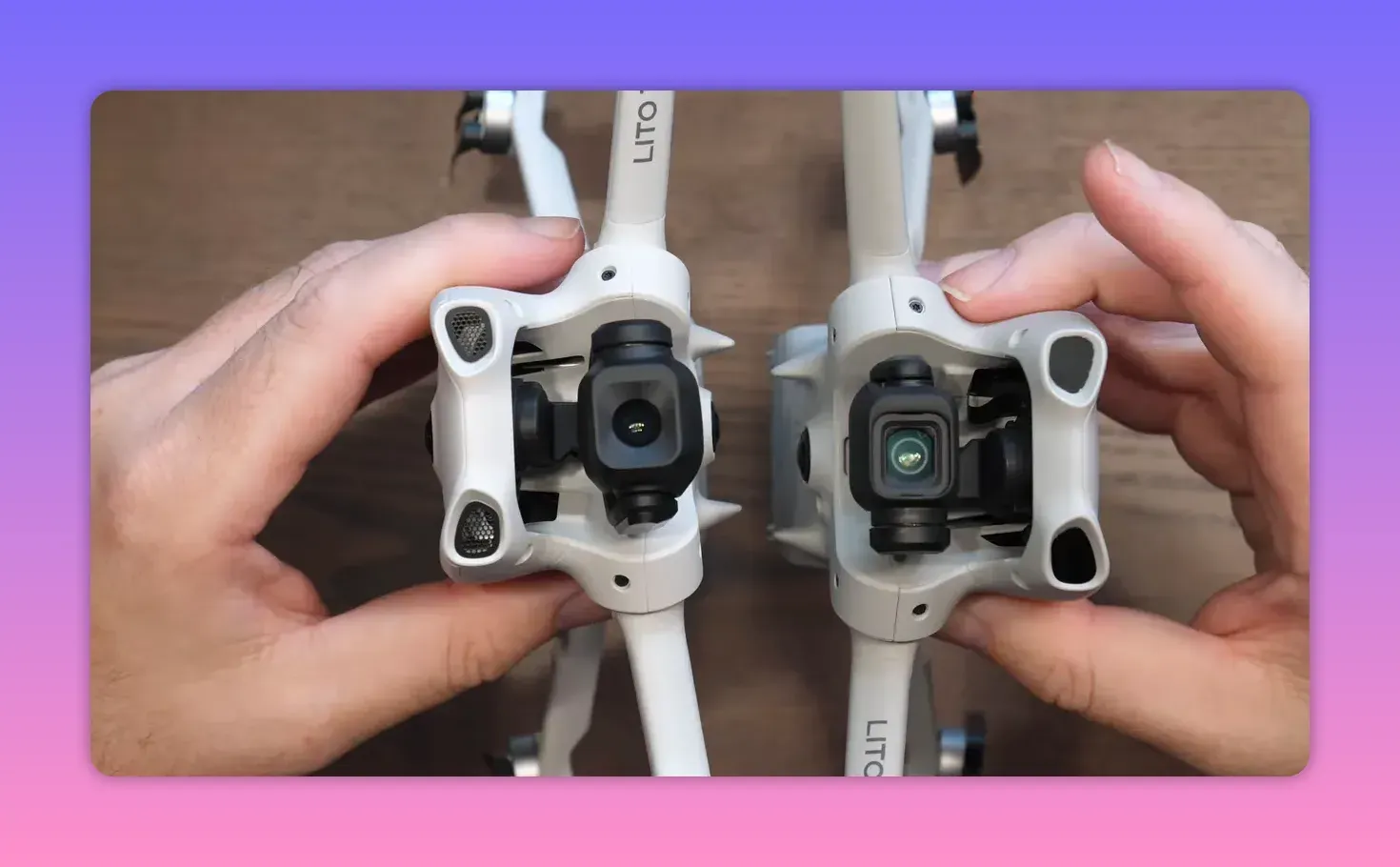
One small but useful detail: the front of the camera appears to include a cut-out for clip-on ND filters. DJI had not confirmed launch filters at the time, but the mounting provision seems to be there. Which is nice. Flying fixed-shutter video without ND is how you end up arguing with physics.
Obstacle sensing gets a redesign—and the X1 adds LiDAR
This is one of the Lito X1’s more interesting upgrades. It has omnidirectional object sensing with sensors on the top and bottom, plus a front-facing LiDAR sensor on the X1 model.
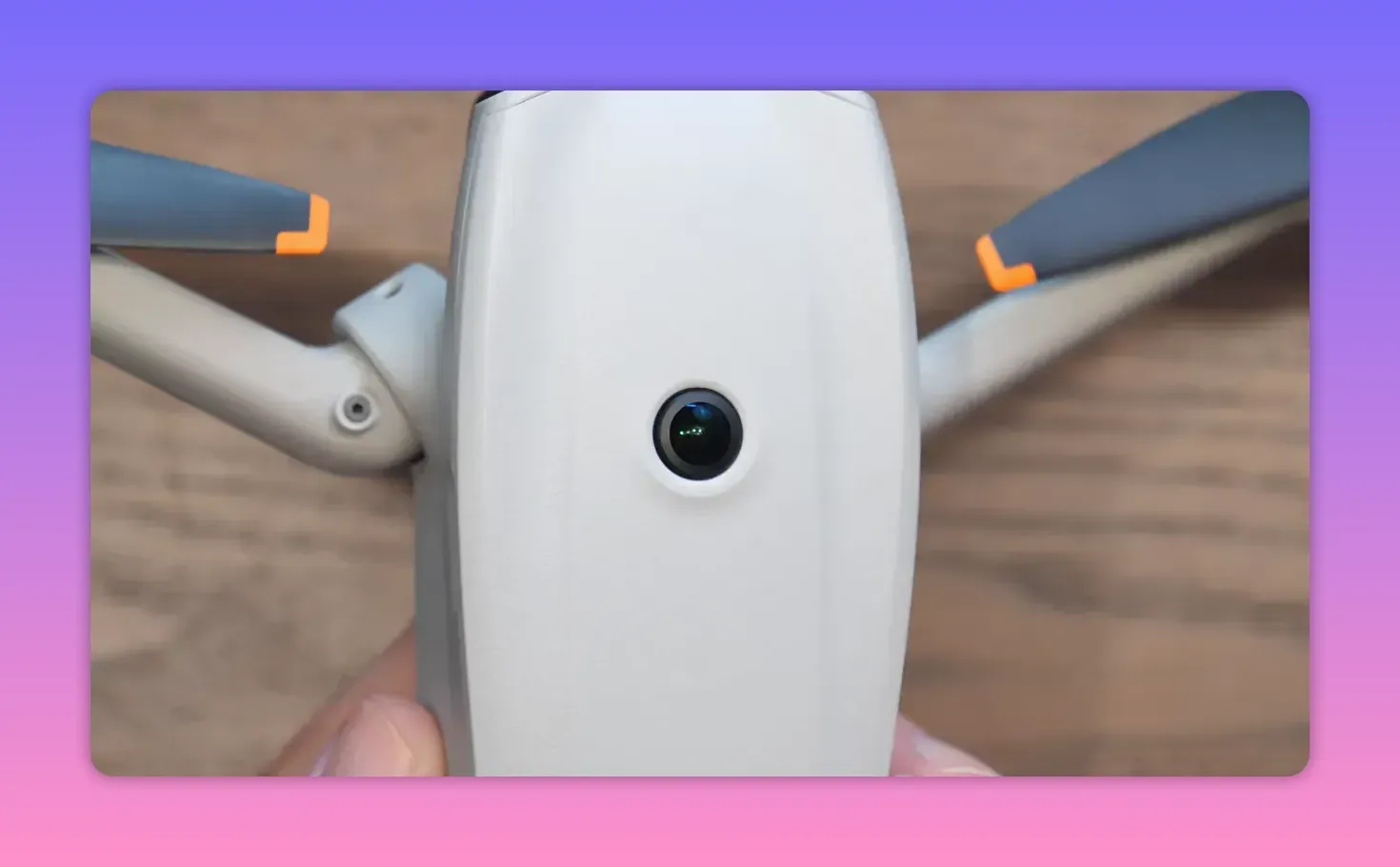
DJI has changed the sensing layout compared with older drones. Instead of the familiar spread of forward and backward vision cameras, the Lito uses single wide-angle cameras on the top and bottom, more like DJI’s recent 360 products. The company is reusing that imaging know-how for a new all-around sensing system.
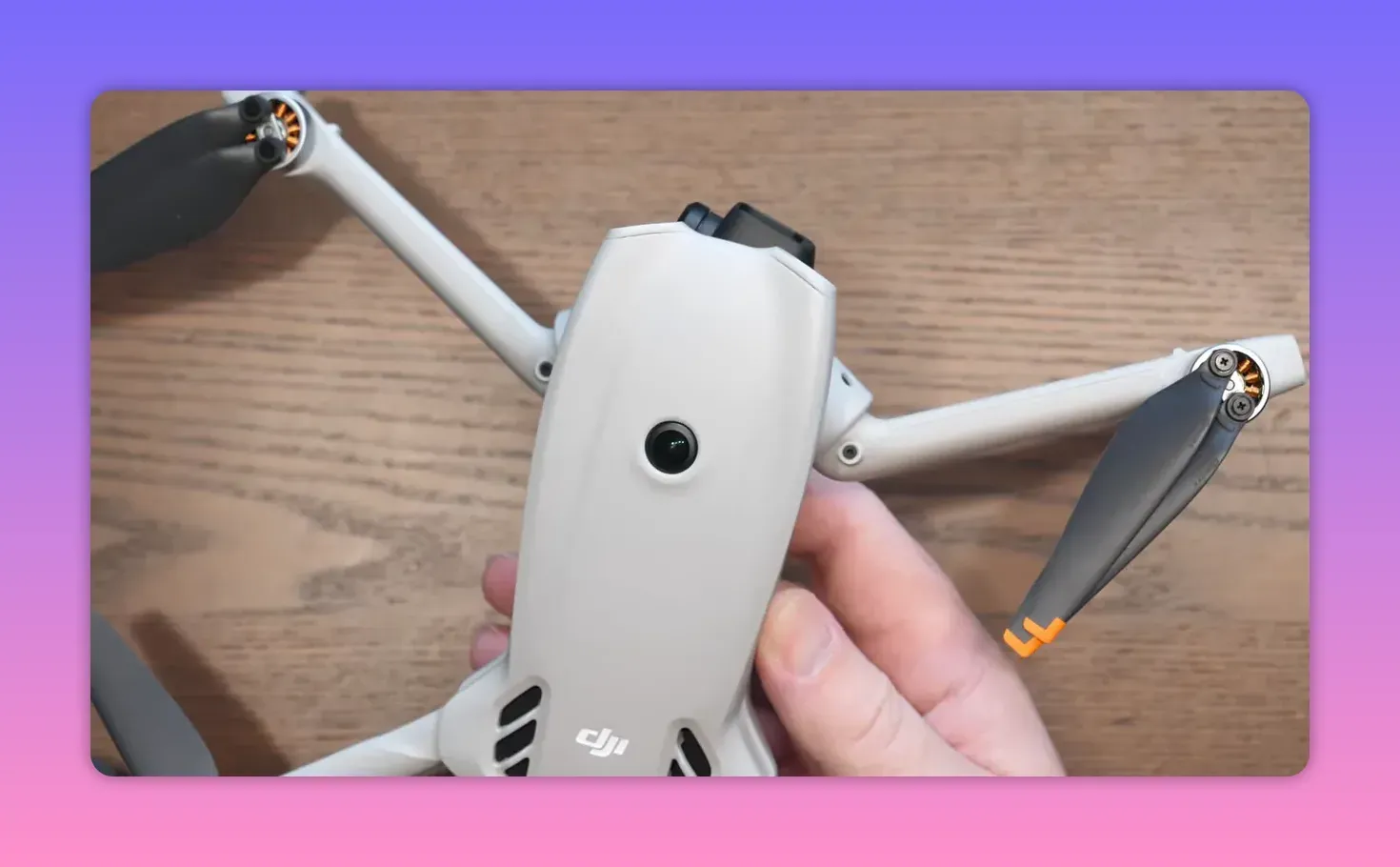
In practice, that gives the X1 obstacle detection and avoidance even in very low light or complete darkness, where the LiDAR sensor helps. That is one of the major reasons to buy the X1 over the cheaper Lito 1.
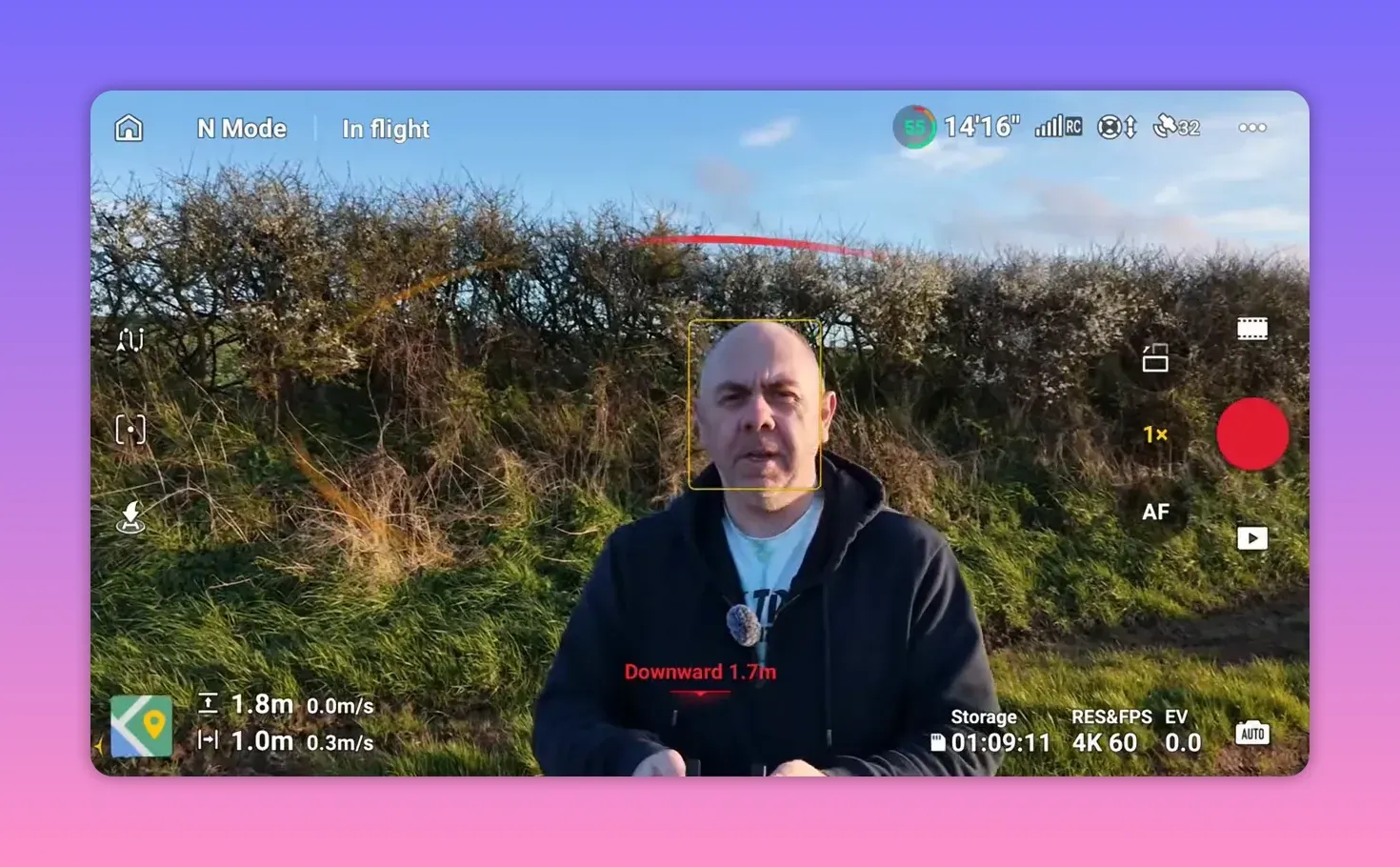
Mads tested the sensing system by trying to fly the drone into himself from different angles. The drone refused to close the final distance, whether approached head-on or from offset angles. It slowed, then stopped. Which is what you want from software designed to prevent expensive stupidity.
He also tested it among trees and thin branches. The system did a good job even with awkward clutter such as leaves and small twigs, though it could let the drone get fairly close before braking. It also had occasional misses and some sensitivity to sunlight. So the verdict is “useful”, not “magic”.
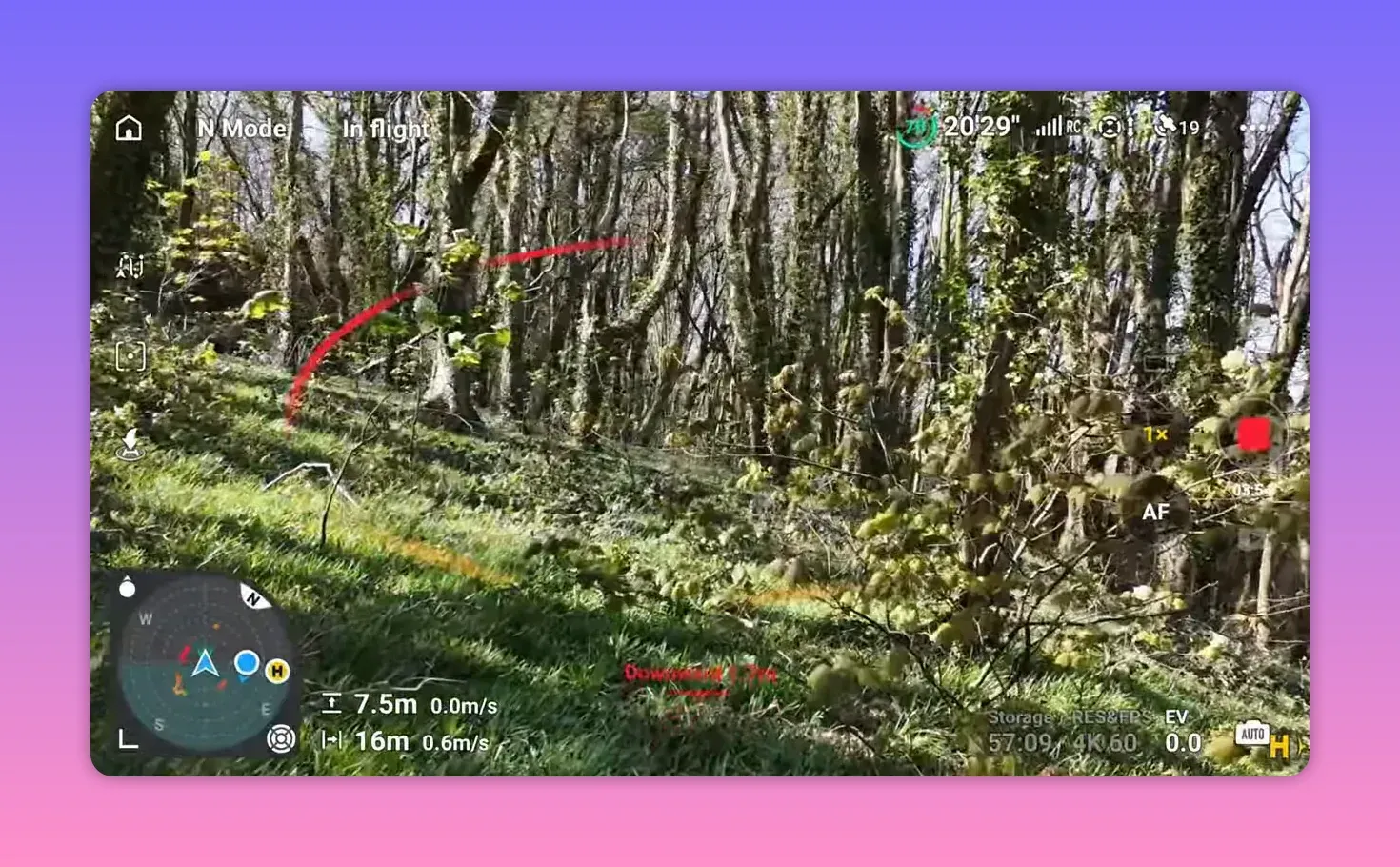
As ever, obstacle sensing is backup, not permission to fly like a clown. The area still needs to be clear. Sensors help. They do not repeal bad decisions.
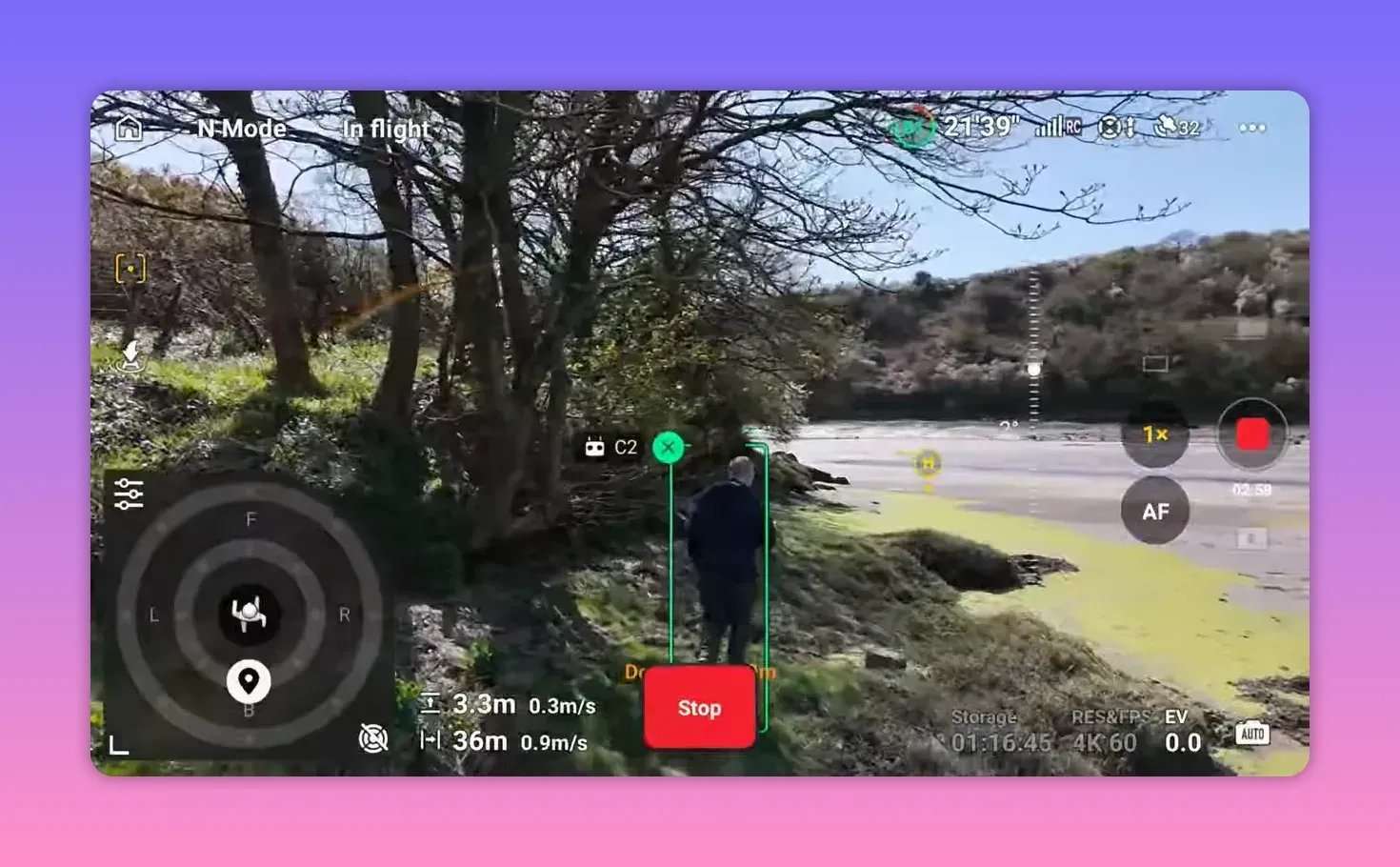
You can actually see what the sensing cameras see
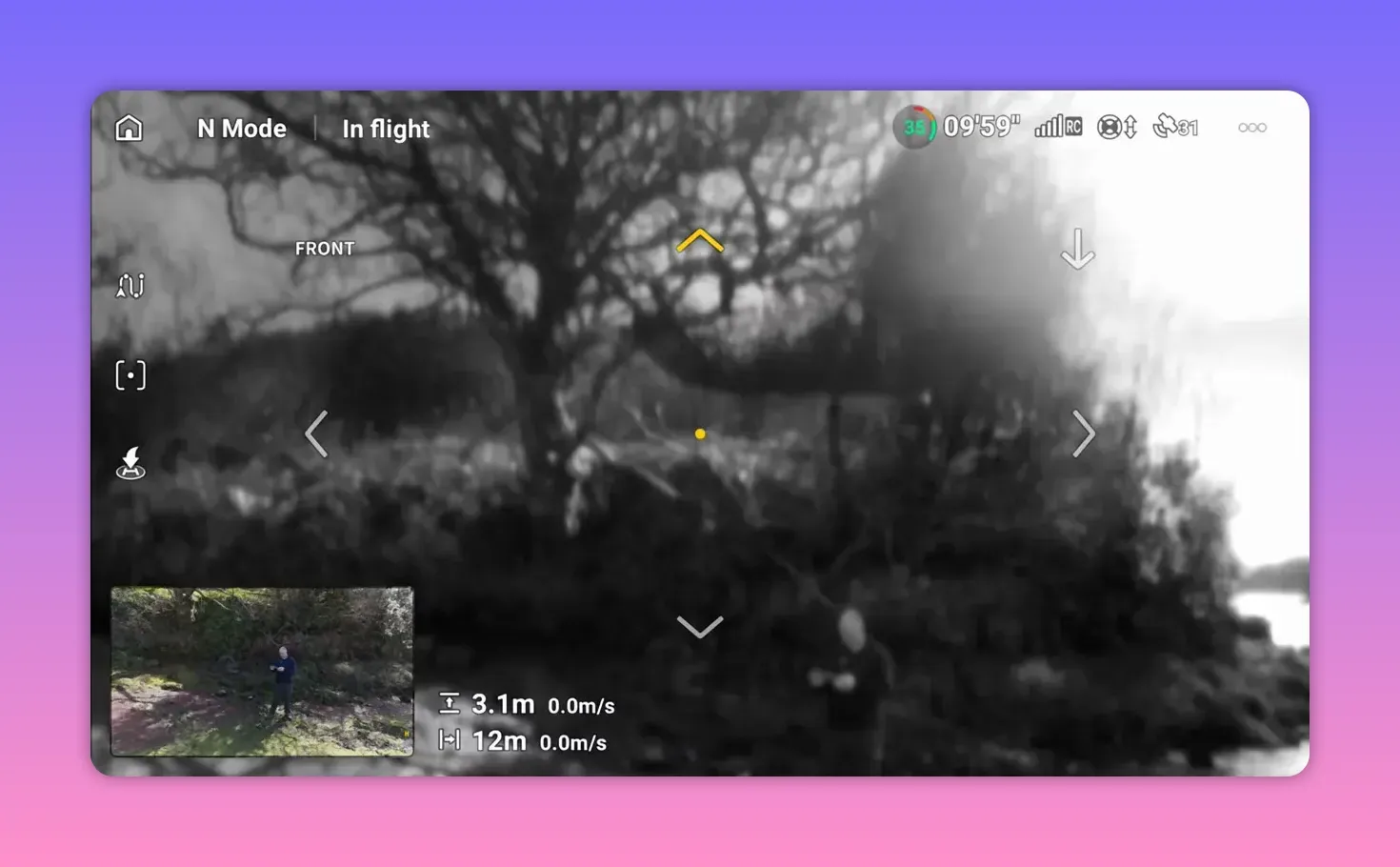
A neat carry-over from DJI’s newer 360 products is the ability to view the top and bottom sensing camera feeds. They are black-and-white, lower resolution, and lower frame rate, but they are accessible on the DJI RC2.
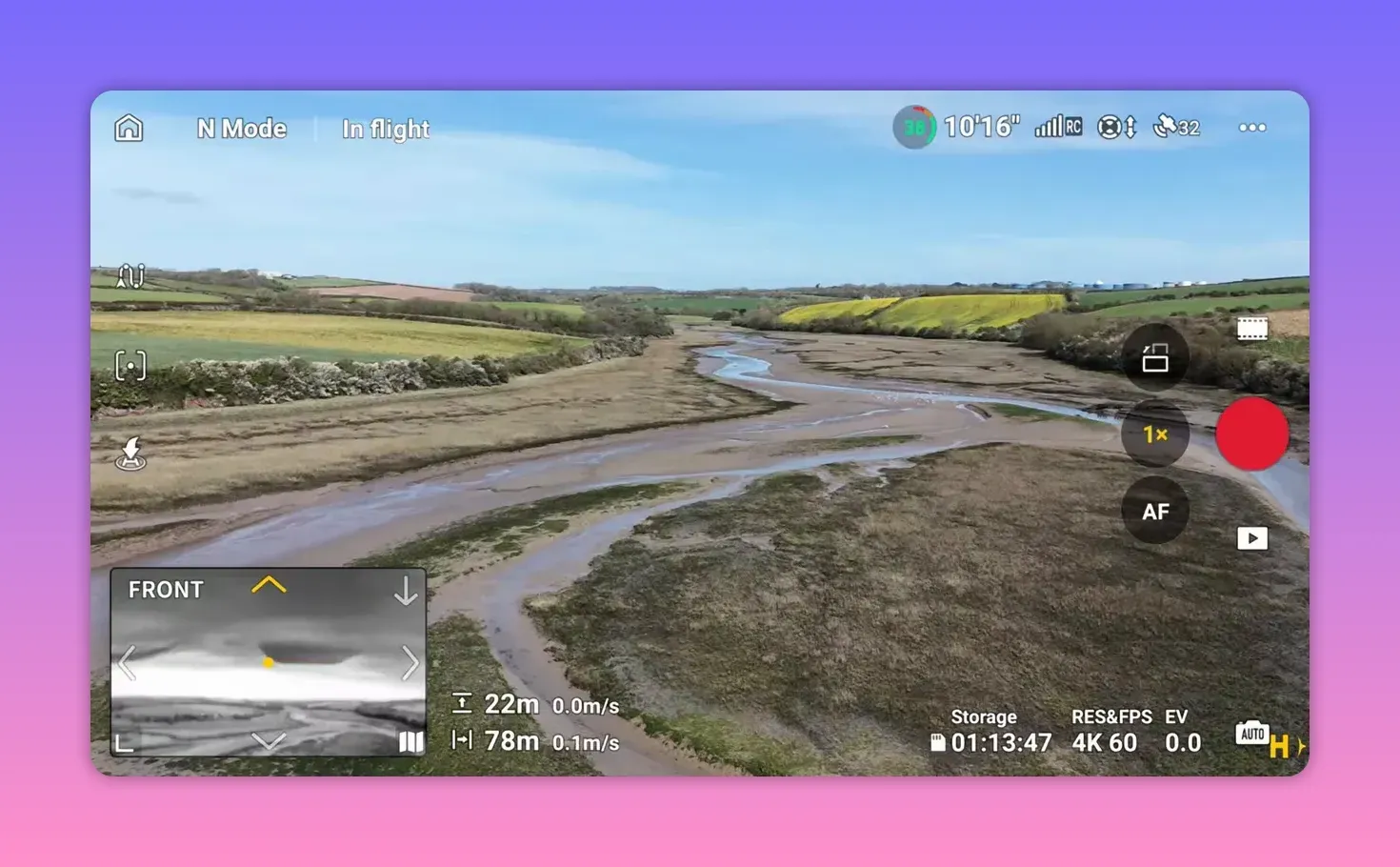
You can look around those camera views—up, down, left, and right—and even bring them up full-screen. It is not cinematic. It is useful. Seeing what the drone thinks it sees is often the difference between trusting the system and swearing at it.
DJI O4 transmission and controller options
The Lito series uses DJI O4 for video transmission. That is the link carrying the live camera view back to the controller or phone. With the RC2, DJI rates the range at up to 15km.
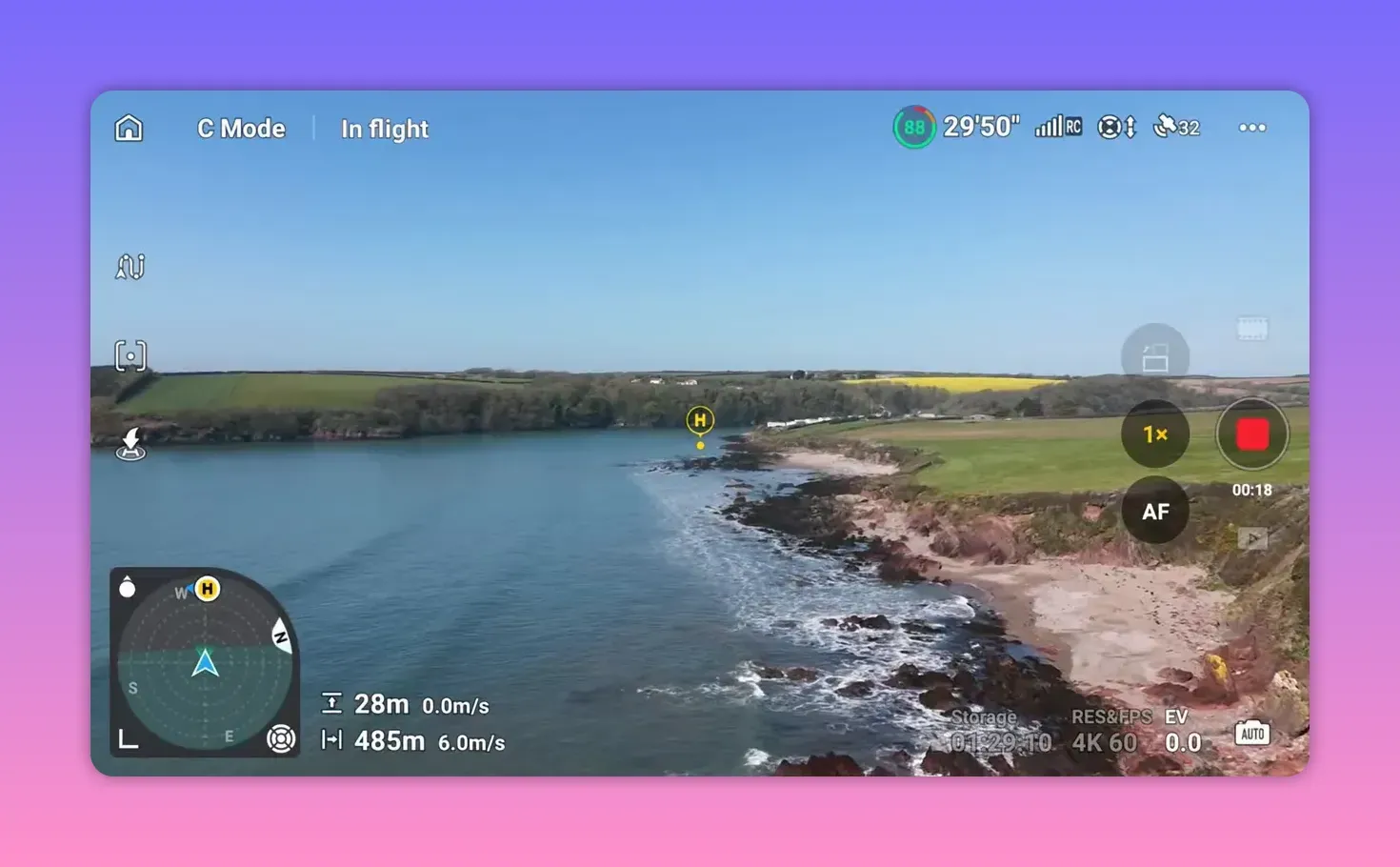
There are two controller choices:
- DJI RC-N3, which uses your own phone or tablet with the DJI Fly app
- DJI RC2, DJI’s all-in-one Android-based controller
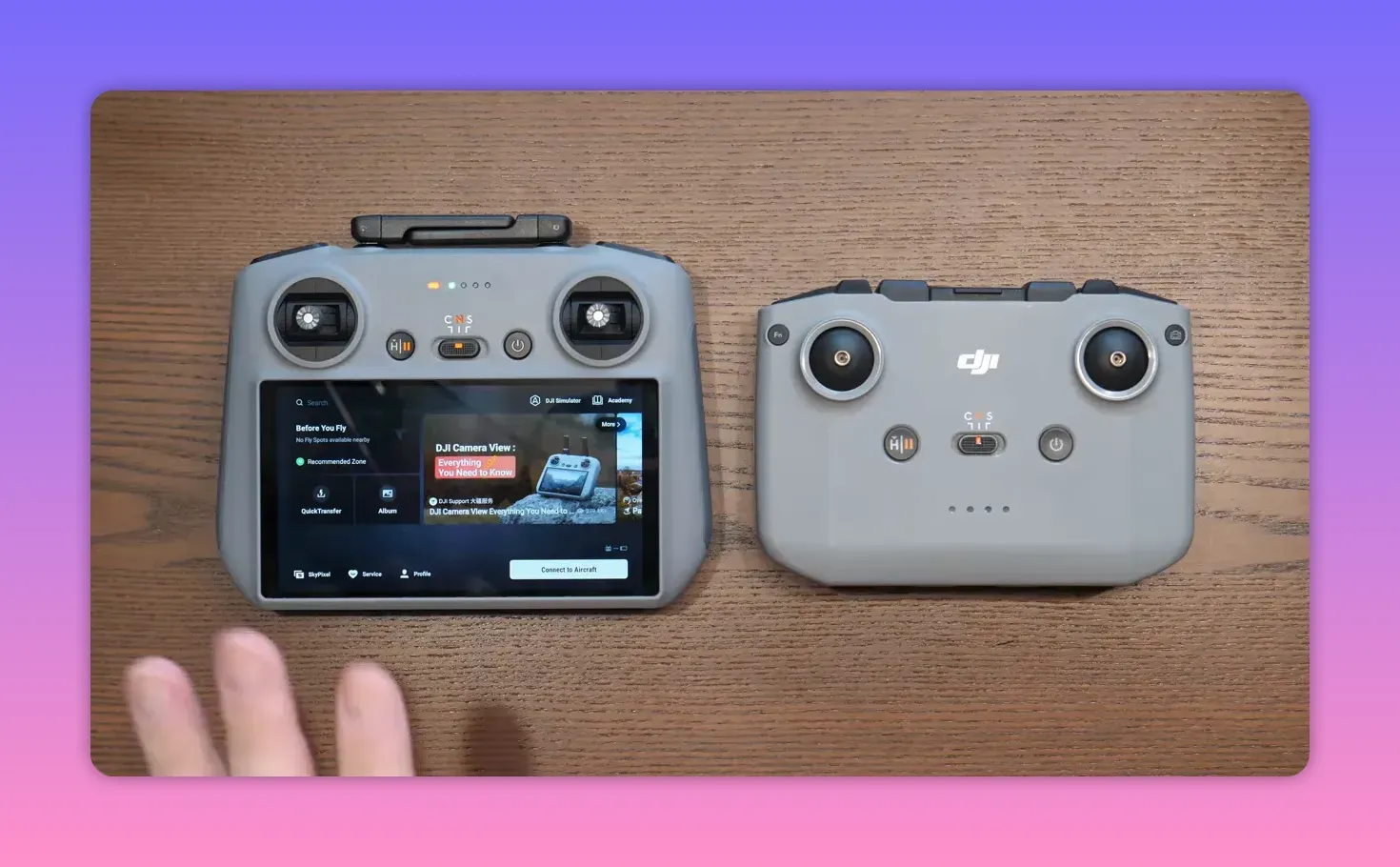
The preferred option here is the RC2, and it is easy to see why. It has a built-in 1080p 60fps display rated at up to 700 nits, plus Wi-Fi, Bluetooth, 32GB of onboard storage, and native support for the DJI Fly app.
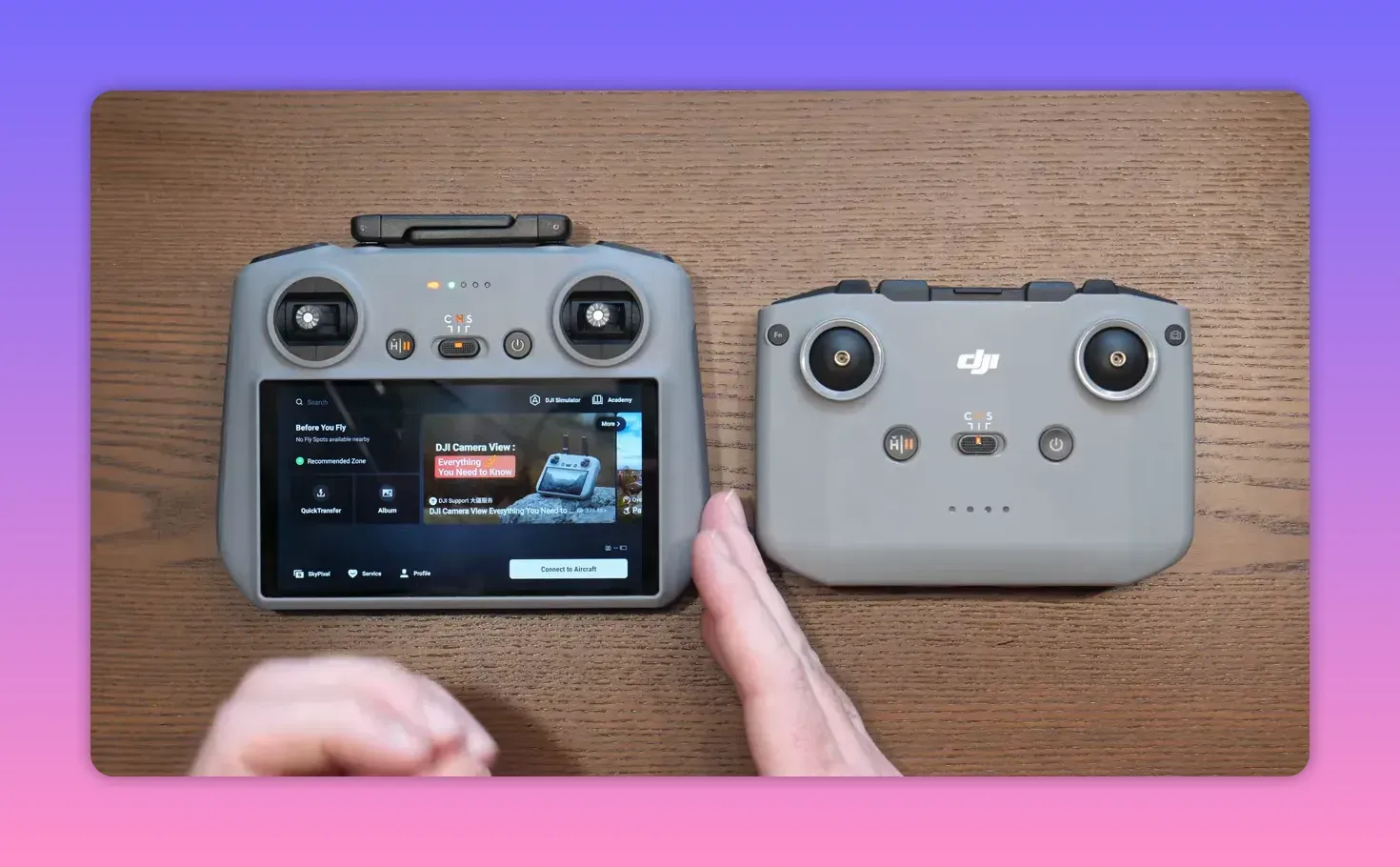
It is not DJI’s top-end “Pro” radio, but it does what matters and avoids the cable-dangling ritual of phone-based controllers. For an FpV drone fan crossing into camera drones, that convenience matters more than marketing adjectives.
Batteries, charging, and real-world flight time
The Lito X1 uses a new battery model, BWXGP1-2788-7.0. It is similar in shape and size to the Mini 5 Pro battery, but it is not compatible. The Mini 5 Pro battery does not fit the Lito, and the Lito battery does not fit the Mini 5 Pro.
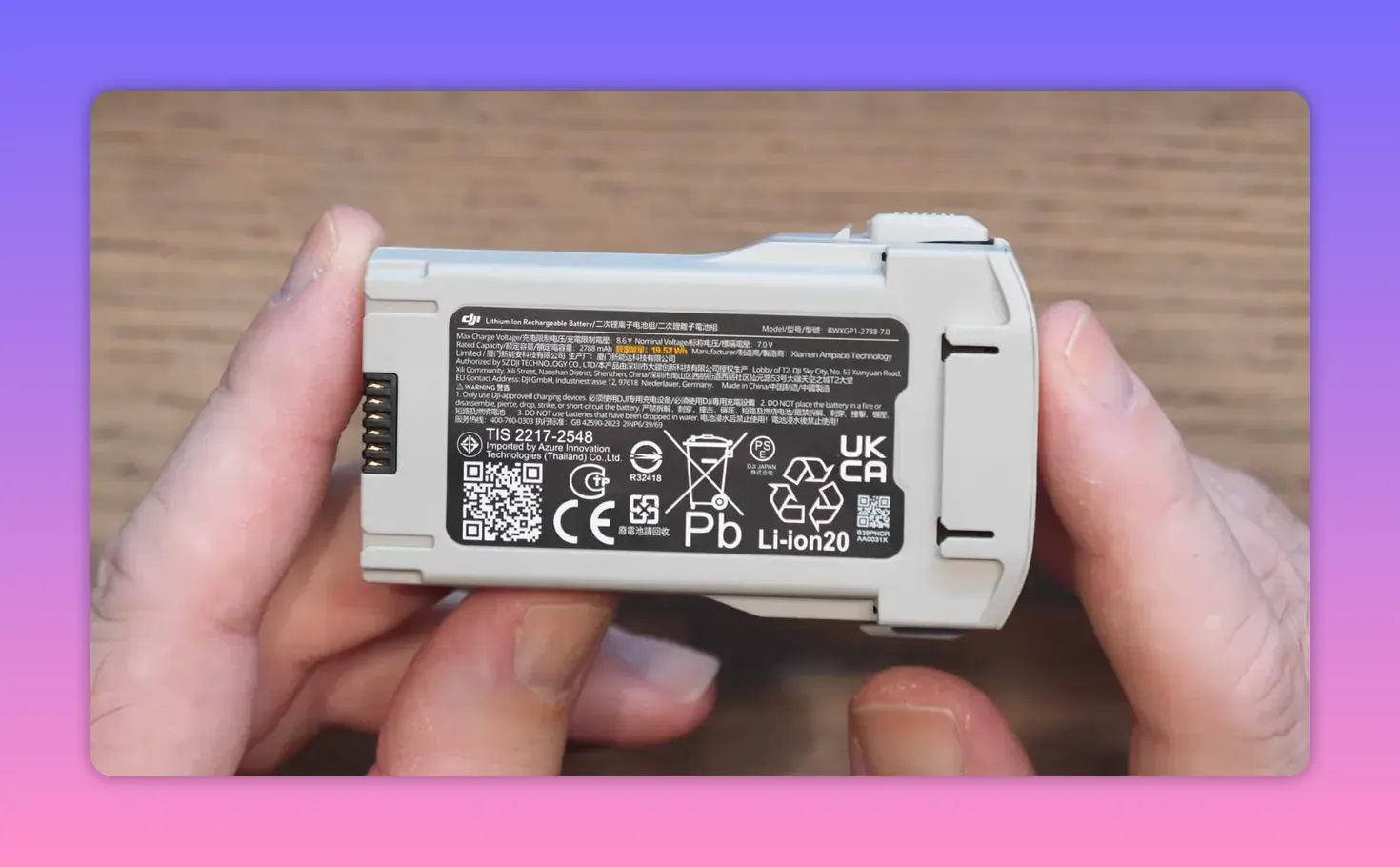
The X1 battery has a 2788mAh capacity. The Lito 1 battery is smaller at 2590mAh. Oddly, the X1 battery is also lighter than the battery on the Lito 1, despite having higher capacity. Chemistry remains a dark art with labels.

The Fly More charging hub can charge batteries sequentially or in parallel, depending on the available power input. It is also a two-way hub, so it can use the drone batteries as a USB-C power bank for a phone or the RC2.
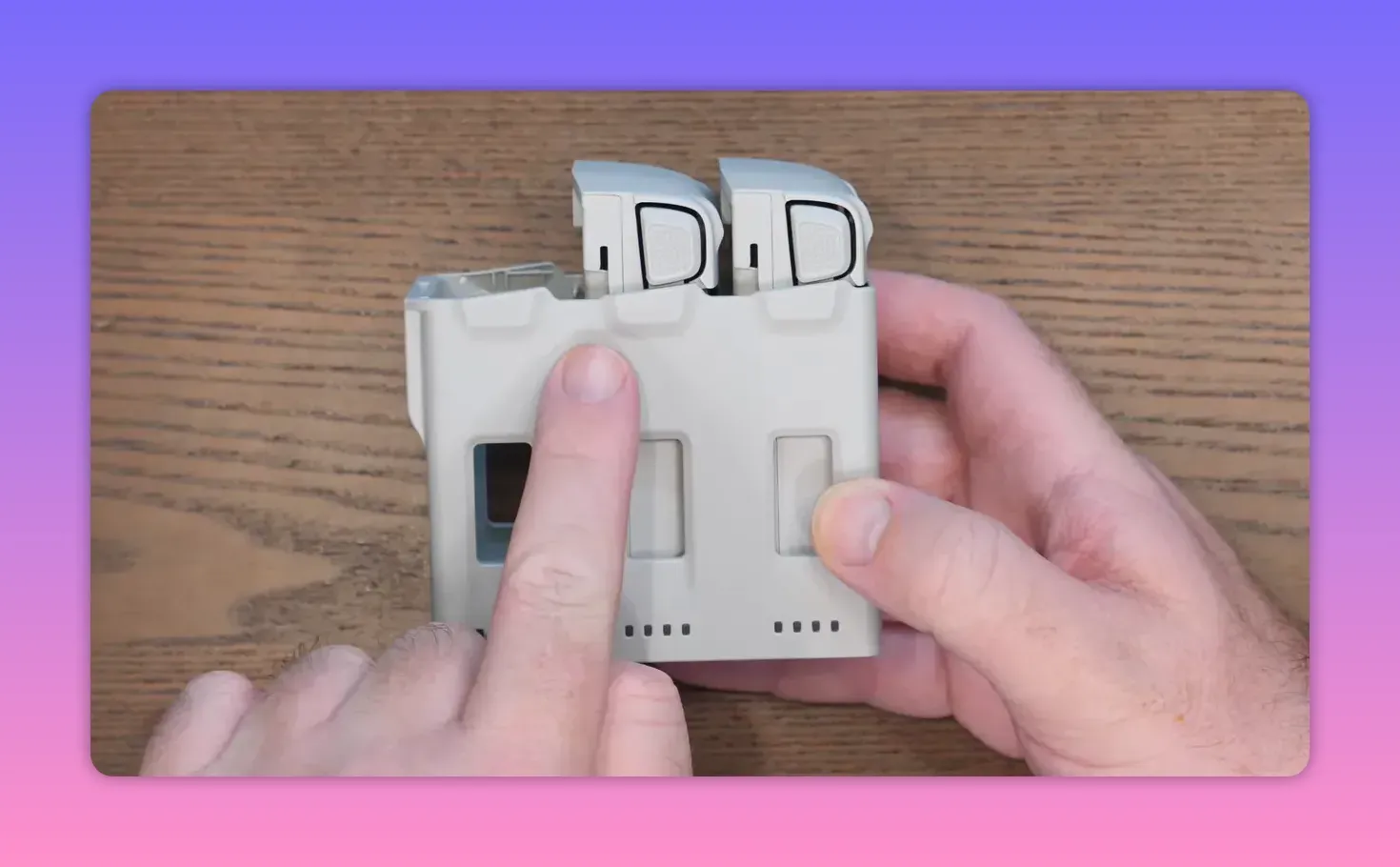
Real-world flight time came in at roughly 20 to 30 minutes, depending on conditions. Wind reduced that in testing. DJI’s official figures are usually sunnier, calmer, and less interested in reality.
With three batteries in the Fly More kit, you are looking at enough airtime for a proper session without spending half the day orbiting a charger.
Lito X1 vs Lito 1: which one should you buy?
Externally, the two drones are very similar. The Lito 1 uses a slightly lighter shade of plastic, while the X1 is more grey. The important differences are inside.
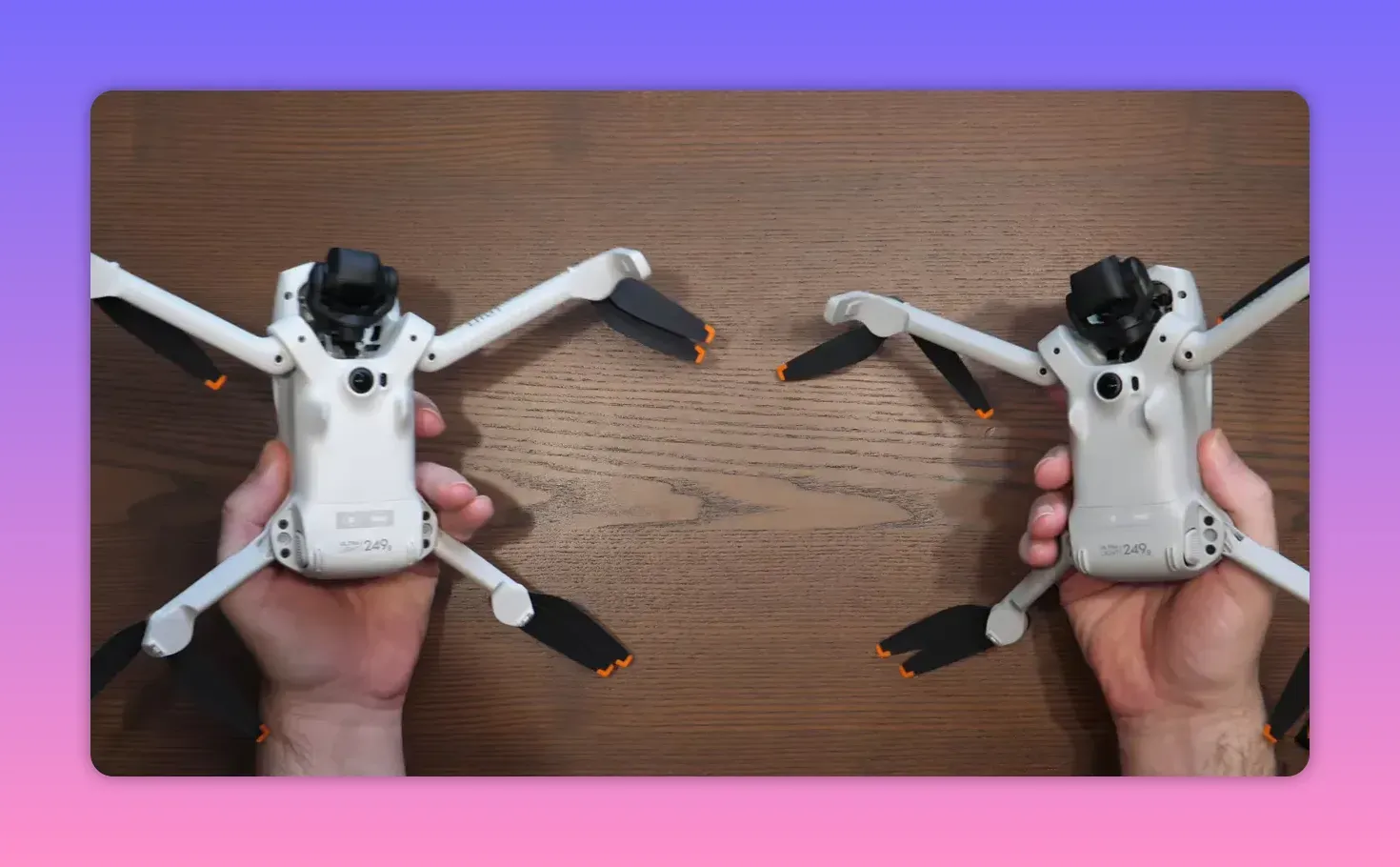
Both drones can record 4K 60fps and 4K 100fps slow motion. Both use DJI O4 with up to 15km transmission. Both fly for roughly 20 to 30 minutes. Both get omnidirectional obstacle sensing.
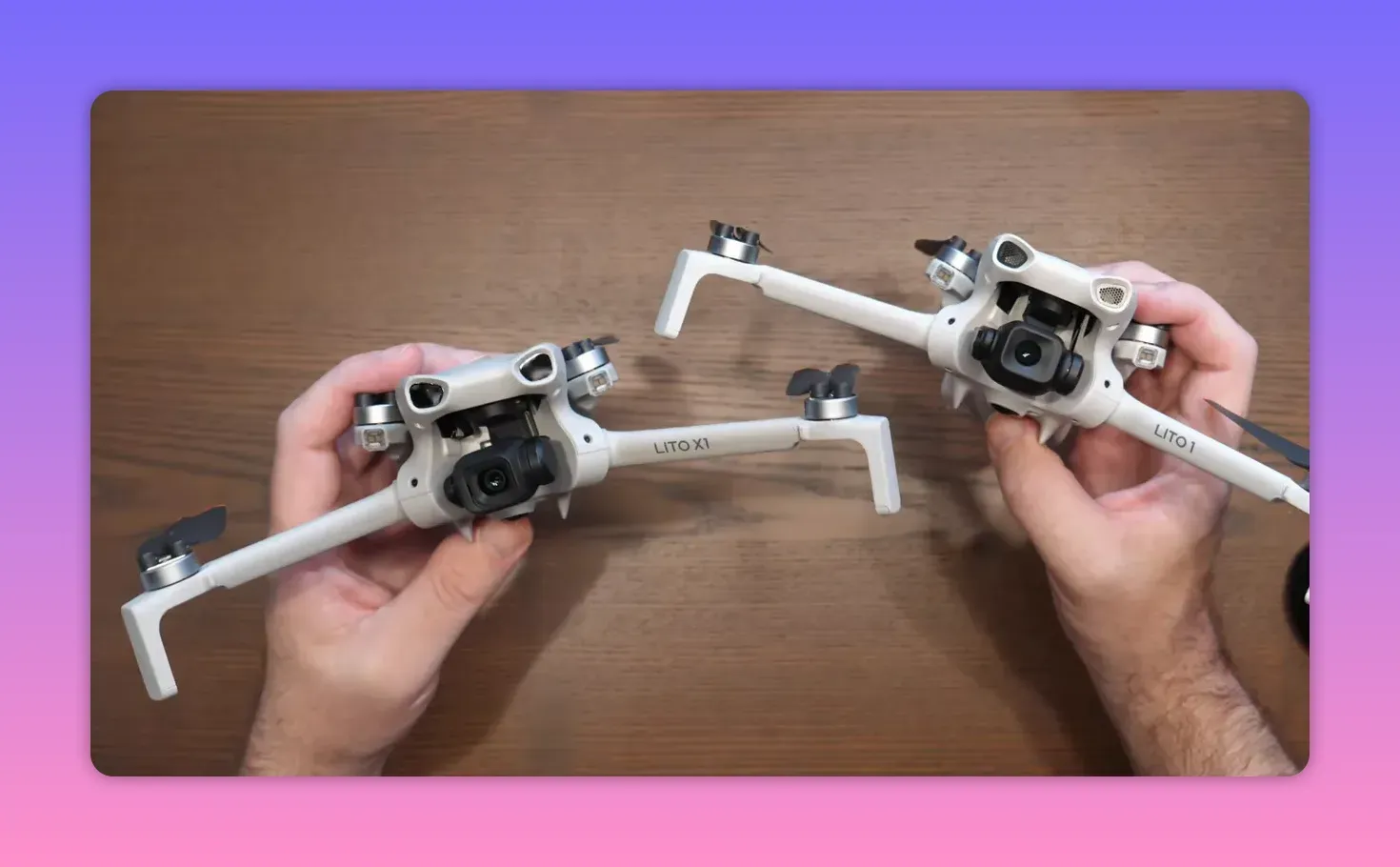
The X1 pulls ahead in three areas:
- Larger image sensor
- Variable focus / focusable lens
- Front LiDAR sensor
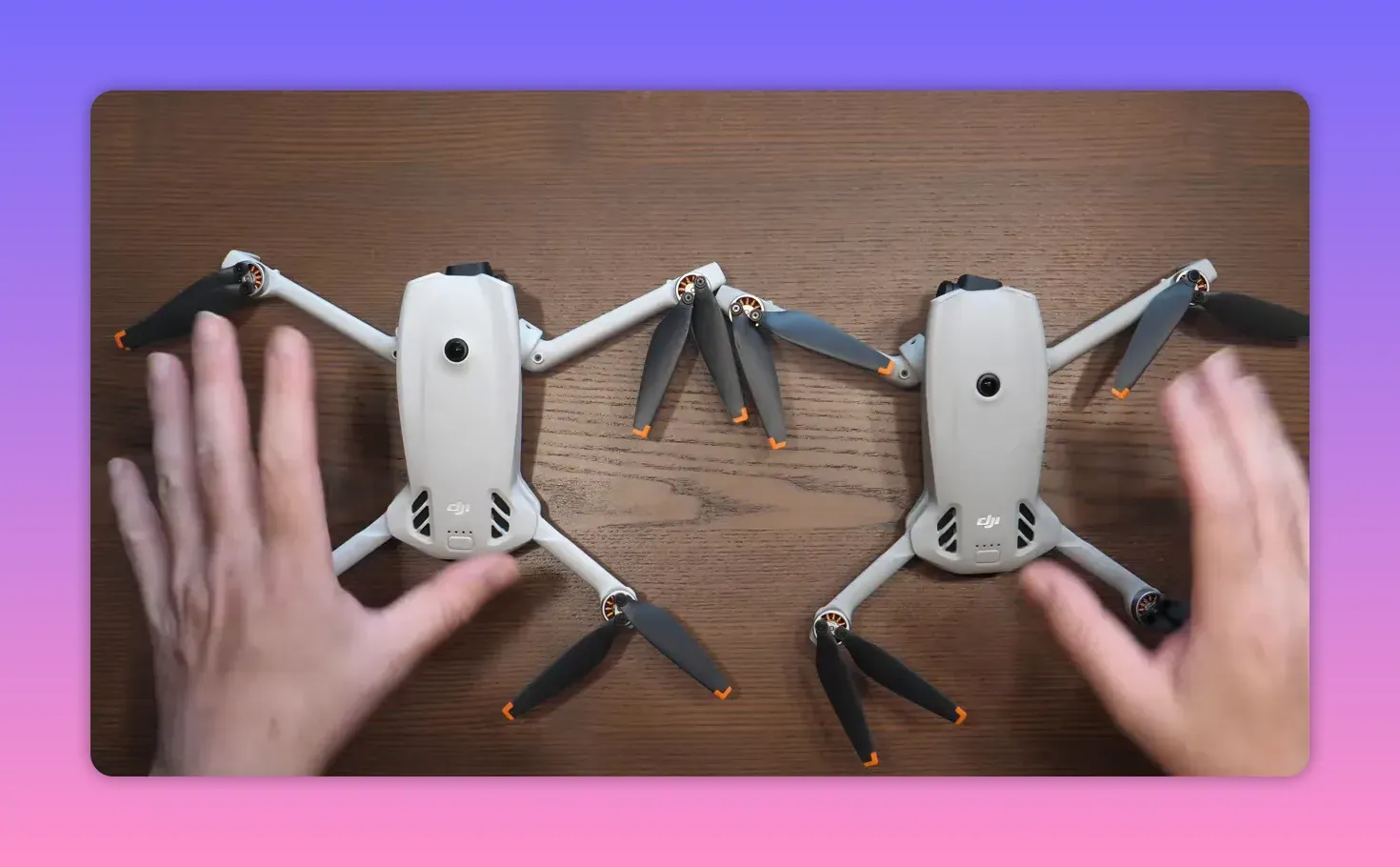
The X1 also supports waypoints. At the time of testing, the Lito 1 did not. If you need night flying, the best image quality, or waypoint missions, the X1 is the obvious pick. If not, the cheaper Lito 1 may be enough.
Flying the Lito X1: familiar DJI controls, which is a compliment
Once airborne, the Lito X1 behaves like a modern DJI camera drone. Nothing radical appears in the interface, which is good. Reinventing basic flight controls is how products win design awards and lose pilots.
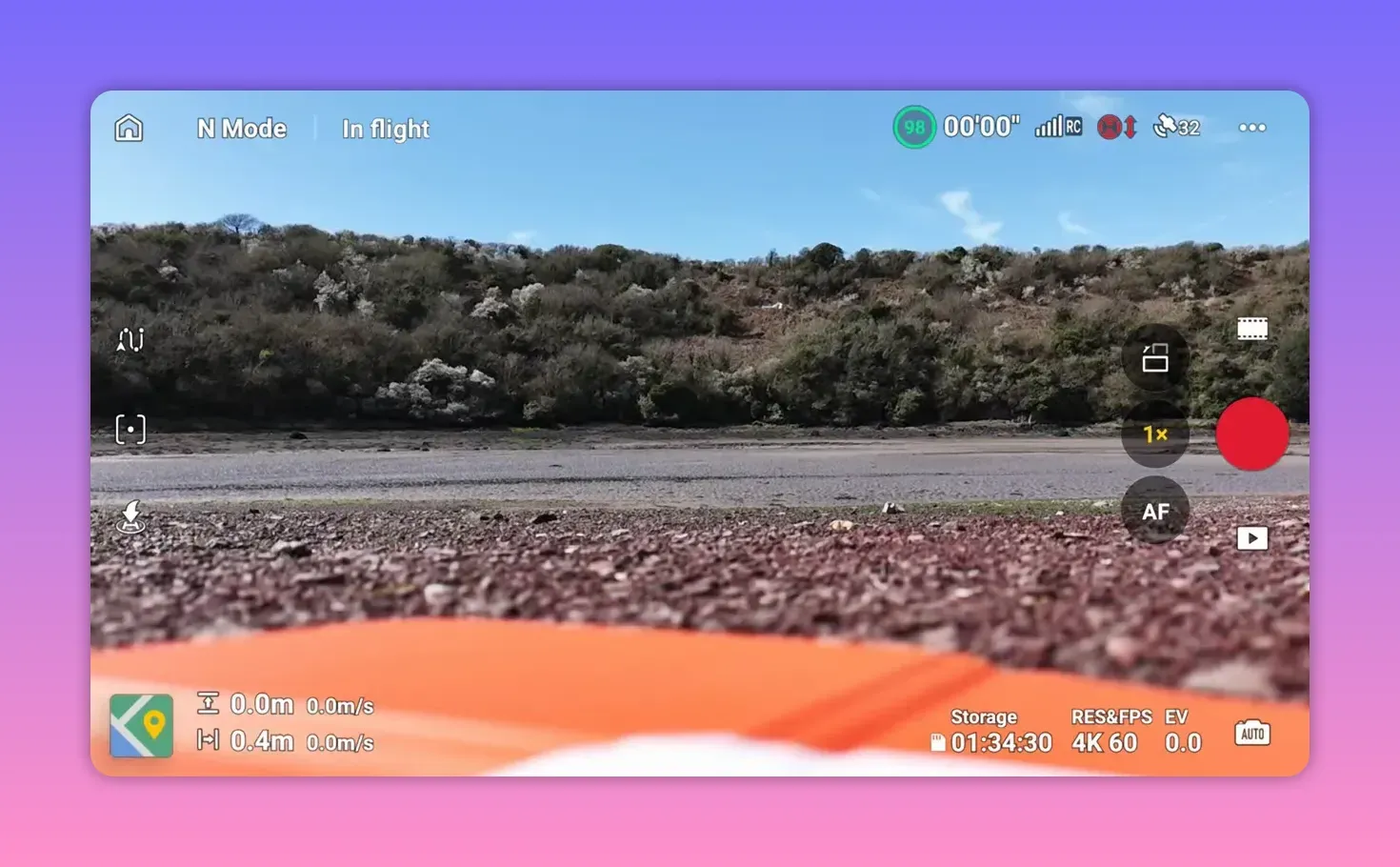
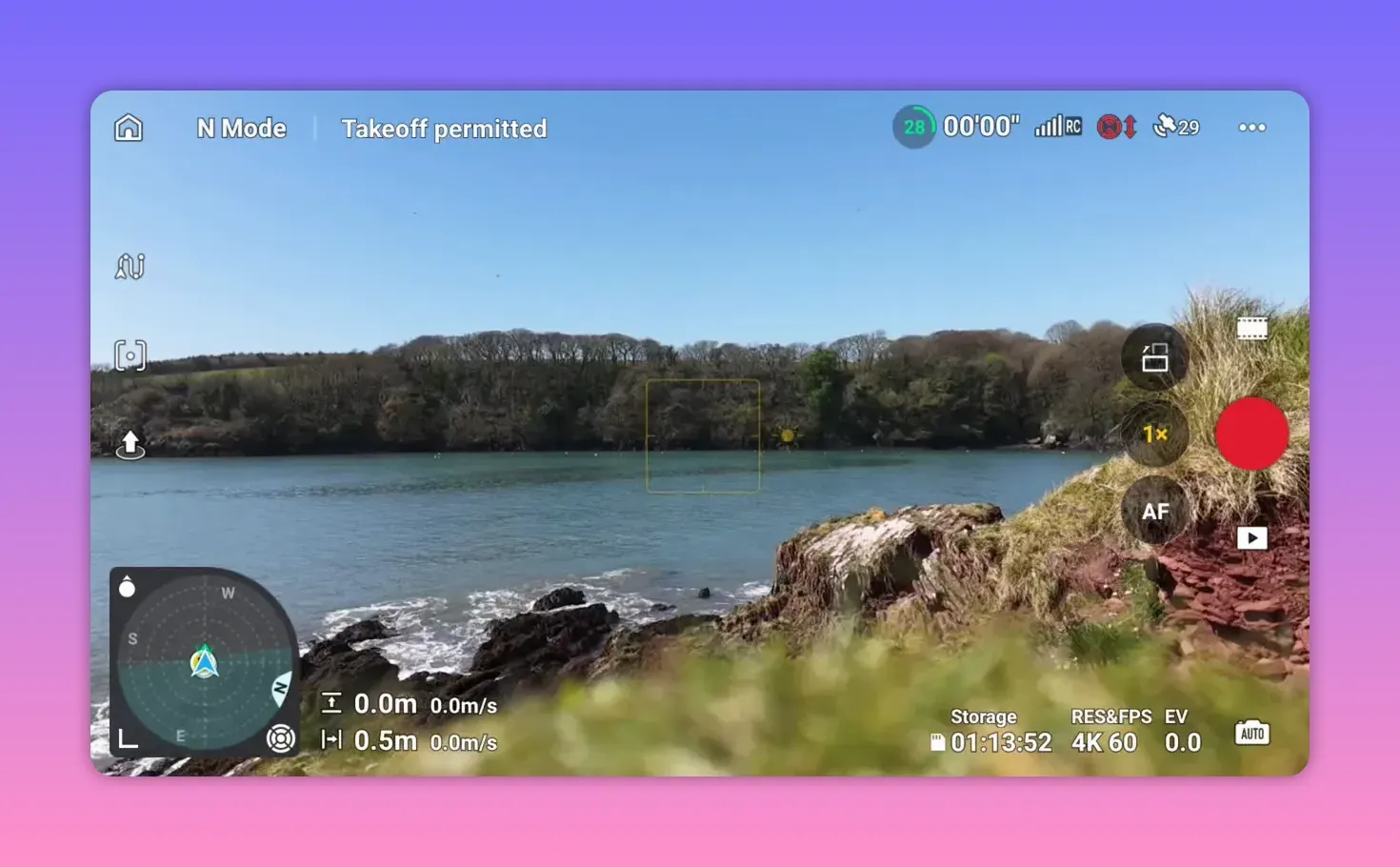
The gimbal tilts upward to 40 degrees and downward to 90 degrees. You can control this from the screen or via the controller wheel.
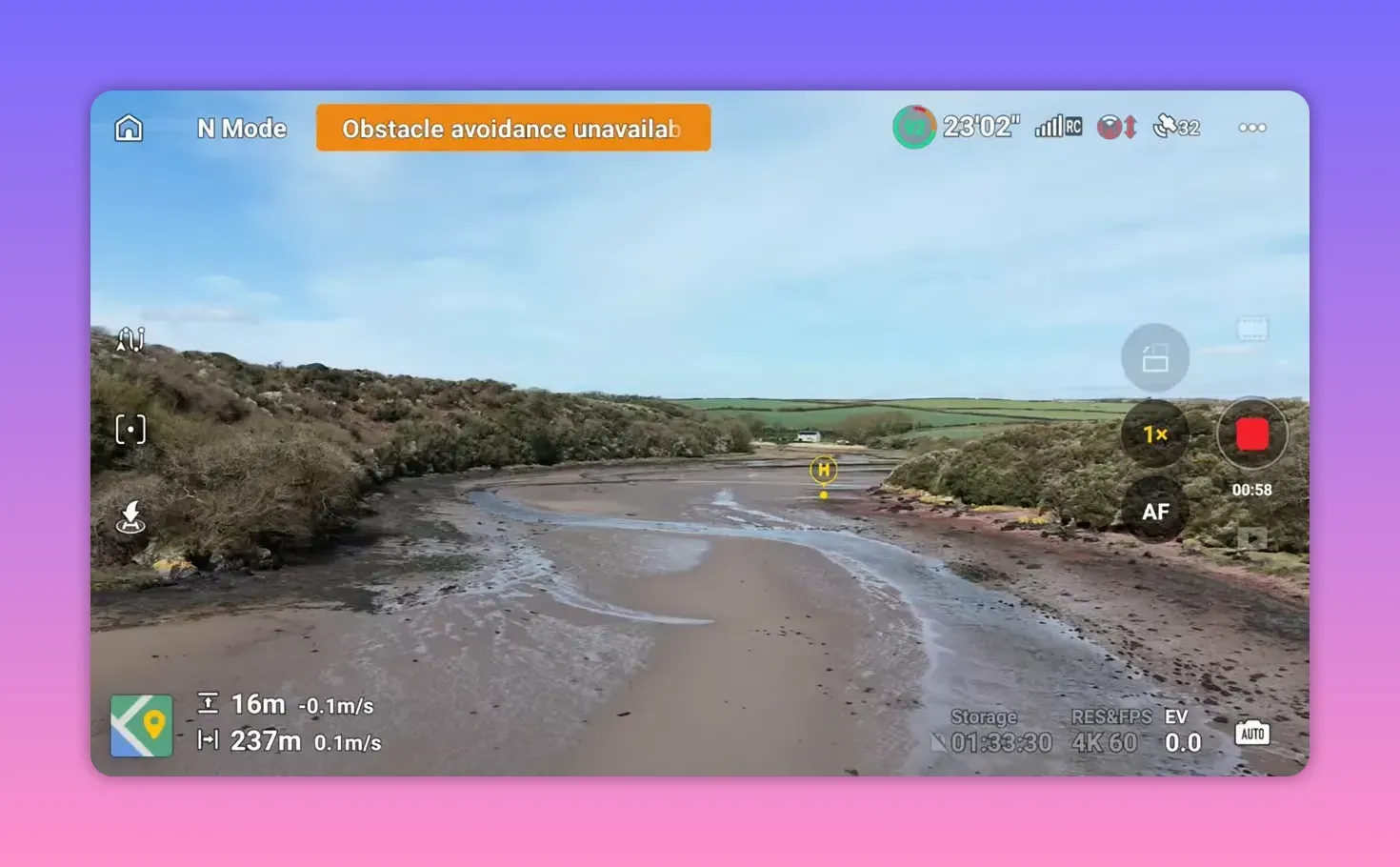
There is also digital zoom up to 3x, controlled from the right-hand wheel or via on-screen zoom steps. It is digital, so treat it as framing convenience rather than free optics.
When not recording, you can switch between horizontal and portrait capture modes. Again, this is the software crop mode rather than mechanical rotation.
Video modes, photo modes, and the usual DJI smart shots
For video, the main recording options include:
- 4K from 24fps to 60fps
- 1080p from 24fps to 60fps
- 4K slow motion at 100fps
- 1080p slow motion up to 200fps
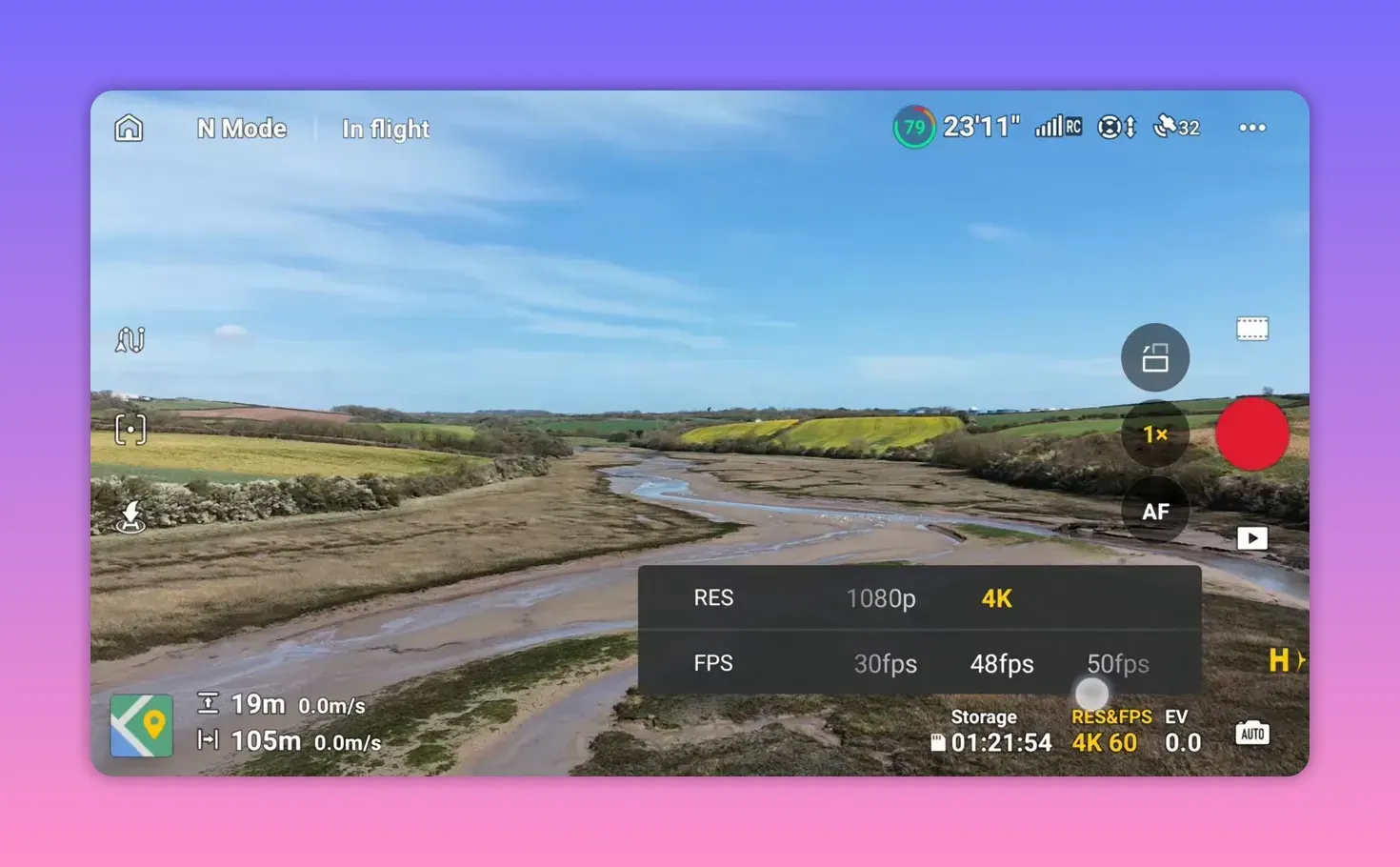
Photo modes include the familiar set: single shot, AEB, burst, and timer. Nothing exotic, but enough for the intended market.
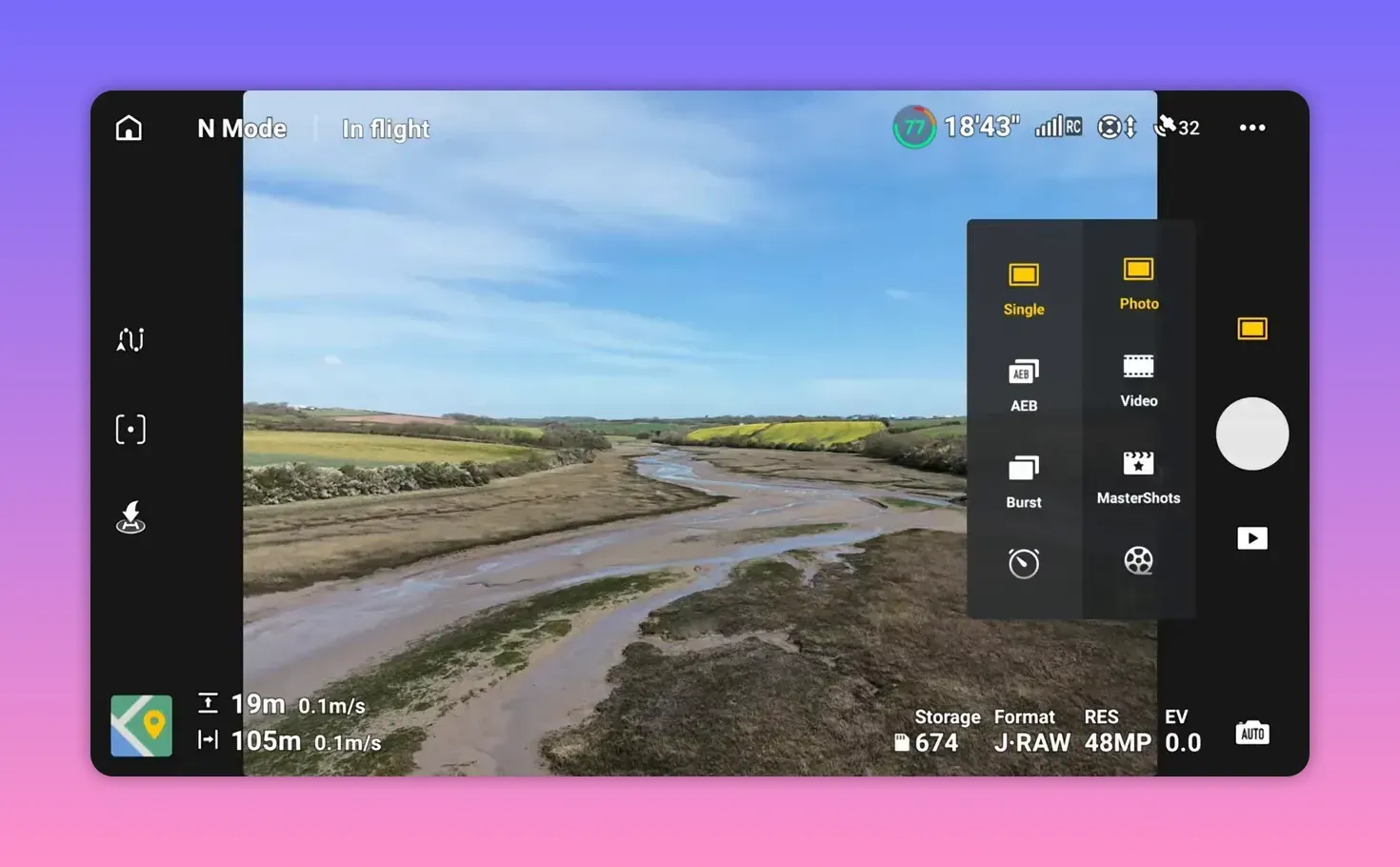
The smart flight modes include MasterShots and the usual QuickShots. That means automated moves such as:
- Dronie
- Rocket
- Circle / Orbit
- Spiral
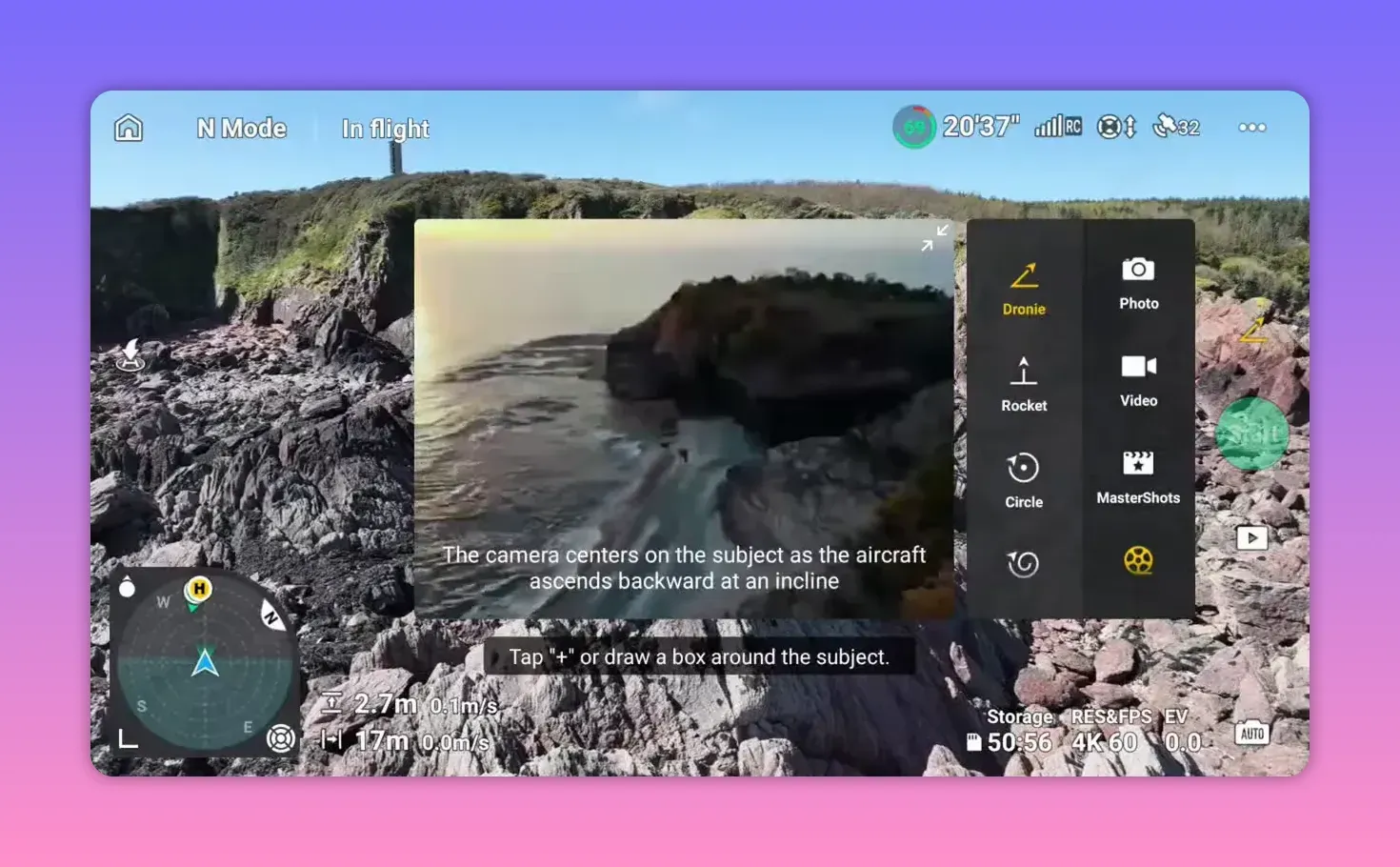
These modes are aimed at people who want clean, repeatable camera moves without manually juggling yaw, pitch, framing, and regret. That also makes the X1 a sensible crossover drone for someone coming from the FpV drone side and wanting easier cinematic shots.
Focus, Spotlight, and ActiveTrack 360
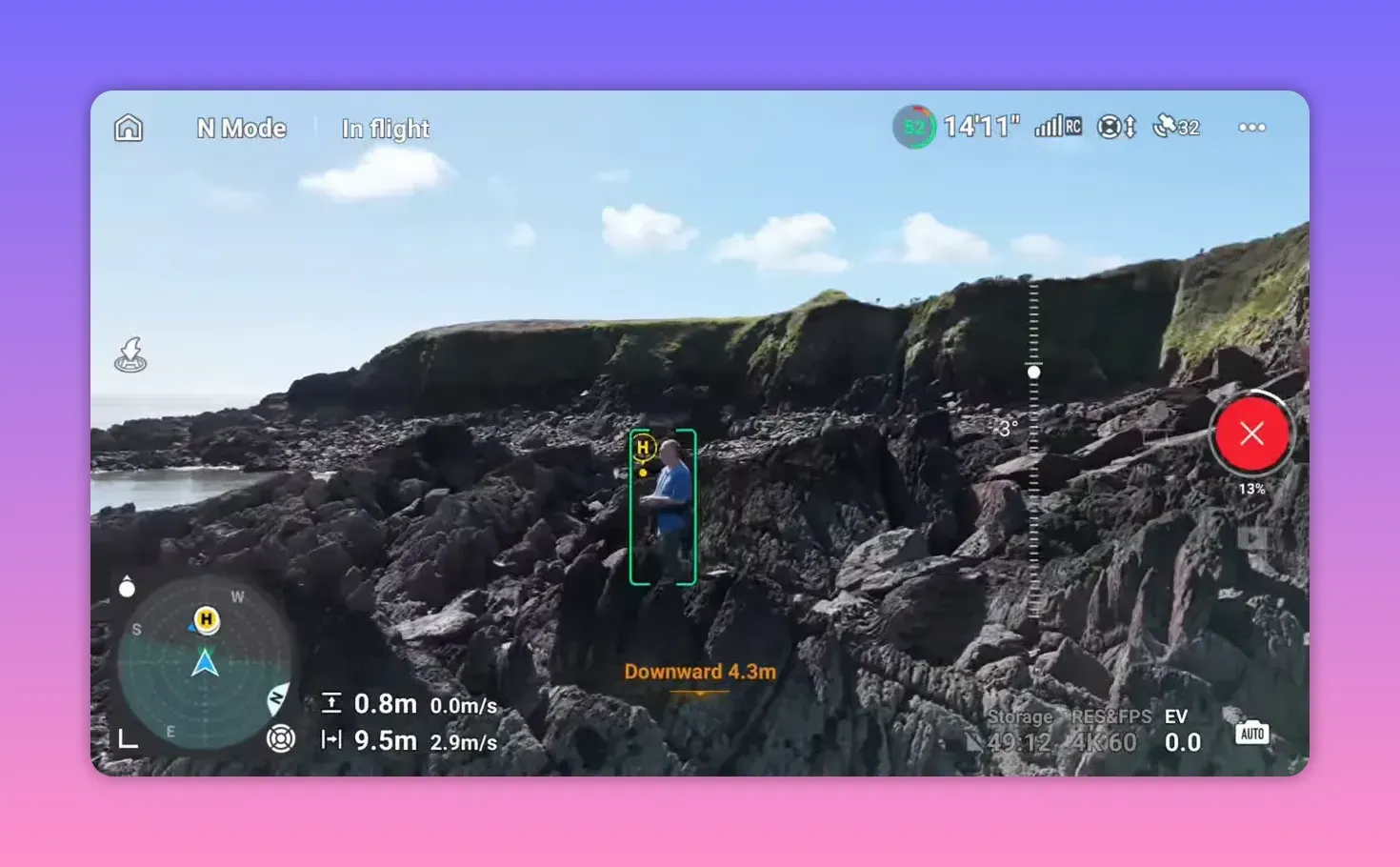
One of the stronger features on the Lito X1 is its subject tracking. Draw a box around the subject and the drone offers Spotlight and ActiveTrack options.
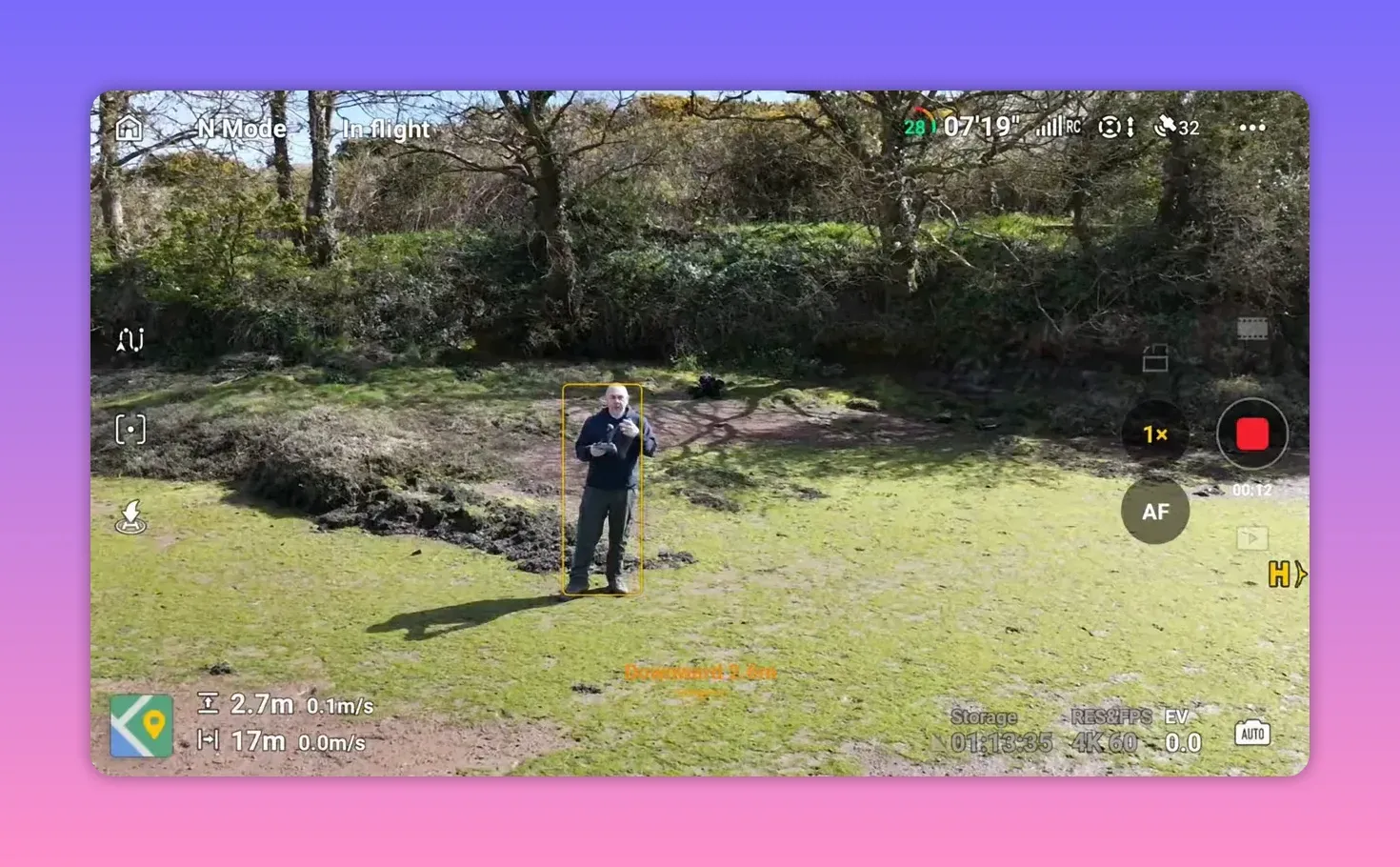
Spotlight keeps the selected subject framed while you fly manually. The drone does not move on its own; it just manages the camera framing so you can focus on flying. That is handy if your thumbs are better at movement than composition.
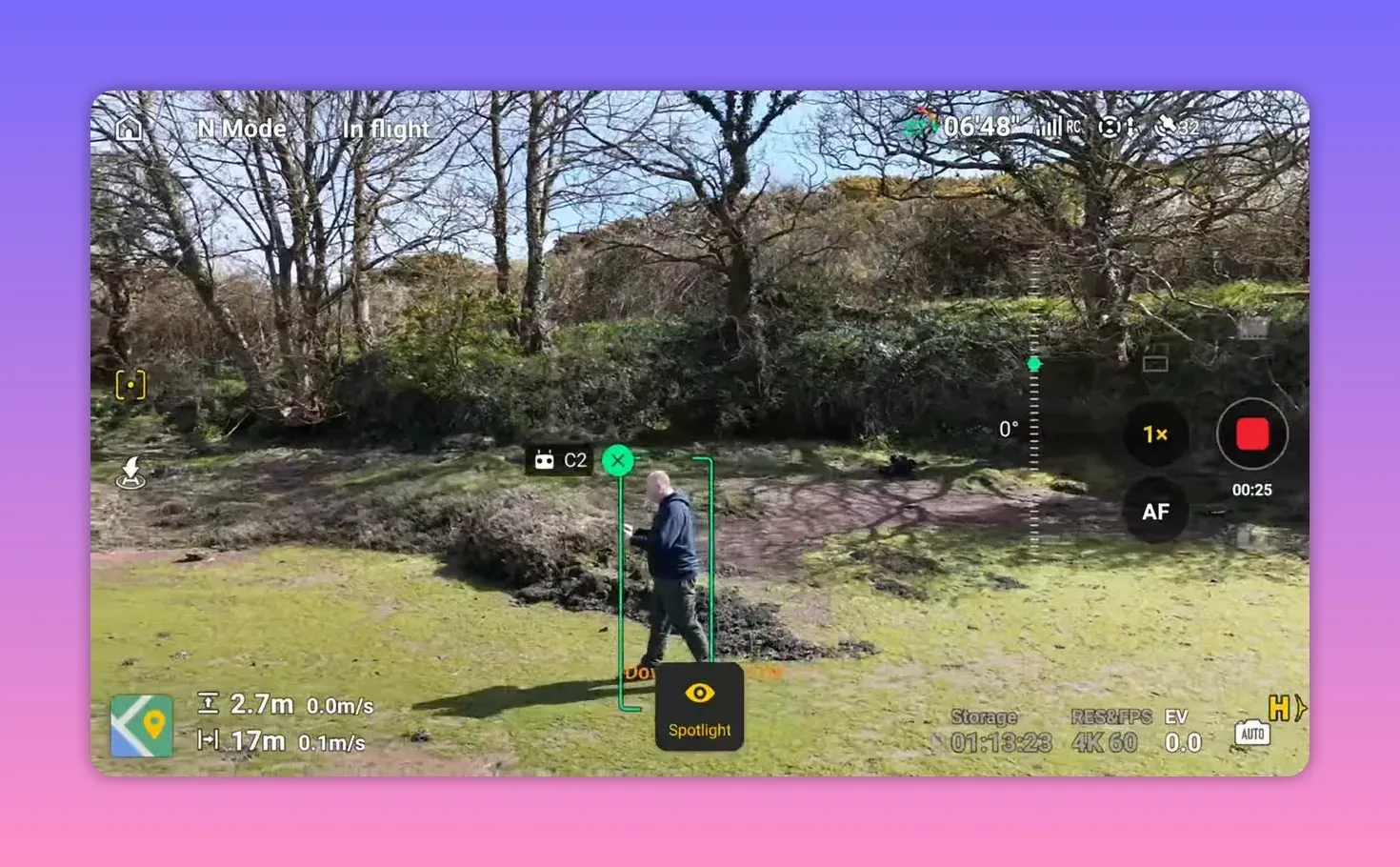
ActiveTrack with Spotlight adds autonomous following. The drone repositions itself behind the subject and tracks while using the obstacle sensing system to avoid objects. You can also command it to shift left or right for different tracking angles.
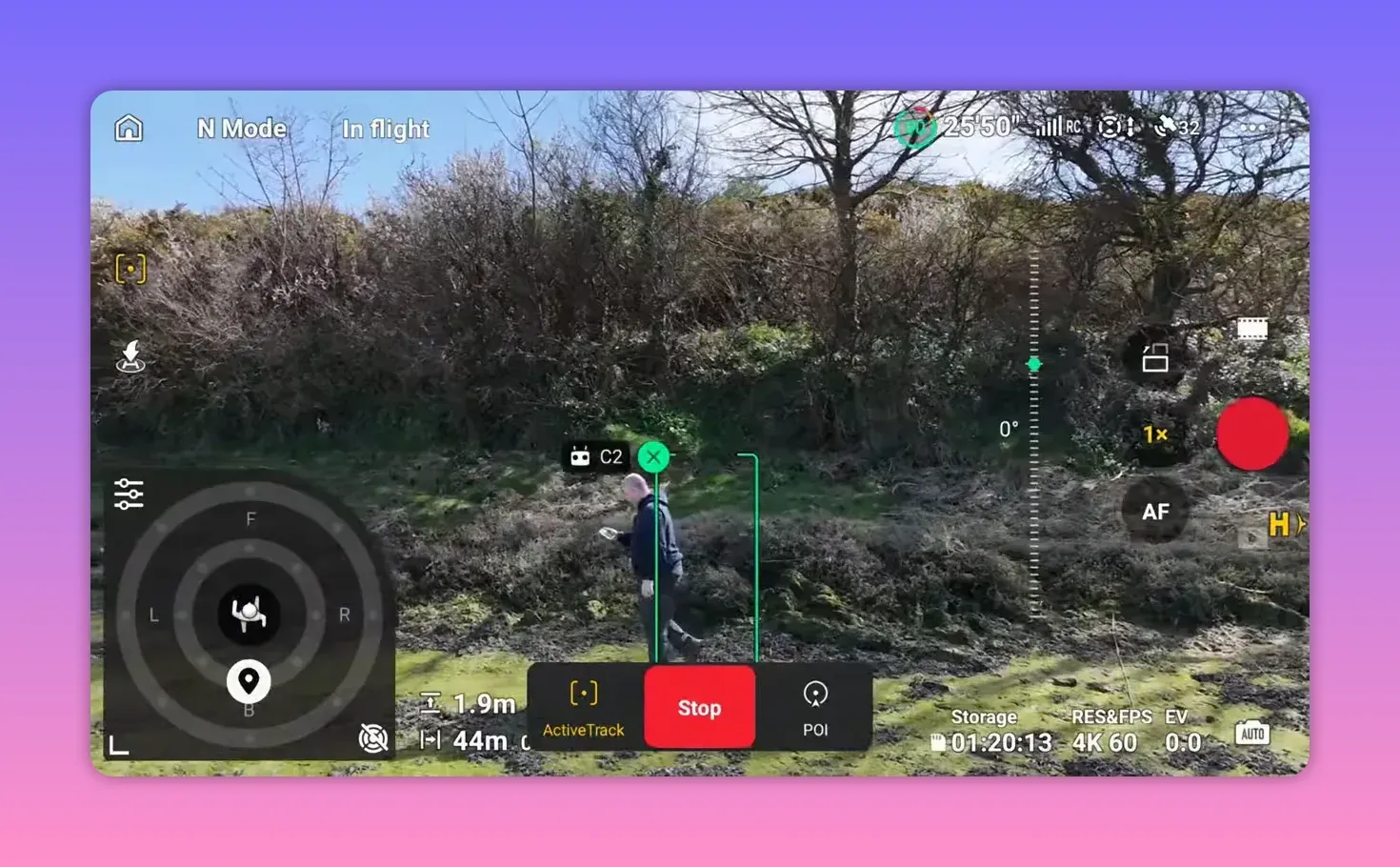
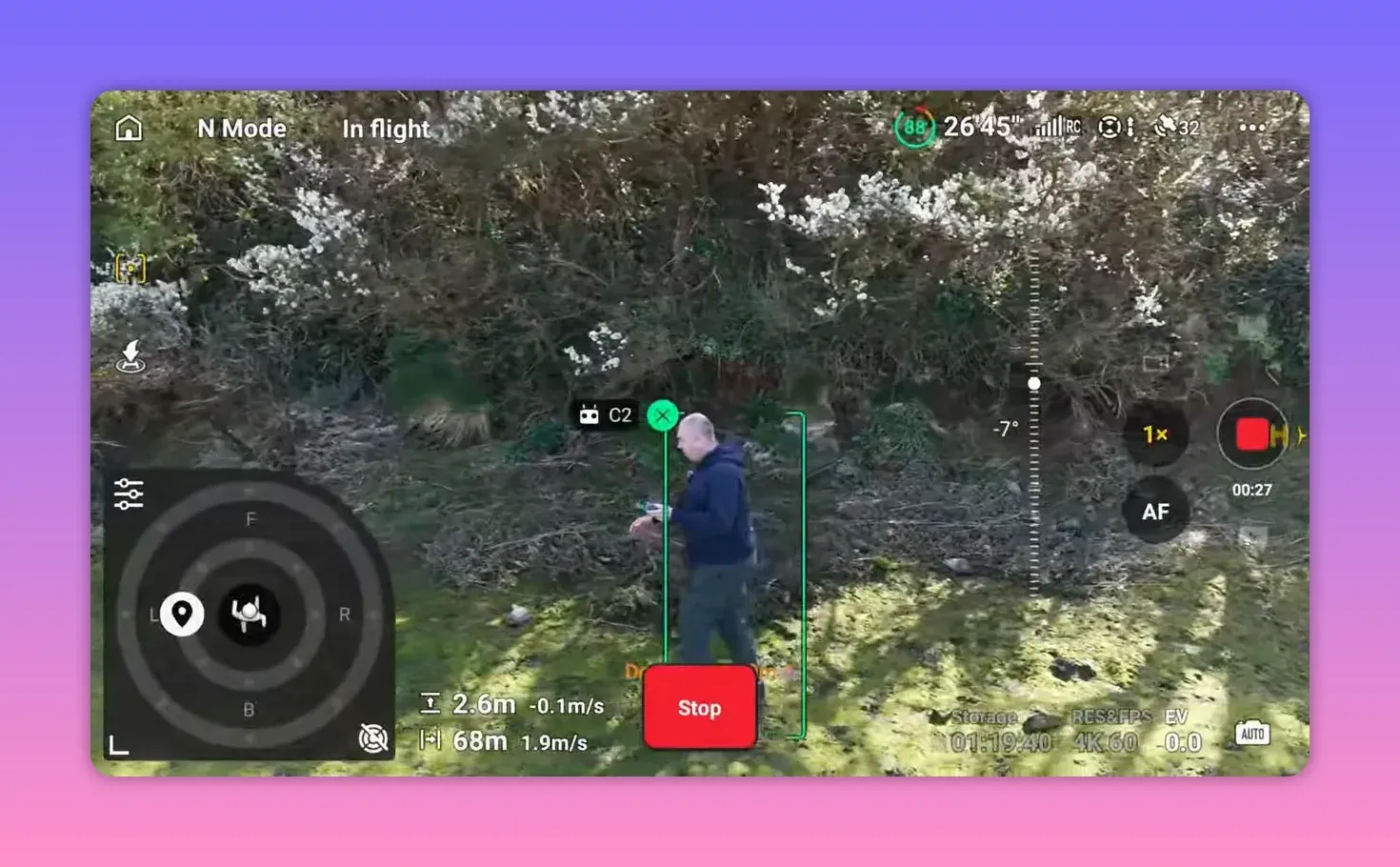
During testing, the drone tracked a walking subject, repositioned to the side when asked, and maintained framing while adjusting distance and angle. It struggled slightly when moving through mixed sun and shadow, but the system remained effective overall.
So is the Lito X1 actually good?
Yes. In fact, the main point here is how little feels compromised. The Lito X1 is not revolutionary. It does not need to be. It takes DJI’s newer features and packages them into a lower-cost drone that still feels current.
Mads compares the Lito range to a lower-cost but up-to-date product line, rather than a discounted old model. That rings true. DJI’s older Mini 4K and Mini 3 series remain available, but they are ageing. The Lito range is the cleaner answer for buyers who want fresh hardware, not warehouse leftovers.
The X1, in particular, looks like the sweet spot for most people. It offers strong video quality, modern transmission, tracking, smart shots, omnidirectional sensing, LiDAR for low light, and waypoint support—without approaching flagship pricing.
For beginners, it is easy to recommend. For experienced pilots, it makes sense as a compact travel drone or a lower-risk machine for everyday flying. And for anyone coming from the FpV drone world, it is a practical way to get stable, polished aerial footage without needing to fight a freestyle quad into behaving.
Who should buy the DJI Lito X1?
You should consider the Lito X1 if you want:
- A sub-250g DJI drone with current features
- Better low-light ability than the cheaper Lito 1
- Autofocus and a larger camera sensor
- Waypoint support
- Safer tracking thanks to omnidirectional sensing and front LiDAR
- A simpler route to polished footage than a typical FpV drone
You may want the Lito 1 instead if cost matters more than night flying, autofocus, or waypoint missions. The core flight experience stays broadly similar.
FAQ
Is the DJI Lito X1 under 250g?
Yes. The tested weight came to about 248.5g with battery, which keeps it inside the sub-250g class.
What is the difference between the DJI Lito X1 and Lito 1?
The X1 has a larger camera sensor, a focusable lens, and a front-facing LiDAR sensor. It also supports waypoints, which the Lito 1 did not at the time of testing.
Can the Lito X1 shoot vertical video?
Yes, but through a software crop rather than a mechanically rotating gimbal. The camera remains in landscape orientation.
What video resolutions and frame rates does the Lito X1 support?
It supports 4K at 24 to 60fps, 1080p at 24 to 60fps, 4K slow motion at 100fps, and 1080p slow motion up to 200fps.
Does the DJI Lito X1 have obstacle avoidance?
Yes. It has omnidirectional object sensing using top and bottom wide-angle cameras, plus a front LiDAR sensor on the X1 model.
How long does the DJI Lito X1 fly for?
Real-world flight time was around 20 to 30 minutes, depending on wind and conditions.
Can Lito X1 batteries be used in the Mini 5 Pro?
No. The batteries are not cross-compatible.
Is the DJI Lito X1 a good option for an FpV drone pilot?
Yes, if the goal is smooth aerial footage with less manual workload. It does not replace an FpV drone for freestyle or racing, but it makes cinematic capture much easier.
Takeaway box
- The Lito X1 is DJI’s modern budget-friendly sub-250g drone—less flagship tax, most of the useful bits.
- You get 1/1.3-inch imaging, 4K60, 4K100 slow motion, autofocus, O4 transmission, and ActiveTrack 360 for £599 with RC2 Fly More.
- The X1’s front LiDAR is the real separator from the Lito 1—better for low light and night flying.
- Obstacle sensing works well, even around branches, but it is still a safety net—not a licence to stop thinking.
- If an FpV drone feels like too much work for clean footage, the Lito X1 is the calmer, less shouty answer.
This article was based from the video DJI Lito X1 4K Mini Drone WIth Omnidirectional Obstacle Sensing - Best Beginner Drone 2026!