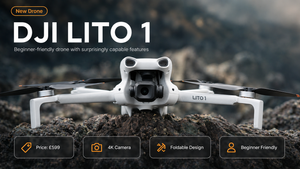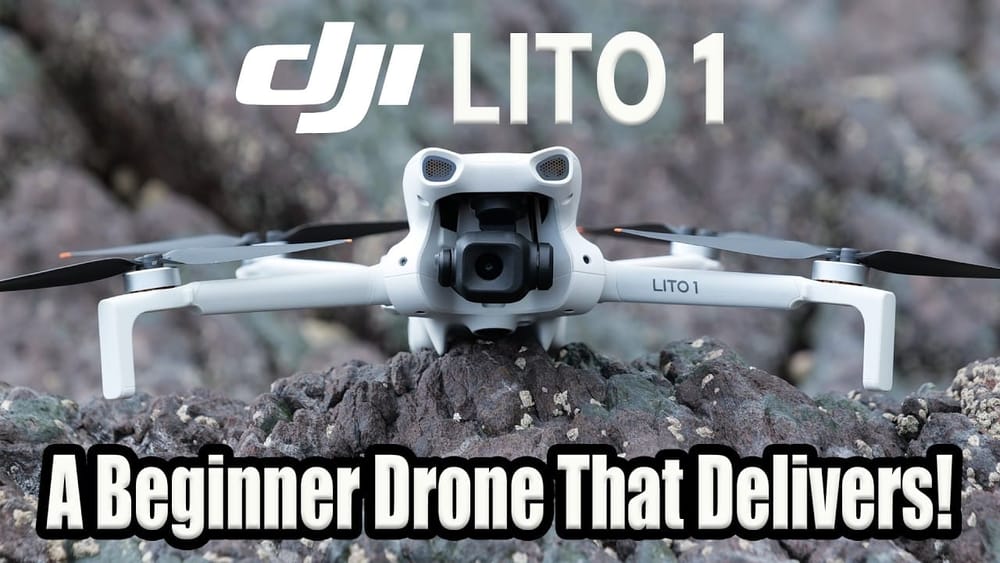
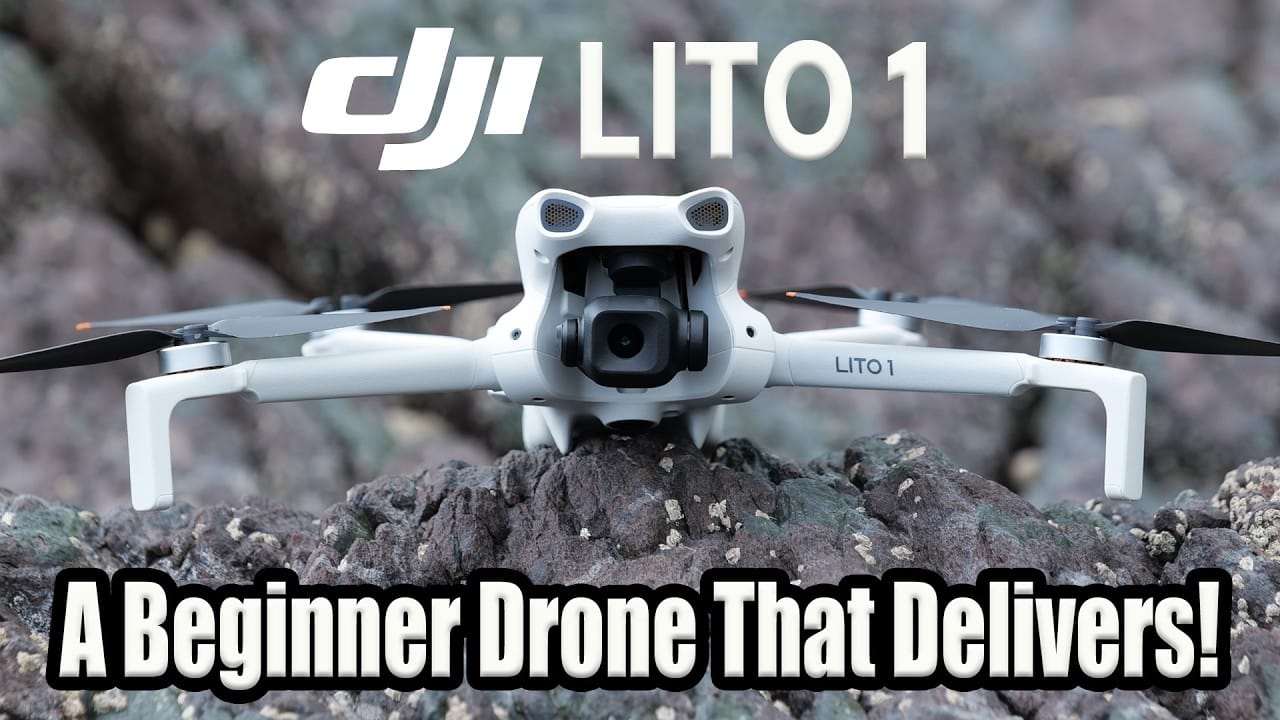
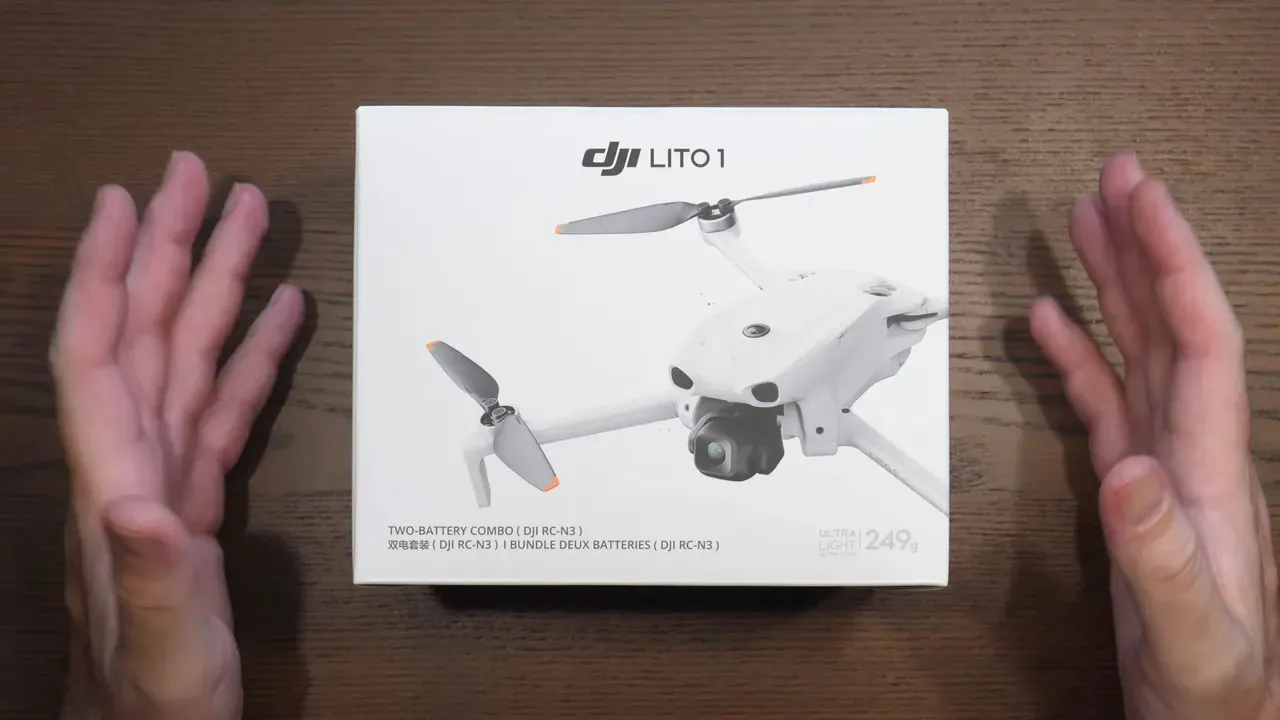
The DJI Lito 1 is DJI’s new entry-level sub-250g drone, built to replace ageing basic Mini models without making your bank account file a complaint. If you want the short version, it brings DJI O4, 4K/60 video, omnidirectional sensing and smart flight modes to a £339 starter package.
TLDR: What you actually need to know
The fast version, for people with limited time and unlimited tabs:
- Price: The DJI Lito 1 two-battery combo with the DJI RC-N3 costs £339 in the UK.
- Camera: You get a 1/2-inch sensor, up to 4K 60fps in normal recording, and 4K 100fps in slow motion.
- Weight: The drone and battery total 249g, which keeps the DJI Lito 1 in the all-important sub-250g class.
- Flight features: It includes DJI O4, omnidirectional object sensing, ActiveTrack 360, QuickShots, MasterShots, Hyperlapse and panoramic imaging.
- Best for: First-time drone buyers who want modern DJI features without paying for every premium extra under the sun.
- Avoid if: You need night flying support, LiDAR sensing, D-Log M, HDR, manual focus or waypoint support. That is where the Lito X1 starts making more sense.
- Verdict: The conclusion is simple. The DJI Lito 1 is not revolutionary, but it is a very tidy evolutionary update to DJI’s budget mini drone formula.
What is the DJI Lito 1 actually replacing?
The DJI Lito 1 replaces the older “basic Mini” slot in DJI’s range. Think Mini 4K, Mini 3 and similar models that did the job, but are now looking a bit elderly next to DJI’s newer tech.
The idea here is straightforward. DJI has already pushed its more expensive compact drones further upmarket, while cheaper Mini-style models were starting to show their age. The DJI Lito line picks up that lower-cost baton and drags it into the present, carrying over newer transmission tech and improved sensing.
There are two versions in the range. The DJI Lito 1 is the cheaper, more beginner-friendly model. The Lito X1 is the pricier sibling with the shinier hardware and fewer compromises, because of course there has to be one.
What do you get in the DJI Lito 1 box?
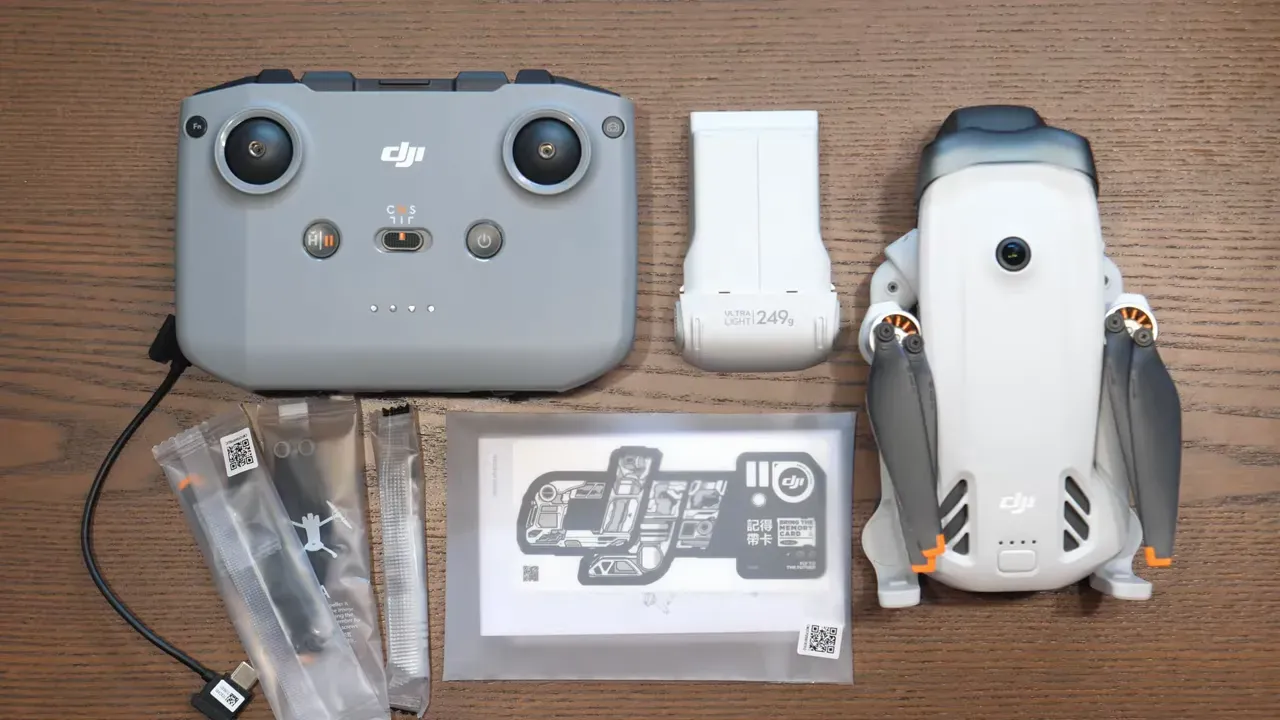
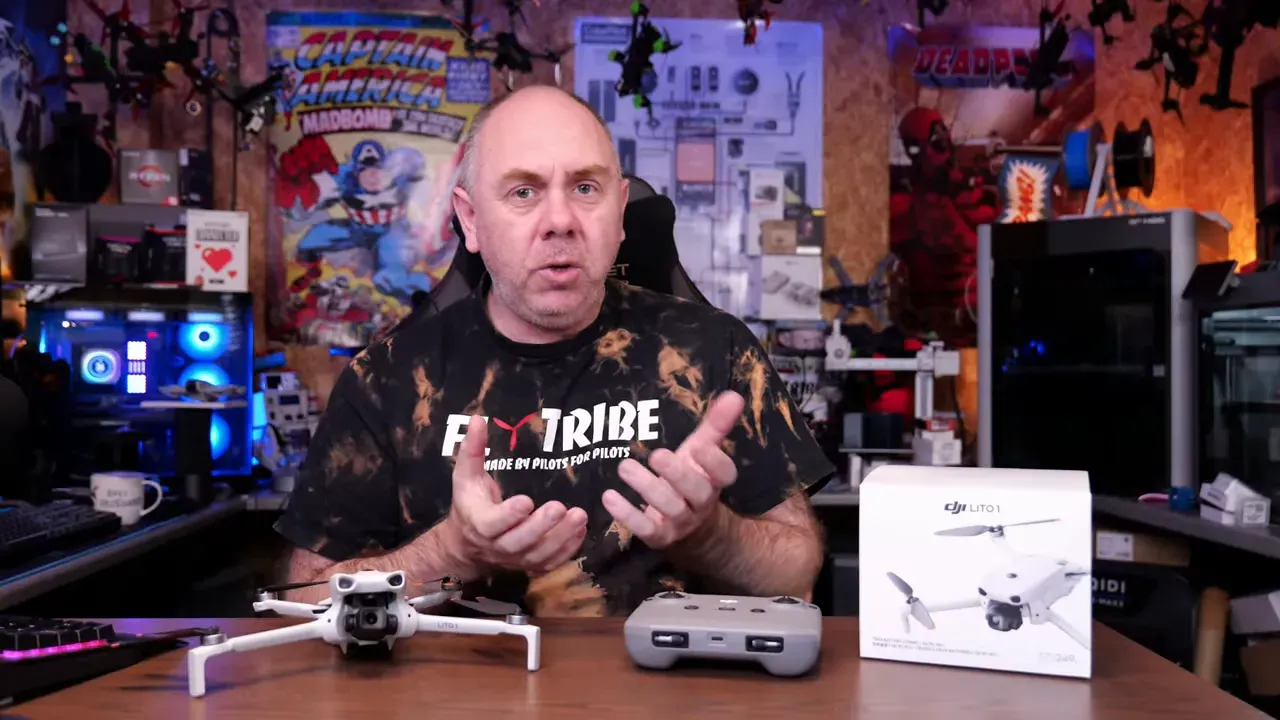
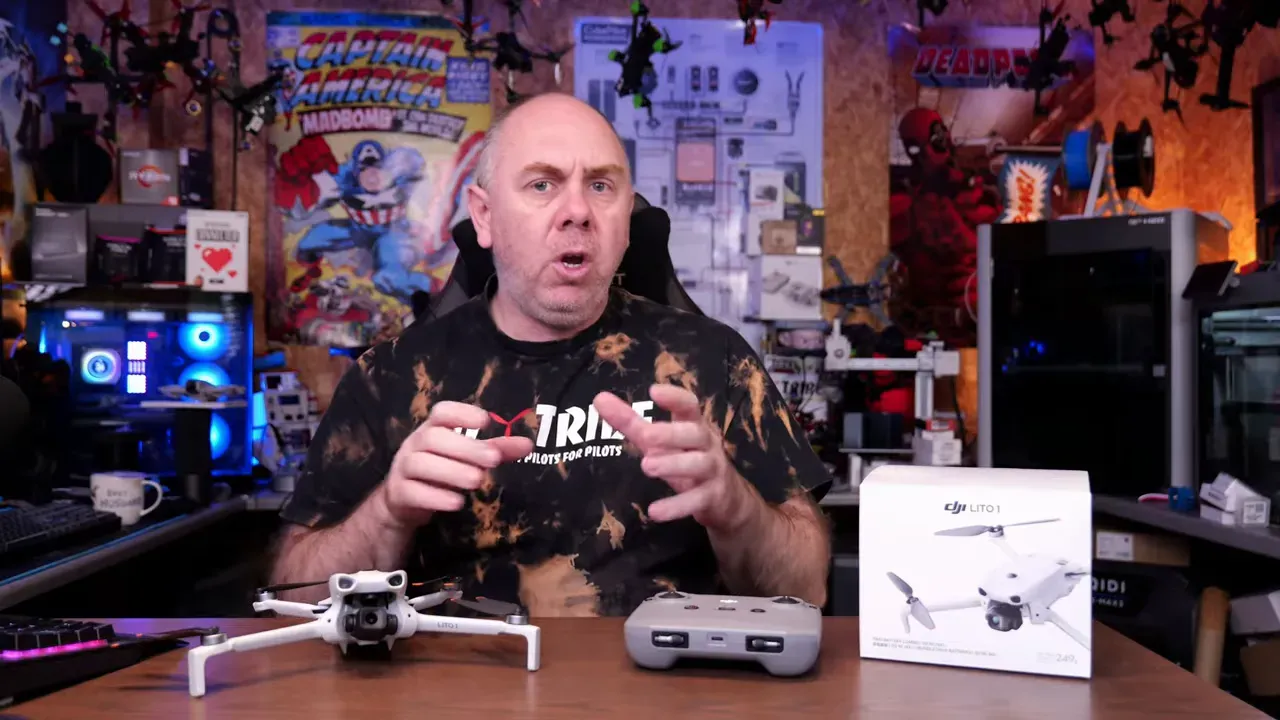
The DJI Lito 1 kit shown here is the two-battery combo with the DJI RC-N3 controller. That means you use your own phone or tablet as the display, which keeps cost down and keeps fingerprints up.
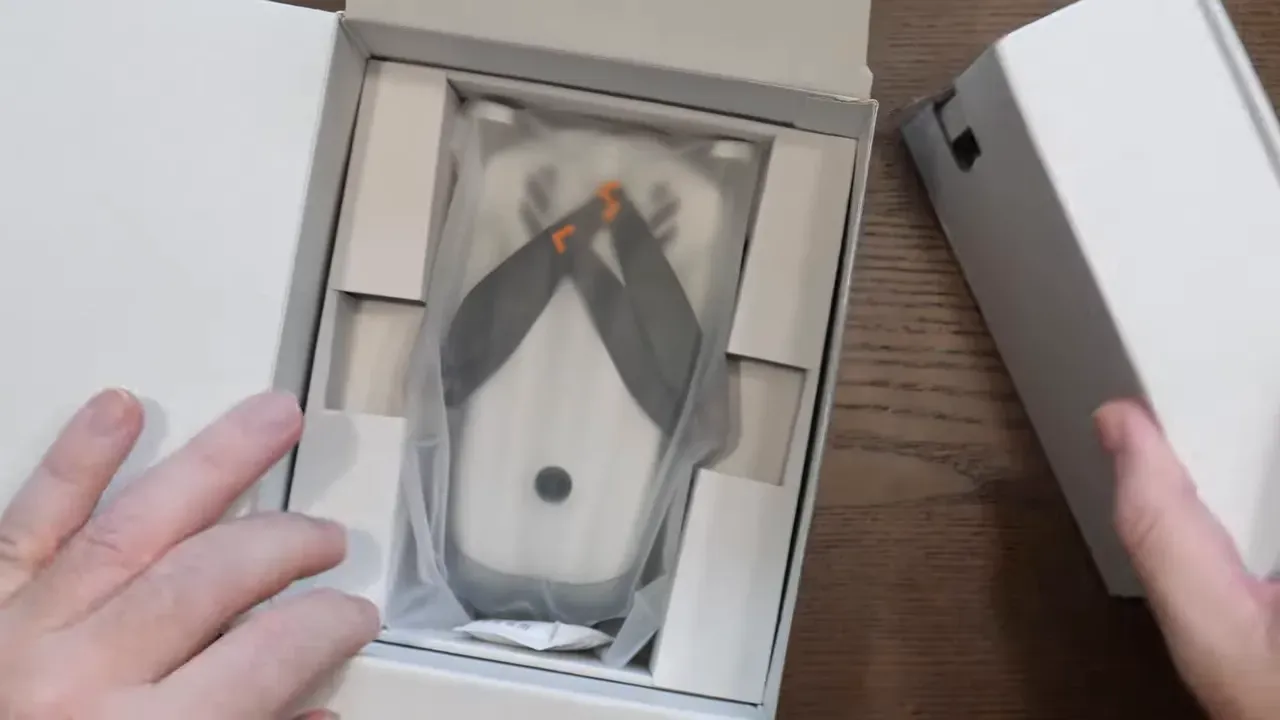
In the box, you get the drone, one additional flight battery, the DJI RC-N3, the manuals, a sticker pack, two spare propellers, a screwdriver for those propellers and an Apple connection cable. The DJI Lito 1 does not include a carry bag, unlike the X1.
That all makes sense for an entry-level package. It is sold as a beginner drone kit, and the point is pretty obvious. Open the box, charge a few things, clip in your phone and go make questionable cinematic decisions over a field.
What are the DJI Lito 1 camera specs?
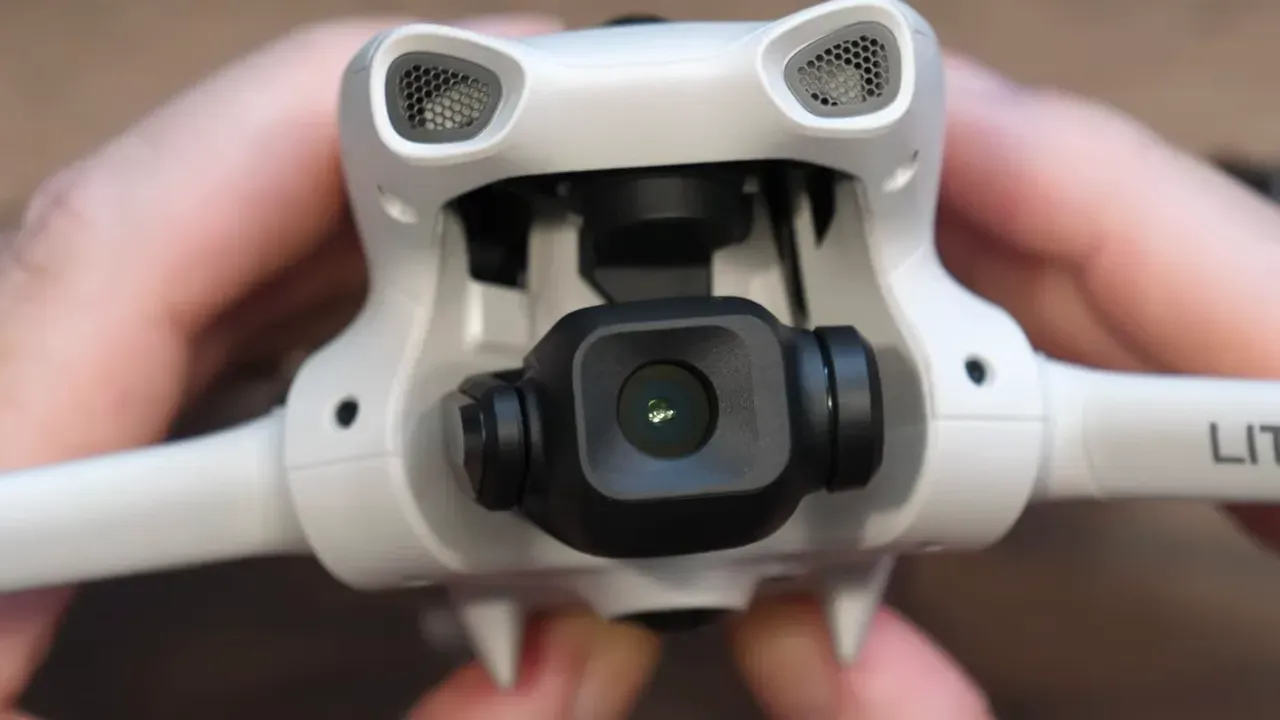
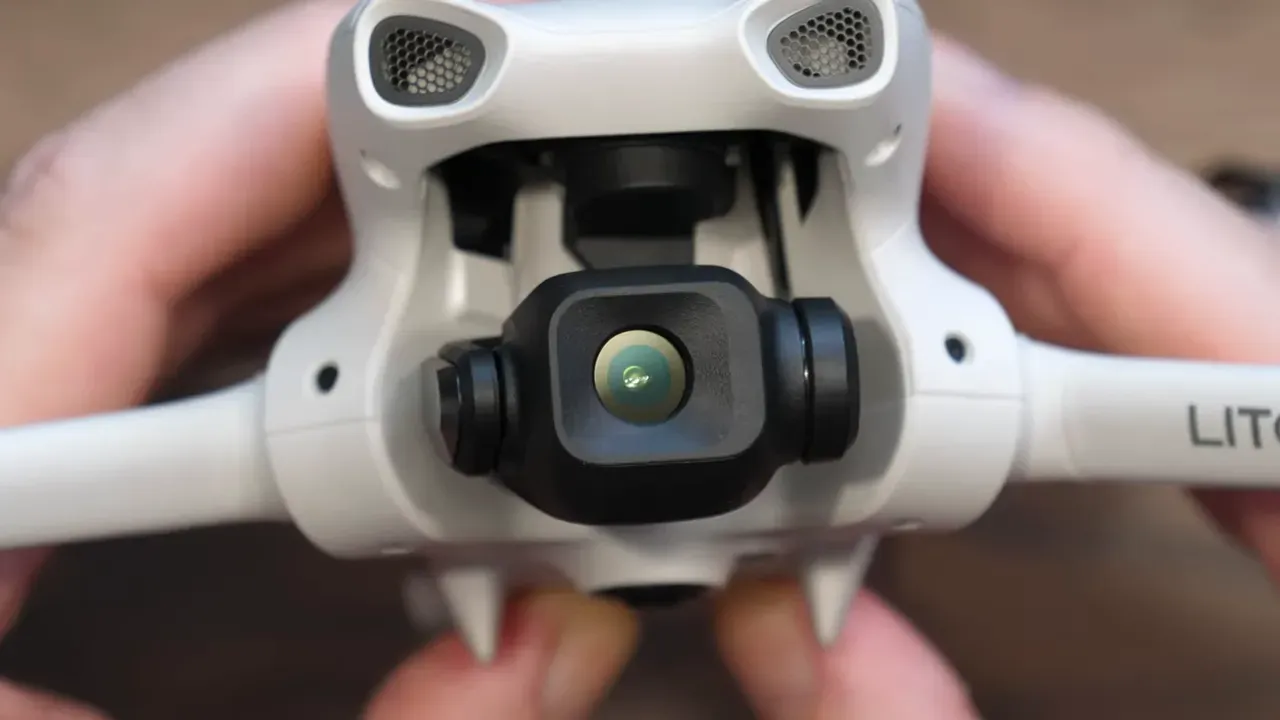
The DJI Lito 1 uses a 1/2-inch camera sensor with a fixed-focus lens on a three-axis gimbal. It records up to 4K at 60fps in normal mode and 4K at 100fps in slow motion mode.
That camera setup puts it firmly in “good enough for most people” territory, which sounds dismissive but is actually the point. Not everyone needs a bigger sensor and all the grading options. A lot of people just want clean, stable 4K footage without needing a post-production workflow that looks like a small accounting fraud.
The gimbal only works in the normal horizontal orientation. It does not rotate mechanically for vertical shooting. Instead, the DJI Lito 1 offers a crop-based vertical shooting mode that trims the sides and uses more of the sensor area to create a portrait-friendly view.
There is also digital zoom, with 1x, 2x and 3x options. It is digital, not optical, so it is handy for reframing, not magic.
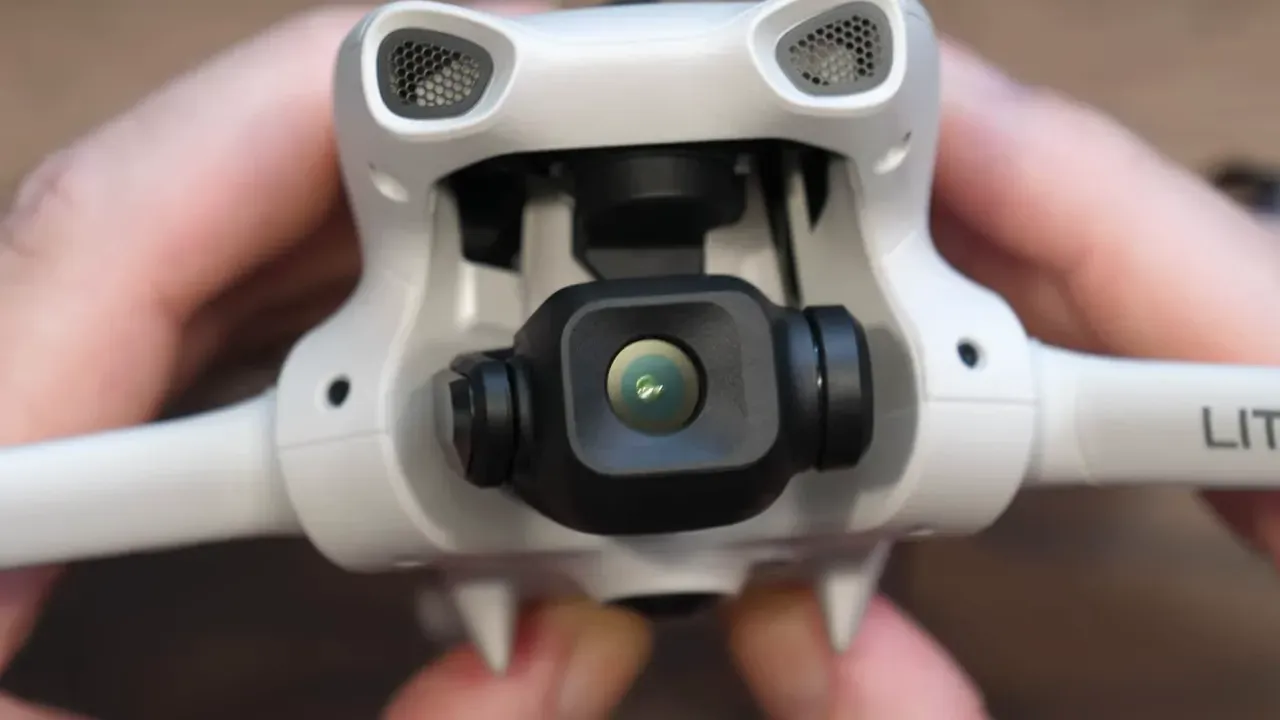
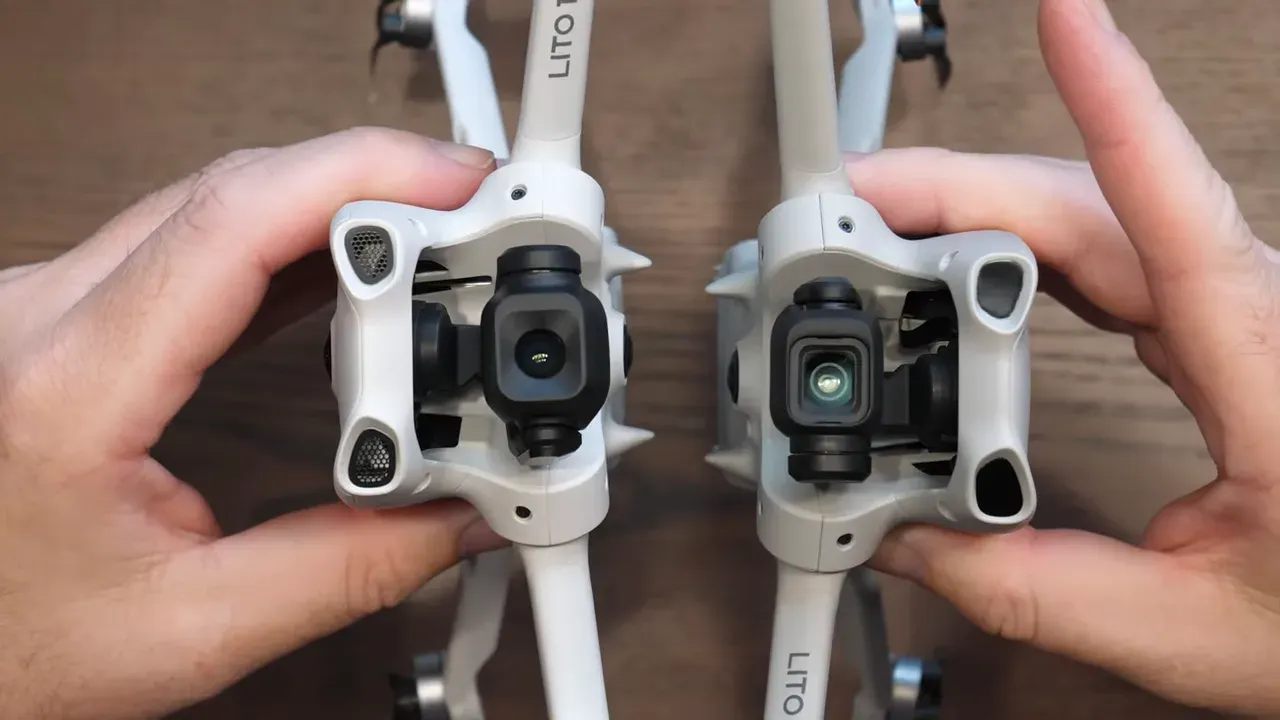
One small physical detail is worth noting. The camera body on the DJI Lito 1 does not appear to have a dedicated fitting area for ND filters. The Lito X1 does have a cut-out that looks designed for that job. That does not prove filters are impossible on the Lito 1, but it does suggest DJI expects the X1 owner to care more about accessories, sunsets and other expensive habits.
Does DJI Lito 1 have obstacle sensing?
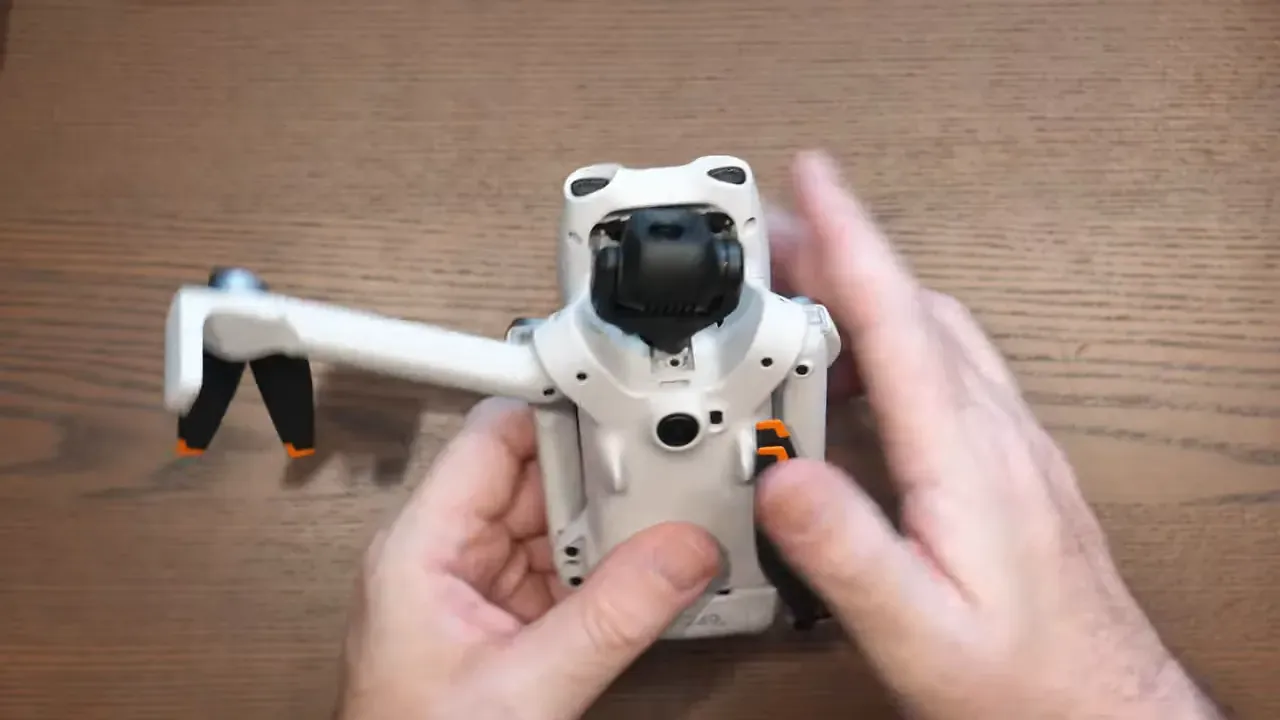
Yes, the DJI Lito 1 has omnidirectional object sensing, but only in daylight. It uses a top camera and a bottom camera, with no LiDAR sensor on this model.
That matters because the Lito X1 adds front-facing LiDAR, while the DJI Lito 1 sticks to standard optical sensing. In plain English, it will detect obstacles around itself during daytime flying, but there is no obstacle sensing support in the dark.
The sensing system is also newer in design than older DJI drones. Instead of separate forward and rear cameras, DJI uses two very wide-angle cameras, one above and one below, to build a stitched, near-360-degree awareness model. It is broadly similar in concept to how ultra-wide camera systems are used elsewhere in DJI’s range.
So what? For a beginner drone at this price, omnidirectional sensing is a big deal. It reduces the chances of a first flight ending in hedge-based education.
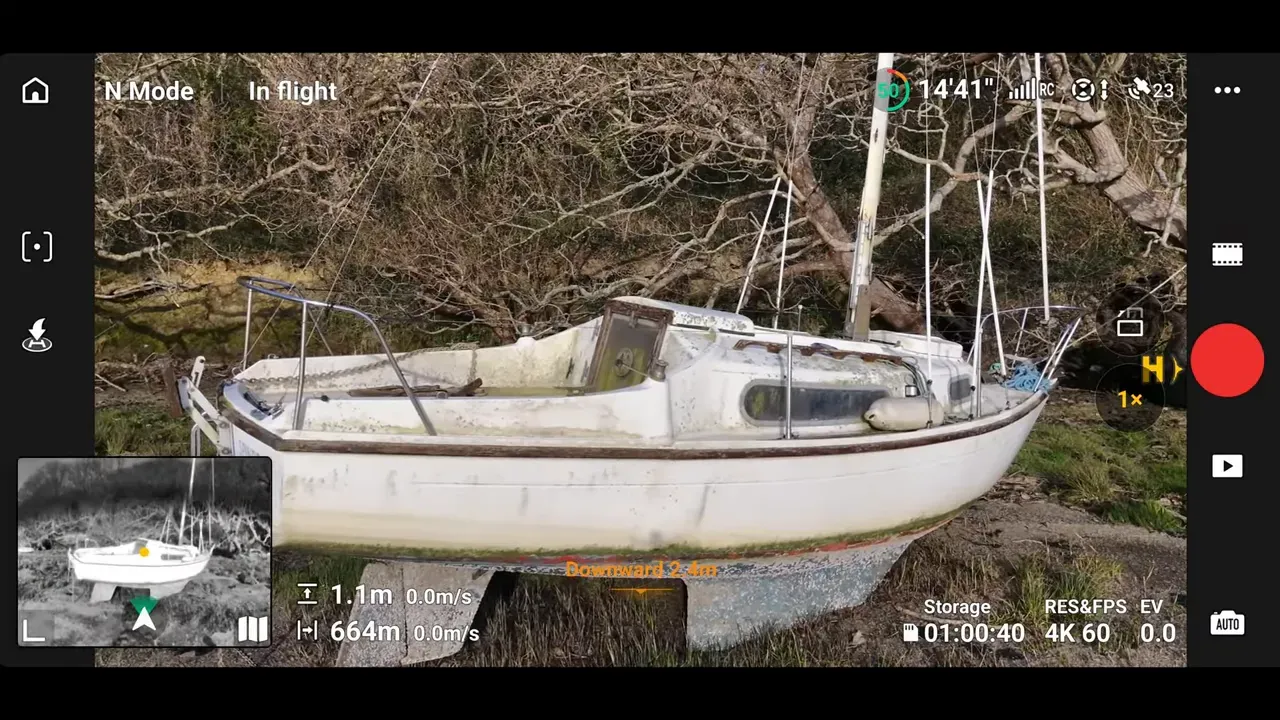
A neat addition is the ability to view the sensing camera feed in the app. Tap the radar graphic and the DJI Lito 1 shows a stitched view from those obstacle sensing cameras. You can even expand it and look around the scene. It is not something you would want to fly by full time, unless chaos is your hobby, but it is useful for understanding what the drone is seeing.
How good is DJI Lito 1 transmission and battery life?
The DJI Lito 1 uses DJI O4 and claims up to 15km range with a 1080p live feed. Real-world flight time sits at about 20 to 30 minutes, depending on conditions and how enthusiastically you throw it about.
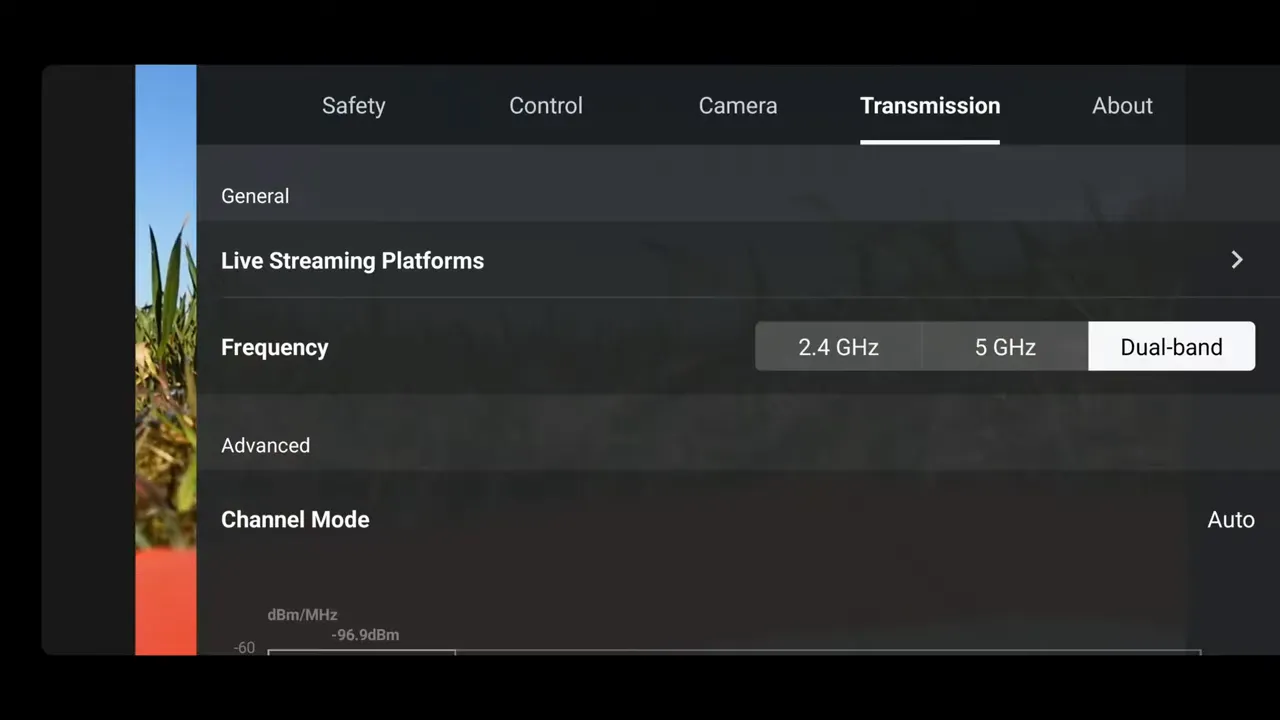
DJI O4 is the bigger story here. This is DJI’s newer dual-band wireless link, and it gives the DJI Lito 1 a much more current-feeling control and video system than older budget models. It works with both the DJI RC2 and the DJI RC-N3. The kit in question uses the RC-N3, so you supply your own phone.
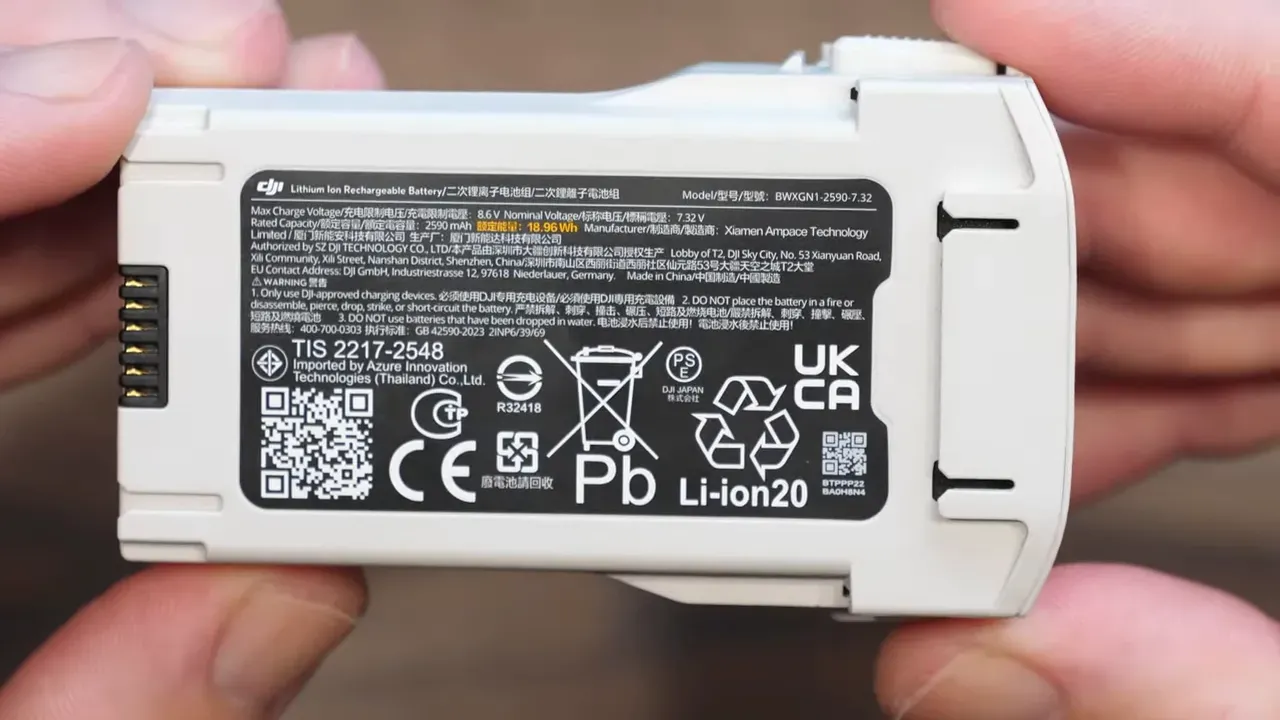
The battery in the DJI Lito 1 is a different pack from the X1 battery. Capacity is 2590mAh, or 18.96Wh. The reviewer notes the packs are physically interchangeable, although cross-use support was not active at the time of testing.
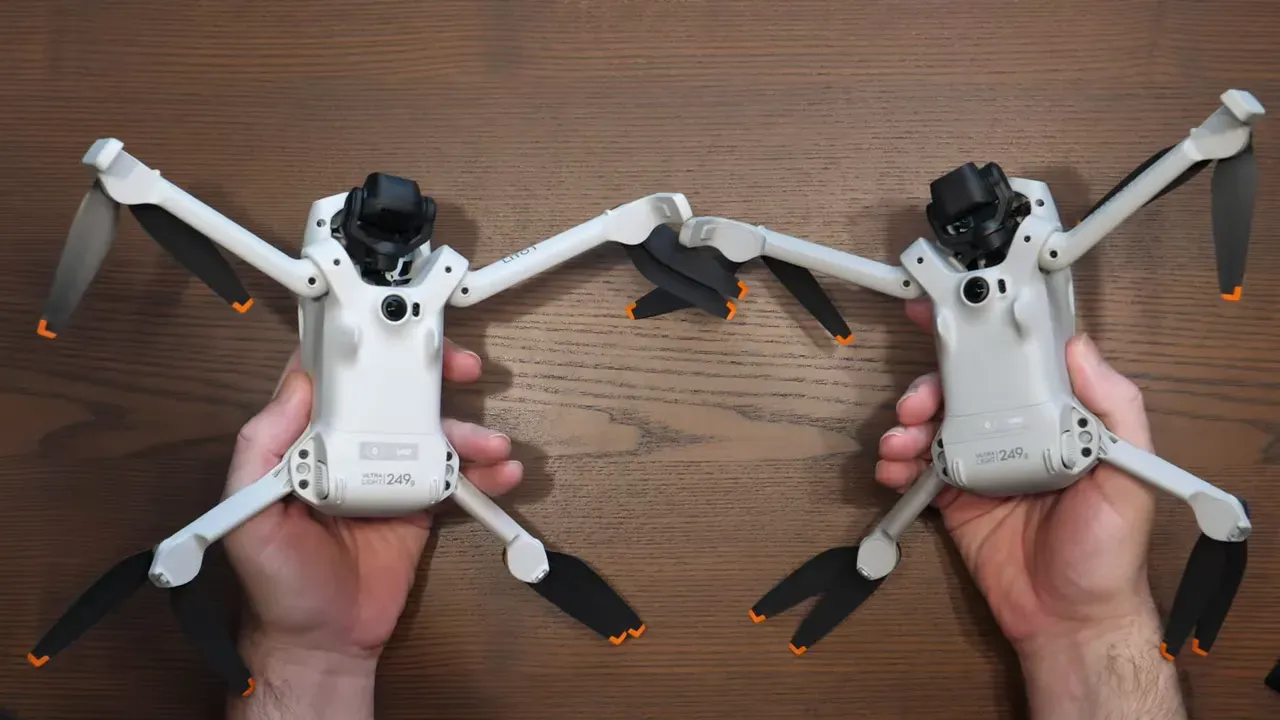
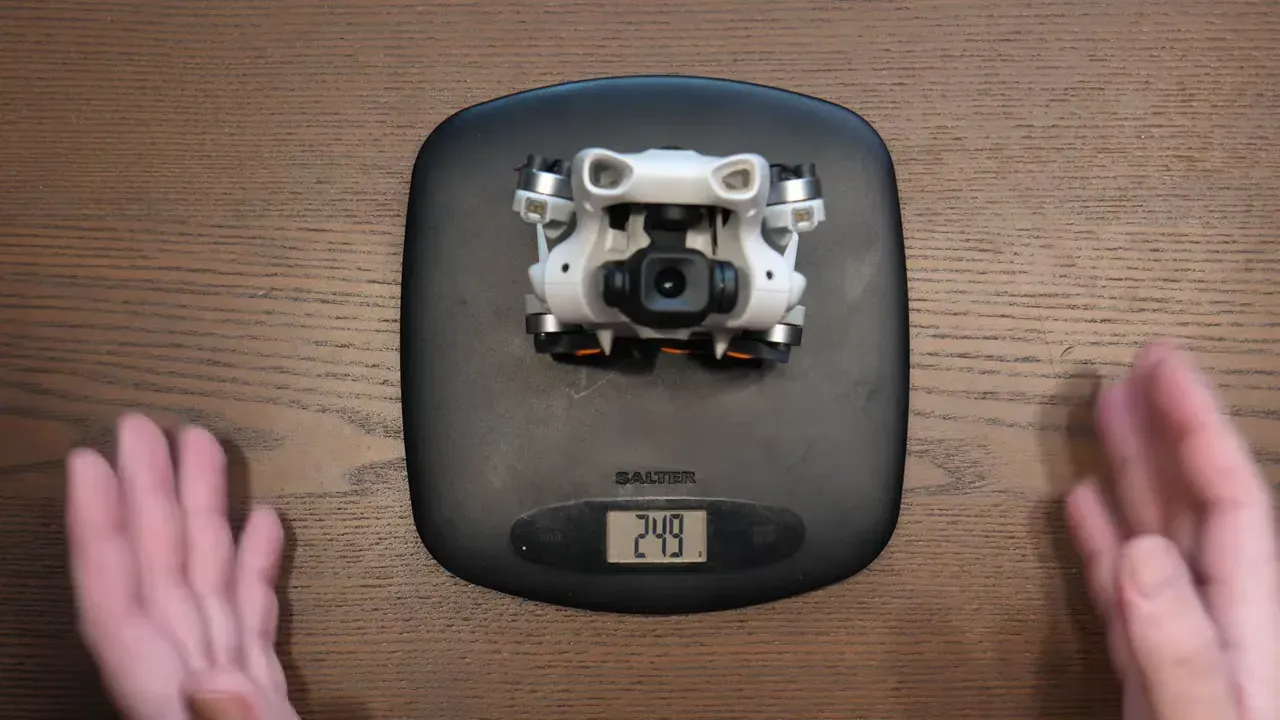
On the scales, the drone body alone comes in at 169.51g, and the battery at 78.63g. Rounded, that gives the DJI Lito 1 a take-off weight of 249g. That number is not accidental.
What flight modes does DJI Lito 1 support?
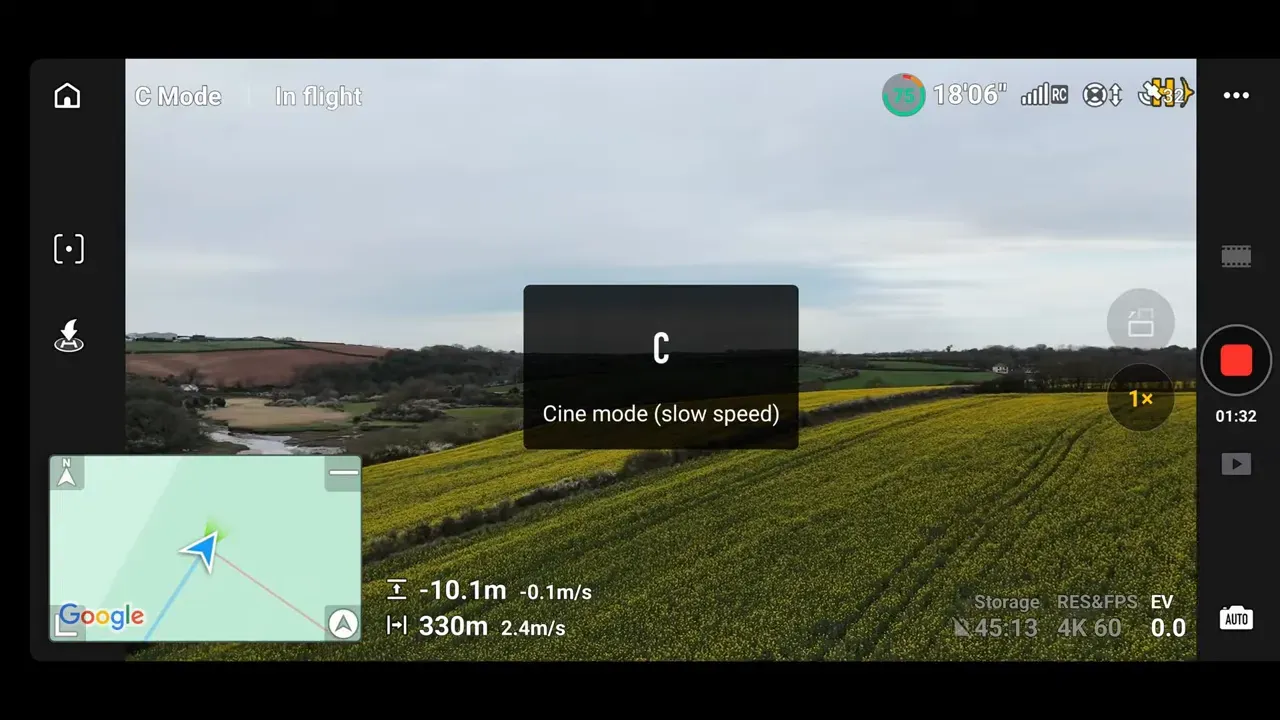
The DJI Lito 1 supports normal camera flying, Cine mode, Sport mode and a full set of DJI smart features. So yes, this is the sensible drone that still wants to show off at parties.
Cine mode slows response down for smoother, more precise movement. That is useful for gentle tracking shots, indoor work, or low-altitude passes where you want footage that looks deliberate rather than mildly panicked.
Sport mode does the opposite. It gives the DJI Lito 1 more pace and a quicker response, which is useful in stronger wind or whenever normal mode feels too restrained.
The camera modes include standard video, photo and slow motion. You also get the software vertical mode for portrait-oriented clips. Frame rate options go up to 4K 60fps in regular video and 4K 100fps in slow motion. In 1080p, this model tops out at 100fps, while the X1 can go to 200fps.
How smart are the DJI Lito 1 tracking features?
The DJI Lito 1 is surprisingly smart for a lower-cost drone. It supports ActiveTrack 360, Spotlight, QuickShots, MasterShots, Hyperlapse and panoramic imaging.
QuickShots include the usual DJI set: Dronie, Rocket, Circle and Spiral. These are pre-programmed moves that let the drone create polished footage without requiring you to manually choreograph every stick input like some sort of airborne concert pianist.
Spotlight keeps the selected subject framed while you manually fly the drone. ActiveTrack with FocusTrack goes further, keeping the subject centred while the drone follows and navigates around obstacles using the omnidirectional sensing system.
You can also choose the tracking perspective, such as front, rear or side. For new pilots, that is one of the strongest arguments for the DJI Lito 1. It offers DJI’s more advanced automated shooting features without stepping up to the premium model.
What is the DJI Lito 1 like to fly?
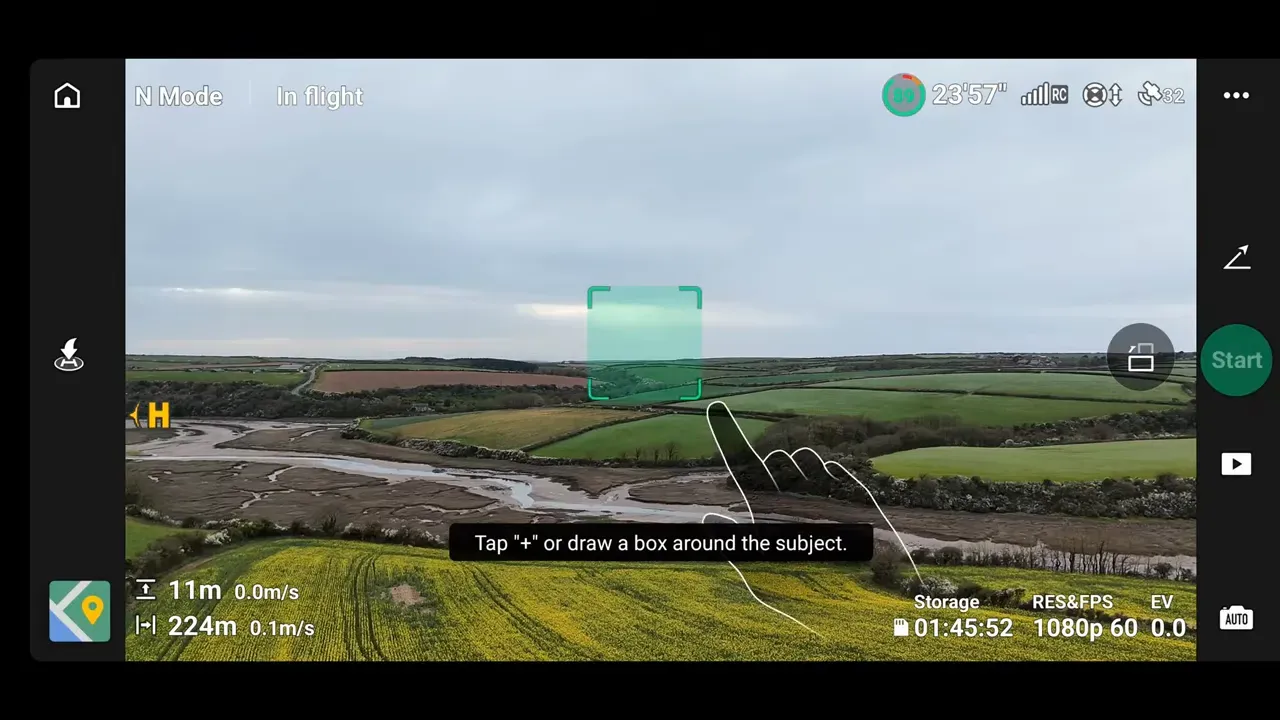
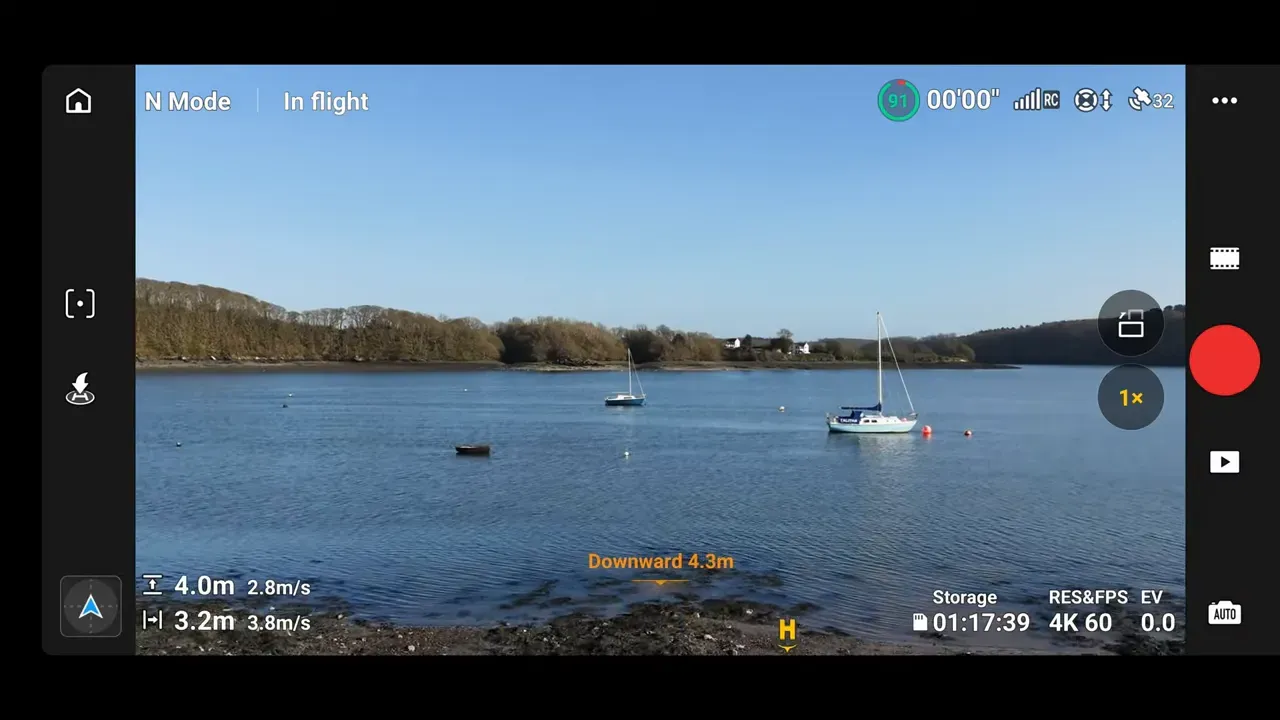
The DJI Lito 1 looks straightforward and easy to fly, especially for someone starting out. The flying experience shown with the DJI RC-N3 is familiar DJI territory, with the standard Fly app controls and settings.
Recording settings, frame rates and flight modes are all where you would expect them. The drone behaves predictably in normal flight, offers stable gimbal footage and provides clear obstacle warnings when moving through tight spaces.
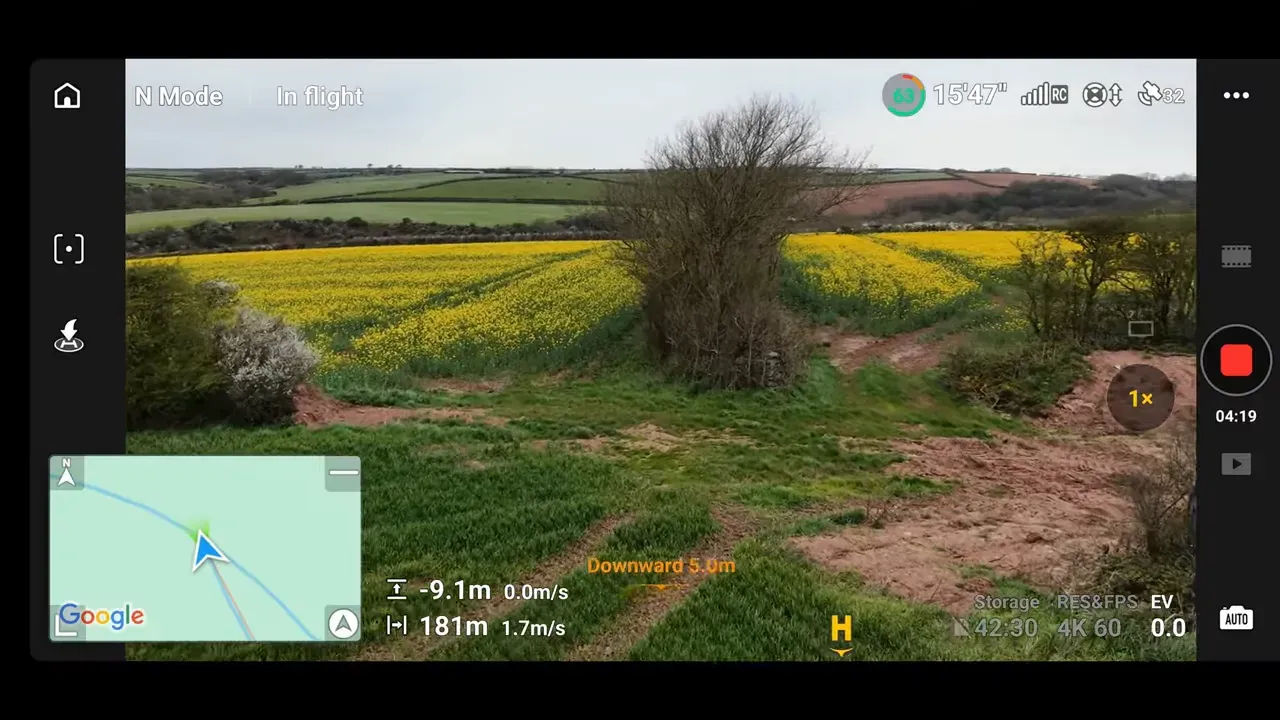
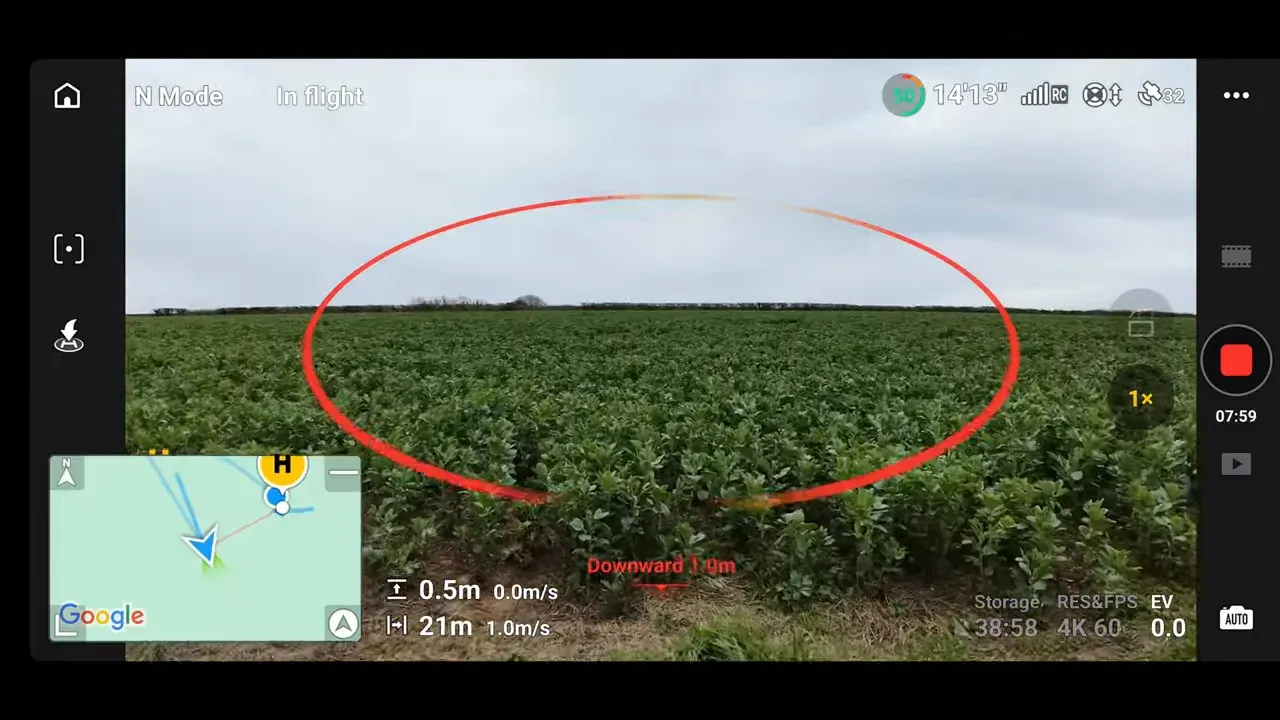
One useful example shown is flying through a gate and close to bushes. The DJI Lito 1 detects surrounding obstacles, displays them on-screen and refuses to move closer once it decides that enough is enough. It also blocks reverse movement into obstacles behind it.
Advanced Return to Home is included too. The drone plots a route back to the home point while trying to avoid obstacles on the way. Again, for a beginner-focused sub-250g drone, that is the sort of feature that saves money and embarrassment.
What’s the difference between DJI Lito 1 vs Lito X1?
The main difference is that the Lito X1 gives you better imaging and better low-light capability. The DJI Lito 1 keeps most of the core experience, but leaves out the premium extras.
Both drones record up to 4K 60fps, both can shoot 4K 100fps slow motion, both use DJI O4, both offer around 20 to 30 minutes of flight time and both have omnidirectional object sensing. That is why the DJI Lito 1 is interesting. It keeps a surprising amount of the expensive stuff.
Where the X1 pulls ahead is with its larger sensor, variable focus lens, front-facing LiDAR sensor, slightly larger battery and waypoint support. The DJI Lito 1 also misses out on HDR and D-Log M.
If you intend to fly at night, the answer is easy. Buy the X1. If you mostly want a compact daytime drone with solid video and the same broad DJI feel for less money, the DJI Lito 1 is the simpler choice.
Is DJI Lito 1 worth buying?
Yes, the DJI Lito 1 looks like a very strong first drone. It hits the right balance of price, portability, safety features and camera performance.
The reviewer’s overall take is unusually clear. There is very little to criticise at this price. It is a sub-250g drone with DJI O4, a capable 4K camera, omnidirectional sensing and a generous set of smart shooting modes. That combination is hard to ignore for £339.
It is not sold as a groundbreaking machine, and that is fine. The DJI Lito 1 is an evolutionary product. It updates the cheaper end of DJI’s mini drone range with newer cameras, newer wireless tech and a more modern sensing system.
If you are buying your first drone and do not care about night flying, ND filter friendliness, manual focus or the premium imaging modes of the X1, the DJI Lito 1 is likely the sensible buy. Which is less exciting than buying the expensive one, but considerably better for rent.
Internal link idea: DJI Lito X1 review and comparison
Internal link idea: Best beginner drones under 250g
Internal link idea: DJI O4 explained
FAQ
Can DJI Lito 1 fly at night?
It can fly at night, but its obstacle sensing does not work in the dark. The DJI Lito 1 lacks the LiDAR sensor found on the X1, so if night flying matters, the X1 is the better fit.
Does DJI Lito 1 shoot vertical video?
Yes, but it uses a crop-based vertical mode rather than a rotating gimbal. The DJI Lito 1 crops the sides and uses the sensor area to create a portrait-friendly frame.

Does DJI Lito 1 support waypoints?
Not at the time covered here. The reviewer states the Lito X1 supports waypoints, while the DJI Lito 1 does not at that point, though it still includes DJI’s other smart shot modes.
Can DJI Lito 1 use ND filters?
Not stated clearly as supported. The camera body does not appear to have a dedicated ND filter fitting like the X1, so filter use looks less straightforward on the DJI Lito 1.
What controller works with DJI Lito 1?
The DJI Lito 1 works with the DJI RC2 and the DJI RC-N3. The bundle discussed here includes the RC-N3, which requires your own smartphone or tablet.
How long does DJI Lito 1 battery last?
Real-world battery life is around 20 to 30 minutes. Actual endurance depends on conditions, flight mode and how hard the drone is being pushed.
Is DJI Lito 1 good for beginners?
Yes, that is exactly where it fits best. The DJI Lito 1 combines low weight, obstacle sensing, DJI O4, automated shots and a reasonable price, which makes it a strong first-drone option.
Key specs and claims mentioned
- Price for the two-battery combo with DJI RC-N3: £339 in the UK
- Sub-250g take-off weight, 249g total
- Drone body weight: 169.51g
- Battery weight: 78.63g
- Battery capacity: 2590mAh
- Battery energy: 18.96Wh
- Camera sensor size: 1/2-inch
- Fixed-focus lens
- Three-axis gimbal, horizontal orientation only
- Video up to 4K 60fps in normal mode
- Slow motion up to 4K 100fps
- 1080p up to 100fps on the Lito 1
- Digital zoom: 1x, 2x and 3x
- DJI O4 transmission system
- 1080p live feed
- Claimed range up to 15km
- Real-world flight time estimated at 20 to 30 minutes
- Omnidirectional object sensing via top and bottom wide-angle cameras
- No LiDAR sensor on the DJI Lito 1
- No HDR, D-Log M or waypoint support mentioned for this model
- Supports ActiveTrack 360, Spotlight, MasterShots, Hyperlapse, QuickShots and panoramic imaging
- Advanced Return to Home included
This article was based from the video DJI Lito 1 4K Mini Drone - Budget Price & Premium Features!