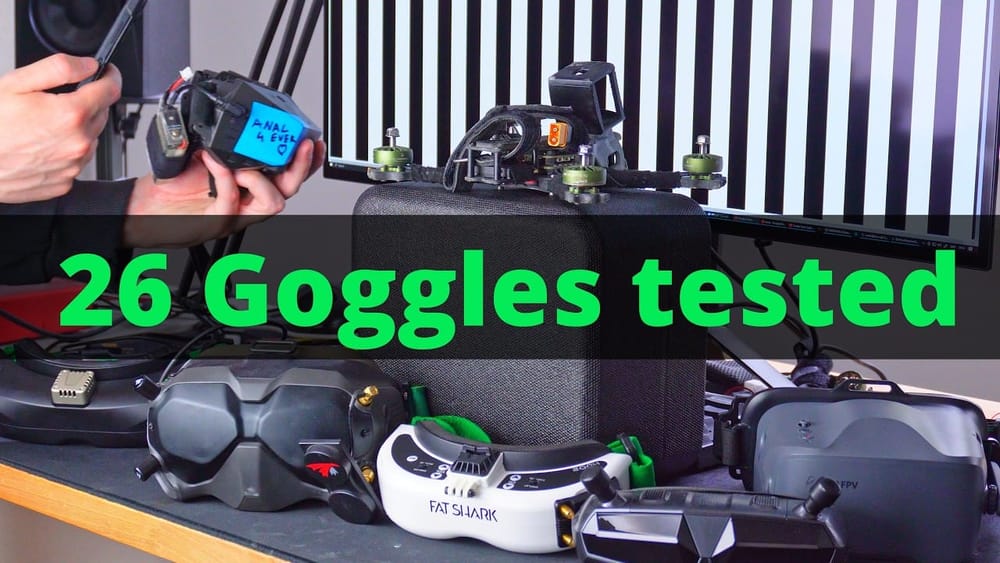
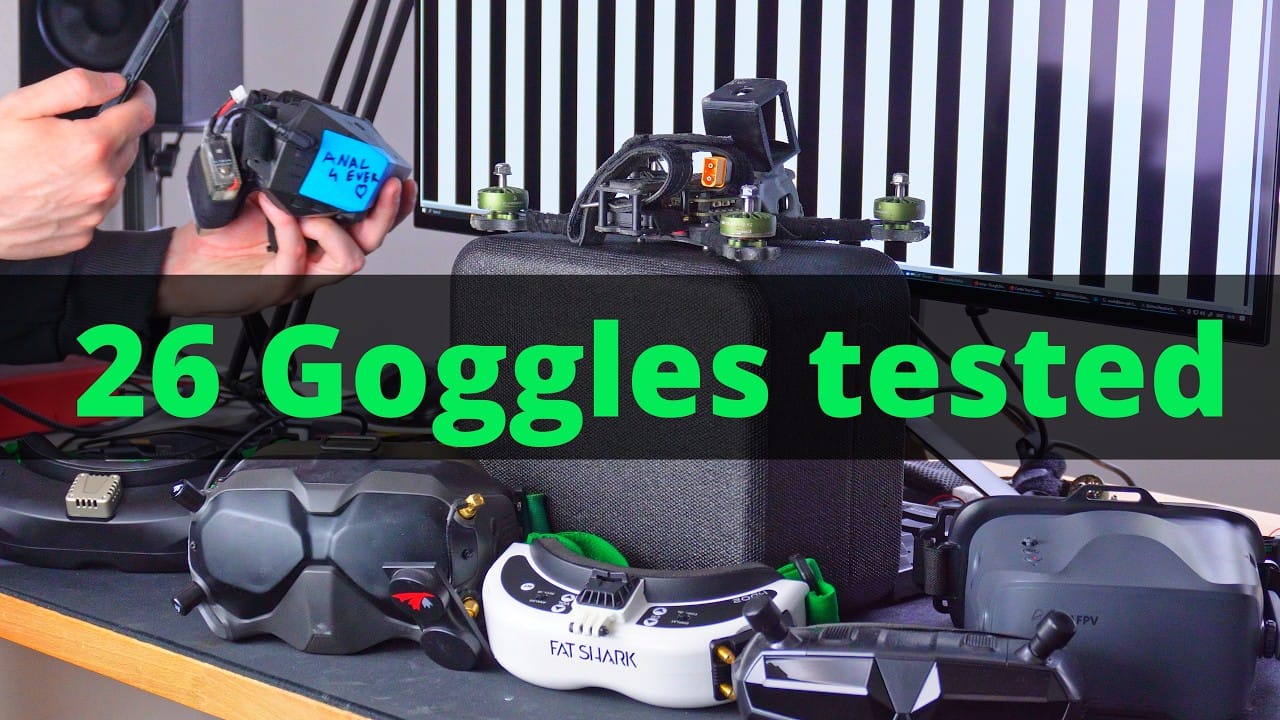
Someone made a SkyZone review, then ran an FpV latency test rabbit hole on most analog and digital goggles. The results are… not the upgrade story you want to hear, and this post shows the numbers plus the method to verify them at home.
TLDR: What you actually need to know
- Latency is measured two ways, first pixel latency vs full frame, but this report uses half frame latency as a single comparison number.
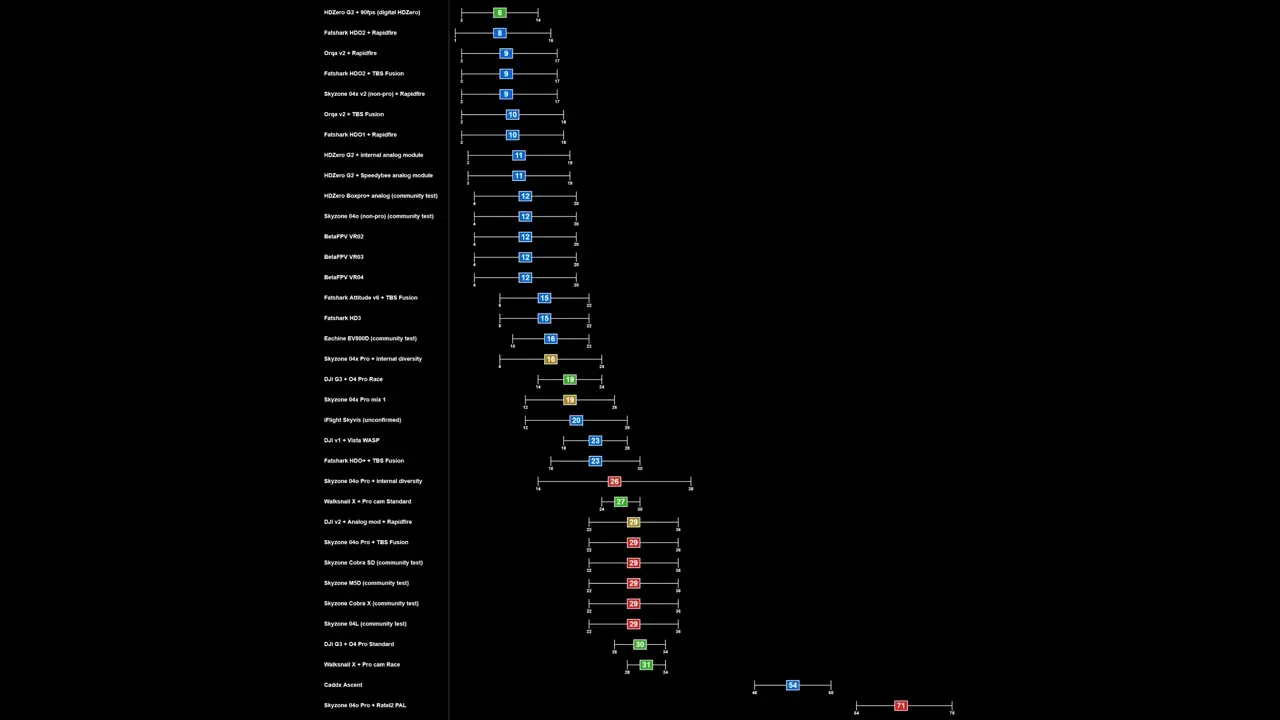
- Best performers for racing: HD0 goggles on the 90 FPS HD0 system clock in as the top latency result, and it also looks better than the closest tie.
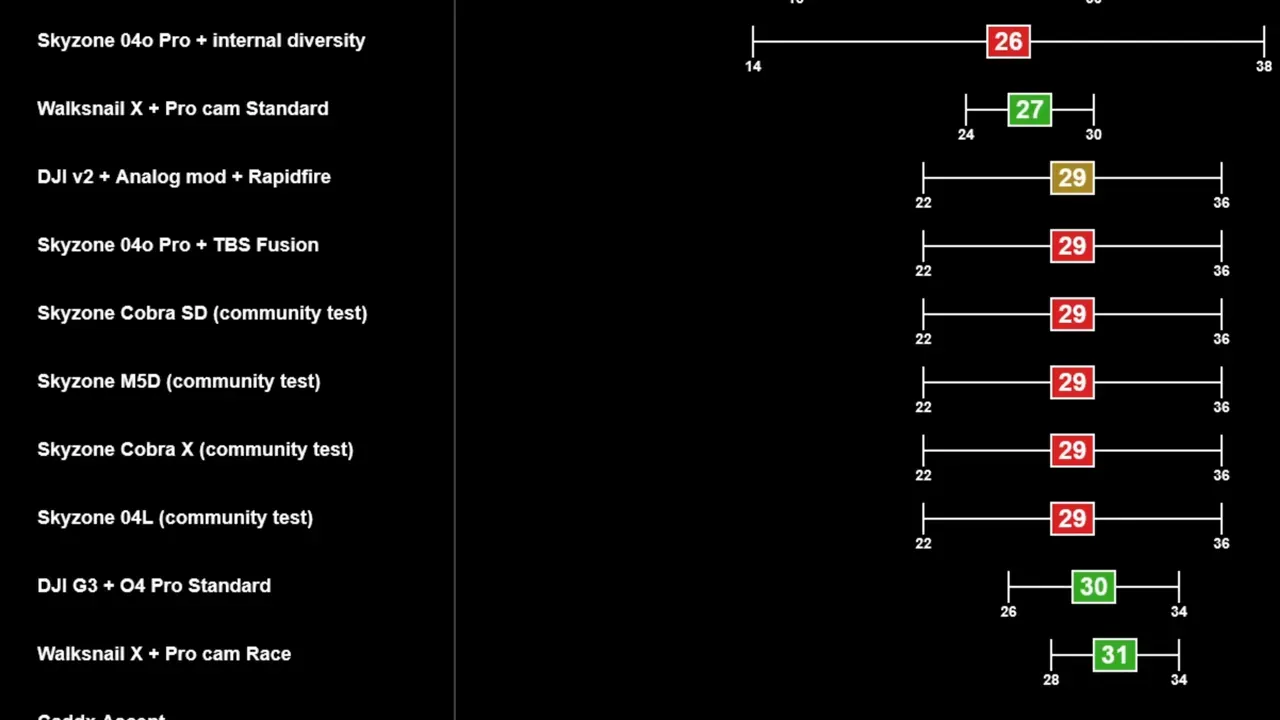
- Analog is not automatically better: some newer analog goggles land around 16 to 30 ms, and one premium unit hits 16 ms in diversity mode with a warning to avoid.
- Digital example: DJI Goggles 3 with O4 Pro Air in race mode tested at about 19 ms, with the tradeoff that image clarity can outweigh a few milliseconds.
- Camera latency can wreck everything: the popular Ratel 2 camera adds about 40 ms at default settings (and PAL can be much worse in some combinations).
- Best for: racing and freestyle pilots who care about how fast you can dodge a wall, without guessing which piece adds lag.
- Avoid if: you buy goggles or cameras without checking both goggle latency and camera latency, because setups can land at 71 ms (described as unsafe).
What happens when you test FpV latency the hard way?
You get results that make “newer is better” look like a marketing slogan with trust issues. The tests covered most analog goggles and most digital goggles, and the conclusion was blunt, newer analog models can be worse than their previous versions, and worse than the original DJI V1 system from about seven years ago.
There is also a clear acknowledgement of sourcing bias, not every unit was personally owned, and results relied on people lending goggles, running home tests, and contributing data.
So what? If you care about FpV latency, you cannot just shop by generation, you need the specific latency number for the specific goggle plus video chain.
How do you measure FpV latency without fooling yourself?
You stop arguing about first pixel vs full frame and you pick a single number that matches how you actually fly. Traditional reporting uses first pixel latency, the earliest moment you can see a row of pixels, and full frame latency, when the entire image appears.
The test report uses half frame latency, described as the time until you can see about half the image. That is framed as practical for dodging, since you probably do not need the full image to react, it also keeps comparisons simple.
So what? Half frame latency is a more “do I care in a flight” metric, not just an academic one.
Which goggles were best for lowest FpV latency?
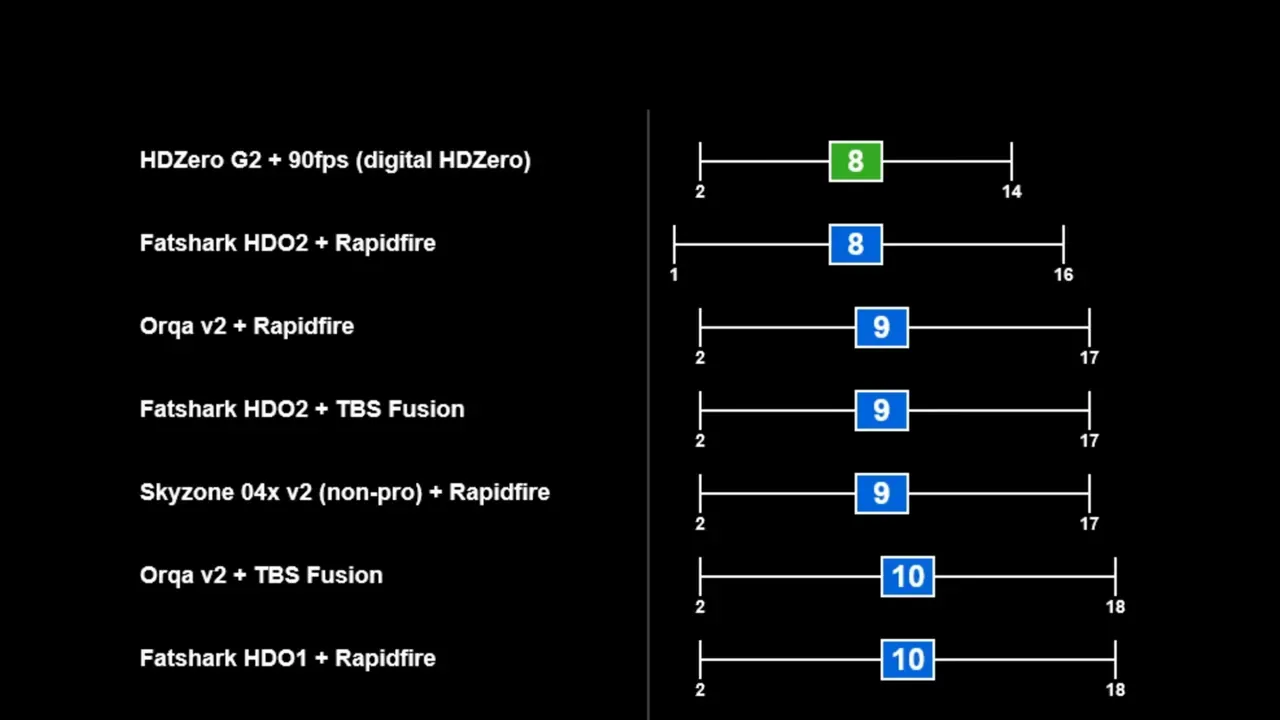
The lowest latency tested system was HD0 goggles running the 90 FPS HD0 system. The report describes a tie on the numbers between HD0 goggles and Fetchak HDO2, but it is “not really a tie” because HD0 looks much better and runs 50 percent more FPS.
For rank three, Orca goggles and the older SkyZone 04X V2 were tied, with a warning that the newer SkyZone 04X Pro is the opposite of that story. The report attributes the similar performance to them using the same Sony screen, and it notes a rapid fire module can slightly outperform a TBS Fusion, roughly half a millisecond, enough to change rounding.
So what? If you are picking for racing feel, you chase the HD0 90 FPS setup first, then you verify the whole chain.
Is the newest analog goggle always faster than older ones?
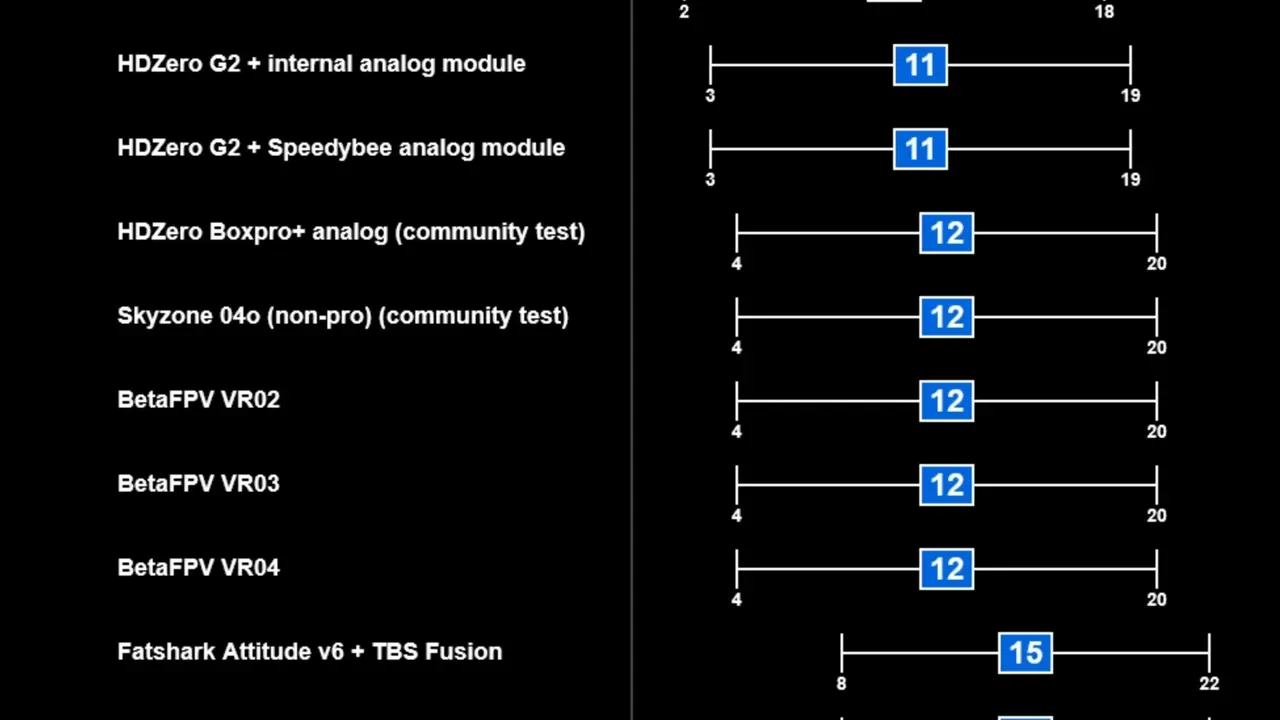
No, the newest analog goggles can be worse, sometimes even worse than the old DJI V1 system. The report directly calls out that “most of the new generation analog goggles” were not only worse than prior versions, but also worse than DJI V1 from around seven years ago.
It also flags a premium “avoid buying” case, the SkyZone 04X Pro in diversity mode at about 16 ms. Meanwhile, it discusses other analog options around 11 ms, but says it is unfair to call them the “best analog” if you only care about analog, as those results are tied to HD0 digital system usage.
So what? Treat analog as a video pipeline you must measure, not a promise.
What about digital FpV latency, can you still race?
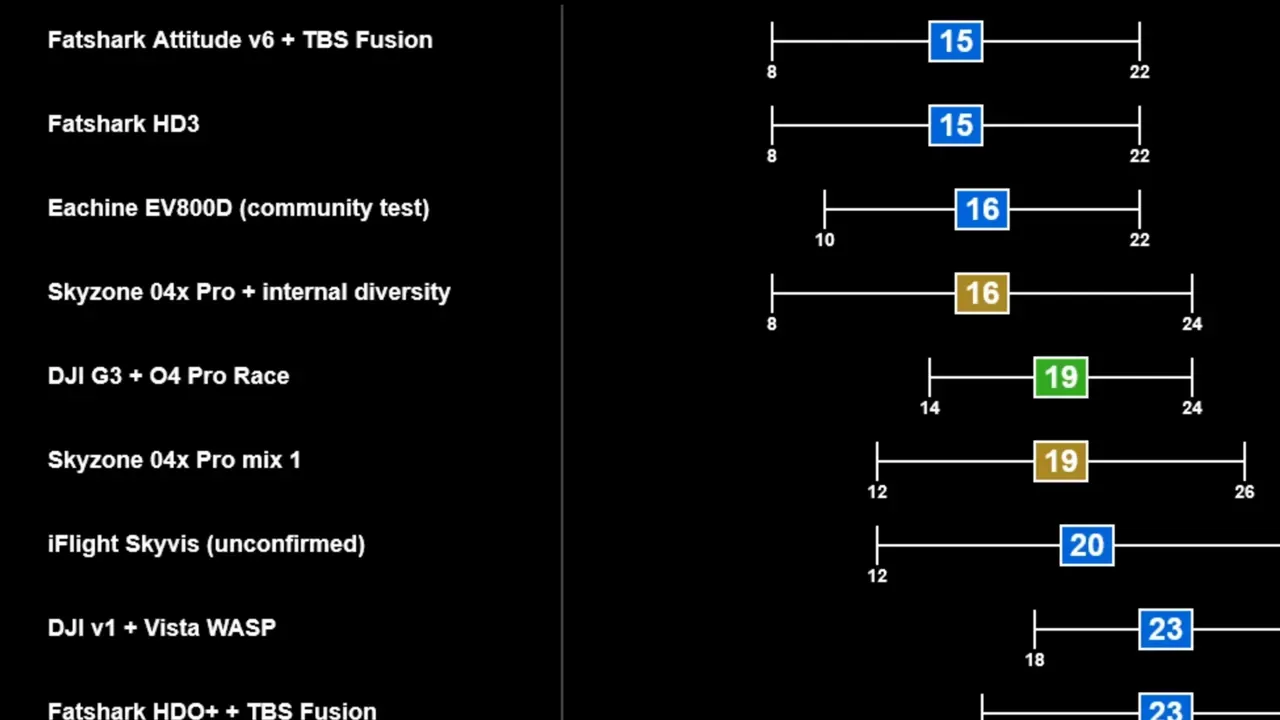
Yes, some digital setups test competitively, and clarity can matter more than a few milliseconds. The report lists DJI Goggles 3 with O4 Pro Air unit in race mode at about 19 ms, and it emphasises “crystal clear image” that helps you see where you are going.
It also includes a less confident entry for iFlight SkyWars at about 20 ms, noting only one community test and different testing methods. The recommendation stays conservative: stay away from anything unproven if you are optimizing feel.
So what? Digital is not automatically slower than analog, but you should still compare the tested mode, especially “race” vs “standard”.
Which goggle modes make a big difference, race vs standard?
Race mode can significantly change latency, sometimes in ways that surprise people. The report says DJI Goggle 3 with O4 Pro in standard mode hits about 30 ms, but switching to race mode is a “pretty big difference”.
It also reports an oddity where one Waxnell Goggle X in race mode is slightly worse than standard mode, and it was rerun three times because the result “does not really make sense.”
So what? Mode switching is part of the measurement, do not assume “race” only improves things.
How much camera latency can ruin your FpV latency numbers?
A lot, analog camera latency can add one or two frames on top of goggle latency, and that can dominate your total delay. The report says it used to be common knowledge, but it is “kind of been lost to time,” and many pilots fly with added latency without knowing it.
The most recommended camera, Ratel 2, is described as adding about 40 ms of latency at default settings. It explains analog cameras tend to either add latency or not, with added latency typically being about 18 to 20 ms for one frame or about 40 ms for two frames, sometimes only in one mode.
So what? You need to measure or at least verify camera mode latency, not just goggle specs.
How to test your own setup at home for FpV latency?
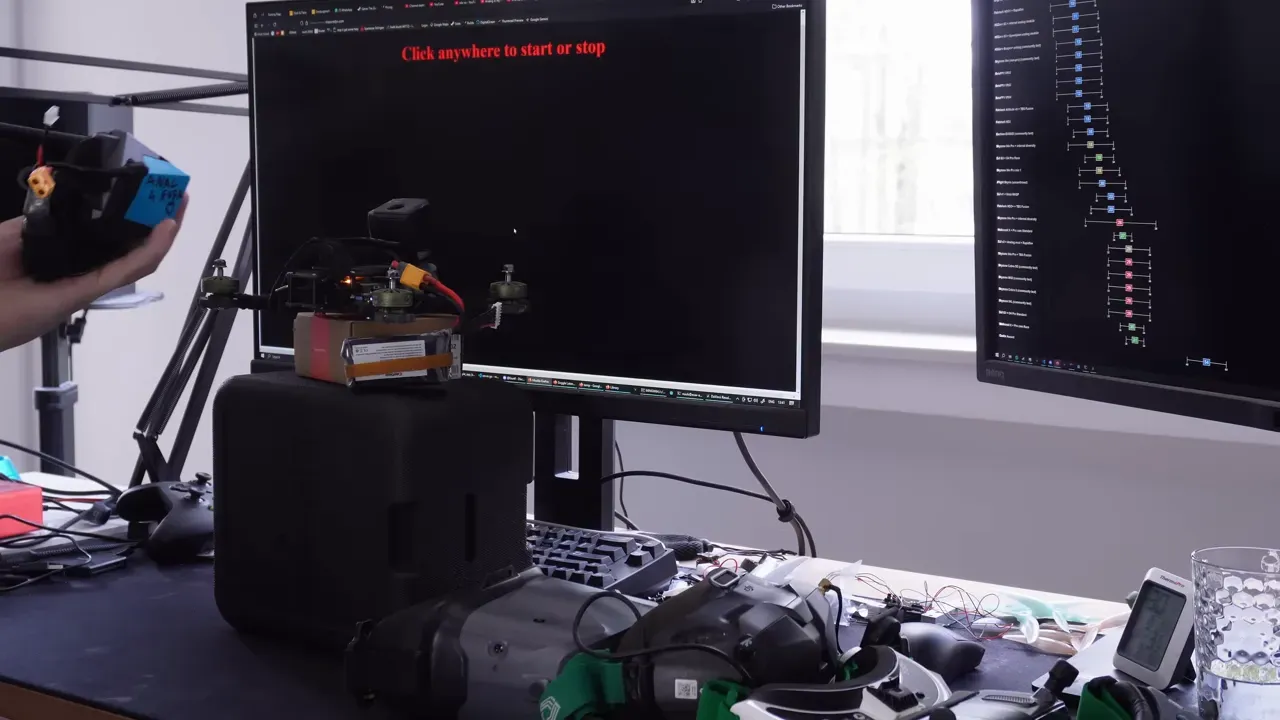
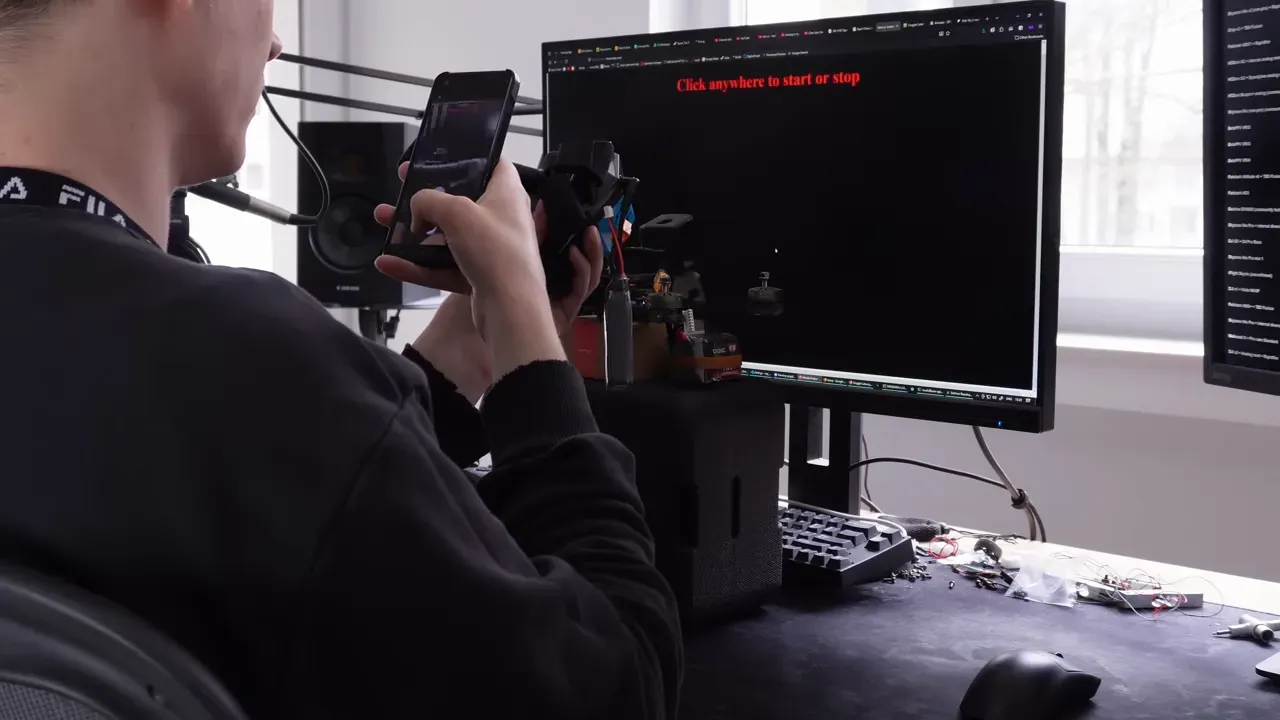
You use a simple home method that compares when a cursor moves on a monitor vs when it appears on the goggle. The report points to a latency tester tool URL, then you place your quad in front of the tester on your monitor. You position a mouse cursor so it is visible on both the monitor and in the middle of the goggle view.
Then you record both the monitor and the goggle screen at the same time using a slow motion camera. The anchor point is the cursor, you count how many frames it takes for the cursor movement to appear on the goggle, enter that into an Excel sheet, and repeat.
So what? If your numbers do not match, the first thing to check is whether your slow motion recording actually matches the advertised FPS.
Which cameras have added latency, and which are safer?
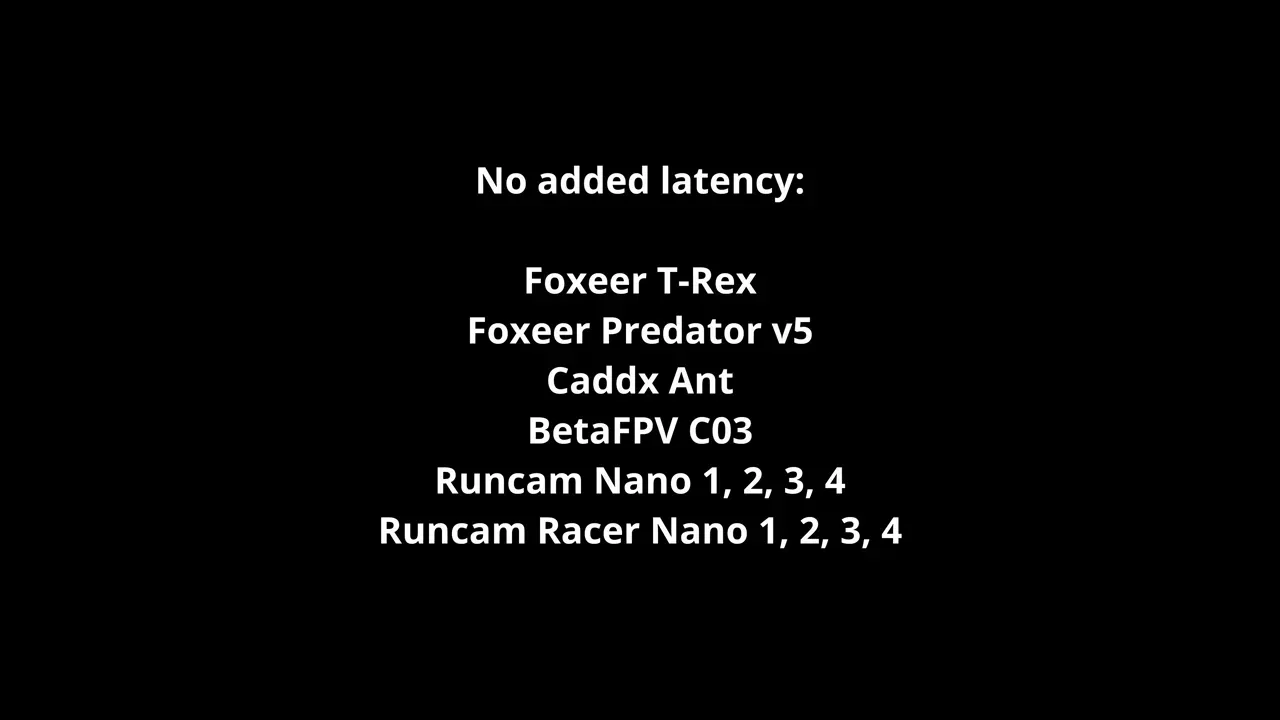
Some cameras are known to be safer, while others are known to add latency and should be avoided for racing and freestyle. The report says analog camera latency is straightforward, cameras either add it or they do not, and it provides a list of “safe cameras” and a list of “cameras where I know that they do have latency.”
However, the transcript does not include the actual camera names inside the “safe” and “avoid” lists. It does include one concrete warning example, Ratel 2 at default settings adding about 40 ms, and it also references a Kadex Ratel 2 PAL default as causing extremely high latency in at least one tested chain.
So what? The exact safe and unsafe camera models matter, so verify the camera list from the full source rather than trusting default assumptions.
FAQ
What is FpV latency measured in for goggles?
This method compares time in milliseconds using a single metric called half frame latency. It is chosen instead of first pixel or full frame because it is easier to compare and matches how pilots react during maneuvers.
First pixel is when you see the earliest row of pixels, and full frame is when the entire image appears.
Is 10 to 20 ms latency fast or slow?
The report treats around 11 to 19 ms as very good performance, especially for racing. It flags 16 ms in a premium diversity mode as an “avoid” case, and it calls 23 to 30 ms “behind” the leaders.
At 54 ms and 71 ms it becomes described as genuinely uncomfortable or unsafe.
Does race mode always reduce FpV latency?
No. The report says race mode is usually a big difference, but it also reports a case where race mode is slightly worse than standard mode, and it was rerun three times.
So mode selection is part of the experiment, not a guarantee.
How can camera latency add 40 ms?
Analog cameras can add latency in whole frame chunks. The report estimates one added frame at about 18 to 20 ms, and two added frames at about 40 ms, sometimes only in one specific mode.
Ratel 2 default settings are called out as about 40 ms.
My numbers do not match, what should I check?
First check that your slow motion camera is actually recording at the advertised speed. The report suggests verifying by counting frames for one cycle of the tester website, where a full cycle should take exactly 250 ms.
If your FPS is wrong, your derived latency will be wrong.
Which chain matters more, goggles or cameras?
Both matter, and the report argues camera latency can be the silent killer. Even if your goggle is fast, a camera that adds one or two frames can dominate the total delay.
So you should validate both the goggle latency and the camera mode latency together.
Is this FpV latency testing method hard to run?
It is described as designed to be easy to run at home. You use a tester website, point your quad at it, place a cursor visible on both monitor and goggle view, and record both with a slow motion camera.
The only annoying part is doing frame counting carefully.
Key specs and claims mentioned
- Latency metric used for comparisons is half frame latency.
- “Very smooth” colour coding maps to 100 FPS digital systems, and “smooth” maps to 60 FPS analog.
- HD0 goggles with 90 FPS HD0 system described as best tested latency performer.
- HD0 goggles and Fetchak HDO2 described as a tie on numbers, but HD0 looks better and has 50 percent more FPS.
- Orca goggles and SkyZone 04X V2 described as tied around rank three, both using a Sony screen.
- DJI Goggles 3 with O4 Pro Air in race mode described at about 19 ms.
- DJI V1 with Vista and WASP described at about 23 ms.
- DJI V2 analog mode and similar models described around 29 to 30 ms.
- DJI Goggles 3 with O4 Pro in standard mode described at about 30 ms.
- Ratel 2 camera described as adding about 40 ms at default settings.
- Analog camera latency estimates: 18 to 20 ms (one frame) or about 40 ms (two frames).
- Home test validation cycle: one website cycle should be 250 ms.
This article was based from the video FPV Goggle latency test