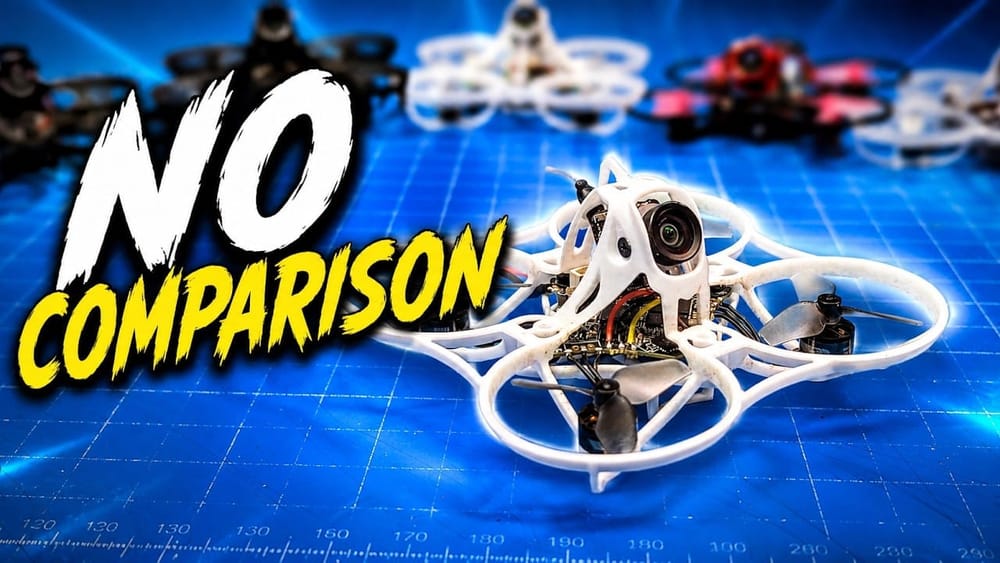
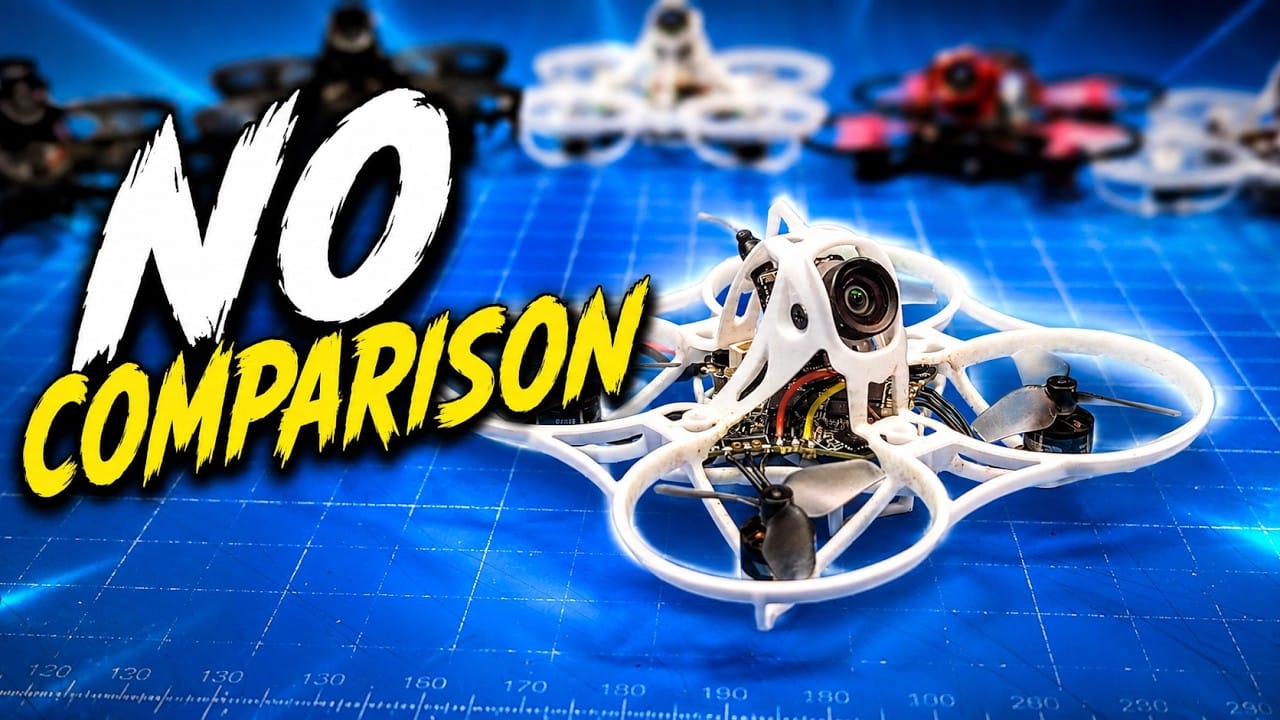
The Emax Tinyhawk Aero is a 65mm 1S whoop that appears to fly far above its weight class, then immediately asks whether you fancy buying into another battery connector. It delivers sharp handling, a capable 400mW VTX and a notably light frame, but it also brings some small-print misery.
TLDR: What you actually need to know
- The Tinyhawk Aero weighs 16.31g without a battery and uses 0702 27,000KV motors with 31mm HQ tri-blade props.
- Its G473 flight controller combines a 6A 4-in-1 ESC, built-in ExpressLRS and a VTX rated up to 400mW.
- At 25mW VTX power, recorded flights reached roughly 2 minutes 36 to 38 seconds on a small 1S pack.
- At 400mW, battery voltage fell to around 4V before arming and flight time dropped to around 1 minute 52 seconds.
- Best for: Pilots wanting an exceptionally responsive indoor whoop or a 25mW race-capable machine.
- Avoid if: You need BT2.0 battery compatibility without soldering, adapters, or a second battery ecosystem.
What makes the Emax Tinyhawk Aero fly so well?
The Tinyhawk Aero’s headline act is its handling. The supplied flying report describes it as the best-performing whoop tested, including against specialist micro builds such as the NewBeeDrone Race Spec V2, GameHat Pickle Whoop, Air65 and Carbon Fury.
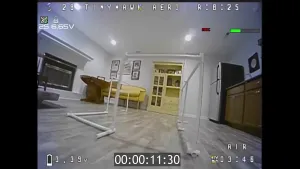
That is a bold claim for a white plastic 65mm whoop, a species not normally famous for restraint. Yet the Aero reportedly tracks cleanly indoors, stays composed outdoors, and remains easy to place when pushed through a home at pace.
The outdoor test took place in a reported 14mph wind. That is not a sensible weather forecast for a small 1S whoop, but the Aero still remained controllable enough to make repeated garden runs. The test does not provide a controlled comparison or wind-speed data from the quad itself, so treat this as a promising real-world observation rather than laboratory proof.
The adjustable camera angle also stayed put through crashes. That matters more than it sounds. A camera that moves after every impact turns a simple indoor session into a recurring exercise in staring at skirting boards.
What hardware does the Tinyhawk Aero use?
The Aero packs surprisingly serious electronics into a 65mm frame. It uses a G473 flight controller with integrated ExpressLRS, a 6A 4-in-1 ESC and a VTX rated from low power up to 400mW.
- Frame size: Approximately 65mm
- Dry weight: 16.31g on the reported scale
- Motors: 0702, 27,000KV
- Props: 31mm HQ tri-blade
- Receiver: Built-in ExpressLRS
- ESC: 6A 4-in-1
- VTX: Up to 400mW
- Battery connector: Emax EM2.0
The integrated ELRS receiver is sensible and saves a few grams, wires and opportunities to swear at a solder joint. For setup help beyond this model, our guide to common ExpressLRS errors and fixes covers binding, channel order and the usual ways a radio system can look simple right up until it does not.
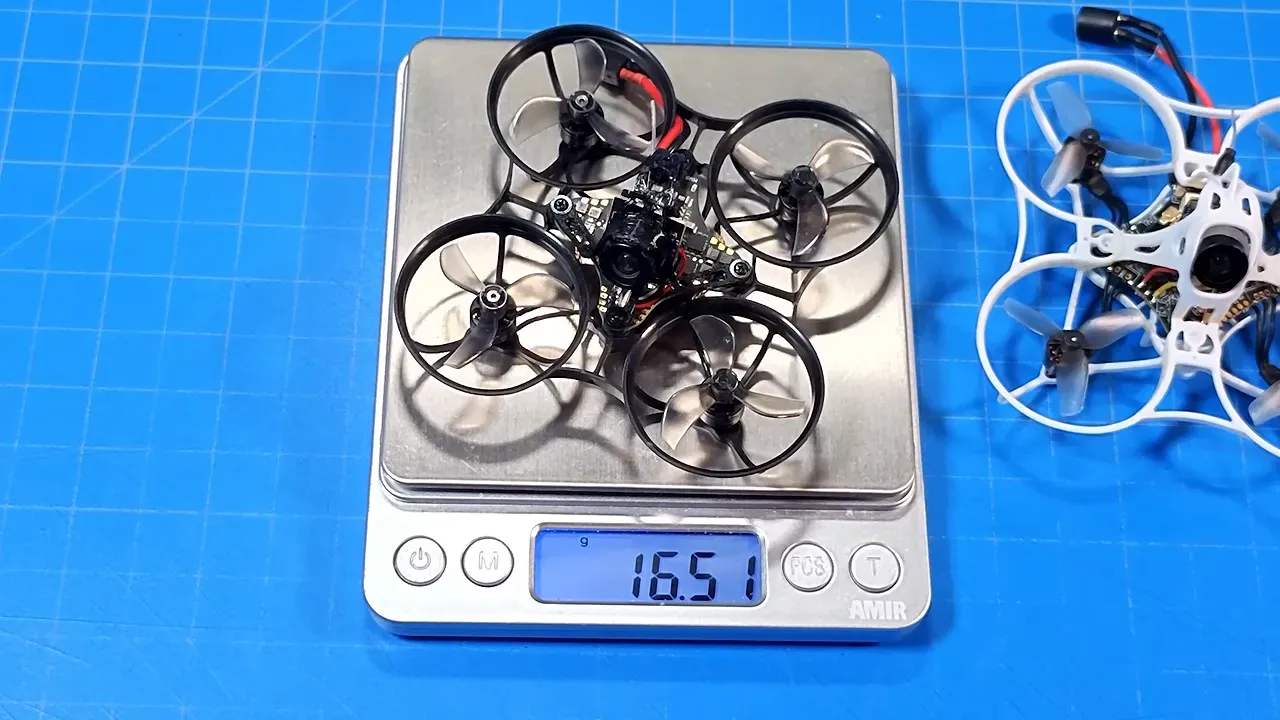
The quoted 16.31g weight places it close to several established performance whoops. In the same comparison, the Race Spec V2 weighed 16.51g, the Carbon Fury 16.12g, the Pickle Whoop 15.39g, and the Air65 Champion Edition 17.77g.
Does 400mW VTX power ruin Tinyhawk Aero flight time?
Yes, 400mW VTX power has a conspicuous effect on the Tinyhawk Aero’s flight time. The test found the voltage could fall to just over 4V within 30 seconds at 400mW, before the quad had even armed.
With the VTX at 25mW, a fairly active indoor run lasted 2 minutes 38 seconds, while an outdoor flight came in at 2 minutes 36 seconds. At 400mW, a gentler indoor flight landed at 1 minute 52 seconds. The pilot estimated a harder 400mW run could end closer to 1 minute 40 to 45 seconds.
That is not mysterious. A 1S 300mAh or 320mAh pack has finite energy, and a 400mW VTX is not powered by optimism. What stands out is how dramatic the sag appeared compared with other whoops in the same pilot’s experience.
Lower settings help. The test found 200mW improved matters, 100mW improved them further, and 25mW delivered the longest usable flights. For organised tiny whoop racing, 25mW may already be the permitted ceiling, so the compromise is less painful there.
For flying through a difficult RF environment, however, this is the decision point. If your building needs 400mW to maintain a usable image, expect short flights and steep pre-arm sag. If 25mW works in your usual space, the Aero makes a much stronger case.
How does the Tinyhawk Aero frame differ from normal whoops?
The Aero uses a two-piece frame where the canopy is moulded into the upper frame section. The flight controller mounts beneath it, secured upward into that top piece.
The ducts are notably shallow compared with several rival whoops. The frame also uses three duct struts where some alternatives use more. Less plastic can help with weight, but plastic has a longstanding habit of objecting when introduced to furniture at speed.
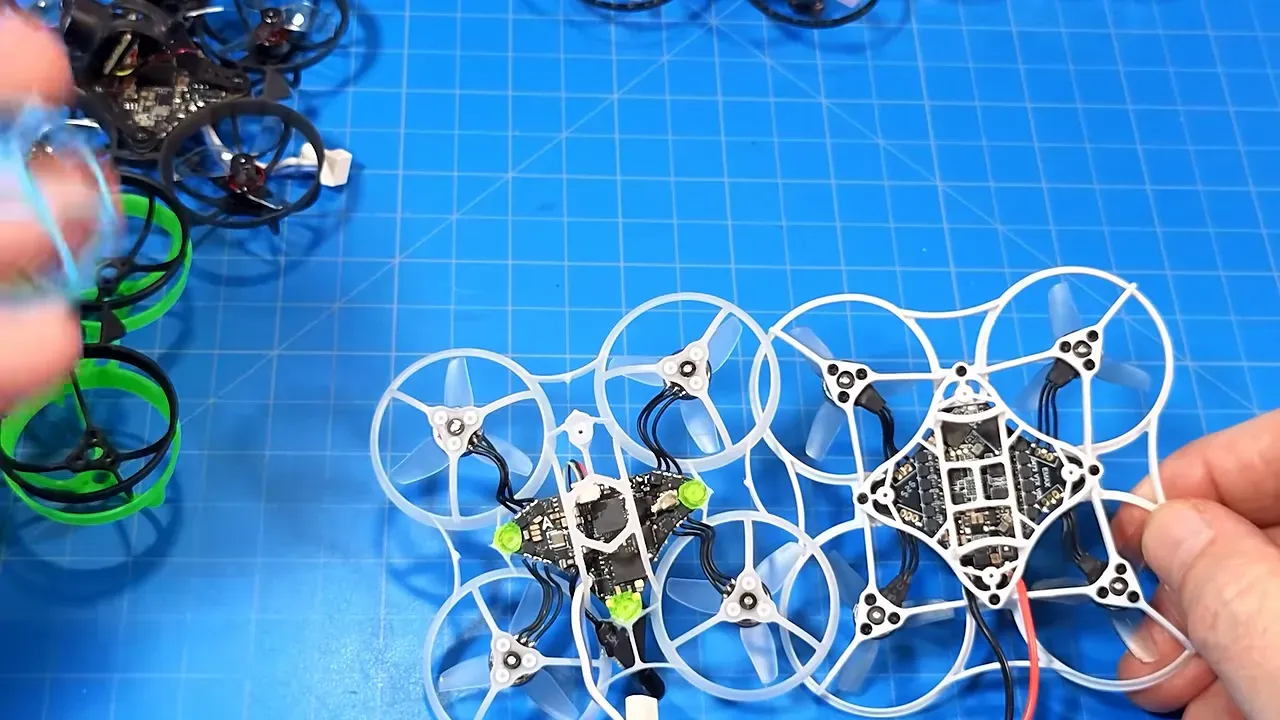
The built-in canopy is both tidy and limiting. It was reported as durable during the test period, and the camera angle remained stable after crashes. But if you normally fit a printed TPU canopy, reduce canopy weight, or keep a drawer devoted to unnecessary cosmetic alterations, the Aero makes that less straightforward.
A custom canopy may still be possible by cutting away the existing upper structure and using the mounting holes. That is a modification project, not a standard swap. The camera itself is retained by a screw and plastic mounting ring, though exact camera specifications were not supplied.
The supplied test included around 80 flights and hard speed-run crashes. The frame broke at the rear, and the battery holder also broke. Flight behaviour did not appear to suffer immediately, but the damaged battery retention allowed packs to shift or eject in later crashes. Glue can repair plastic, but it cannot improve the geometry of a battery hanging sideways after turtle mode.
Is the EM2.0 battery connector compatible with BT2.0?
No, Emax EM2.0 is not directly compatible with BT2.0, A30 or other common 1S battery connectors. It is the Aero’s most obvious ownership catch.
The test pilot made an adapter to use BT2.0 batteries for additional flights, since only five EM2.0 packs were available. Replacing the connector with your preferred system is also practical because the supplied lead has enough length to work with, although that means cutting and soldering on a new connector.
If you do convert it, do the job properly. Tiny whoop wiring may be microscopic, but it can still fail spectacularly when a joint bridges. Our guide on how to solder FPV drones covers the basics before the magic smoke gets involved.
Emax’s EM2.0 connector is described as open source and electrically capable of higher throughput. Whether that provides a meaningful advantage on a 1S 65mm whoop was not established in the supplied testing.
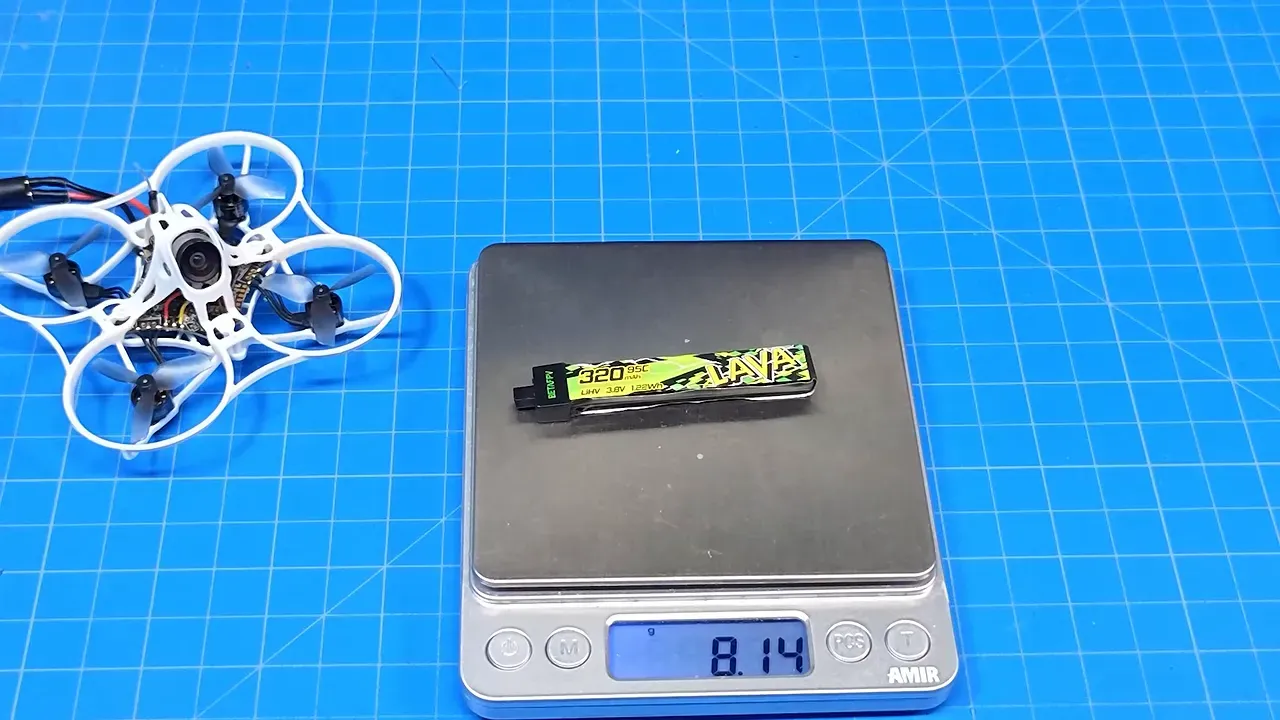
There is also a small weight penalty. The reported Emax EM2.0 320mAh pack weighed 8.85g, while a BetaFPV Lava II 320mAh pack weighed 8.14g. That is roughly 0.71g, not half a gram, and on a tiny whoop it is enough for racers to notice even if the rest of humanity has more pressing concerns.
How should you set up the Tinyhawk Aero safely?
Use a small fan whenever the Aero is powered on at the bench. The onboard VTX and flight controller have little airflow while stationary, especially at higher VTX power, and small electronics do not enjoy being baked for administrative purposes.
Keep these setup habits in place:
- Set the VTX to 25mW first, then increase power only if your flying environment requires it.
- Do not leave the quad powered on while stationary without airflow.
- Check the battery holder after hard impacts, particularly if packs begin sitting loose or sideways.
- Inspect the canopy-frame section and rear ducts after speed crashes.
- Choose an EM2.0 battery plan before buying several packs of an incompatible connector type.
The Aero also supports low-power disarm behaviour in Betaflight during setup. In the reported test, that helped prevent the VTX from immediately jumping to 400mW before arming. Menu names and defaults can vary by firmware version, so check the actual configuration before assuming it is set.
Is the Emax Tinyhawk Aero worth buying?
Yes, if flight feel matters more to you than battery ecosystem purity. The Tinyhawk Aero makes a persuasive case as a high-performance 65mm whoop, especially at 25mW where it offers useful flight time without the severe voltage penalty.
It is not the automatic pick for every pilot. High VTX power sharply reduces endurance, the EM2.0 connector locks you into Emax packs unless you modify it, and the integrated canopy restricts easy customisation. The frame survived plenty of abuse, but two plastic breakages appeared during aggressive speed-run crashes.
For indoor freestyle, casual house laps, and race-style use at 25mW, the balance looks very good. For long-range video penetration, a BT2.0-only battery collection, or frequent canopy experiments, it asks for compromise before it offers its impressive handling.
FAQ
What battery does the Emax Tinyhawk Aero use?
The Tinyhawk Aero uses Emax’s EM2.0 1S battery connector. It is not plug-compatible with BT2.0, A30 or PH-style batteries, so plan on buying EM2.0 packs, using an adapter, or fitting a different connector.
Can the Tinyhawk Aero run at 400mW?
Yes, its VTX is rated up to 400mW. The supplied testing found that this setting caused substantial voltage sag before arming and significantly shorter flights than 25mW operation.
How long does the Tinyhawk Aero fly for?
Reported active flights at 25mW lasted roughly 2 minutes 36 to 38 seconds. A gentler 400mW indoor flight landed at 1 minute 52 seconds, with harder flying expected to shorten that further.
Does the Tinyhawk Aero have ExpressLRS?
Yes, the G473 flight controller has an integrated ExpressLRS receiver. This removes the need for an external receiver, though normal ELRS binding and radio configuration still apply.
Can you replace the Tinyhawk Aero canopy?
Not as a simple standard canopy swap. The canopy is part of the upper frame section, although a custom solution may be possible by modifying the frame and using its mounting points.
Is the Emax Tinyhawk Aero suitable for tiny whoop racing?
It looks well suited to racing thanks to its low weight, responsive handling and 25mW VTX option. Confirm your event’s VTX power and technical rules before arriving with a 400mW setting and a puzzled expression.